Language Learning with Video Games: Complete Guide to Immersive Learning
Last updated: March 22, 2026

You've probably heard people say video games are a waste of time, but here's the thing: they're actually one of the most effective tools for learning a new language. I'm talking about real immersion, hours of practice without feeling like you're studying, and vocabulary that actually sticks because you learned it while trying to beat a boss or solve a puzzle. The language learning industry is catching on, too, with the market projected to hit massive growth by 2030, but you don't need fancy educational games to make this work. Regular video games you already love can teach you way more than most apps ever will.
- Choosing the right video game for your level
- Setting up your game for maximum learning
- Using video games alongside traditional study methods
- The best genres for different language goals
- Dealing with difficulty spikes and unknown words
- Pros and cons of language learning games
- Making a sustainable gaming study routine
Choosing the right video game for your level
Here's where most people mess up: they jump into a game that's way too advanced for their current language skills. If you're a beginner, don't start with a text-heavy visual novel or a game with complex political dialogue. You'll get frustrated and quit within an hour.
- For absolute beginners, games with simple, repetitive language work best. Think Pokemon, Animal Crossing, or Stardew Valley. These games use everyday vocabulary, repeat phrases constantly, and often include visual cues that help you understand what's happening even when you don't know every word. Pokemon especially uses the same battle commands over and over, so you'll memorize words like "attack," "defend," and "item" within your first few battles.
- Intermediate learners can handle more complex narratives. RPGs like Dragon Quest, Persona, or The Legend of Zelda series offer rich stories with varied vocabulary. You'll encounter different speech patterns from various characters, learn idioms, and pick up cultural references. These games usually have enough context clues that you can follow along even when you hit unknown words.
- Advanced learners should go for whatever interests them. Visual novels, strategy games with political intrigue, or narrative-driven adventures like The Witcher series will challenge you with literary language, formal speech, and complex sentence structures. At this level, games to learn from become games to enjoy while maintaining your language skills.
Setting up your game for maximum learning
Most modern video games let you change the language settings independently for text and audio. Language learners can benefit a lot from this design. You can mix and match based on your goals and current level.
- The most common setup for intermediate learners: target language text with target language audio. This reinforces both reading and listening simultaneously. When you hear a word pronounced while reading it, you're creating stronger memory connections. Plus, if you mishear something, you can check the text. If you don't understand a written word, the voice acting might give you context clues.
- Some people prefer target language text with their native language audio, especially for games with lots of quick-time events or action sequences where you need to react fast. This lets you focus on reading comprehension without the pressure of understanding rapid-fire spoken dialogue during intense gameplay moments.
PC games offer the most flexibility here since you can often install language packs separately or mod games to include additional languages. Console games are getting better about this, but you might need to change your entire system language to access certain options, which is annoying.
Using video games alongside traditional study methods
Video games shouldn't replace structured learning, especially if you're a beginner. They work best when combined with other methods.
- Spend 30 minutes on grammar explanations or vocabulary drills, then reward yourself with an hour of gaming in your target language. The game becomes both practice and motivation.
- Keep a notebook nearby while playing. When you encounter a word or phrase multiple times and still don't know what it means, write it down. Look it up later during your study session. This is way more effective than pausing every two minutes to check your dictionary, which kills the immersion and makes gaming feel like homework.
- Some learners create custom flashcard decks based on vocabulary from their favorite games. If you're playing through a Japanese RPG, you could make cards for all the battle terminology, character names, location names, and common phrases that appear in dialogue. Since you've seen these words in context repeatedly, reviewing them later reinforces what you already partially know.
The 80/20 rule applies here too. About 20% of the vocabulary in any game will appear 80% of the time. Once you nail down those high-frequency words, the game becomes way more enjoyable and you'll learn the remaining vocabulary naturally through exposure.
The best genres for different language goals
- If you want conversational practice and everyday vocabulary, life simulation games are perfect. The Sims (with language packs), Animal Crossing, and similar titles focus on daily activities, social interactions, and common objects. You'll learn how to talk about furniture, food, emotions, and relationships, which is actually useful for real conversations.
- RPGs and adventure games give you the widest vocabulary range. You'll encounter everything from medieval fantasy terms to modern slang, depending on the setting. These games also tend to have the most dialogue, which means more reading and listening practice per hour of gameplay. Dragon Quest games are famous in Japan for using clear, well-written Japanese that's perfect for learners.
- Strategy games and puzzle games often have minimal dialogue but lots of specialized vocabulary. If you want to learn a new language for professional reasons or want to understand technical terms, games like Civilization or city-builders force you to learn words related to economics, politics, military strategy, and resource management.
- Visual novels are basically interactive books with occasional choices. They're text-heavy and dialogue-focused, making them ideal for reading practice. The downside is less action vocabulary and more narrative description. But if your goal is to eventually read novels in your target language, visual novels are excellent stepping stones for you to immerse yourself in.
Dealing with difficulty spikes and unknown words
You will hit walls where you don't understand enough to progress. This happens to everyone. The key is having strategies ready before you get frustrated and switch back to your native language.
- First option: use context clues and trial-and-error. If you're stuck on a puzzle or quest, try different approaches and see what happens. Sometimes you can figure out what an instruction meant by the results of your actions. This actually reinforces learning because you're actively problem-solving with the language.
- Second option: look up specific information without spoiling the whole game. Instead of reading a full walkthrough in your native language, search for that one quest or puzzle in your target language. You'll find guides written by native speakers, which gives you even more reading practice while solving your immediate problem.
- Third option: join communities of other language learners playing the same game. Reddit, Discord servers, and language learning forums have people sharing tips, asking questions, and helping each other through difficult sections. This combines gaming with social learning, which is pretty cool.
Pros and cons of language learning games
Yeah, there are language learning video games specifically designed for language learning, and some are actually good. These blend educational content with game mechanics, trying to make grammar drills and vocabulary practice feel less like studying.
The quality varies dramatically though. Many "educational" language games feel like boring quizzes with game-like graphics slapped on top. The good ones integrate learning naturally into gameplay, where you genuinely need to use the language to progress rather than just answering multiple-choice questions between levels.
Honestly, I'd recommend starting with regular commercial games rather than educational ones. You'll stay motivated longer because the games are actually fun, and the language you learn will be more natural and useful. Educational games have their place, especially for absolute beginners who need a structured introduction to basics, but they shouldn't be your only tool.
Making a sustainable gaming study routine
The biggest advantage of using video games to learn languages is sustainability. You can keep this up for years because you're doing something you enjoy. Compare that to forcing yourself through boring textbook exercises that you'll quit after a few weeks.
- Set realistic goals based on your schedule. Maybe you play for 30 minutes every evening, or you dedicate Saturday mornings to a longer gaming session in your target language. The key is consistency over intensity. Playing for 30 minutes daily beats cramming for three hours once a week.
- Switch between games periodically to avoid vocabulary gaps. If you only play fantasy RPGs, you'll know tons of words about magic and monsters but struggle with everyday conversation. Mix in different genres to build a well-rounded vocabulary when you're learning new languages.
Anyway, if you want to level up your immersion learning beyond just games, Migaku's browser extension and app let you look up words instantly while watching shows or reading articles in your target language. Makes the whole process way smoother when you're switching between different types of content. There's a 10-day free trial if you want to check it out.
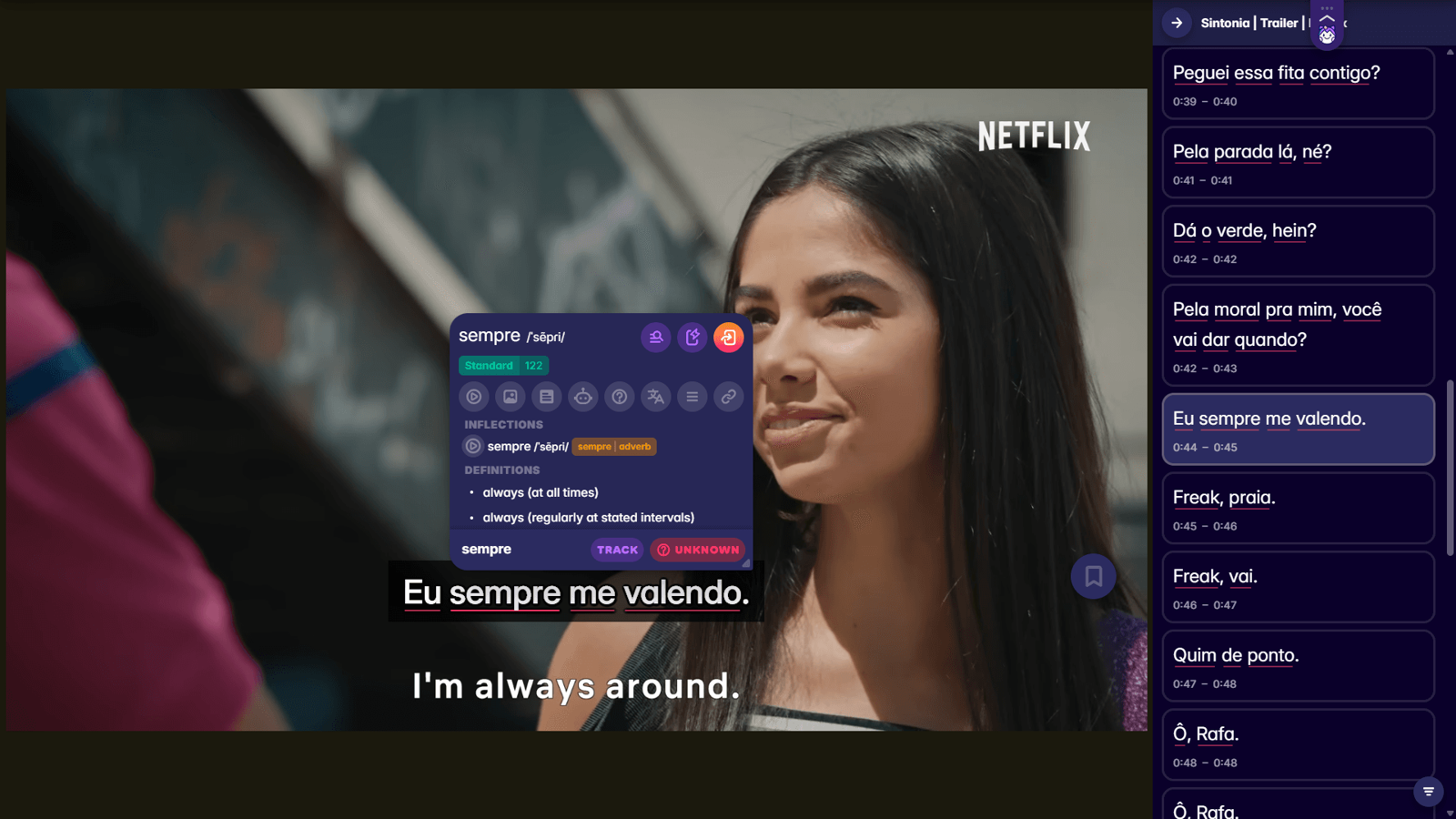
Playing video games gives you context with real-time feedbacks
When you're exploring a dungeon in Final Fantasy and a character says something about a "potion," you immediately understand what that word means because you see the item, use it, and experience its effect. Your brain creates multiple associations with that single word, which makes it stick way better than memorizing it from a flashcard. The immersive nature of video games means you're constantly exposed to your target language in realistic situations. You're reading dialogue, listening to voice acting, following quest instructions, and making decisions based on language comprehension. The experience is as effective as consuming other traditional media.
If you consume media in the language you want to learn, and you understand at least some of the messages and sentences within that media, you will make progress. Period.
Video games are one of the best language learning tools. Try them out!