LGBTQ+ Life in Germany: Laws, Communities, and Welcoming Cities
Last updated: May 27, 2026
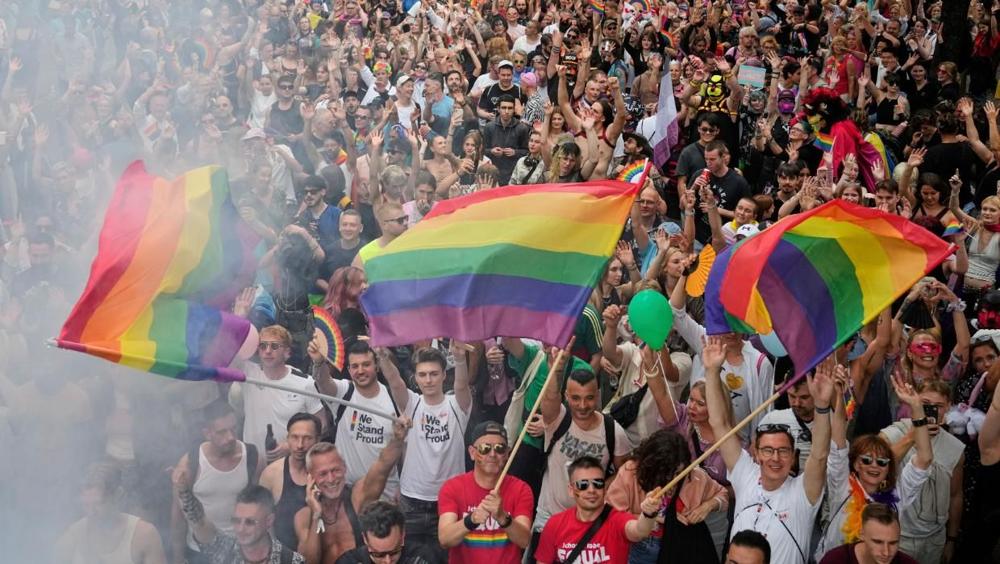
Germany is one of the more legally progressive countries in Europe for LGBTQ+ residents, with marriage equality since 2017, a new Self-Determination Act in force since 2024, and active queer communities in every major city. That said, protections are not yet perfect and hate-crime numbers have risen, so where you settle still matters.
Last updated: May 27, 2026
The legal landscape in 2026
If you are moving to Germany as an LGBTQ+ person, the core legal framework is broadly favorable. Same-sex marriage has been legal since 1 October 2017, after the Bundestag passed the law on 30 June 2017. Married same-sex couples have full equal rights, including joint adoption and stepchild adoption.
The General Equal Treatment Act (Allgemeines Gleichbehandlungsgesetz, AGG), in force since 18 August 2006, prohibits discrimination on the basis of sexual identity in employment, housing, and the provision of goods and services. Complaints can be filed with the Federal Anti-Discrimination Agency (Antidiskriminierungsstelle des Bundes), which received 8,827 advice requests in 2022, a 14% jump over the prior year.
One legal gap remains visible. Article 3(3) of the Basic Law (Grundgesetz) still does not explicitly list "sexual identity" as a protected characteristic. On 11 July 2025 the Berlin Senate submitted a Bundesrat initiative to add it, and on 26 September 2025 the Bundesrat formally forwarded the proposal to the Bundestag, where a two-thirds majority is required to amend the constitution. As of May 2026, the vote has not yet taken place.
Other relevant statutes:
- Conversion-therapy ban: The Act to Protect against Conversion Treatments came into force in 2020. Performing conversion therapy on minors or under coercion is punishable by up to one year in prison or fines of up to €30,000. Germany was the fifth country worldwide to enact such a ban.
- Intersex protections: Surgical or medical interventions on intersex children without medical necessity are prohibited. Germany is one of only six European countries with such a rule.
- Blood donation: Since the 2023 amendment to the Transfusion Act (Section 12a, effective 16 March 2023) and the September 2023 Haemotherapy Guideline, eligibility is assessed on individual sexual behavior. Sexual orientation and gender identity no longer factor in. A four-month deferral applies to anyone with recent high-risk sexual contact.
On ILGA-Europe's Rainbow Map 2025, Germany scored 69%, its highest score to date, ranking 8th of 49 European countries.
The Self-Determination Act (SBGG)
The Self-Determination Act (Selbstbestimmungsgesetz, SBGG) came into force on 1 November 2024, replacing the 1980 Transsexuals Act (TSG). It is one of the most significant legal changes in recent German history for transgender, non-binary, and intersex residents.
Key points:
- Changing your registered gender entry and first name(s) is done by simple declaration at the Standesamt (civil registry office). No court process, no psychological assessments, no medical certificates.
- You must first pre-register the change at the registry office. A mandatory three-month waiting period follows before you can finalize the declaration.
- The administrative fee is €30 (€60 in cases involving parents and minors).
- A declaration is binding for one year before another change can be made.
- The outing ban under §13 and §14 SBGG makes it an administrative offence to disclose or investigate a person's former gender entry or name, with fines up to €10,000.
- Minors aged 14+ can file their own declaration with legal guardian consent. For children under 14, the guardian files, but the child's agreement is required from age 5.
- If you have no German birth or marriage certificate (for example, you have never lived in Germany before), the competent office is Standesamt I in Berlin.
Uptake has been substantial. According to the Federal Statistical Office, 10,589 gender changes were registered in November and December 2024 alone under the SBGG, compared with 596 cases under the old TSG between January and October 2024.
What daily life actually feels like
The EU Agency for Fundamental Rights' 2023 LGBTIQ Survey, published in 2024, found that 60% of LGBTIQ respondents in Germany live largely openly, against an EU average of 51%. At the same time, 38% reported experiencing discrimination in the previous year, in line with the 37% EU average.
Hate crime is a real and rising concern. German police recorded 1,765 criminal offences in 2024 in the subcategory "sexual orientation," an increase of roughly 18% over the prior year. Berlin alone recorded a record-high 588 anti-queer offences in 2023 according to the Berlin Monitoring of Anti-Queer Violence. Most incidents involve insults, threats, or assaults in public spaces, often near nightlife districts or on public transport at night.
Institutional support exists. Since January 2022, there has been a Federal Government Commissioner for the Acceptance of Sexual and Gender Diversity (often called the Queer-Beauftragte). Sophie Koch has held the post since May 2025.
The most welcoming cities
Every major German city has visible queer infrastructure, but a few stand out for the depth of community, services, and events.
Berlin
Berlin is the unofficial queer capital of Germany and one of the largest queer hubs in continental Europe. The neighborhoods of Schöneberg (the historic gay village around Nollendorfplatz), Kreuzberg, Neukölln, and Friedrichshain each have distinct queer scenes. Specialist clinics, trans health providers, asylum support for LGBTQ+ refugees, and dedicated anti-violence projects (Maneo, L-Support, the Berlin Monitoring) operate citywide. CSD Berlin 2025, the 47th edition, took place on 26 July 2025 under the motto "Nie wieder still!" ("Never silent again!"). CSD Berlin 2026 is scheduled for 25 July 2026.
Berlin is also where Standesamt I handles SBGG declarations for residents without a German civil-status record, which makes it administratively convenient for newcomers.
Cologne (Köln)
Cologne hosts ColognePride / CSD Köln, which drew about 1.4 million visitors and roughly 55,000 parade participants in July 2025, making it Europe's largest Pride event of its kind. The scene is concentrated in the Bermudadreieck around Schaafenstraße and Rudolfplatz. The city has a long Catholic-rooted but famously tolerant character, and queer life is mainstream rather than tucked away.
Hamburg
Hamburg's St. Georg district, around Lange Reihe, is the historic center of queer life in the north. Hamburg Pride typically takes place in late July or early August. The city combines strong anti-discrimination enforcement with a sizable trans and non-binary community and well-established health services.
Munich (München)
Munich's scene clusters in the Glockenbachviertel and Gärtnerplatzviertel. Christopher Street Day Munich is one of the larger southern Pride events. Bavaria is politically more conservative than Berlin or NRW, but Munich itself has long-standing queer organizations such as Sub e.V. and LeTRa.
Frankfurt am Main
Frankfurt has a compact but active scene in the Bahnhofsviertel and Sachsenhausen, and benefits from being a financial hub with many international employers offering same-sex partner benefits, relocation support, and diversity networks.
Leipzig
Leipzig has grown into eastern Germany's most visible queer city outside Berlin, with strong student, lesbian, and non-binary scenes. It is also more affordable than Berlin or Munich, which matters if you are relocating on a modest budget.
Practical relocation checklist
A short list of things to handle in your first months as an LGBTQ+ arrival:
- Anmeldung: Register your address at the Bürgeramt within two weeks of moving in. This unlocks almost everything else.
- Health insurance: Statutory insurance (gesetzliche Krankenversicherung) covers gender-affirming care, HIV care, PrEP, and mental health support, though waiting times vary. Confirm coverage details in writing with your Krankenkasse.
- Registry office (Standesamt): If you plan to use the SBGG, locate your competent office and book the pre-registration appointment early. Slots in Berlin and Munich can run weeks out.
- Anti-discrimination support: Save the number of the Antidiskriminierungsstelle des Bundes and any city-level equivalent (e.g., LADS in Berlin).
- Community organizations: Join at least one local queer association in your first weeks. They are the fastest route to housing tips, doctor recommendations, and friends.
- Long-term status: If you intend to stay, read up on Germany's permanent residency paths early, since some routes have language and contribution thresholds.
- Taxes: Married same-sex couples can choose joint tax classes. Get familiar with German tax classes for foreigners before your first full tax year.
- Transit: The Deutschlandticket is useful for visiting queer events and community across cities on a single monthly pass.
Common pitfalls
- Assuming federal law equals local attitudes. Rural areas in eastern states and parts of Bavaria can feel markedly less open than the cities listed above. Police-reported hate crime rose around 18% in 2024 nationally.
- Skipping the SBGG pre-registration step. The three-month waiting period is mandatory. You cannot finalize a name and gender change on the same day you first walk in.
- Ignoring the one-year lock. After an SBGG declaration, you cannot change your entries again for 12 months. Choose your name carefully.
- Underestimating the AGG. If you experience workplace discrimination, you typically have only two months from the incident to file an internal complaint under §15 AGG. Document everything in writing.
- Assuming all health providers are trans-competent. Ask community organizations for vetted referrals rather than relying on the first GP you find.
FAQs
Is same-sex marriage fully equal to opposite-sex marriage?
Yes. Since 1 October 2017, same-sex couples have full marriage rights, including joint adoption.
Can a foreigner use the Self-Determination Act?
You generally need to be resident in Germany or have a German civil-status record. Residents without a German birth or marriage certificate file at Standesamt I in Berlin. EU citizens with stable residence in Germany are typically eligible. Non-EU citizens should verify with the registry office and their consulate, since the change may not be recognized in your country of citizenship.
Does statutory health insurance cover gender-affirming care?
Yes, including hormone therapy and, with approval, surgeries. Documentation requirements still exist on the insurance side even though the SBGG removed them from the legal name and gender process.
Is conversion therapy illegal?
It is banned for minors and in cases involving coercion or deception of adults, with penalties up to one year in prison or €30,000 in fines.
Which city has the largest Pride?
ColognePride, with roughly 1.4 million visitors in 2025, is the largest in Germany and one of the largest in Europe. Berlin's CSD is also enormous and more politically charged.
Where do I report a hate crime?
File a police report (Anzeige) and contact a specialized victim-support organization in parallel, such as Maneo in Berlin or rubicon in Cologne. The Federal Anti-Discrimination Agency handles non-criminal discrimination cases.
Are pronouns and non-binary entries recognized?
The SBGG allows entries of "male," "female," "diverse," or no entry. Many employers and universities accept self-chosen names and pronouns informally even before the legal change is finalized.
Settling in as an LGBTQ+ resident of Germany is mostly a question of logistics: pick a city whose scene fits you, register quickly, line up health and legal support, and learn enough German to navigate the Standesamt, your Krankenkasse, and your neighbors. The last part makes a real difference in how welcome daily life feels, and if you want a structured way to pick up German through real shows, news, and conversations you actually care about, try Migaku.