Living in Gangnam, Seoul: An Expat Lifestyle Guide
Last updated: May 29, 2026
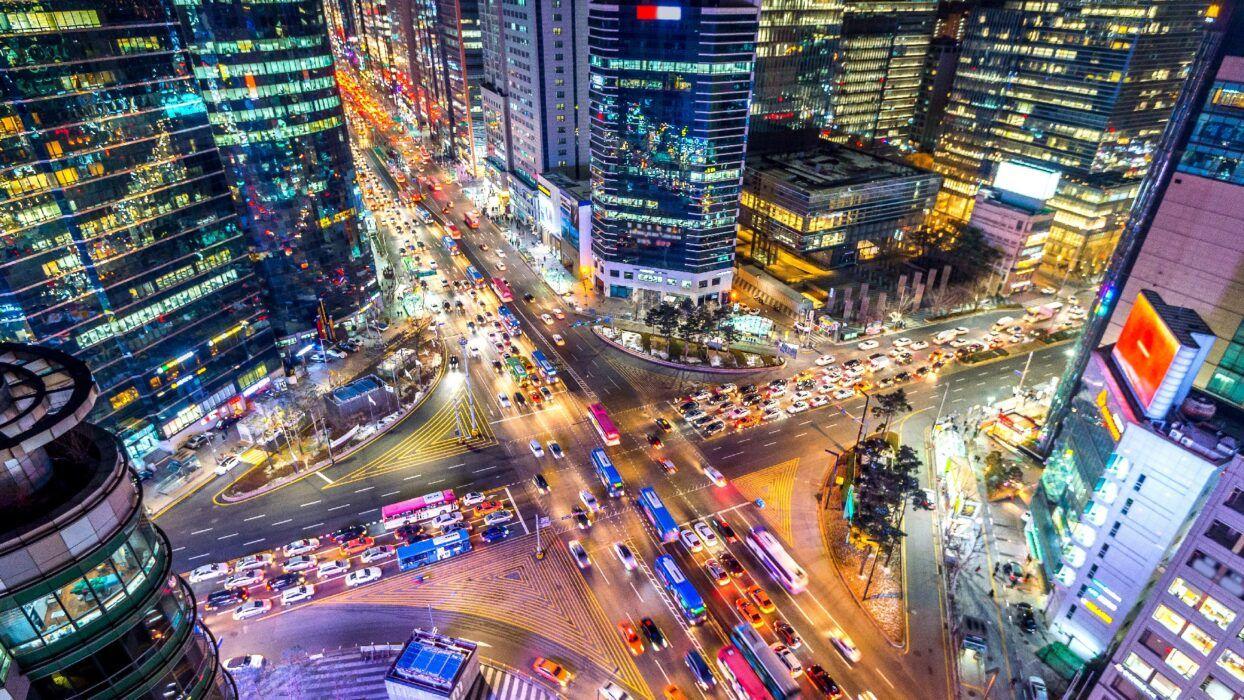
Gangnam is Seoul's most affluent district, home to corporate headquarters, top hospitals, international schools, and the priciest real estate in South Korea. This guide covers what an expat actually needs to know about rent, paperwork, transit, schools, and day-to-day costs in 2026.
Last updated: May 29, 2026
Why Expats Choose Gangnam
Gangnam-gu (along with neighboring Seocho-gu and Songpa-gu) forms the southern core of Seoul that most foreign professionals gravitate toward. The draw is practical: short commutes to multinational offices in Yeoksam and Samseong, the city's best private healthcare clinics along Teheran-ro, two of Seoul's largest international schools within a 30-minute radius, and direct subway lines on Lines 2, 3, 7, 9, and the Shinbundang Line.
The trade-off is cost. According to the Korea Real Estate Board, Gangnam-gu apartment sale prices rose 0.20% in the third week of May 2026, with Seocho-gu up 0.26% and Songpa-gu up 0.38%. Apgujeong-dong and Cheongdam-dong in Gangnam-gu, along with Banpo-dong and Jamwon-dong in Seocho-gu, remain the most expensive residential pockets in the country, where family-sized apartments routinely exceed ₩2,000,000 per month in monthly rent (wolse), and that figure does not include the large refundable deposit Korean leases require.
If you are still weighing districts, see our overview of Best Neighborhoods in Seoul for Foreigners and the more bohemian alternative in Living in Hongdae.
Visa Eligibility and Residence Registration
Before you sign a lease, your visa status determines almost everything: whether you can open a bank account, register a phone, enroll in health insurance, and sign a rental contract in your own name.
The most common pathways for Gangnam-based expats:
- E-series work visas (E-1 through E-7) sponsored by a Korean employer. The E-7 (specialized activities) covers most office professionals.
- F-2-7 points-based long-term residency. Requires a minimum 80 of 100 points across education, age, Korean language ability, income, and volunteer work. Applicants earning above ₩40 million per year can apply immediately regardless of length of prior stay.
- F-5 permanent residency, typically after several years on F-2 or through investment/marriage tracks.
- F-1-D "Workation" Digital Nomad visa, launched for remote workers employed by a foreign company. As of 2026 it requires annual income of at least KRW 88,102,000 (roughly USD 66,000) after tax deduction, at least one year of experience in the same industry, age 18+, and private medical insurance covering KRW 100,000,000. The visa is valid for one year, extendable to two. The fee for U.S. citizens is USD 45.
- D-2 (degree) and D-4 (language) student visas for those attending universities or hagwons.
After arrival, you must apply for the Residence Card (the renamed Alien Registration Card) within 90 days at the local Immigration Office. The fee is ₩35,000 (raised from ₩30,000 in January 2025), and processing takes roughly 2–3 weeks. If you move apartments, you have 14 days to update your address or face a fine.
Housing: Jeonse, Wolse, and What Gangnam Actually Costs
Korean leases come in two formats that confuse most newcomers:
- Jeonse: a large lump-sum deposit (often 50–80% of the property's value) held by the landlord for the lease term, with no monthly rent. You get the full deposit back at the end. Jeonse prices in Seoul rose 0.29% in the third week of May 2026, with a cumulative 3.20% increase for the year so far.
- Wolse: a smaller deposit (typically ₩10–100 million) plus monthly rent. This is what most expats use.
Seoul's average monthly rent for a standard apartment crossed ₩1,500,000 for the first time in March 2026, and premium districts regularly exceed ₩2,500,000. A rough Gangnam benchmark:
Property type | Typical monthly wolse | Typical deposit |
|---|---|---|
Studio/officetel (Yeoksam, Seolleung) | ₩900,000–₩1,500,000 | ₩10–30 million |
One-bedroom (Sinsa, Nonhyeon) | ₩1,200,000–₩2,000,000 | ₩30–100 million |
Two/three-bedroom family apt (Apgujeong, Banpo, Daechi) | ₩2,500,000–₩6,000,000+ | ₩100 million+ |
For authoritative weekly figures, consult the Korea Real Estate Board at reb.or.kr. Most foreigners work through a 부동산 (budongsan, real estate office) and pay a brokerage commission set by Seoul Metropolitan Government schedules. Many landlords prefer tenants with a Korean guarantor or employer letter, so come prepared with documents.
Healthcare and National Health Insurance
National Health Insurance Service (NHIS) enrollment is mandatory for any foreigner staying in Korea six months or longer. F-2, F-5, and F-6 visa holders are enrolled automatically as local subscribers.
Key 2026 figures:
- Workplace subscriber contribution: 7.19% of monthly salary, split evenly at 3.595% employee and 3.595% employer (effective January 1, 2026).
- Long-term care insurance: 13.14% of the health premium (up from 12.95%).
- Regional (self-paying) foreign subscriber minimum: approximately ₩152,790 per month, including long-term care, pegged to the all-subscriber average.
- D-2 and D-4 student visa holders receive a 50% discount, bringing the premium to roughly ₩76,000–₩80,000 per month.
Verify current premiums directly at nhis.or.kr, as the all-subscriber average shifts annually.
Pay on time. NHIS arrears above ₩500,000 trigger Immigration Office restrictions on visa extensions, and for long-term non-payment NHIS can freeze your Korean bank account.
Gangnam's medical infrastructure is the country's densest. Samsung Medical Center (Irwon-dong), Gangnam Severance Hospital, and the international clinics along Teheran-ro all have English-speaking staff and accept NHIS. Private dental and dermatology clinics cluster around Sinsa and Apgujeong.
Schools for Expat Families
Families posting to Gangnam typically choose between three international schools within commuting range. Tuition for SY2026/2027 generally runs KRW 28 million to 45 million per child annually, with one-off entrance or capital fees of KRW 5,000,000–20,000,000 and application fees of KRW 350,000–800,000.
Specific data points published for 2026:
- Seoul International School (Seongnam, just south of Gangnam): a KRW 4,000,000 Initial Registration Fee is due within 7 days of acceptance for new students; re-enrollment fee for returning students is KRW 3,000,000, due by March 4, 2026.
- Seoul Foreign School (Yongsan): first-year enrollment cost for a 2-year-old is approximately ₩40,109,271 based on 2025/2026 fees including one-time charges.
- Dwight School Seoul (Songdo and Seoul campuses) and Korea International School Pangyo are the other common options.
Admissions are competitive and most schools require WIDA or equivalent English assessments, passport copies, prior school transcripts, and immunization records. Apply 6–12 months in advance for popular grades.
Transportation and Getting Around
Gangnam is one of the best-connected districts on the planet. The Seoul Metro's Line 2 runs the spine of Teheran-ro through Gangnam Station, Yeoksam, and Samseong. Line 9 (express) connects to Gimpo Airport. The Shinbundang Line links to Pangyo's tech corridor.
2026 fares:
- Subway base fare: ₩1,550 with T-money (₩1,650 single-ride), after the June 28, 2025 increase.
- City bus: ₩1,500.
- Seoul Climate Card: monthly unlimited subway/bus for approximately ₩62,000–₩65,000. Short-term passes for tourists: ₩5,000 (1-day), ₩10,000 (3-day), ₩15,000 (5-day).
- Taxi base: ₩4,800 for first 1.6 km, then ₩100 per 131 meters or 30 seconds of waiting. Late-night surcharges: +20% from 10–11 PM and 2–4 AM, +40% from 11 PM–2 AM.
- Deluxe (mobeom) taxis: ₩7,000 base for first 3 km, ₩200 per 151 m, no late-night surcharge.
Since March 17, 2026, subway kiosks at 273 stations across Lines 1–8 accept overseas credit and debit cards for T-Money and Climate Card top-ups, which removes one of the long-standing pain points for new arrivals.
Gangnam also hosts Seoul's autonomous taxi pilot. As of April 6, 2026, the late-night driverless taxi service operating in a roughly 20.4 km² zone transitioned to paid service with flat fares of ₩4,800, ₩5,800, or ₩6,700 depending on the time slot. The fleet expanded from 3 to 7 vehicles, hailed through the Kakao T app.
For airport transfers: the AREX Express Train from Incheon to Seoul Station is ₩4,150, and Airport Limousine Buses to Seoul districts run ₩15,000–₩17,000 one-way.
Cost of Living and Salary Context
A quick frame of reference for what you are spending against. The 2026 minimum wage is KRW 10,320/hour, or KRW 2,156,880/month at 209 hours, effective January 1, 2026. The National Pension contribution rose to 9.5% on January 1, 2026, the first step of a phased increase to 13% by 2033, typically split with employers.
Typical monthly expat budget in Gangnam (single professional, one-bedroom):
Category | Range (KRW) |
|---|---|
Rent (1BR wolse) | 1,200,000–2,000,000 |
Utilities + internet | 150,000–250,000 |
NHIS (if regional subscriber) | ~152,790+ |
Mobile plan | 30,000–70,000 |
Groceries | 400,000–800,000 |
Eating out + coffee | 400,000–900,000 |
Transit (Climate Card) | ~62,000 |
Groceries at department-store basements (Hyundai, Galleria) and at Kim's Club or SSG run noticeably higher than at Costco Yangjae or traditional markets. Imported goods carry a premium.
Common Pitfalls
- Signing a lease before getting your Residence Card. Many landlords and brokers require it. Time the application carefully and ask your employer to expedite documents.
- Underestimating deposit size. Even wolse contracts in Gangnam often require ₩30 million or more upfront. Plan liquidity before you arrive.
- Skipping NHIS payments. Arrears block visa extensions and can freeze bank accounts.
- Address-change neglect. You have 14 days from moving to update your Residence Card with Immigration.
- Assuming English is enough. Gangnam is more English-friendly than most of Korea, but utilities companies, building managers (gwalliso), and hospitals outside the international wings operate almost entirely in Korean.
- Missing school deadlines. International schools fill grades early; the SY2026/2027 re-enrollment cutoff at Seoul International School was March 4, 2026, with new applicants required to pay registration within 7 days of acceptance.
FAQs
Do I need to speak Korean to live in Gangnam?
You can survive in English in the Gangnam–Itaewon–Hannam corridor, but practical tasks (signing contracts, dealing with the immigration office, talking to a plumber) are far easier with basic Korean.
Can I open a Korean bank account before getting my Residence Card?
Most major banks require the Residence Card. A few branches accept passport-only accounts with limited functionality. KB Kookmin, Shinhan, and Woori have Gangnam branches with English-speaking staff.
Is Gangnam family-friendly?
Yes. Daechi-dong is a famous education district, Banpo has riverside parks and the Sebitseom islands, and Apgujeong has playgrounds and pediatric clinics. The trade-off is cost.
How long does the Residence Card take?
Roughly 2–3 weeks after application at the local Immigration Office. The fee is ₩35,000.
What if I want to travel during my stay?
Gangnam is a strong base for weekend trips. See our 1 Week Korea Itinerary for a route covering Seoul, Busan, and Jeju.
Is the autonomous taxi worth using?
It is novel and cheap for short late-night hops within the Gangnam zone, but the fleet is still small (7 vehicles as of April 2026) and wait times can be long. Treat it as a backup, not a primary mode.
Settling into Gangnam is mostly an exercise in paperwork and patience. Get the visa right, budget honestly for deposits, register with NHIS on time, and the lifestyle largely takes care of itself. If you want to make daily life in Seoul smoother, picking up Korean from real shows, news, and conversations helps more than any textbook, and Migaku is built to learn directly from that kind of native content.