Living in Hongdae: A Guide for Students and Nightlife Lovers
Last updated: May 29, 2026
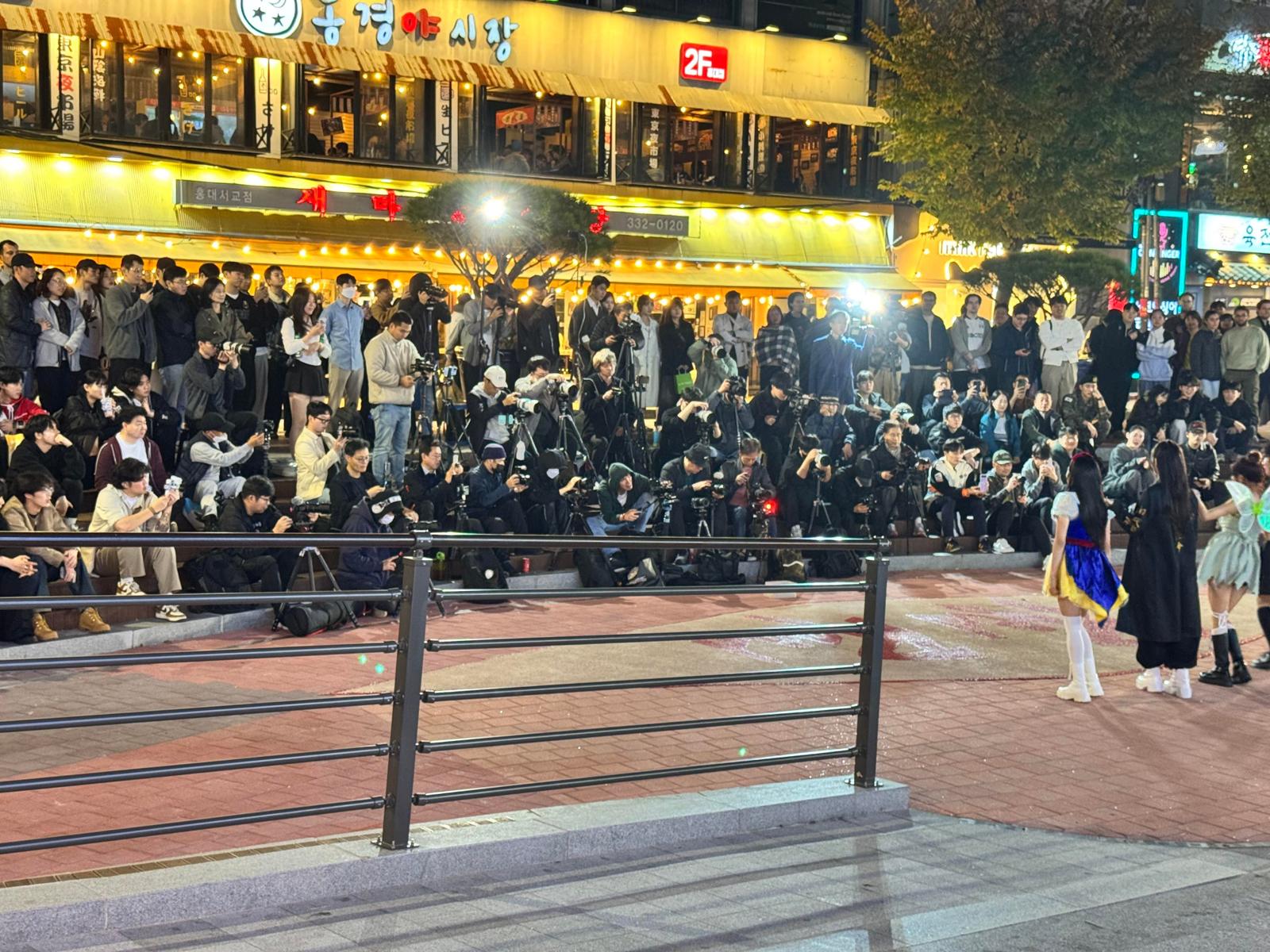
Hongdae, the area around Hongik University in Mapo-gu, is Seoul's busiest student and nightlife district, drawing international students with mid-range rent, a 24-hour atmosphere, and direct subway links to the rest of the city. This guide covers what you actually need to know to live there in 2026: housing costs, the D-2 student visa, transit, club rules, and the small details that trip up newcomers.
Last updated: May 29, 2026
Why Hongdae Works for Students
Hongdae sits on Subway Line 2 (Hongik Univ. station), with additional access via the Gyeongui-Jungang and Airport Railroad (AREX) lines. That last point matters: the AREX All-Stop train runs from Incheon Airport to Hongik Univ. as part of its route to Seoul Station, with the full Seoul Station run taking about 59 minutes for ₩4,150–₩4,750. If you arrive with luggage, you can be in your Hongdae studio in roughly an hour without a taxi.
The neighborhood revolves around Hongik University's art and design programs, which sets the tone: independent bookstores, busking on the main pedestrian street (Hongdae Walking Street), vintage shops, live music venues, and a club density that rivals Gangnam at lower prices. Unlike Itaewon, which leans toward expats and tourists, Hongdae's crowd skews Korean university students in their early twenties, with a steady international layer from exchange programs at Yonsei, Sogang, and Hongik itself.
For an overview of how Hongdae compares to other parts of the city, see this rundown of the best neighborhoods in Seoul for foreigners.
Visa and Legal Basics for Student Residents
Most international students living in Hongdae are on a D-2 (degree-seeking) or D-4 (language program) visa. The D-2 has stricter financial and academic conditions but more work flexibility.
Key D-2 facts for 2026:
- Financial proof: ₩20,000,000 (about $15,000 USD) held in your account for at least 28 days before applying.
- Processing time: 2 to 4 weeks at most consulates.
- In-Korea status change fee: approximately ₩130,000.
- Alien Registration Card (ARC): required within 90 days of arrival, costs ₩30,000, and arrives 2 to 3 weeks after application at your local immigration office.
- National Health Insurance (NHIS): mandatory, roughly ₩40,000 per month, usually enrolled automatically through your university.
Work rights on a D-2 are tightly scoped. During the semester, bachelor's students can work up to 20 hours per week and graduate students up to 30. You generally need to have completed 6 months of study and hold TOPIK Level 3 before taking off-campus part-time work (Level 2 may be accepted for on-campus jobs). During official vacations, hours are uncapped. Working outside these limits is not a minor issue: penalties include fines up to ₩20,000,000, deportation, and a re-entry ban of up to 5 years.
One change worth flagging: in February 2026, Korea's Ministry of Justice barred 20 universities from issuing student visas due to weak oversight of international students. As of the 2025–2026 review cycle, 181 universities hold accredited status to recruit international students. Confirm your school's status on HiKorea (www.hikorea.go.kr) before signing any housing contract.
For entry-level part-time roles (cafes, convenience stores, English tutoring through approved channels), the 2026 hourly minimum wage is ₩10,030, roughly $7.50 USD.
What It Costs to Live in Hongdae
Hongdae is not the cheapest district in Seoul, but it is far below Gangnam or Yongsan. Here is the realistic monthly picture for a single student in 2026:
Expense | Monthly cost (KRW) |
|---|---|
Studio / one-room (Hongdae area) | ₩650,000 – ₩950,000 |
Goshiwon (tiny private room) | ₩400,000 – ₩900,000 |
University dormitory | ₩500,000 – ₩700,000 |
Studios/small 1BR in wider Mapo-gu | ₩550,000 – ₩900,000 |
National Health Insurance | ~₩40,000 |
Transit (Climate Card, youth) | ₩55,000 – ₩58,000 |
A standard Korean one-room lease usually demands a deposit (보증금, boejeunggeum) of ₩5,000,000 to ₩10,000,000 (about $3,500–$7,000 USD). Goshiwon rooms skip the deposit entirely, which is why they remain the default for first-semester students. A comfortable monthly budget, excluding tuition, falls between ₩1,000,000 and ₩1,617,000 (roughly $700–$1,135 USD).
A few practical notes:
- Most landlords expect deposits paid in a single wire transfer. Bring documentation of source of funds.
- Some buildings near Hongik University's main gate charge a "key money" deposit higher than the listed range because of demand from foreign students. Compare listings two or three subway stops away (Sangsu, Hapjeong, Mangwon) for noticeably better prices.
- Utilities (electricity, gas, water, internet) typically add ₩100,000–₩150,000 per month in winter, less in spring and fall.
Getting Around: Transit and the Climate Card
Seoul's subway is the cheapest way to commute, and Hongdae is well positioned for it. The base fare with a T-money card is ₩1,400 (single-journey tokens cost ₩100 more). T-money cards themselves cost ₩2,500 at any CU, GS25, 7-Eleven, or Emart24.
If you commute daily, the Seoul Climate Card pays off quickly. 2026 pricing for the 30-day passes:
Pass | Price (KRW) |
|---|---|
Basic (subway + bus) | ₩62,000 |
Combined (adds Ttareungi bike share) | ₩65,000 |
Youth (ages 19–39, no bike) | ₩55,000 |
Youth + bike | ₩58,000 |
Physical card (one-time) | ₩3,000 |
Short-term tourist passes (1, 2, 3, 5, and 7 days) range from ₩5,000 to ₩20,000. Between April and June 2026, Seoul also announced a ₩30,000 rebate for users who fully use a 30-day Climate Card, dropping the effective adult cost to ₩32,000 and youth cost to ₩25,000 for that window. Over 720,000 people use the Climate Card daily, so this is a mainstream tool, not a niche subsidy.
The subway runs from about 5:30 AM to midnight. The last train from Gangnam on Line 2 toward City Hall departs around 11:50 PM. If you stay out later than that, which is normal in Hongdae, the "Owl Bus" (N-Bus) network covers the city all night and accepts the Climate Card. Save the N26 and N62 routes in your map app: both pass through Hongdae.
Accessibility has also improved. As of 2026, 96% of Seoul subway stations have elevators, and wheelchair taxis can be booked through the 120 Dasan Call Center.
Hongdae Nightlife: Rules, Costs, and Etiquette
Hongdae nightlife splits into three rough categories: live music clubs (FF, Club Evans for jazz), dance clubs (Cocoon, NB2, Mike's Cabin), and bar/pub streets that cluster around the Hongik playground and Exit 9 of Hongik Univ. station.
The core rules:
- Legal drinking age is 19 in international (full) years. In 2026, that means you must be born in 2007 or earlier. Clubs check passports or ARCs strictly, not just ID cards.
- Cover charges in Hongdae typically run around ₩15,000, sometimes up to ₩20,000 with one drink included. Cocktails average ₩8,000–₩12,000. Compare that to Gangnam mega-clubs, where covers hit ₩30,000 and tables start at ₩300,000.
- Mike's Cabin, popular with international students, charges around ₩10,000 entry (cash preferred). Lines build fast on Friday and Saturday; arriving before 10:30 PM avoids a 30-minute queue.
- Upper age limits exist. As of January 2026, many Hongdae dance clubs and bars enforce informal age caps, sometimes 30, occasionally as low as 25 or 28. This is not posted, it is enforced at the door. If you are in your thirties, look toward Itaewon or the cocktail bars of Hapjeong and Yeonnam-dong instead.
- Cash and card both work, but smaller bars sometimes require cash for tabs under ₩10,000.
Safety is generally good. Seoul has over 1.5 million CCTV cameras citywide, and the emergency number for police is 112 (English interpreters available). Standard precautions still apply: watch your drink, keep your phone in a zipped pocket on packed dance floors, and have a screenshot of your home address in Korean for taxi drivers.
If you are into K-pop alongside the club scene, the entertainment company offices and showrooms are an easy day trip. See this guide to K-pop tourism in Seoul for HYBE, SM Town, and JYP locations.
Common Pitfalls Newcomers Hit
- Signing a one-room lease before seeing the ARC paperwork through. Some landlords ask for the full deposit before your ARC is issued. Ask the international office at your university to review the contract first.
- Underestimating the deposit. A ₩700,000 monthly rent often comes with a ₩7,000,000 deposit. If you do not have that liquid, focus on goshiwon or dormitory housing for the first semester.
- Working without TOPIK Level 3 or before the 6-month mark. This is the most common visa violation among D-2 students. Universities report hours to immigration.
- Assuming the subway runs late. It does not. Plan around the midnight cutoff or budget for taxis (base fare ₩4,800 in 2026, surcharges after midnight).
- Ignoring noise rules in residential buildings. Hongdae's main strip is loud, but the apartments two blocks back enforce quiet hours, and complaints can escalate quickly.
- Trying to club-hop past age 30 without checking policy. Save yourself the door rejection and call ahead, or ask Korean friends which venues are mixed-age.
FAQs
Is Hongdae safe to walk in late at night?
Yes, by global standards. The main streets stay busy until 5 or 6 AM on weekends, and CCTV coverage is dense. The usual caution around drunk crowds applies near the playground area around closing time.
Can I live in Hongdae on a D-4 language visa?
Yes. The housing market does not distinguish between D-2 and D-4. Work rights are more restricted on D-4 (you generally cannot work the first 6 months and need program director approval), so budget more cash up front.
How much Korean do I need to live here?
For daily life in Hongdae, very little, since menus and signs often have English and the staff is used to international students. For renting an apartment, dealing with utility companies, and any government office, you will need either solid Korean or a Korean-speaking friend.
What is the cheapest realistic monthly budget?
Goshiwon at ₩450,000, cooking most meals, Climate Card Youth at ₩55,000, NHIS at ₩40,000, and modest spending puts you near ₩900,000 to ₩1,000,000 per month. That is tight but workable.
Is it worth living in Hongdae if I do not drink or club?
Yes, depending on the block. The Yeonnam-dong and Hapjeong sides of Hongdae are quieter, full of cafes and bookstores, and still on the same subway line. Avoid the area within three blocks of Hongik Univ. station Exits 8 and 9 if you want to sleep on weekends.
What about travel outside Seoul?
Hongdae's location on Line 2 and the AREX gives you fast access to Seoul Station for KTX trains to Busan, Gyeongju, and beyond. For ideas, see this 1-week Korea itinerary covering Seoul, Busan, and Jeju.
If you are moving to Seoul, learning Korean from the shows, songs, and YouTube videos you already enjoy will make Hongdae feel a lot more like home. Try Migaku if that sounds like your kind of approach.