Morning Routine for Language Learners: Build a Daily Habit
Last updated: April 2, 2026

Most people try to squeeze language learning into random gaps throughout their day, which usually means it doesn't happen at all. Here's the thing: building a morning routine language learning habit is probably the most reliable way to actually make consistent progress. When you tackle it first thing, before emails and notifications take over, you're using your freshest mental energy on something that matters. Plus, you can't "forget" or get too tired if it's already done by 9am.
- Why mornings work better for language learning
- Build your language learning routine from scratch
- Integrate the 80/20 rule into your morning practice
- The 15/30/15 method for structured morning sessions
- Use a tutor in your morning routine
- Podcast listening strategies
- Combine morning practice with sentence mining
- How to make it stick when motivation disappears
- Adjust your routine as you progress
Why mornings work better for language learning
Your brain is genuinely sharper in the morning. After sleep, your working memory is refreshed, and you haven't burned through your decision-making energy yet. This matters more than you'd think for learning a new language, because you're constantly making micro-decisions about grammar rules, word meanings, and pronunciation.
I've tried learning at different times of day, and morning sessions just stick better. When I practiced Spanish vocab at 7am versus 8pm, the morning reviews felt easier, and I remembered more the next day. There's actual science backing this up, too. Your cortisol levels peak naturally in the morning, which helps with alertness and memory formation.
The other huge advantage? Consistency. Morning routines are easier to protect. Nobody's texting you at 6:30 am asking for favors. Your boss isn't scheduling surprise meetings. You control that time completely, which means your daily routine actually stays daily.
Build your language learning routine from scratch
Start stupidly small. Seriously, like 5-10 minutes small. People always crash and burn because they design these elaborate 90-minute morning routines that work great for exactly three days. You want something so easy you'd feel silly skipping it.
Here's what worked for me when I started: 10 minutes of flashcard reviews with coffee. That's it. No podcasts, no grammar exercises, no tutor sessions. Just cards and caffeine. After two weeks, it felt weird NOT doing it, so I added 5 minutes of reading.
The key is attaching your language practice to something you already do every morning. Coffee is perfect because you're just sitting there anyway. Some people do it while eating breakfast or right after brushing their teeth. The existing habit acts like an anchor.
Pick one activity to start:
Just one. You can add more later once the habit is locked in.
Integrate the 80/20 rule into your morning practice
The 80/20 rule for learning a language basically says that 20% of your effort produces 80% of your results. For morning routines, this means focusing on high-impact activities instead of trying to do everything.
The highest-return activities are usually input-based: reading, listening, and reviewing vocabulary you've already encountered. These give you way more benefit per minute than, say, writing out conjugation tables or doing grammar drills.
When I applied this to my mornings, I stopped doing random Duolingo lessons (low impact) and switched to reviewing sentences I'd saved from actual content (high impact). My comprehension jumped noticeably within a month.
For most learners, the 20% that matters most is:
- Spaced repetition reviews of real sentences
- Reading content slightly above your level
- Listening to comprehensible input
- Reviewing vocabulary in context
Notice what's missing? Random vocabulary lists, abstract grammar rules, etc. Those might feel productive, but they're usually in the 80% of effort that produces minimal results.
The 15/30/15 method for structured morning sessions
The 15/30/15 method is a 60-minute structure that balances different types of practice. You spend 15 minutes on review, 30 minutes on new input, and 15 minutes on active production or analysis.
- First 15 minutes: Review your flashcards or spaced repetition system. This is maintenance work, reinforcing what you've already learned. Your brain is fresh, so you'll move through cards quickly, and retention will be solid.
- Middle 30 minutes: Consume new content in your target language. Read an article, watch a show, listen to a podcast. This is where you encounter new vocabulary and patterns. The goal is comprehensible input, stuff you mostly understand but that challenges you a bit.
- Final 15 minutes: Do something active with what you just learned. Mine new sentences, write a short summary, or practice speaking about the topic. This cements the new material before you move on with your day.
You don't need to follow this exactly. Maybe you do 10/20/10 because you only have 40 minutes. The principle is the same: review, input, then active practice. The structure prevents you from spending all your time on just one type of learning.
Use a tutor in your morning routine
Morning tutor sessions are surprisingly effective if you can swing them. The accountability factor alone is huge. You're way less likely to skip your language practice when someone's literally waiting for you on a video call.
I used to do 30-minute iTalki sessions at 7am twice a week. Having those scheduled meant I had to wake up and show up, no negotiating with myself. On non-tutor mornings, I'd do independent study, so the routine stayed consistent.
The best way to use morning tutor time is conversational practice, especially discussing content you've been consuming. If you watched a French cooking show yesterday, talk about it with your tutor this morning. This reinforces the vocabulary while it's still fresh and gives you immediate feedback.
Tutor sessions work best when they're part of a bigger routine, though. Just doing 30 minutes with a tutor twice a week won't cut it. You need the daily independent practice too. Think of the tutor as the accountability anchor and feedback mechanism, while your solo morning work does the heavy lifting.
Podcast listening strategies
Podcasts fit perfectly into morning routines because you can listen while doing other things. Making coffee, getting dressed, commuting if that's part of your morning. But here's the thing: passive listening doesn't do much unless you're already pretty advanced.
For beginners and intermediates learning a new language, you need to actively focus. That means sitting down with the podcast, following along with a transcript if possible, and actually processing what you're hearing. Just having Spanish audio playing while you shower isn't language learning, it's background noise.
I like using podcasts designed for learners in the morning because they're usually 10-20 minutes, which fits nicely into a routine. Shows like Coffee Break Spanish or InnerFrench are built for this. They speak clearly, explain tricky parts, and repeat important phrases.
If you want to use native content podcasts, pick topics you already know about. If you're into cooking, find cooking podcasts in your target language. Your existing knowledge fills in comprehension gaps and makes the input way more comprehensible.
Best morning podcast approach:
- Choose episodes that match your level
- Listen actively, don't multitask
- Replay confusing sections immediately
- Save new words or phrases you hear
- Keep episodes under 20 minutes for consistency
Combine morning practice with sentence mining
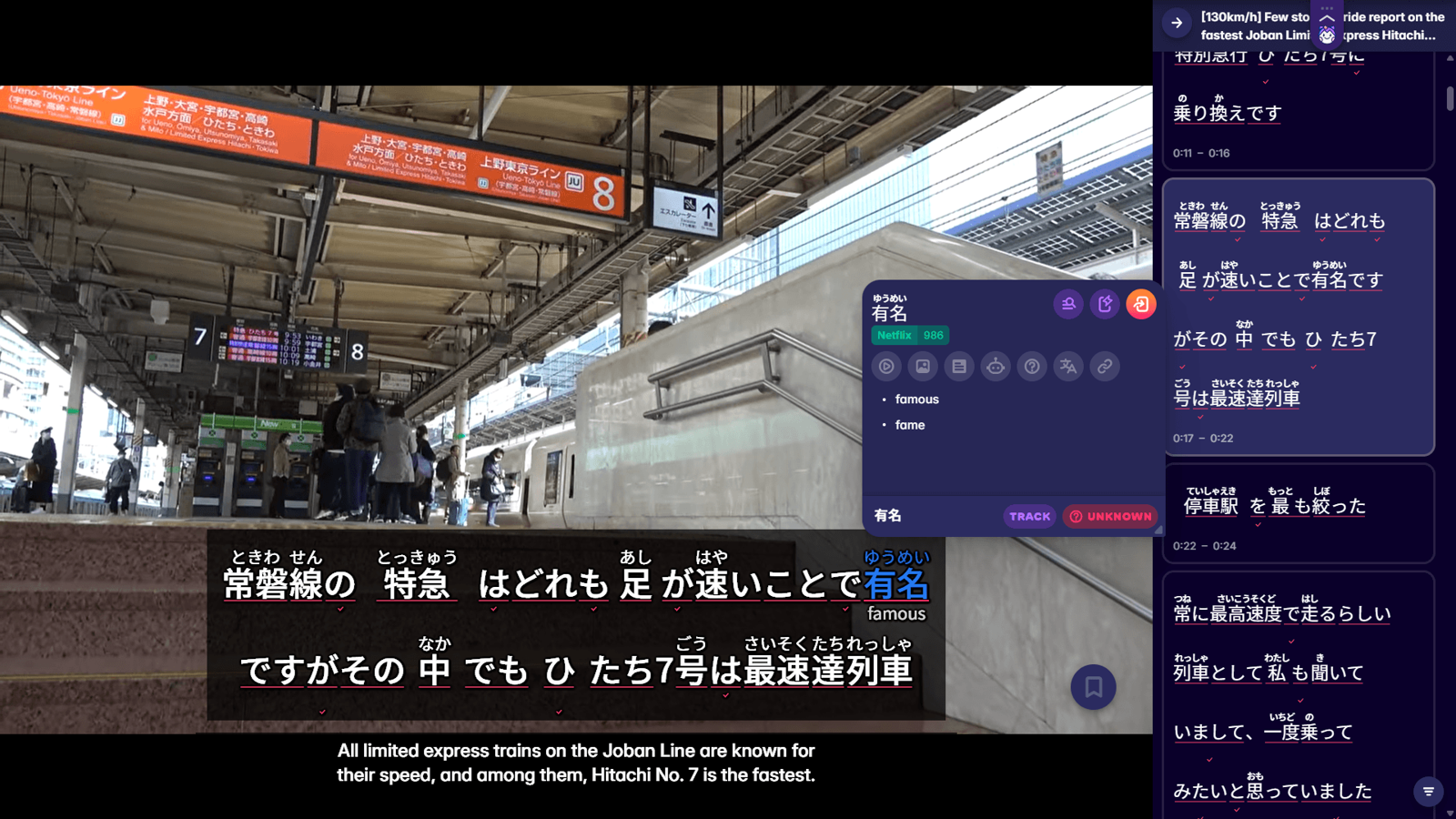
Sentence mining is when you save full sentences from real content instead of isolated vocabulary words. It's ridiculously effective because you learn words in context with natural grammar patterns.
Your morning routine should include both mining new sentences and reviewing old ones. I usually review mined sentences first thing (15-20 minutes), then spend time consuming new content where I'll find today's sentences.
The workflow looks like this:
- Watch or read something in your target language.
- Save interesting sentences to your spaced repetition system.
- Review those sentences over the following days and weeks.
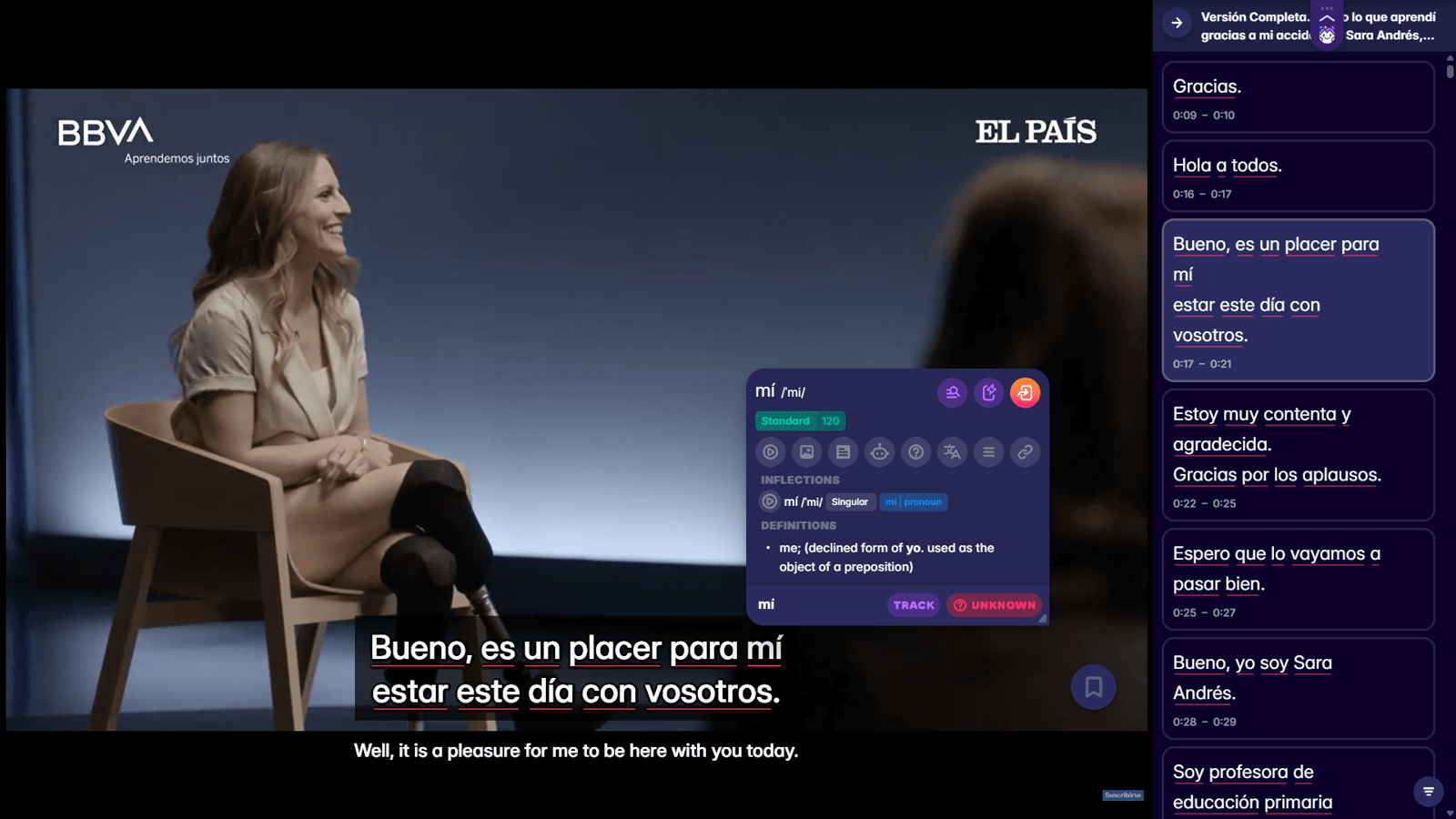
Migaku's browser extension makes this pretty seamless since you can click words instantly while watching shows.
What makes morning mining special is that you can immediately review what you mined yesterday. The timeline is tight, so retention is better. If you mined sentences from a Japanese drama last night, reviewing them at 7 am the next morning means they're still somewhat fresh in your memory.
Don't overthink which sentences to mine. Just grab ones that:
- Contain words you don't know but seem useful
- Use grammar patterns you're learning
- Come from content you actually enjoyed
- Feel natural and conversational
How to make it stick when motivation disappears
Motivation can be tricky. On some busy days, you will feel less motivated to learn, and on other days, you just feel like resting. You need systems that work even when you don't feel like it.
The smallest viable routine is your safety net. On days when you really don't want to do anything, what's the absolute minimum? For me, it's five minutes of flashcard reviews. That's it. I can do five minutes even when I'm tired, sick, or unmotivated.
Having that minimum means you never fully break the chain. Even a tiny session maintains the habit and keeps the routine alive. You'd be surprised how often a "just five minutes" session turns into 20 because you got into it.
Environmental design helps too. I keep my phone on airplane mode until after language practice. My Anki app is the only thing on my home screen. My target language books sit next to my coffee maker. Everything's set up to make the routine the path of least resistance.
Tracking streaks works for some people. Seeing "47 days in a row" can motivate you to keep going. But don't let a broken streak destroy your routine. If you miss a day, just start again the next morning. The habit matters more than the streak.
Adjust your routine as you progress
What works at beginner level won't work at intermediate. Your morning routine needs to evolve as your skills develop.
- Beginners should focus heavily on input and vocabulary building. Lots of flashcard reviews, simple reading, and learner-focused podcasts. You're building a foundation, so repetition and clear explanations matter most.
- Intermediate learners can shift toward more native content and less structured review. You might drop some flashcard time and add more reading or podcast listening. You understand enough now that immersion becomes more valuable than drilling basics.
- Advanced learners barely need structured review at all. Your morning routine might just be reading news in your target language with coffee, or watching YouTube videos about your hobbies. The learning happens through natural exposure rather than formal study.
I shifted my Japanese routine pretty dramatically over two years. Started with 30 minutes of Anki reviews and 10 minutes of graded readers. Now it's 10 minutes of review and 30 minutes reading whatever interests me. The time investment stayed similar but the activities changed completely.
Pay attention to what feels too easy or too hard. If flashcard reviews are boring because you know everything, reduce that time. If native podcasts are still incomprehensible, drop back to learner content. Your routine should challenge you without overwhelming you.
Speaking of consuming media, if you want to make sentence mining actually practical during your morning routine, Migaku's browser extension and app let you look up words and save sentences instantly while watching shows or reading articles. Way faster than manually copying stuff into flashcards. There's a 10-day free trial if you want to check it out.
For language learners, morning routine beats perfect study plans
Look, you can spend weeks researching the absolute optimal language learning method, or you can just start doing something every morning. I've seen people make insane progress with "suboptimal" methods just because they showed up daily. And the simple truth is, routines tend to stick better if the activities, such as media consumption, genuinely interest you.
If you consume media in your target language, and you understand at least some of the messages and sentences within that media, you will make progress. Period.
Small daily habits build fluency over time.☕