# Nice to Meet You in Italian: Formal and Informal Italian Greetings
> Piacere is the basic word for "nice to meet you" in Italian. If you're curious to learn more, this post includes other formal and informal variations.
**URL:** https://migaku.com/blog/language-fun/nice-to-meet-you-in-italian
**Last Updated:** 2026-02-25
**Tags:** vocabulary, phrases
---
Meeting someone new in Italy is exciting, but fumbling through your first greeting as an [Italian learner](https://migaku.com/learn-italian)? Not so much. The good news is that saying "nice to meet you" in Italian is actually pretty straightforward once you know the basics. The main word you'll use is "**piacere**," and it works in tons of situations. In this guide, I'll walk you through exactly how to use it, when to switch between formal and informal versions, and what to say when someone hits you with one of these phrases first.
---
## The basic translation: Piacere
> 💡 The Basic Phrase 💡
Here's the simplest answer: "**piacere**" is how you say "nice to meet you" in Italian. Just that one word covers most situations when you're meeting someone for the first time.
When someone introduces themselves, you can respond with "piacere" and you're golden. It literally translates to "pleasure," which makes sense when you think about it. You're basically saying "pleasure to meet you" but keeping it short.
The pronunciation is "pee-ah-CHEH-reh" with the emphasis on that third syllable. Native speakers will sometimes say it quickly, almost like "pyah-CHEH-reh," blending that first part together.
I've used this word hundreds of times in Italy, and honestly, it's one of those phrases that immediately makes you sound like you know what you're doing. Even if your Italian is pretty rough otherwise, nailing this greeting gives a great first impression.
---
## Formal vs informal: When it actually matters
Italian has different levels of formality baked into the language, and this shows up when you're introducing yourself. The context determines which version you should use.
### Informal version: Piacere di conoscerti
When you're meeting **someone your age, a friend of a friend, or anyone in a casual setting**, you'd say "**piacere di conoscerti**." This breaks down to "pleasure of knowing you" with the informal "you" form.
The pronunciation is "pee-ah-CHEH-reh dee koh-noh-SHER-tee." That final "conoscerti" part uses the "tu" form, which is informal Italian.
Use this version when:
- Meeting people at parties or social gatherings
- Introduced to someone roughly your age in a casual context
- Talking to kids or teenagers
- Meeting friends of friends
### Formal version: Piacere di conoscerla
In professional settings, when **meeting someone older, or if you want to show respect**, switch to "**piacere di conoscerla**." The only difference is that final word, which uses the formal "Lei" form instead.
Pronunciation: "pee-ah-CHEH-reh dee koh-noh-SHER-lah."
Use this version when:
- Meeting business contacts or colleagues
- Introduced to someone significantly older
- Professional networking events
- Meeting your partner's parents for the first time
- Any situation where you'd use "sir" or "ma'am" in English
The thing about Italy is that people generally appreciate when you err on the side of formal. If you're not sure which to use, go with conoscerla. The other person will usually tell you to switch to the informal if they want.
---
## Adding intensity: It's very nice to meet you
Sometimes you want to express that you're really happy to meet someone. Maybe you've heard a lot about them, or you're genuinely excited about the introduction.
- "**Molto lieto**" or "**molto lieta**" means "very pleased." Use "lieto" if you're male, "lieta" if you're female. This is a bit more formal and sounds quite polished.
- You can also say "**è un vero piacere**," which translates to "it's a real pleasure" or "it's a true pleasure." This phrase works great when you've been wanting to meet someone specific.
- For "it's very nice to meet you" specifically, you could say "**è molto bello conoscerti**" (informal) or "**è molto bello conoscerla**" (formal). This literally means "it's very beautiful to know you," which sounds more natural in Italian than it does in English.
---
## How to respond when someone says nice to meet you in Italian first
When someone says "piacere" to you first, you've got a few options for responding.
- The easiest response is just to say "**piacere**" right back. This works perfectly fine and is super common.
- If you want to add a little extra warmth, say "**piacere mio**," which means "my pleasure" or "the pleasure is mine." It's a nice touch that shows you've got some Italian skills beyond the basics.
- Another option is "**molto piacere**," meaning "very pleased" or "very nice to meet you." The word "molto" means "very" or "much," so you're emphasizing how pleased you are to meet them.
---
## Great to see you vs nice to meet you in Italian greetings
There's a difference between meeting someone for the first time and seeing them again. In Italian, this distinction matters.
- "Nice to meet you" is for first meetings, so you use piacere and its variations.
- "Great to see you" is for people you already know. For this, you'd say "che piacere vederti" (informal) or "che piacere vederla" (formal). This translates to "what a pleasure to see you."
Another common phrase for "so good to see you" is "bello vederti" or "bello vederla," which means "nice to see you" or "good to see you."
Don't mix these up. Using "piacere" by itself when you've already met someone before sounds a bit odd, like you're pretending you don't remember them.
---
## Italian conversations in real life
Let me show you how these phrases actually work in context.
### Casual introduction at a party:
- Marco: "Ciao, sono Marco."
- You: "Ciao Marco, io sono (your name). Piacere di conoscerti."
- Marco: "Piacere mio!"
### Formal business meeting:
- Signora Rossi: "Buongiorno, sono la Signora Rossi."
- You: "Buongiorno Signora Rossi, sono (your name). Piacere di conoscerla."
- Signora Rossi: "Piacere."
### Quick introduction through a mutual friend:
- Friend: "Questo è Paolo." (This is Paolo)
- You: "Ciao Paolo, piacere!"
- Paolo: "Piacere!"
See how simple it can be? The basic structure stays the same, you just adjust the formality level based on the situation.
---
## Other Italian words of polite greetings
While piacere is specifically for "nice to meet you," there are other polite [greetings](https://migaku.com/blog/language-fun/italian-greetings) you should know for different situations.
- "Buongiorno" (Good morning/Good day) works until roughly 2 or 3 PM. Use this in formal situations or when entering shops.
- "Buonasera" (Good evening) takes over in the afternoon and evening. It's more formal than "ciao."
- "Salve" is a neutral greeting that works anytime and sits between formal and informal. It's super useful when you're not sure which level to use.
- "Come sta?" (formal) or "Come stai?" (informal) means "How are you?" and often follows the initial greeting.
- In professional contexts, you might hear "lieto di conoscerla" (Pleased to meet you), which is quite formal and polished.
---
## Common mistakes to avoid
I've heard plenty of learners mess up these phrases, so here are the main things to watch out for.
1. Don't say "bello di conoscerti" or mix up "bello" (beautiful/nice) with "piacere" in the standard phrase. The correct phrase uses "piacere di conoscerti."
2. Don't forget the "di" in the longer versions. It's "piacere di conoscerti," not "piacere conoscerti."
3. Watch out for mixing formal and informal. Don't say "piacere di conoscerla" and then immediately switch to informal "tu" forms in the rest of your conversation. Stay consistent.
4. Pronunciation matters more than you might think. That "ch" sound in piacere is a hard "k" sound, not a "ch" like in "cheese." It's "pee-ah-CHEH-reh," not "pee-ah-CHEE-reh."
---
## Regional variations and cultural notes
Italian has regional dialects, but "piacere" is pretty universal across Italy. You'll hear it in Rome, Milan, Naples, and everywhere in between.
That said, the formality levels can vary by region. Northern Italy tends to be a bit more formal in business contexts, while southern Italy might switch to informal more quickly in social situations. When in doubt, follow the lead of the person you're talking with.
In very casual situations, especially among young people, you might just hear "ciao" without any "piacere" at all from your Italian friends. That's fine too, but knowing the proper phrases means you can adjust to any situation.
Some older Italians or people in very formal settings might use "incantato" (Enchanted) or "onorato" (Honored) in Italian language, but these are pretty rare in everyday conversation. Stick with piacere and you'll be fine 99% of the time.
---
## Tips to learn Italian formal and informal greetings
The best way to get comfortable with these phrases is to actually use them. If you're learning Italian, try to create opportunities to introduce yourself, even if it's just in a language exchange or online conversation.
1. Say the phrases out loud. Seriously, pronunciation improves way faster when you actually move your mouth and practice the sounds. "Piacere di conoscerti" should roll off your tongue naturally after a few dozen repetitions.
2. Watch Italian movies or shows and pay attention to the proper ways of greeting people in Italian culture. You'll start noticing the patterns of when they use formal versus informal, and how they respond to introductions.
3. [Flashcards](https://migaku.com/blog/language-fun/flashcard-best-practices-language-learning) can help too, especially if you want to drill the difference between formal and informal versions. Make cards with different scenarios and practice choosing the right phrase.
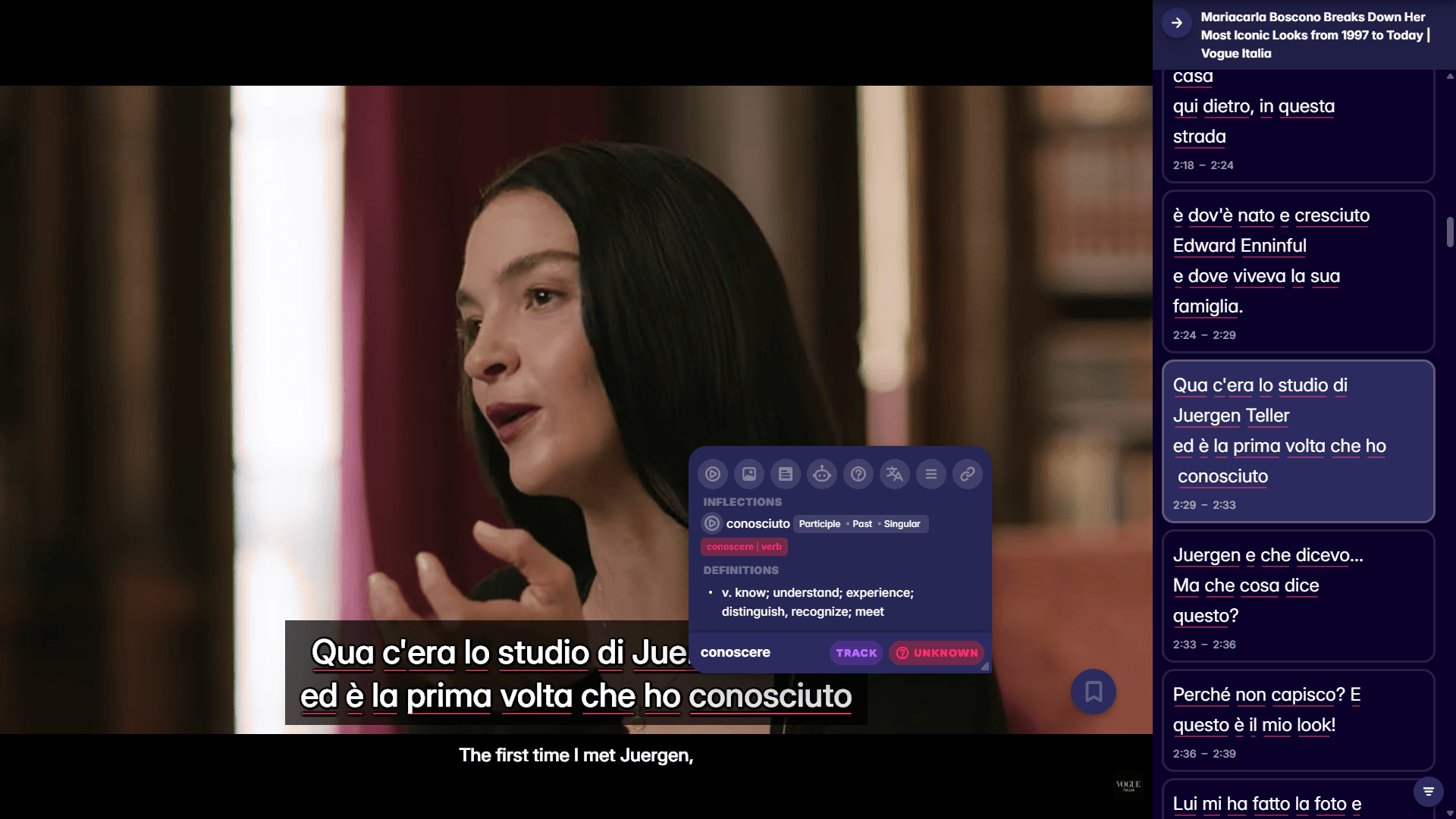
Anyway, if you want to actually practice Italian with real content from native speakers, Migaku's browser extension and app let you look up words and phrases instantly while watching Italian shows or reading articles. Makes picking up natural expressions like these way easier. There's a 10-day free trial if you want to check it out.
 ---
## Making it stick in your learning routine
If you're serious about learning Italian, immersion beats memorization every time. The more you encounter these phrases in real situations, the more automatic they become.
Learning individual phrases is useful, but they stick better when you see them in context. Reading Italian content, watching videos, or listening to podcasts will expose you to these greetings naturally.
> If you consume media in Italian, and you understand at least some of the messages and sentences within that media, you will make progress. _Period_.
First impressions last.🤝
---
## Making it stick in your learning routine
If you're serious about learning Italian, immersion beats memorization every time. The more you encounter these phrases in real situations, the more automatic they become.
Learning individual phrases is useful, but they stick better when you see them in context. Reading Italian content, watching videos, or listening to podcasts will expose you to these greetings naturally.
> If you consume media in Italian, and you understand at least some of the messages and sentences within that media, you will make progress. _Period_.
First impressions last.🤝