Niederlassungserlaubnis: Germany's Permanent Residency Paths
Last updated: May 27, 2026
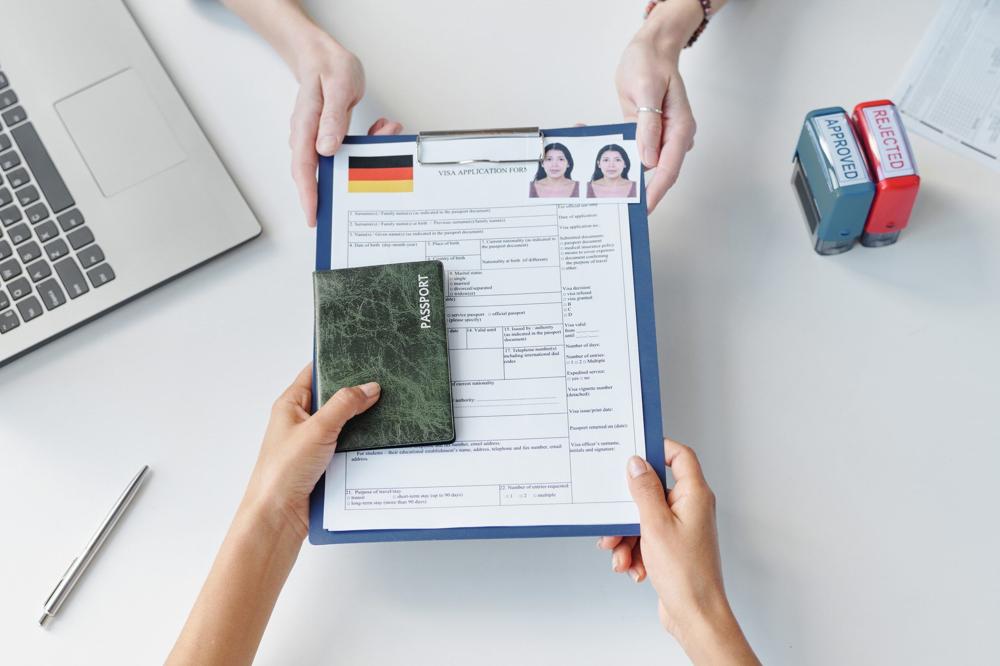
The Niederlassungserlaubnis is Germany's open-ended settlement permit, granting you the legal right to live and work in the country without renewal deadlines once you meet the criteria in § 9 of the Aufenthaltsgesetz (AufenthG). Depending on your visa category, you can qualify in as little as 21 months (EU Blue Card with B1 German) or as long as 5 years under the standard track.
Last updated: May 27, 2026
What the Niederlassungserlaubnis Actually Is
The Niederlassungserlaubnis (often shortened to NE) is one of two German permanent residence titles. The other is the Erlaubnis zum Daueraufenthalt-EU, which carries similar rights inside Germany but offers more flexibility for moving within the European Union.
Key features of the NE:
- Unlimited validity. The status itself does not expire, although the physical eAT card may need to be renewed.
- Unrestricted access to the German labor market, including self-employment.
- Entitlement-based: if you tick every statutory box, the Ausländerbehörde must issue it. There is no discretionary lottery.
- Counts as a qualifying status on the path to German citizenship.
- Since April 11, 2024, the eAT card no longer prints a passport number or expiration date, so you no longer need to transfer it when you renew your passport.
According to BAMF figures cited in 2026, more than 280,000 third-country nationals currently hold a Niederlassungserlaubnis.
The Standard 5-Year Track (§ 9 AufenthG)
This is the default route for most foreign residents who do not hold an EU Blue Card or a skilled-worker permit under § 18a/18b. To qualify under § 9 Abs. 2 AufenthG, you generally need to meet all of the following:
- Five years of residence on a valid Aufenthaltserlaubnis (60 months). Student or vocational training time counts at only 50%, so two years on a Studium visa equals one qualifying year.
- 60 months of pension contributions to the gesetzliche Rentenversicherung, either mandatory (through employment) or voluntary.
- Secured livelihood for yourself and any dependents, without reliance on social assistance.
- B1 German language proficiency, evidenced by a recognized certificate (telc, Goethe, ÖSD, TestDaF, or an Integrationskurs final exam).
- Basic knowledge of the German legal and social order, normally proven by passing the Einbürgerungstest or the Leben in Deutschland test (around €25 to sit), or by successfully completing an Integrationskurs.
- Adequate housing for you and your family.
- No serious criminal record.
- Health and pension insurance in place.
Miss one element, even by a small margin, and the case officer will reject the application. The most common stumbling block is the pension column: freelancers and self-employed applicants often discover they have not been paying into the Rentenversicherung at all.
Faster Tracks for Skilled Workers and Blue Card Holders
Germany's 2023-2024 immigration reforms kept the accelerated NE timelines in place, and they remain the fastest legal route to permanent residency in 2026.
EU Blue Card holders (§ 18c Abs. 2 AufenthG)
- 21 months of residence with B1 German, or
- 27 months of residence with A1 German
- Pension contributions for the corresponding period
- Secured livelihood and a job matching the Blue Card profile
The 2026 Blue Card salary thresholds (effective January 1, 2026) are:
Category | 2026 gross minimum | 2025 figure |
|---|---|---|
Standard occupations | €50,700/year | €48,300/year |
Shortage occupations, new graduates, qualifying IT specialists | €45,934.20/year | €43,760/year |
Skilled workers (§ 18c Abs. 1 AufenthG)
If you hold a residence permit as a Fachkraft under § 18a (vocational training) or § 18b (academic):
- 3 years of residence with 36 months of pension contributions, or
- 2 years if you completed your vocational training or university degree in Germany (24 months of contributions)
In both cases, B1 German and a secured livelihood are required.
Highly qualified persons (§ 18c Abs. 3 AufenthG)
Researchers, top-tier academics, and a small group of highly specialized professionals may receive the Niederlassungserlaubnis without a prior residence period, provided their livelihood is secured. The fee is higher (€147) and the bar set by the Ausländerbehörde is correspondingly high.
Self-employed (§ 21 Abs. 4 AufenthG)
After 3 years on a self-employment residence permit, you can apply if your business is operating successfully and your livelihood (including that of dependents) is secured.
Spouses of German citizens (§ 28 Abs. 2 AufenthG)
Foreign spouses qualify after 3 years of residence, provided the marriage still exists, German is at A1 level or above, and basic integration is demonstrated.
Refugees and asylees
- 5 years total (including asylum procedure time) with A2 German, or
- 3 years with C1 German and a largely secured livelihood
Document Checklist
The Ausländerbehörde in your city sets the exact list, but the following appears on nearly every checklist:
- Valid passport and current eAT card
- Completed application form (Antrag auf Erteilung einer Niederlassungserlaubnis)
- Biometric passport photo (35 x 45 mm)
- Proof of registered address (Meldebescheinigung)
- Employment contract and recent payslips (typically the last 6 months), or proof of self-employment income (tax assessments, profit-and-loss statements)
- Pension contribution statement (Rentenversicherungsverlauf) from the Deutsche Rentenversicherung showing at least the required months
- Health insurance confirmation
- Rental contract and proof of adequate living space
- Language certificate (B1, or A1/A2/C1 depending on track)
- Einbürgerungstest or Leben in Deutschland certificate, or Integrationskurs completion certificate
- Tax certificates from the Finanzamt
- Where relevant: marriage certificate, children's birth certificates, custody arrangements
Berlin's Landesamt für Einwanderung (LEA), since December 2024, requires the language certificate and integration test certificate to be uploaded explicitly through the online application portal. Other Bundesländer are gradually moving toward similar digital pre-screening.
Fees and Processing Time
Fees are set nationally by § 44 of the Aufenthaltsverordnung (AufenthV), last amended in May 2026:
Permit type | Fee (2026) |
|---|---|
Standard Niederlassungserlaubnis | €113 |
NE for highly qualified persons (§ 18c Abs. 3) | €147 |
NE for self-employed (§ 21 Abs. 4) | €124 |
Erlaubnis zum Daueraufenthalt-EU | €109 |
NE for minor children (§ 35) | €55 |
Replacement eAT card (status unchanged) | €67 |
Add roughly €25 for the Leben in Deutschland test, and €100-€300 for the B1 language exam depending on the provider.
Processing time: once your complete application is submitted, the Ausländerbehörde typically issues a decision within 2 months. The bottleneck is usually getting the appointment in the first place. In Berlin, Munich, Hamburg, and Frankfurt, appointment waits have reached up to 6 months. Apply for the appointment well before your current Aufenthaltserlaubnis expires.
Common Pitfalls
A surprising number of NE applications fail not on the headline criteria but on technicalities:
- Pension shortfall. Freelancers and Künstlersozialkasse members sometimes do not realize they need 60 months (or fewer, depending on track) of paid-in contributions. Voluntary contributions can fill gaps, but they must be paid before you apply.
- Wrong language certificate. Only certificates from recognized providers count. A B1 certificate from a non-accredited school will be rejected.
- Counting student years wrong. Three years on a Studium visa plus two on a work permit equals 3.5 qualifying years, not 5.
- Letting the permit lapse through long absence. A Niederlassungserlaubnis lapses if you leave Germany for more than 6 months without prior approval. Frequent travelers should request a longer-absence confirmation (Wiedereinreisebescheinigung) in advance. After 15 years of lawful residence with secured livelihood, this lapse rule no longer applies.
- Tax debts. Outstanding Finanzamt liabilities can derail an application even if everything else is in order.
- Insufficient living space. German guidelines generally expect about 12 square meters per person over six years of age. A studio apartment shared with a partner and child may fail this test.
- Switching jobs at the wrong moment. If you are on a Blue Card or skilled-worker permit, ending employment shortly before the NE appointment can complicate the livelihood assessment.
For financial planning during your qualifying years, see our guides to German Tax Classes for Foreigners and the Best Banks in Germany for Foreigners. Students researching qualifying residence should also look at DAAD Scholarships in Germany.
Niederlassungserlaubnis vs. Daueraufenthalt-EU
Both permits are permanent. The differences matter only if you plan to move around Europe or spend long periods outside Germany.
Feature | Niederlassungserlaubnis | Daueraufenthalt-EU |
|---|---|---|
Validity | Unlimited | Unlimited |
Fee (2026) | €113 | €109 |
Lapses after 6 months abroad | Yes (with exceptions) | More flexible rules for absences |
Mobility within EU | Limited | Easier transfer to another EU member state |
German language requirement | B1 (standard track) | B1 |
If you intend to relocate within the EU, the Daueraufenthalt-EU is usually the better choice. If you plan to stay in Germany, the Niederlassungserlaubnis is the standard option.
FAQs
Can I apply before my five years are up?
Yes, in two situations: (1) you are on a faster track (Blue Card, skilled worker, self-employed, spouse of a German), or (2) you want to apply in the weeks immediately before reaching the milestone. The decision will only be issued once you have met every condition.
Does my time on a Chancenkarte (Opportunity Card) count?
The Chancenkarte is a job-seeker permit and does not directly lead to permanent residence on its own. Time on it counts toward the standard 5-year track only after you transition to a qualifying work permit. Verify the current rules with BAMF, as the Chancenkarte points system has been adjusted since its 2024 launch.
Will I lose my NE if I become unemployed?
No. Once granted, the permit does not depend on continued employment. Social assistance use can complicate later citizenship applications but does not revoke the NE itself.
Do I need to give up my original citizenship?
The Niederlassungserlaubnis does not affect your nationality. That question only arises if you later apply for German citizenship under the Staatsangehörigkeitsgesetz (StAG); current rules generally permit dual citizenship, but confirm with BAMF for your case.
What about my children?
Minor children of NE holders can usually receive a Niederlassungserlaubnis under § 35 AufenthG after five years of residence with their parents, often at the reduced fee of €55. Children born in Germany to NE-holding parents may have direct paths under § 33.
Do I need to renew anything?
The legal status does not expire. The physical eAT card may need to be replaced (€67) if it is lost, damaged, or if your appearance changes substantially.
What if my B1 certificate is more than two years old?
Most Ausländerbehörden accept older certificates, but a few city offices have started asking for certificates issued within the last five years. Check locally before booking the exam.
Starting the Application
A realistic timeline for someone on the standard track:
- 12 months before eligibility: request your Rentenversicherungsverlauf and confirm contribution months. Book the B1 exam if you do not have a certificate.
- 9 months before: sit the Leben in Deutschland or Einbürgerungstest. Pass scores are usually available within 4-6 weeks.
- 6 months before: request the appointment from your Ausländerbehörde or submit through the online portal where available (Berlin, Hamburg, parts of NRW).
- At eligibility: attend the appointment with your full document set and pay the fee. Receive the Fiktionsbescheinigung if processing extends beyond your current permit's expiry.
- Within roughly 2 months: collect the eAT card.
If you are settling in Germany for the long term, reaching B1 German is the single most useful investment you can make, both for the Niederlassungserlaubnis itself and for daily life. Migaku helps you build that level using real German content, from news clips to Tatort episodes: learn German with Migaku.