JavaScript is required

How to Say Please in French: Complete Politeness Guide

Last updated: April 4, 2026

How to say please and make polite requests in French - Banner

Learning how to say please in French is one of those essential skills that'll make your conversations sound natural and polite. The most common way is "s'il vous plaît" (formal) or "s'il te plaît" (informal), but there's way more to making polite requests than just memorizing one phrase. French politeness has its own rhythm and cultural expectations, and once you understand the patterns, you'll sound less like a textbook and more like an actual French speaker.

The basic ways to say please in French

Let's start with the fundamentals. The standard translation for please in French is "s'il vous plaît" when you're being formal or talking to someone you don't know well. This literally translates to "if it pleases you," which already tells you something about how French approaches politeness. It's treating requests as conditional on the other person's willingness, not just demands with a polite word tacked on.

When you're talking to friends, family, or anyone you'd normally use "tu" with, you switch to "s'il te plaît." Same meaning, just the informal version. The pronunciation is pretty similar, but "te" is obviously shorter than "vous."

Here's the thing though. French speakers don't just throw "s'il vous plaît" at the end of every sentence like English speakers do with please. The placement matters, and sometimes you don't even need it if your sentence structure is already polite enough.

When to use vous plaît versus te plaît

The vous versus tu distinction runs through all of French, and please is no exception. If you're ordering at a restaurant, talking to a store clerk, addressing someone older, or speaking to anyone in a professional context, you stick with "s'il vous plaît." Even if you're talking to multiple friends at once, you'd technically use vous plaît because vous is also the plural form.

For te plaît, think of situations where you'd be completely casual in English. Asking your roommate to pass the salt, requesting your friend to send you that photo, telling your younger sibling to get down from somewhere they shouldn't be climbing. That's te plaît territory.

I've seen learners get stuck overthinking this, but honestly, if you default to vous plaît when uncertain, nobody's going to be offended. Using tu forms with someone you should be formal with is the actual mistake to avoid.

Making polite requests beyond the basics

Saying please is just one piece of sounding polite in French. The language has several other expressions that soften requests and make you sound more natural in conversation.

"Je vous prie" or "je te prie" is a more formal, slightly old-fashioned way of saying please. It literally means "I pray you" or "I beg you," which sounds dramatic in English but comes across as refined in French. You'll see this in written correspondence more than casual speech, but it's good to recognize.

Another common pattern is using the conditional tense to make requests. Instead of "Je veux un café" (I want a coffee), you'd say "Je voudrais un café" (I would like a coffee). The conditional automatically adds politeness without needing to say please at all. Pretty cool how the grammar itself handles politeness, right?

Location and context matter

Where you place "s'il vous plaît" in a sentence changes the emphasis. At the end of a request, it's standard and neutral: "Un café, s'il vous plaît." At the beginning, it adds urgency or emphasis: "S'il vous plaît, écoutez-moi" (Please, listen to me). In the middle of a sentence, it can soften a command: "Pouvez-vous, s'il vous plaît, fermer la porte?"

In restaurants, you'll hear specific uses. "L'addition, s'il vous plaît" means "check, please" or "the bill, please." This is the standard way to ask for your bill, and leaving out the please would sound pretty rude. Some people just catch the server's eye and say "s'il vous plaît" on its own, and the server knows exactly what they want.

If you need to ask about a location in French, you'd typically structure it like "Où se trouve la gare, s'il vous plaît?" (Where is the train station, please?). The please at the end softens what could otherwise sound like a demand for information.

Informal ways to be polite

French has some casual expressions that serve similar functions to please without being quite so formal. "S'il te plaît" is already informal, but you can get even more casual with friends.

"Steuplé" or "steup" is what happens when French speakers say "s'il te plaît" really fast. It's super informal, almost like saying "please" in a whiny or joking tone in English. You'd use this with close friends or siblings, definitely not with your boss or a stranger.

In text messages and online, you might see "stp" as an abbreviation for "s'il te plaît" or "svp" for "s'il vous plaît." These are everywhere in French texting, similar to how English speakers write "pls" or "plz."

Polite questions versus commands

French distinguishes between asking someone to do something and telling them to do it. Even with please, an imperative (command form) sounds more direct than a question.

Compare these:

  • "Fermez la porte, s'il vous plaît" (Close the door, please) - direct command
  • "Pouvez-vous fermer la porte, s'il vous plaît?" (Can you close the door, please?) - polite question
  • "Pourriez-vous fermer la porte, s'il vous plaît?" (Could you close the door, please?) - even more polite

The last version uses the conditional "pourriez" instead of the present "pouvez," which adds an extra layer of politeness. This is the kind of nuance that makes you sound fluent rather than just correct.

Cultural expectations around politeness

Here's something that trips up a lot of English speakers: French politeness culture expects you to say hello before making any request. Walking into a store and immediately asking "Où sont les chaussures?" (Where are the shoes?) without first saying "Bonjour" is considered pretty rude, even if you add "s'il vous plaît."

The standard pattern is: greeting first, then request. "Bonjour, je cherche des chaussures, s'il vous plaît" flows naturally. This applies to basically every interaction with service workers, store employees, or anyone you're approaching with a question or request.

Saying "merci" (thank you) is also expected after someone helps you, and the response you'll typically hear is "je vous en prie" (you're welcome, formal) or "je t'en prie" (you're welcome, informal). This literally translates to something like "I pray you of it," which again sounds weird in English but is completely standard in French.

Regional variations you might encounter

In Quebec and other French-speaking regions of Canada, you'll hear some variations. "S'il vous plaît" and "s'il te plaît" are still standard, but the overall politeness patterns can differ slightly from European French.

Quebec French tends to use "bienvenue" as a response to thank you, where European French uses "je vous en prie" or "de rien." The actual please forms stay the same though, so you don't need to worry about completely different words.

In very formal or literary French, you might encounter "je vous prie de" followed by an infinitive verb. "Je vous prie de m'excuser" means "Please excuse me" in a very formal register. You'd see this in official letters or very polite formal situations, but it's overkill for everyday conversation.

Phrases that include please for specific situations

Some common French phrases have please built into them for specific contexts. Learning these as complete chunks makes you sound more natural than trying to construct them from scratch.

"Faites comme chez vous, je vous en prie" means "Make yourself at home, please." The "je vous en prie" here emphasizes the invitation.

"Asseyez-vous, s'il vous plaît" (Sit down, please) or "Assieds-toi, s'il te plaît" (informal) are standard ways to offer someone a seat.

If someone's in your way and you need them to move, "Pardon, s'il vous plaît" works as "Excuse me, please." You could also say "Excusez-moi, s'il vous plaît" for the same purpose.

When you want someone to get down from somewhere, like a child climbing on furniture, you'd say "Descends, s'il te plaît" (Get down, please, informal). The imperative "descends" plus the please makes it a firm but polite instruction.

Questions people actually ask about French please

A common question is why the French language structures please this way. The "s'il vous plaît" construction reflects a more indirect approach to requests compared to English. You're literally saying "if it pleases you," which frames your request as conditional on the other person's willingness. This matches the overall French communication style, which tends to value indirectness in polite contexts.

Another question that comes up is whether you always need to say please in French. The answer is no, but you need to replace it with something else that signals politeness. Using the conditional tense, adding "excusez-moi" before a question, or structuring your sentence as a polite question rather than a command all work. Just dropping politeness markers entirely makes you sound rude or overly blunt.

People also wonder about the difference between "s'il vous plait" and "s'il vous plaît" (with the accent). The correct spelling includes the circumflex accent on the î in plaît. You'll see it written without the accent sometimes in informal contexts or older texts, but the standard modern spelling uses the accent.

How to practice using please naturally

Reading how to use please is one thing, but actually using it naturally in conversation takes practice. The best approach is consuming real French content where you can see these politeness patterns in context.

Watch French shows or movies and pay attention to how characters make requests. You'll notice that formal situations have way more "s'il vous plaît" than casual conversations between friends. Restaurant scenes are particularly good for this because they're full of polite requests and standard phrases.

Try shadowing exercises where you repeat after native speakers, matching their intonation. The way French speakers say "s'il vous plaît" varies depending on the context. Sometimes it's quick and almost throwaway, other times it's emphasized for effect. Getting that natural rhythm matters as much as knowing the words.

When you're practicing speaking, force yourself to make complete polite requests rather than just vocabulary words. Don't just say "café," say "Un café, s'il vous plaît." The muscle memory of the complete phrase helps it come out naturally when you need it.

Common mistakes to avoid

One mistake learners make is overusing please to the point where it sounds unnatural. In English, you might say please multiple times in a single interaction, but French tends to be more economical with "s'il vous plaît." One well-placed please in a polite sentence structure is usually enough.

Another issue is mixing formal and informal. Don't say "s'il vous plaît" to your friend and then switch to "tu" forms for everything else. Keep your politeness level consistent throughout the conversation.

Some learners forget that questions are inherently more polite than commands in French. If you're constantly using imperatives (command forms) even with please, you'll sound more demanding than someone who structures their requests as questions.

Building on basic politeness

Once you've got the basic please forms down, you can start exploring the broader world of French politeness expressions. "Avec plaisir" (with pleasure) is a nice way to agree to do something someone's asked. "Volontiers" (gladly) works similarly.

"Permettez-moi" (allow me) or "permets-moi" (informal) is a polite way to interrupt or interject. It's more formal than just saying "excuse me" but serves a similar function.

Understanding the full range of politeness tools in French makes your language use more sophisticated. You're not just translating English patterns directly, you're actually thinking in French politeness norms.

The conditional tense becomes your friend here. "J'aimerais" (I would like), "je voudrais" (I would want), "pourriez-vous" (could you) all add layers of politeness without needing to stack multiple "s'il vous plaît" phrases.

Why French politeness matters for language learning

Politeness isn't just about being nice. In French, it's actually a core part of successful communication. Using the wrong register or skipping politeness markers can create misunderstandings or make people less willing to help you.

When you're traveling in French-speaking areas, proper use of please and other politeness expressions opens doors. Store clerks, restaurant servers, and random people you ask for directions respond way better when you follow the cultural script of greeting plus polite request.

For language learners specifically, sounding polite often makes native speakers more patient with your mistakes. They recognize you're making an effort to communicate properly, not just demanding things in broken French.

The formal versus informal distinction also teaches you about French social dynamics. Who you use "vous" versus "tu" with, when to be more or less formal, these are insights into how French society structures relationships and interactions.

Your French politeness toolkit

At this point, you've got the core tools for polite French. "S'il vous plaît" and "s'il te plaît" cover most situations, but you also know about conditional verb forms, polite question structures, and cultural expectations like greeting before requesting.

The real skill is deploying these tools naturally based on context. A casual request to a friend needs different language than asking a favor from your boss. A restaurant interaction follows different patterns than shopping in a store.

Keep consuming French media and you'll internalize these patterns. Pay attention to how real French speakers navigate politeness in different situations. The more examples you encounter, the more automatic your own polite French becomes.

If you consume media in French, and you understand at least some of the messages and sentences within that media, you will make progress. Period.

Learn it once. Understand it. Own it.

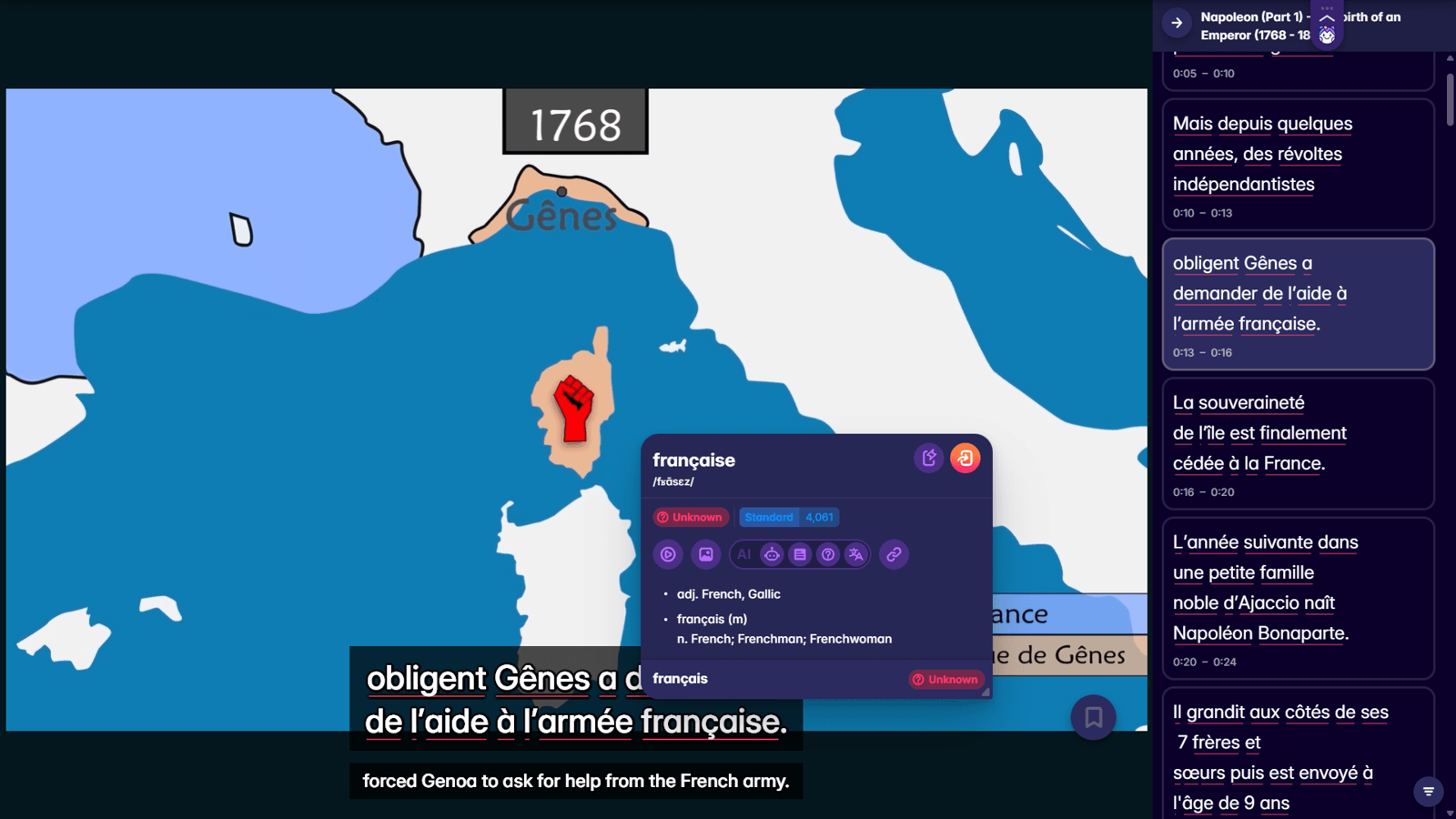
If you want to pick up these natural patterns faster, Migaku's browser extension lets you look up words and save full sentences while watching French shows or reading French content. Makes it way easier to collect real examples of polite requests and practice them in context. There's a 10-day free trial if you want to check it out.
Learn French with Migaku