Portuguese Internet Slang: Guide to Brazilian Internet Slang in 2026
Last updated: March 21, 2026

If you've spent any time chatting with Brazilians online or scrolling through Portuguese social media, you've probably noticed that the language looks completely different from what you learned in textbooks. Understanding these expressions is pretty much essential if you want to sound natural in online conversations, whether you're texting friends, commenting on Instagram, or trying to understand what people are saying on TikTok. Let's break down the most popular slang terms you should know when learning Portuguese in 2026.
- Abbreviations used in texting
- The famous "kkkkkk" and other Brazilian Portuguese reactions
- Gen Z slang terms taking over in 2026
- Casual Brazilian internet slang for social media
- Slang words and phrases you need to know for online gaming
- Brazilian vs European Portuguese language differences online
- How to use Portuguese slang naturally without sounding fake
Abbreviations used in texting
Let's start with the basics. These abbreviations show up constantly in messages and comments.
- "Vc" means "você" (you). Pretty straightforward, saves two whole letters. You'll see this everywhere.
- "Tbm" or "tb" means "também" (also/too). If someone asks "você gosta de pizza?" and you want to say "me too," just reply "eu tbm."
- "Pq" means "porque" (because) or "por que" (why), depending on context. Brazilians don't bother distinguishing between the different forms of "porque" in casual texting.
- "Blz" comes from "beleza," which literally means beauty but functions as "cool" or "okay." Someone suggests meeting at 3pm? Just reply "blz" and you're good.
- "Flw" is short for "falou," meaning "said" but used like "later" or "bye." It's super casual, and you'll see it at the end of conversations all the time.
- "Tmj" stands for "tamo junto," meaning "we're together" or showing solidarity. If your friend is going through something tough, hit them with a "tmj" to show support.
- "Sdd" or "sdds" means "saudade" or "saudades," that famously untranslatable Portuguese word for missing someone or something. People spam this in comments when they haven't seen someone in a while.
The famous "kkkkkk" and other Brazilian Portuguese reactions
What does it mean when Brazilians text kkkkk? It's laughter. The letter K in Portuguese sounds like "ka," so repeating it mimics laughing sounds. The more Ks, the funnier something is. You might see "kkkkkk" or even "kkkkkkkkkkk" depending on how hard someone's laughing.
This is completely different from European Portuguese, where people often use "rsrs" (from "risos," meaning laughs) or just "haha" like in English.
Other reaction expressions you'll see:
- "Kkkkk chorando" means "laughing crying," similar to the 😂 emoji energy.
- "Mds" stands for "meu Deus" (my God), used when something is shocking or unbelievable.
- "Aff" expresses annoyance or frustration, like "ugh" in English.
Gen Z slang terms taking over in 2026
Brazilian Gen Z has created a whole vocabulary that older Portuguese speakers sometimes struggle to understand. These terms spread through TikTok, Instagram, and Twitter (or X, whatever we're calling it now).
- "Lacrou" comes from "lacrar," meaning to seal or close, but in slang it means someone absolutely killed it or won an argument. If someone posts a perfect comeback, the comments fill up with "lacrou." It's similar to "you ate that" in English slang.
- "Surtou" means someone freaked out or lost it, from the verb "surtar." "Ela surtou quando viu o crush" means she freaked out when she saw her crush.
- "Mano" technically means brother, but everyone uses it like "dude" or "bro." You'll hear this constantly: "mano, que isso?" (Dude, what's that?).
- "Mó" is a contraction of "maior" or "muito" and works as an intensifier. "Mó legal" means "really cool." This is super common in São Paulo especially.
- "Crush" is borrowed straight from English and means the person you're into. "Meu crush me respondeu" means my crush responded to me. Portuguese has native words for this, but everyone just says crush now.
- "Cringe" also comes from English and means the same thing, something embarrassing or awkward. Young Brazilians use it exactly like English speakers: "isso é muito cringe."
- "Shippar" comes from English "ship" (as in relationship), meaning to support or want two people to get together. "Eu shippo eles" means I ship them.
- "Cancelado" means canceled, like cancel culture. "Ele foi cancelado" means he got canceled on social media.
Casual Brazilian internet slang for social media
These slang words and phrases dominate comments sections and captions.
- "Arrasou" means you slayed or killed it. Someone posts a great photo? Comment "arrasou" and you're being supportive.
- "Gato" or "gata" literally means cat, but is slang for hot or attractive. "Que gata" means "she's hot."
- "Top" means great or awesome, borrowed from English. "Esse filme é top" means this movie is awesome.
- "Massa" literally means dough or mass, but as slang it means cool or nice. More common in northeastern Brazil.
- "Dahora" or "da hora" means cool or awesome. The spelling varies, but the meaning stays the same.
- "Maneiro" is another word for cool, more old-school, but still used.
- "Né" is short for "não é?" (isn't it?) and gets added to the end of sentences for confirmation. "Tá frio, né?" means "It's cold, right?"
- "Bem" means well or very, and you'll see it as an intensifier. "Bem legal" means very cool. It's basic but essential.
Slang words and phrases you need to know for online gaming
Brazilian gamers have their own vocabulary that mixes Portuguese and English.
- "Noob" is used exactly like in English, meaning a beginner or someone who's bad at the game.
- "Rushar" comes from English "rush," meaning to attack quickly or push aggressively.
- "Farmar" from "farm," means to grind or collect resources repeatedly.
- "GG" (good game) gets used the same way as in English gaming communities worldwide.
- "Feeder" refers to someone who keeps dying and feeding the enemy team, same as English.
- "Tiltado" comes from "tilted" in English, meaning frustrated or playing badly because you're upset.
The gaming community shows how much English has infiltrated Portuguese internet slang. Gamers switch between languages constantly, and many gaming terms simply don't get translated.
Brazilian vs European Portuguese language differences online
The internet slang gap between Brazil and Portugal is huge. European Portuguese has its own expressions that sound completely foreign to Brazilians.
- Portuguese people say "pá" constantly, which is a filler word like "man" or "dude." You won't hear this from Brazilians.
- In Portugal, "fixe" means cool, while Brazilians have never used this word in their lives. They'd say "legal" or "massa" instead.
- "Bué" is European Portuguese slang for "a lot" or "very." "Bué fixe" means very cool. Again, this sounds weird to Brazilian ears.
How to use Portuguese slang naturally without sounding fake
The biggest mistake learners make is forcing slang into every sentence. Native speakers don't actually talk like a slang dictionary.
- Mix formal and informal language naturally. Real conversations blend standard Portuguese with occasional slang, not pure slang from start to finish.
- Pay attention to who uses what. If you're a 30-year-old trying to sound like a 16-year-old Brazilian TikToker, it's going to come across as weird. Use slang that fits your age and context.
- Start with the safe, universal terms. "Kkkkk," basic abbreviations, and common expressions like "legal" work for everyone. Save the heavy Gen Z stuff until you really understand the nuances.
- Listen more than you speak (or read more than you write). Absorb how native speakers actually use these terms before you start throwing them around.
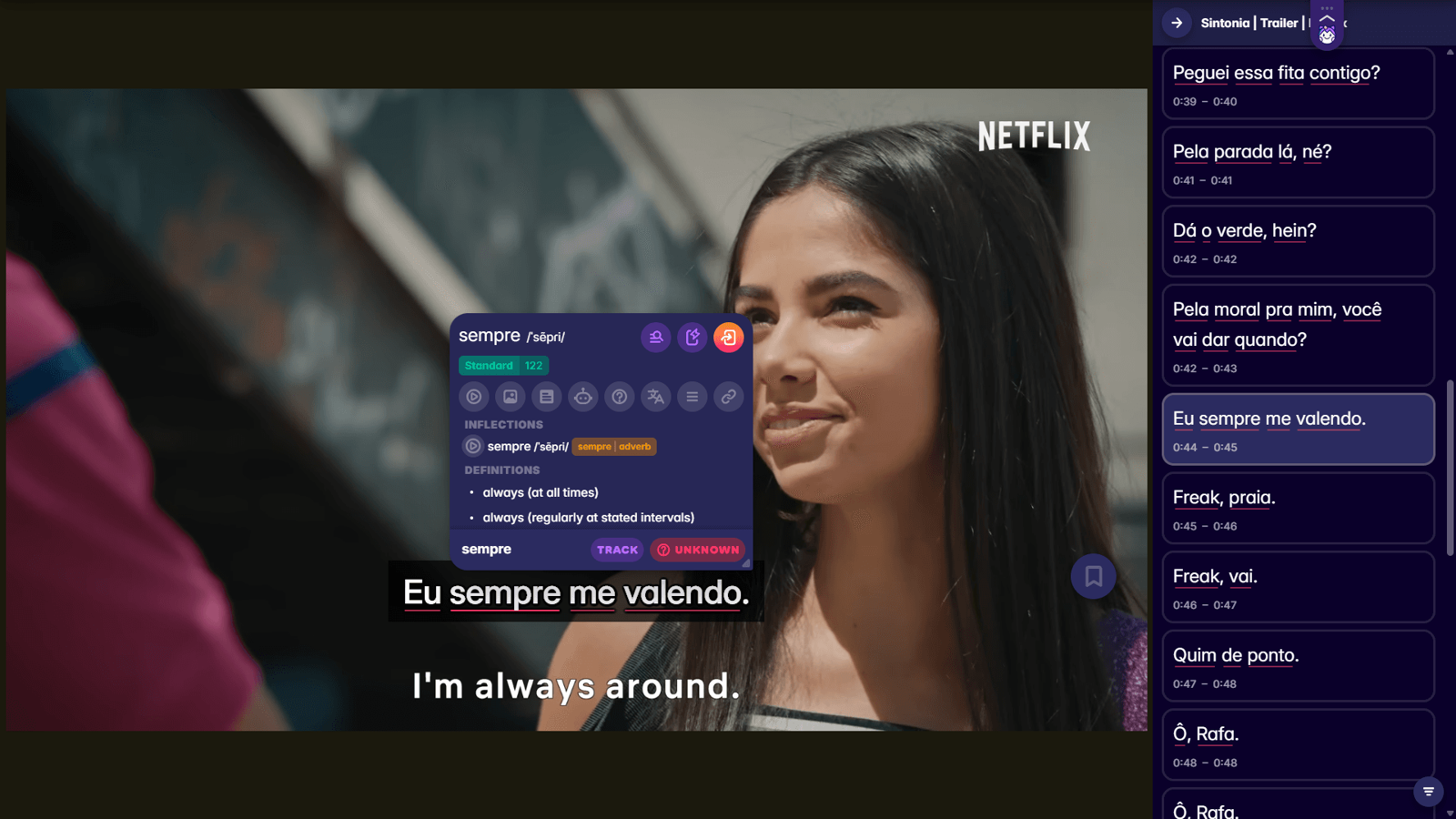
Anyway, if you want to learn Portuguese through native content, Migaku's browser extension and app let you look up slang and vocabulary instantly while watching videos or reading social media. Makes the whole immersion process way more practical. There's a 10-day free trial if you want to check it out.
Internet slang evolves way faster than traditional vocabulary
The gap between formal Portuguese and what people actually use online is massive. When you learn Portuguese through traditional methods, you're getting the polished, proper version. The best way to actually internalize Portuguese internet slang terms is through real content. If you're watching Brazilian YouTube videos, reading tweets, or following Portuguese Instagram accounts, you're building an intuitive sense of how slang works.
If you consume media in Portuguese, and you understand at least some of the messages and sentences within that media, you will make progress. Period.
What you've learned from context is way more valuable than what you've memorized from lists.