# Portuguese Phone Conversation Phrases: Talk on the Phone
> Learn essential portuguese phone conversation phrases for greetings, asking for someone, leaving messages, and ending calls in Brazilian and European Portuguese.
**URL:** https://migaku.com/blog/language-fun/portuguese-phone-conversation-phrases
**Last Updated:** 2026-03-26
**Tags:** vocabulary, phrases
---
Phone calls in Portuguese can feel way more intimidating than face-to-face conversations. You can't rely on hand gestures, facial expressions, or context clues from your surroundings. Just you, a phone, and someone [speaking rapid-fire Portuguese](https://migaku.com/learn-portuguese) on the other end. But here's the good news: phone conversations follow pretty predictable patterns, and once you memorize a handful of key phrases, you'll handle most calls without breaking a sweat. This guide covers the essential Portuguese phone conversation phrases you need for both [Brazilian Portuguese and European Portuguese](https://migaku.com/blog/language-fun/brazilian-vs-european-portuguese) contexts.
----
## What Portuguese people say when they answer the phone
The greeting you'll hear depends entirely on whether you're calling someone in Brazil or Portugal. These differences matter because using the wrong greeting can immediately signal you're unfamiliar with local customs.
- In Brazil, most people answer with **"Alô?" ** (pronounced ah-LOH). It's casual, universal, and works in pretty much every situation. You might also hear **"Oi" ** (hi) in informal contexts when someone recognizes the caller ID.
- In Portugal, the standard greeting is **"Estou?" ** (literally "I am?") or sometimes "Sim?" (yes?). Some Portuguese speakers also use "Estou, sim?" combining both. The pronunciation of "Estou" sounds like "shtoh" with that characteristic Portuguese sh-sound.
For business calls in both countries, you'll often hear the person state their name or company: "Bom dia, Empresa Silva" (Good morning, Silva Company) or simply their name followed by a greeting.
----
## Starting the conversation: Greetings and introductions
Once someone picks up, you need to identify yourself and state your purpose. Here are the essential phrases:
**"Olá, aqui é (your name)" ** (Hello, this is (your name)) works in both Brazilian Portuguese and European Portuguese. The word "olá" serves as a versatile greeting for phone calls, though it sounds slightly more formal than "alô."
**"Bom dia" (good morning), ** **"Boa tarde" (good afternoon), ** and **"Boa noite" (good evening) ** all work perfectly to start phone conversations. Time-specific greetings show cultural awareness and politeness.
To state why you're calling, use **"Estou ligando para..." ** (I'm calling to...). This phrase sets up your purpose clearly: "Estou ligando para marcar uma consulta" (I'm calling to schedule an appointment).
If you're returning a call, say **"Estou retornando a sua ligação" ** (I'm returning your call) or in European Portuguese, **"Estou a retornar a sua chamada." **
----
## Asking to speak with someone
You won't always reach the person you need directly. These phrases help you navigate through receptionists and assistants:
- **"Gostaria de falar com (name), por favor" ** (I would like to speak with (name), please) is the most polite version. The phrase "por favor" (please) makes any request more courteous and should become automatic in your phone conversations.
- **"(name) está?" ** (Is (name) there?) works for informal situations. It's direct and casual, perfect for calling friends or family.
- **"Posso falar com (name)?" ** (Can I speak with (name)?) sits somewhere between formal and casual. Good for most everyday situations.
When someone asks who's calling, you'll hear **"Quem gostaria?" ** (Who would like (to speak)?) or **"De onde fala?" ** (literally "From where do you speak?" meaning "Who's calling?"). Respond with **"Aqui é (name)" ** or **"É o/a (name)" ** (It's (name)).
----
## Handling hold and wait situations
Phone calls rarely go smoothly. Someone needs to check availability, transfer you, or grab information. Here's what you'll hear and say:
- **"Um momento, por favor" ** (One moment, please) is what you'll hear when someone needs you to wait. The person might also say **"Aguarde um momento" ** (Hold on a moment).
- If you need someone to wait, use these same phrases. **"Pode aguardar?" ** (Can you hold?) asks permission politely.
- **"Não desligue, por favor" ** (Don't hang up, please) tells you to stay on the line. In Portugal, you might hear "Não desligue" with slightly different pronunciation.
- When the person you want isn't available, you'll hear **"Ele/Ela não está no momento" ** (He/She isn't here at the moment) or **"Ele/Ela está ocupado/ocupada" ** (He/She is busy).
----
## Leaving messages and taking information
Sometimes you'll need to leave a message or take down information during the phone call in Portuguese. These phrases handle those situations:
- **"Posso deixar um recado?" ** (Can I leave a message?) or **"Gostaria de deixar um recado" ** (I would like to leave a message) both work well.
- If you're taking a message for someone else, ask **"Gostaria de deixar um recado?" ** (Would you like to leave a message?) or **"Posso anotar um recado?" ** (Can I write down a message?).
- **"Pode repetir, por favor?" ** (Can you repeat, please?) saves you when you miss something. Don't pretend you understood when you didn't. This phrase is absolutely essential for learners.
- **"Mais devagar, por favor" ** (Slower, please) helps when someone's speaking too fast. Native speakers talk quickly on the phone, and there's no shame in asking them to slow down.
- **"Como se escreve?" ** (How do you spell that?) helps you get names and addresses correctly. Follow up with **"Pode soletrar?" ** (Can you spell it?).
----
## Managing the conversation flow
Once you're connected to the right person, you need phrases for making a phone call go well:
- **"Você pode me ouvir?" ** (Can you hear me?) in Brazilian Portuguese or **"Consegue ouvir-me?" ** in European Portuguese addresses connection issues. Phone quality varies, especially on international calls.
- **"A ligação está ruim" ** (The connection is bad) or **"Está cortando" ** (It's cutting out) explains technical problems. In Portugal, you might say "A chamada está má."
- **"Desculpe, não entendi" ** (Sorry, I didn't understand) admits confusion honestly. Better to clarify than guess wrong.
- **"Pode falar mais alto?" ** (Can you speak louder?) helps with volume issues.
- To confirm information, use **"Então..." ** (So...) followed by repeating what you understood: "Então, a reunião é amanhã às 15h?" (So, the meeting is tomorrow at 3pm?).
----
## Ending the call like native speakers
Good endings matter. They leave positive impressions and wrap things up professionally:
- **"Obrigado/Obrigada pela ajuda" ** (Thank you for the help) shows appreciation. Remember that men say "obrigado" and women say "obrigada."
- **"Foi um prazer falar com você" ** (It was a pleasure speaking with you) works for professional contexts in Brazil. In Portugal, use "consigo" instead of "com você."
- **"Até logo" ** (See you later) or **"tchau" ** (bye) both work for casual endings. "Tchau" is extremely common in Brazil for informal calls.
- **"Tenha um bom dia/boa tarde/boa noite" ** (Have a good morning/afternoon/evening) adds warmth to any ending.
- **"Qualquer coisa, me liga" ** (Anything, call me) or **"Qualquer dúvida, estou à disposição" ** (Any questions, I'm available) keeps communication open.
----
## Brazilian Portuguese vs European Portuguese differences
The Portuguese language has significant variations between Brazil and Portugal that really show up in phone conversations. Beyond just the greeting differences I mentioned earlier, there are pronunciation and vocabulary distinctions worth knowing.
Pronunciation in Portugal features more closed vowels and the characteristic sh-sound for "s" in certain positions. Brazilian Portuguese tends toward more open vowels and clearer enunciation of syllables. On the phone, these differences become more pronounced because you lack visual cues.
Vocabulary differs too. Brazilians say "celular" for cell phone while Portuguese say "telemóvel." For "to call," Brazilians use "ligar" while Portuguese might say "telefonar" or "ligar" interchangeably.
The use of "você" (you) is another big difference. In Brazil, "você" is standard and polite. In Portugal, "você" can actually sound rude or distant in many contexts. Portuguese speakers prefer "tu" for informal situations or use indirect constructions that avoid pronouns altogether: "O senhor/A senhora" for formal, "tu" for friends and family.
This matters on phone calls because you want to match the formality level appropriately. When calling businesses in Portugal, stick with "o senhor/a senhora" constructions or use the third person: "O senhor pode ajudar-me?" (Can you help me?) instead of "Você pode me ajudar?"
----
## Tips for learners handling phone calls
Phone conversations challenge even advanced Portuguese learners. Here are practical strategies that actually help:
1. Prepare a script for common scenarios. Write out exactly what you'll say for making appointments, ordering food, or handling customer service. Keep it next to you during the call. Nobody can see your notes, so use them.
2. Practice pronunciation beforehand. Phone audio compresses sound quality, making unclear pronunciation even harder to understand. Record yourself saying key phrases and compare with native speakers.
3. Call during off-peak hours when possible. Customer service representatives and office staff have more patience and time to help you when they're not slammed with calls.
4. Use video calls when appropriate. Apps like WhatsApp offer video calling, which gives you visual context and makes communication easier. Obviously this doesn't work for all situations, but for friends and some business contexts, it's totally acceptable.
5. Don't apologize excessively for being a learner. One "Desculpe, ainda estou aprendendo português" (Sorry, I'm still learning Portuguese) at the start is fine. Constant apologies waste time and make you seem less confident.
6. Ask for emails or text confirmations. After getting information verbally, request "Pode enviar por email/mensagem?" (Can you send by email/text?). This gives you written confirmation and helps you learn new vocabulary.
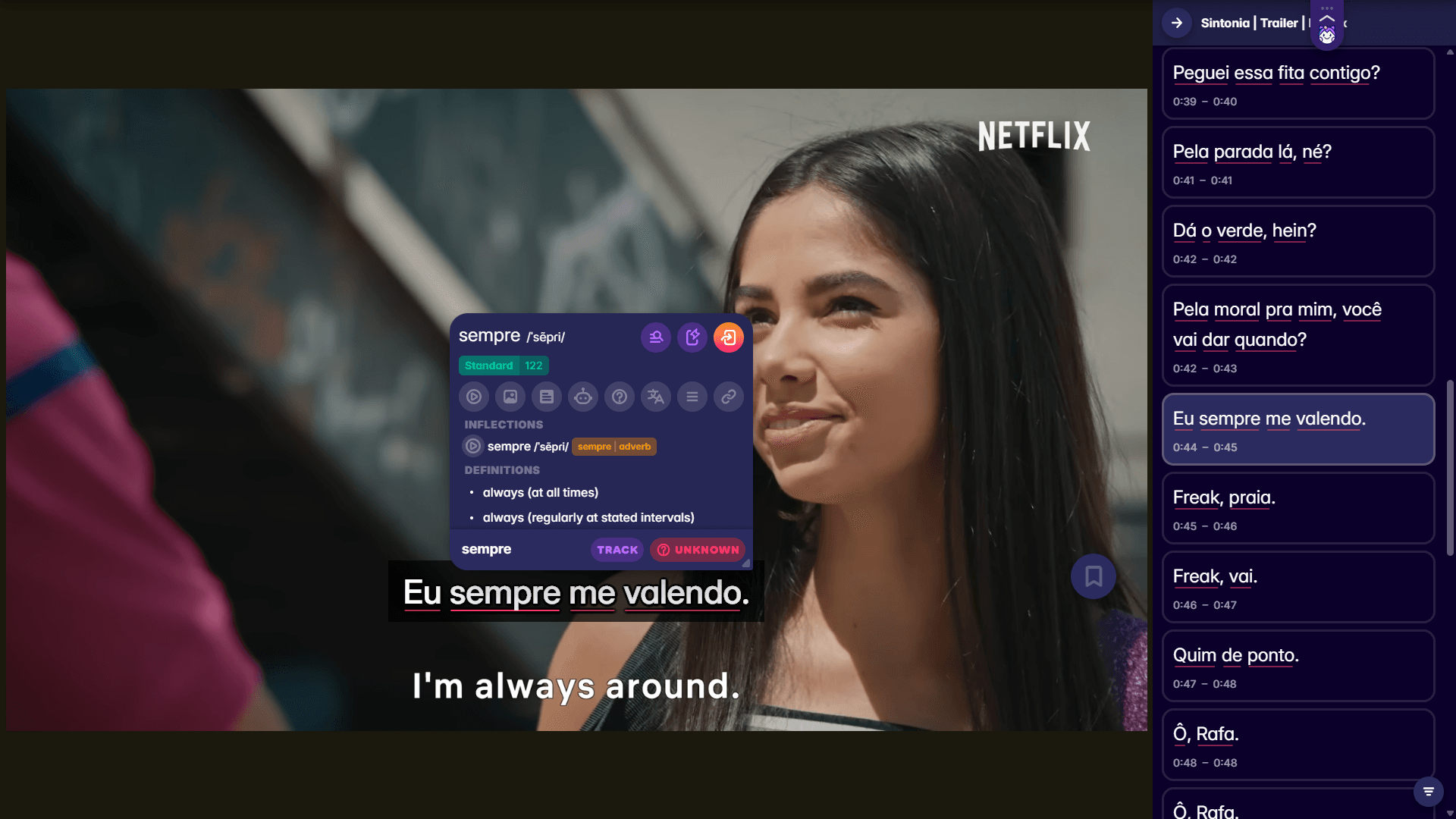
Anyway, if you're serious about improving your Portuguese beyond just phone phrases, Migaku's browser extension and app let you learn from actual Portuguese content like Netflix shows, YouTube videos, and news sites. You can click any word for instant definitions and save phrases you want to remember. There's a 10-day free trial if you want to check it out.
 ----
## Words and phrases for phone calls have definitely evolved in Portuguese-speaking countries
Older formal phrases have given way to more casual language, especially in Brazil where communication tends toward informality anyway. The rise of mobile phones changed greeting patterns. Texting and messaging apps have also influenced phone conversations. People now often text "Posso ligar?" (Can I call?) before actually calling, which would have seemed absurd 20 years ago. Unexpected phone calls can feel almost intrusive now, especially among younger Portuguese speakers. There are still so many phone call phrases and cultures that are not mentioned in this article. And the best way to learn them is to consume Portuguese media, especially dramas, vlogs, and movies about modern life.
> If you consume media in Portuguese, and you understand at least some of the messages and sentences within that media, you will make progress. _Period_.
Keep yourself updated!
----
## Words and phrases for phone calls have definitely evolved in Portuguese-speaking countries
Older formal phrases have given way to more casual language, especially in Brazil where communication tends toward informality anyway. The rise of mobile phones changed greeting patterns. Texting and messaging apps have also influenced phone conversations. People now often text "Posso ligar?" (Can I call?) before actually calling, which would have seemed absurd 20 years ago. Unexpected phone calls can feel almost intrusive now, especially among younger Portuguese speakers. There are still so many phone call phrases and cultures that are not mentioned in this article. And the best way to learn them is to consume Portuguese media, especially dramas, vlogs, and movies about modern life.
> If you consume media in Portuguese, and you understand at least some of the messages and sentences within that media, you will make progress. _Period_.
Keep yourself updated!