Portuguese Restaurant Phrases: Order Food in Portuguese Like a Local
Last updated: March 25, 2026
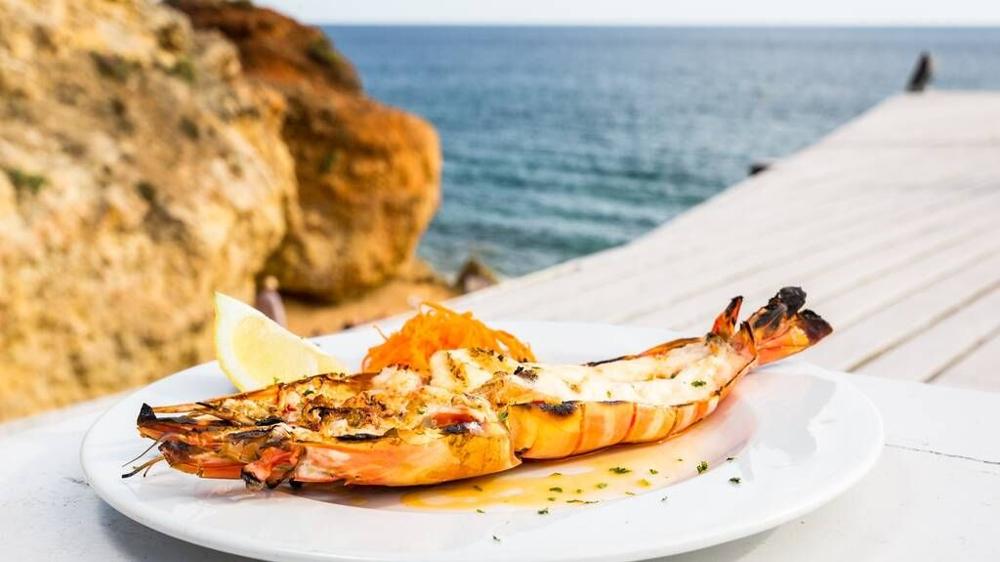
Walking into a Portuguese restaurant for the first time can feel intimidating if you don't know the language. You're staring at a menu full of unfamiliar words, the waiter is waiting for your order, and you're frantically trying to remember how to say "water" in Portuguese. Here's the thing: you don't need to be fluent to navigate a dining experience in Portugal or Brazil. You just need the right phrases at the right moments. This guide covers everything from greeting the waiter to handling the bill, with practical Portuguese restaurant phrases you can use.
- Making reservations and arriving at the restaurant
- Getting the waiter's attention and requesting the menu
- Understanding the menu and asking questions
- Ordering food and drinks with proper etiquette
- Requesting modifications and additional items
- Handling complaints and special requests politely
- Asking for the bill and handling payment
- Portuguese phrases for food and dining
- How to learn these common words for dining
Making reservations and arriving at the restaurant
Before you even step inside, you might want to make a reservation, especially at popular spots in Lisbon or Porto. Calling ahead shows you're serious about dining there, and honestly, it saves you from waiting around hungry.
To make a reservation by phone, you can say: "Gostaria de fazer uma reserva para duas pessoas às oito horas" (I would like to make a reservation for two people at eight o'clock). The phrase "gostaria de" is your polite friend here. It's the conditional form that makes requests sound courteous rather than demanding.
When you arrive, the host might greet you with "Olá, boa noite" (Hello, good evening) or "Boa tarde" (Good afternoon) depending on the time. You can respond with the same greeting and add: "Tenho uma reserva em nome de (your name)" (I have a reservation under (your name)).
If you're walking in without a reservation, try: "Tem uma mesa para duas pessoas?" (Do you have a table for two people?).
The waiter might ask if you prefer inside or outside seating: "Preferem sentar dentro ou fora?" You can answer with "Dentro, por favor" (Inside, please) or "Fora, por favor" (Outside, please).
Pretty straightforward so far, right? The key is having these phrases ready before you walk in, so you're not fumbling with a translation app while people are waiting.
Getting the waiter's attention and requesting the menu
Here's something that trips up a lot of learners: how to get the waiter's attention without being rude. In Portugal and Brazil, the dining culture values a more relaxed pace than what you might find in the US. Waiters won't constantly check on you every five minutes.
To call a waiter politely, use "Com licença" (Excuse me) or "Desculpe" (Sorry/Excuse me). In Portugal, some people also use "Se faz favor" (Please) to get attention. Avoid snapping fingers or saying "garçom" too loudly in Brazil, even though that's the word for waiter there. In Portugal, the term is "empregado" or "empregada" for a waitress, but honestly, "com licença" works better in both countries.
Once the waiter comes over, you'll want the menu. The phrase is simple: "Pode trazer o menu, por favor?" (Can you bring the menu, please?). In some traditional Portuguese restaurants, they might also have a "ementa" which is another word for menu. If you want to see the wine list specifically, ask: "Tem a carta de vinhos?" (Do you have the wine list?).
Sometimes restaurants in tourist areas will have English menus. You can ask: "Tem um menu em inglês?" (Do you have a menu in English?). No shame in asking, though learning Portuguese vocabulary for common dishes makes the experience way more authentic.
Understanding the menu and asking questions
Portuguese menus can be confusing because the names of dishes don't always translate literally.
You'll see sections like:
Portuguese | English |
|---|---|
Entradas | Starters / Appetizers |
Pratos principais | Main courses |
Sobremesas | Desserts |
Bebidas | Drinks |
When you're scanning the menu and something catches your eye but you're not sure what it is, ask: "O que é isto?" (What is this?) while pointing at the item. The waiter will explain, though sometimes in rapid Portuguese that might go over your head. A follow-up phrase that helps: "Pode explicar este prato?" (Can you explain this dish?).
If you want a recommendation, try: "O que recomenda?" (What do you recommend?). This often leads to discovering regional specialties you wouldn't have ordered otherwise. In Portugal, they might suggest "bacalhau" (salted cod) prepared a dozen different ways, or "carne de porco à alentejana" (pork with clams, a specialty from the Alentejo region).
For dietary restrictions, you need specific vocabulary. "Sou vegetariano" (I'm vegetarian) or "Sou vegetariana" if you're female. For vegans: "Sou vegano/vegana." Gluten-free is "sem glúten" and lactose-free is "sem lactose."
To ask if a dish contains something specific: "Este prato tem (ingredient)?" For example, "Este prato tem carne?" (Does this dish have meat?). Common ingredients to know:
Portuguese | English |
|---|---|
carne | Meat |
peixe | Fish |
marisco | Seafood / Shellfish |
ovos | Eggs |
leite | Milk |
amendoim | Peanuts |
Ordering food and drinks with proper etiquette
When you're ready to order, catch the waiter's attention with "Com licença" and say: "Estou pronto para pedir" (I'm ready to order) or just "Gostaria de pedir" (I would like to order).
The standard ordering phrase is: "Para mim, (dish name), por favor" (For me, (dish name), please). If you're ordering for a group, you can go person by person or list everything at once.
Here's a cultural tip that matters: in Portugal especially, meals are social events that take time. Don't expect your food to arrive in 15 minutes like at an American chain restaurant. The kitchen prepares things fresh, and the pace is leisurely. This isn't bad service, it's just how dining works there.
For drinks, you'll almost always be asked: "O que desejam beber?" (What would you like to drink?).
Portuguese | English |
|---|---|
água | Water |
água sem gás | Still water |
água com gás | Sparkling water |
vinho da casa | House wine |
tinto | Red (wine) |
branco | White (wine) |
rosé | Rosé (wine) |
cerveja | Beer |
imperial (Portugal) | Draft beer (small) |
caneca (Portugal) | Draft beer (mug) |
chope (Brazil) | Draft beer |
Coffee culture is different too. After lunch or dinner, it's common to order a "café" which is a small espresso. In Brazil, this same drink is called "cafezinho." If you want a larger coffee with milk, order "um galão" in Portugal or "café com leite" in Brazil.
Requesting modifications and additional items
Sometimes you need to customize your order. The phrase "sem (ingredient)" means "without (ingredient)." For example: "Sem cebola, por favor" (Without onion, please) or "Sem sal" (Without salt).
If you want something on the side, use "à parte" : "Pode trazer o molho à parte?" (Can you bring the sauce on the side?). This works for dressings, sauces, or any accompaniment.
During the meal, you might need extra items. Here are the essentials:
- Pode trazer mais pão?
Can you bring more bread? - Pode trazer azeite?
Can you bring olive oil? - Preciso de outro garfo.
I need another fork. - Pode trazer sal e pimenta?
Can you bring salt and pepper?
Bread and butter often come automatically in Portuguese restaurants, and yes, they usually charge for it. It's called "couvert" and includes bread, butter, olives, or small appetizers. If you don't want it, say: "Não queremos o couvert, obrigado/obrigada" (We don't want the couvert, thank you).
Handling complaints and special requests politely
Look, sometimes things go wrong. Your steak is overcooked, the soup is cold, or they brought the wrong dish entirely. You can address this without being rude.
For a wrong order: "Desculpe, mas pedi (what you ordered)" (Excuse me, but I ordered (what you ordered)). They'll usually fix it immediately.
If something is wrong with the food temperature: "Esta sopa está fria" (This soup is cold) or "Esta carne está muito mal passada" (This meat is very undercooked/rare). For overcooked: "muito bem passada."
Portuguese restaurant culture values politeness, so always include "por favor" and "desculpe" when making complaints. Getting angry or loud will just make the situation awkward for everyone.
Asking for the bill and handling payment
When you're ready to leave, you need to ask for the bill. In Portugal, waiters won't bring it until you request it because rushing diners is considered rude. The phrase is: "A conta, por favor" (The bill, please) or "Pode trazer a conta?" (Can you bring the bill?).
In some places, you might hear people say "A conta, se faz favor" which is just a more formal version.
When the bill arrives, check if service is included. In Portugal, service charge is sometimes added as "serviço incluído." If it's not included, tipping around 10% is appreciated but not mandatory like in the US. In Brazil, a 10% service charge (called "taxa de serviço" or "gorjeta") is usually automatically added to the bill.
For payment methods, you can ask: "Aceitam cartão?" (Do you accept card?) or "Posso pagar com cartão?" (Can I pay with card?). Most restaurants in cities accept cards, but smaller or rural places might be cash-only.
If you're splitting the bill, say: "Podemos dividir a conta?" (Can we split the bill?). Some restaurants are cool with this, others prefer one payment, so have cash ready just in case.
Cash is "dinheiro" in Portuguese. If you're paying cash and need change, the waiter will bring it. If you want to leave the change as a tip, say: "Pode ficar com o troco" (You can keep the change).
Portuguese phrases for food and dining
Building your restaurant vocabulary makes menus less intimidating. You don't need to know every ingredient, just the common categories and items.
Proteins:
Portuguese | English |
|---|---|
carne | Meat |
frango | Chicken |
porco | Pork |
vaca / bife | Beef / Steak |
peixe | Fish |
bacalhau | Salted cod |
polvo | Octopus |
camarão | Shrimp |
Preparations:
Portuguese | English |
|---|---|
grelhado | Grilled |
assado | Roasted |
frito | Fried |
cozido | Boiled / Cooked |
estufado | Stewed |
Sides:
Portuguese | English |
|---|---|
arroz | Rice |
batatas | Potatoes |
batatas fritas | French fries |
legumes | Vegetables |
salada | Salad |
Common dishes in Portugal:
Portuguese | English |
|---|---|
caldo verde | Kale soup |
pastéis de nata | Custard tarts |
francesinha | Porto's famous sandwich |
sardinhas assadas | Grilled sardines |
How to learn these common words for dining
- Try running through a full restaurant scenario in your head: greeting, ordering, asking questions, handling the bill. This mental rehearsal makes the real experience less stressful.
- Carry a small notebook or use your phone to jot down new phrases you hear. Restaurant dining provides tons of real-world learning opportunities because you'll hear the same questions and responses repeatedly. After a few meals, phrases like "está tudo bem?" and "querem sobremesa?" become automatic.
If you want to level up your Portuguese beyond restaurant phrases, Migaku's browser extension and app let you learn from actual Portuguese content like shows, articles, and videos. You can look up words instantly while watching something you're actually interested in, which beats memorizing phrase lists any day. There's a 10-day free trial if you want to try learning Portuguese through real immersion instead of textbooks.
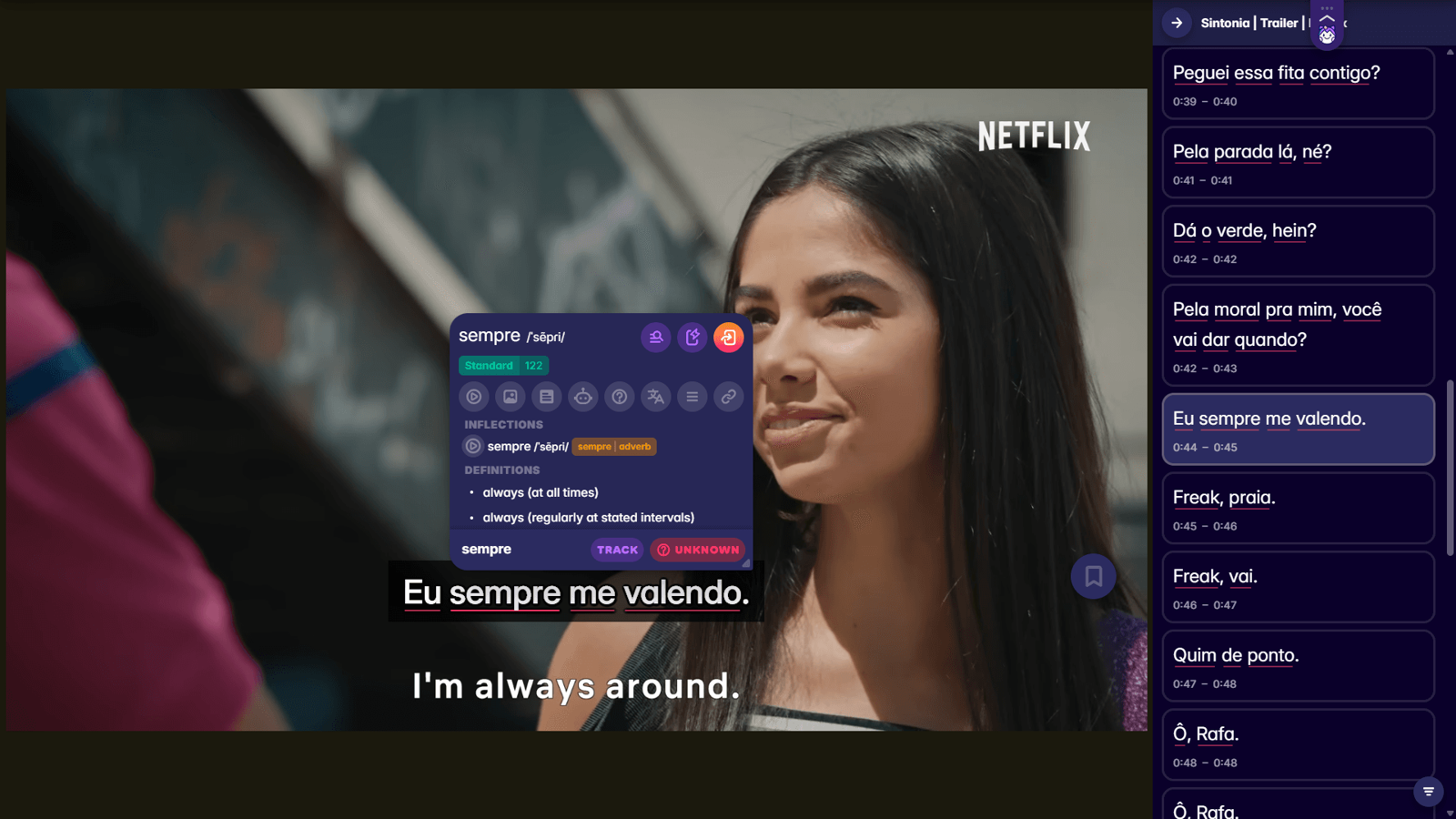
Make your learning more efficient with media consumption
Learning Portuguese restaurant phrases works best when you practice them in context, not just as isolated vocabulary. The goal isn't fluency from day one. And you can spend some time watching travel vlogs and dining vlogs to get used to what people usually say in these situations. Then gradually, you will be building enough practical vocabulary to navigate meals confidently and enjoy the food without stress.
If you consume media in Portuguese, and you understand at least some of the messages and sentences within that media, you will make progress. Period.
Learning these phrases is merely your starting point!