Portuguese Transportation Vocabulary: Travel Like a Local
Last updated: March 28, 2026

Getting around in Portugal or Brazil means you'll need more than just basic greetings and food vocabulary. Whether you're catching a metro in Lisbon, hailing a taxi in São Paulo, or trying to figure out which bus gets you to the beach, learning Portuguese transportation vocabulary will save you time, stress, and probably some money too. This guide covers everything from basic vehicle names to the specific phrases you'll actually use when navigating public transport, driving, or dealing with airports.
- Basic vehicle vocabulary you'll use every day
- Public transport phrases
- Road and driving vocabulary for navigating Portugal and Brazil
- Gas station and car maintenance words
- Airport and air travel terminology
- Metro and train station essentials
- Taxi and ride-sharing vocabulary
- Practical tips for using transport vocabulary
Basic vehicle vocabulary you'll use every day
Let's start with the fundamental vehicles you'll encounter and talk about in Portuguese. These words come up constantly in everyday conversation, whether you're discussing your commute or asking for directions.
- The word for car in Portuguese is "carro" in both European and Brazilian Portuguese. Pretty straightforward.
- If you're talking about a bus, you'll use "ônibus" in Brazil and "autocarro" in Portugal. This is one of those classic differences between the two variants that trips people up initially.
- For train, both variants use "comboio" in European Portuguese and "trem" in Brazil.
- The metro system is "metro" or "metrô" (with the accent in Brazil) in both places.
- A tram, which you'll definitely see in Lisbon, is called "elétrico" in Portugal. That word literally means "electric," which makes sense when you think about it.
Here are more essential vehicle terms:
Portuguese | English |
|---|---|
avião | Plane |
bicicleta / bici | Bicycle |
motocicleta / moto | Motorcycle |
barco | Boat |
navio | Ship |
táxi | Taxi |
metro / metrô | Subway / Underground |
Public transport phrases
Knowing the word for bus doesn't help much if you can't ask when it arrives or how much it costs. These phrases are what you'll need when using public transportation in Portuguese-speaking countries.
- Quanto custa a passagem?
How much is the ticket? / How much is the bus fare? - A que horas sai o comboio? / A que horas sai o trem?
What time does the train leave? (comboio in Portugal, trem in Brazil) - Onde é a paragem? (Portugal) / Onde é o ponto? (Brazil)
Where is the stop? - Este autocarro/ônibus vai para...?
Does this bus go to...? - Preciso de trocar de linha?
Do I need to change lines? - Qual é a próxima paragem/parada?
What's the next stop? - Pode avisar-me quando chegarmos?
Can you tell me when we arrive? - Quero carregar o cartão.
I want to top up the card.
The transportation system in Portugal relies heavily on rechargeable cards. In Lisbon, you'll use the "Viva Viagem" card for metros, buses, and trams. Knowing how to say "Quero carregar o cartão" (I want to top up the card) becomes pretty essential.
Road and driving vocabulary for navigating Portugal and Brazil
If you're planning to rent a car or drive in Portuguese-speaking countries, you'll need specific vocabulary beyond just vehicle names. Road signs, traffic rules, and car-related terms become crucial.
Traffic is "trânsito" or "tráfego" in Portuguese. A traffic jam is "engarrafamento" in Brazil or "congestionamento" in both variants. The word literally paints a picture of bottles stuck together, which feels accurate when you're sitting in one.
Road signs you'll encounter:
Portuguese | English |
|---|---|
Pare / Stop | Stop |
Sentido único | One way |
Proibido entrar | No entry |
Estacionamento | Parking |
Autoestrada | Highway / Motorway |
Portagem (Portugal) / Pedágio (Brazil) | Toll |
Driver's license translates to "carta de condução" in Portugal and "carteira de motorista" in Brazil. You'll need this phrase when renting a car: "Quero alugar um carro" (I want to rent a car).
Basic driving directions use these terms:
Portuguese | English |
|---|---|
Vire à direita | Turn right |
Vire à esquerda | Turn left |
Siga em frente | Go straight |
Rotunda (Portugal) / Rotatória (Brazil) | Roundabout |
Semáforo | Traffic light |
Gas station and car maintenance words
Running out of gas or dealing with car trouble in a foreign country is stressful enough without the language barrier. These phrases help you handle common car-related situations.
Gas station is "posto de gasolina" or just "bomba" informally. To fill up your tank, you'd say "Encher o depósito, por favor" (Fill the tank, please). In Brazil, you might hear "tanque" instead of "depósito" for tank.
Types of fuel:
Portuguese | English |
|---|---|
Gasolina | Gasoline |
Gasóleo (Portugal) / Diesel (Brazil) | Diesel |
Sem chumbo | Unleaded |
Super | Premium |
Car parts vocabulary becomes useful when something goes wrong:
Portuguese | English |
|---|---|
Motor | Engine |
Pneu | Tire |
Roda | Wheel |
Travão (Portugal) / Freio (Brazil) | Brake |
Bateria | Battery |
Óleo | Oil |
Para-brisas | Windshield |
If you need a mechanic, ask "Onde há uma oficina?" (Is there a repair shop?). To explain problems, you might say "O carro não pega" (The car won't start) or "O pneu está furado" (The tire is flat).
Airport and air travel terminology
Flying into Lisbon, Porto, or any Brazilian city means dealing with airport vocabulary. These terms help you navigate from check-in to baggage claim.
Airport is "aeroporto" in Portuguese. When you arrive, look for these signs:
Portuguese | English |
|---|---|
Chegadas | Arrivals |
Partidas | Departures |
Check-in / Registo | Check-in |
Porta (de embarque) | Gate |
Recolha de bagagem (Portugal) / Esteira de bagagem (Brazil) | Baggage claim |
Alfândega | Customs |
Imigração | Immigration |
Flight-related vocabulary:
Portuguese | English |
|---|---|
Voo | Flight |
Cartão de embarque | Boarding pass |
Assento / Lugar | Seat |
Corredor | Aisle |
Janela | Window |
Bagagem de mão | Carry-on luggage |
Bagagem despachada | Checked baggage |
Useful airport phrases include:
- Onde é o portão cinco?
Where is gate five? - O voo está atrasado?
Is the flight delayed? - Onde faço a conexão?
Where do I make the connection?
Metro and train station essentials
The metro systems in Lisbon, Porto, and Brazilian cities like São Paulo and Rio are efficient ways to travel. Understanding station vocabulary and ticketing systems makes your journey smoother.
Station is "estação" universally. Different types include:
Portuguese | English |
|---|---|
Estação de comboios (Portugal) / Estação de trens (Brazil) | Train station |
Estação de metro (Portugal) / Estação de metrô (Brazil) | Metro station |
Terminal rodoviário / Estação de autocarros (Portugal) / Estação de ônibus (Brazil) | Bus station |
Inside the station, you'll see:
Portuguese | English |
|---|---|
Plataforma / Cais | Platform |
Linha / Via | Track |
Bilheteira (Portugal) / Bilheteria (Brazil) | Ticket office |
Máquina de bilhetes | Ticket machine |
Entrada | Entrance |
Saída | Exit |
Elevador | Elevator |
Escada rolante | Escalator |
Ticket types matter when purchasing:
Portuguese | English |
|---|---|
Bilhete simples | Single ticket |
Bilhete de ida e volta | Return ticket |
Passe diário | Day pass |
Passe mensal | Monthly pass |
The phrase "Um bilhete para o centro, por favor" (A ticket to the center, please) works for most situations. Add "ida e volta" if you want a return journey.
Taxi and ride-sharing vocabulary
Taxis remain common in Portuguese-speaking countries, though apps like Uber, Bolt, and Brazilian app 99 have become popular alternatives. You'll still need specific vocabulary for both traditional taxis and ride-sharing services.
To hail a taxi, you can say "Táxi!" or ask "Está livre?" (Are you free/available?). Once inside, tell the driver your destination: "Para o aeroporto, por favor" (To the airport, please).
Important taxi phrases:
- Quanto custa até...?
How much to...? - Pode ligar o taxímetro?
Can you turn on the meter? - Pode parar aqui?
Can you stop here? - Fica com o troco.
Keep the change.
For ride-sharing apps, you'll use similar language, but the app handles most communication. Still, knowing "Estou a chegar" or "Estou chegando" (I'm arriving) helps when coordinating with your driver.
Practical tips for using transport vocabulary
Learning vocabulary lists helps, but using these words in real situations requires some strategy. Here's what works when you're navigating transportation in Portuguese.
- Download transport apps before you travel. In Portugal, the "Moovit" app works across multiple cities and shows routes in Portuguese. Brazil has similar apps for each major city. Seeing the vocabulary in context while planning routes helps reinforce the words.
- Practice asking questions out loud before you need them. "Quanto custa?" and "A que horas?" become automatic when you've said them twenty times in your hotel room. This sounds silly, but it removes hesitation when you actually need to ask.
- Write down your destination in Portuguese. If speaking feels overwhelming, showing someone "Estação de Santa Apolónia" written clearly gets you the information you need. Many locals will switch to English if they can, but starting in Portuguese shows respect.
- Learn the numbers in Portuguese separately. Knowing all the transport vocabulary doesn't help if you can't understand "cinco euros" or "às três horas." Numbers come up constantly in transportation contexts.
- Pay attention to announcements on public transport. Even if you don't catch every word, you'll start recognizing "próxima paragem" (next stop) and station names. This passive listening builds comprehension faster than you'd expect.
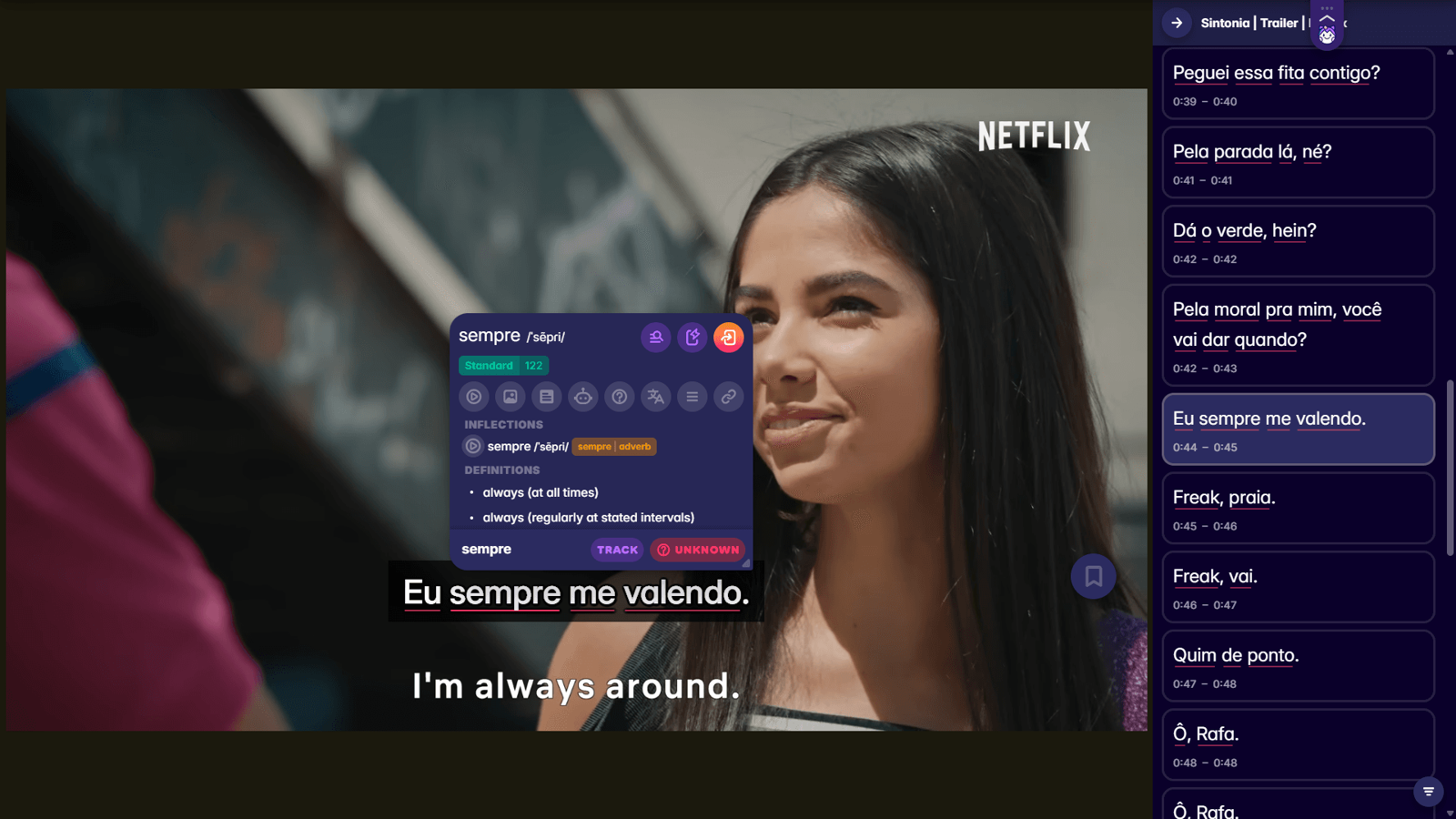
If you want to pick up this vocabulary naturally from actual Portuguese content, Migaku's browser extension and app let you look up words instantly while watching shows or reading articles about travel in Portugal or Brazil. You'll see these transport terms in real contexts, which beats memorizing lists any day. There's a 10-day free trial if you want to check it out.
Your journey starts with learning Portuguese vocabulary
Whether you're planning a trip to Lisbon's historic trams or navigating São Paulo's extensive metro system, this transportation vocabulary gives you the foundation to move around confidently. Make use of the transportation apps and videos about traveling in Portuguese-speaking countries. Prepare thoroughly before your trip, especially if you are keen on learning more than just transportation words!
If you consume media in Portuguese, and you understand at least some of the messages and sentences within that media, you will make progress. Period.
Every trip is an opportunity to learn more!