Renting in Barcelona: Short-Term Airbnb Rules and Long-Term Tips
Last updated: May 15, 2026
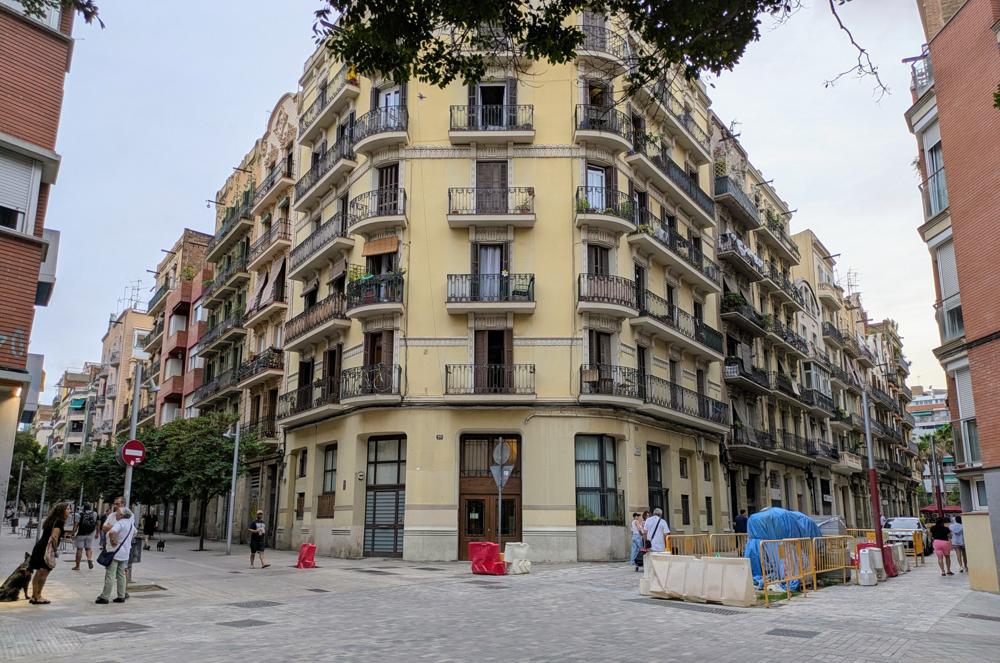
If you are planning to rent in Barcelona in 2026, the city has the strictest short-term rental rules in Spain: no new tourist licenses are being issued, all existing Airbnb-style licenses expire by November 2028, and every legal short-stay listing must now display a national NRU registration number. For anything longer than 31 nights, you are in the residential market, which has its own rent caps and contract rules.
Last updated: May 15, 2026
What counts as a short-term rental in Barcelona
The legal line between "tourist" and "residential" rental in Catalonia is the length of stay.
- 31 nights or less: classified as tourist-use housing (habitatge d'ús turístic, HUT). Requires a tourist license, a Catalan Tourism Registry number (NIRTC), and as of July 2025, a national NRU number.
- 32 nights or more: treated as a residential or seasonal rental. Falls under Spain's Urban Leases Law (LAU) and, in most of Barcelona, under Catalan rent-cap rules.
This distinction matters whether you are a traveler looking for a place to stay, a long-term tenant comparing options, or an owner deciding how to use a property. Listings on Airbnb, Vrbo, and Booking.com that advertise stays of up to 30 nights without a valid license number are operating illegally in Barcelona, and platforms are now required to remove them within 48 hours of an order from the authorities.
The 2028 phase-out: what is actually happening
In 2024 Barcelona's city council announced that none of the roughly 10,101 existing HUT licenses for tourist apartments would be renewed. All of them expire by November 2028, after which the city will, in effect, no longer have legal whole-apartment short-term rentals in residential buildings.
Key points to understand:
- The Spanish Constitutional Court upheld this plan in a March 2025 ruling, dismissing appeals from property owners.
- No new HUT licenses have been issued since the 2014 moratorium, and the 2017 PEUAT urban plan reinforced the freeze.
- Existing licenses cannot be renewed or transferred on their own. They can only change hands as part of a complete property sale, which has pushed license premiums to roughly €60,000 to €120,000 on top of the property price (as of 2025).
- Hotels, hostels, and licensed tourist apartment-hotels (those in dedicated commercial buildings) are not affected the same way.
The practical effect for renters: short-stay apartment supply in Barcelona is shrinking every year until 2028, prices for legal stays are climbing, and hotels are absorbing more of the demand.
NRU registration and the national rules
Since 1 July 2025, every short-term rental in Spain must hold a national registration number, the NRU (Número de Registro Único, sometimes called NRUA), before it can be advertised on any platform. This was established by Royal Decree 1312/2024, in force since 2 January 2025.
How it works:
- Owners apply through the Ventanilla Única Digital, run by Spain's Ministry of Housing (Ministerio de Vivienda y Agenda Urbana).
- Registration costs approximately €27 per property through the Colegio de Registradores and must be renewed annually.
- Under Orden VAU/1560/2025, NRU holders had to file an annual activity report during February 2026 covering 2025 activity. Missing the filing can lead to cancellation of the NRU.
- Listings without a valid NRU must be removed by platforms within 48 hours.
- Fines for advertising without an NRU range from €600 to €60,000 depending on the severity of the infraction.
In Barcelona, the NRU sits on top of the local HUT license and the Catalan NIRTC number. A legal listing in the city should show all three. If you are booking a stay and the listing shows no registration number at all, treat it as a red flag.
Penalties and enforcement
Barcelona enforces these rules more aggressively than any other Spanish city.
- Operating without a valid tourist license can trigger fines of up to €600,000.
- The City Council fined the owner of a building at Ample Street 24 (Ciutat Vella) €420,000 for running 14 illegal tourist apartments.
- Since 2016 the city has issued more than 9,077 fines for irregular tourist apartments and roughly 11,600 cease-and-desist orders.
- A dedicated enforcement team of 70 staff (30 trackers, 27 inspectors, 6 legal officers) detects around 300 illegal listings per month.
- In March 2026 a Spanish court ordered Airbnb to pay a €64 million sanction and refused to suspend it. Separately, Spain's consumer ministry fined Airbnb €65 million for 65,122 listings that violated consumer protection rules.
For renters, this means two things. Booking a stay that turns out to be illegal can mean a last-minute cancellation when a listing is taken down. For owners, the financial risk now clearly outweighs the income from running an unlicensed flat.
Tourist tax in 2026
From 1 April 2026, Catalonia's regional tourist tax (IEET) doubled, and Barcelona adds a municipal surcharge on top.
Accommodation type | Regional IEET | Barcelona surcharge | Total per person, per night |
|---|---|---|---|
5-star hotel | €7 | €5 | €12 |
4-star hotel | Lower band | €5 | Varies |
Tourist apartment (HUT) | Mid band | €5 | Varies |
Cruise passenger, under 12 hours ashore | €11 | n/a | €11 |
Other points to know:
- The tax is capped at a maximum of 7 consecutive nights per person in the same establishment.
- Travelers under 17 are exempt.
- Barcelona's municipal surcharge will rise by €1 each year until 2029, reaching a maximum of €8. Combined with regional rates, the top per-night charge could approach €15 by 2029.
- The tax is collected by the accommodation and shown on your invoice. It is not optional and is separate from VAT.
For exact current rates by category, check the Catalan Tax Agency (atc.gencat.cat) or the Ajuntament de Barcelona tourism portal.
Document checklist for a legal short-term stay
When booking, look for these on the listing:
- NRU number: the national short-term rental registration number.
- HUT or NIRTC number: the Catalan tourism registry number, often shown as "HUTB-XXXXXX".
- Habitability certificate (cèdula d'habitabilitat): held by the owner, sometimes referenced in the listing.
- Clear duration: stays must be at most 31 nights to fall under tourist rules. If the host insists you sign a "seasonal" contract for a 2-week stay, something is off.
If you are an owner trying to operate legally, you also need homeowners' association approval. Under Spain's amended Horizontal Property Law (Organic Law 1/2025, in force April 2025), any new tourist rental in an apartment building requires explicit approval from the community via a 3/5 (60%) majority vote. In Barcelona this is largely academic for new HUT applications since no new licenses are being issued, but it matters for any change of use.
Long-term renting in Barcelona
For stays of 32 nights or more, you are in the residential market. This is where most expats end up.
Prices. Barcelona's average long-term rent reached €1,160 per month in Q4 2025. Expect to pay more in Eixample, Gràcia, and the seafront neighborhoods, and less in Nou Barris, Sant Andreu, or further out in the metropolitan area. For a breakdown of total monthly costs including food, transport, and coworking, see our guide to the cost of living for digital nomads.
Rent caps. Catalonia applies rent-cap rules in designated "tense housing zones," which cover most of Barcelona and the surrounding metropolitan area. New contracts in these zones cannot exceed the previous contract's price or an official index reference, whichever is lower. In December 2025, Catalonia closed the "seasonal contracts" loophole that some landlords had used to evade caps by labeling 11-month residential lets as temporary stays.
Contract types you will see:
- Contrato de arrendamiento de vivienda habitual: the standard residential lease, minimum 5 years for individual landlords (7 years if the landlord is a company), with annual rent updates capped by official index.
- Contrato de temporada (seasonal): for stays from 32 days up to about 11 months, when the tenant has a documented temporary reason (study, work assignment). Post-December 2025, these are scrutinized closely.
- Habitación (room rental): renting a single room in a shared flat. Common, less paperwork, but also less protection.
What landlords typically ask for:
- NIE or passport.
- Proof of income (3 recent payslips, or for freelancers, the last tax return and recent autónomo quotas).
- A guarantor or bank guarantee (aval) in many cases.
- One month deposit (fianza), often plus one additional month as extra guarantee. The fianza is registered with INCASÒL, the Catalan housing institute.
Agency fees. Since the 2023 Housing Law, agency fees on residential rentals are paid by the landlord, not the tenant. If an agency tries to charge you a finder's fee for a long-term lease, that is not legal.
Common pitfalls
- "Tourist" listings sold as long-term: an apartment with a HUT license rented to you for 6 months on an informal arrangement leaves you with no residential rights and no registered fianza.
- No NRU on a short-stay listing: the listing can be pulled mid-trip. Always screenshot the registration number when you book.
- Verbal extensions: if a landlord offers to extend a 1-month stay informally, get it in writing. The 31-night threshold is a legal line, not a guideline.
- Empadronamiento: many landlords resist letting tenants register their address at the town hall. You usually need this for residency paperwork, NIE renewals, and healthcare. Insist on it before signing.
- Utility transfers: confirm whether electricity, gas, water, and internet are in the landlord's name or yours, and who pays the IBI property tax (it should be the landlord).
- Fake listings: scams on Idealista and Facebook groups remain common. Never wire money before viewing the flat in person or via a verified video call, and never pay a deposit before signing.
FAQs
Can I rent an Airbnb in Barcelona for one month?
Legally, a stay of 31 nights or less falls under tourist rules and needs a HUT license plus NRU. A stay of exactly one calendar month can fall either side of the line depending on the night count, so check the listing's terms.
Will Airbnb still exist in Barcelona in 2028?
Whole-apartment tourist licenses in residential buildings expire by November 2028. Licensed hotels, aparthotels, and room rentals where the host lives on-site are governed by different rules and are not part of the phase-out.
Do I pay the tourist tax on a long-term rental?
No. The IEET only applies to tourist accommodation. A residential lease of 32 nights or more is exempt.
Can I sublet my long-term flat on Airbnb to cover rent while I travel?
No. Without a HUT license and NRU, this is illegal in Barcelona, and your residential lease almost certainly forbids it. Fines fall on both the operator and, in some cases, the property owner.
What if I want a base in Europe but not in Barcelona?
Several other countries have clearer residence paths for remote workers and freelancers. See our notes on France Schengen short stay visa rules and freelancer visa options in Europe.
Where can I confirm the official rules?
Go to the source: Ajuntament de Barcelona (ajuntament.barcelona.cat), the Catalan Tax Agency for tourist tax (atc.gencat.cat), and the Ministry of Housing's Ventanilla Única Digital for NRU registration.
If you are settling in Barcelona for the long haul, picking up Spanish, and ideally some Catalan, will make landlords, paperwork, and daily life noticeably easier. Migaku lets you learn from real Spanish shows, news, and YouTube videos, so the language you study is the language you actually hear in the city. Try Migaku.