See You Later in Italian: 12+ Ways to Say Goodbye in Italian
Last updated: March 22, 2026

If you're learning Italian and want to know how to say "see you later" without sounding like a textbook, you're in the right place. The good news is that Italians have tons of ways to say goodbye depending on when you'll see someone next, how close you are to them, and whether you're keeping things casual or formal. The most common phrase you'll hear is "ci vediamo," but there's way more to explore. Let's break down all the different ways to say see you later in Italian so you can sound natural in any situation.
The most common way to say see you later in Italian
When Italians want to say "see you later," they usually reach for "ci vediamo." This phrase literally translates to "we see each other" and works perfectly for casual situations with friends, family, or people you know well.
The pronunciation is pretty straightforward: "chee veh-dee-AH-moh." The "ci" sounds like "chee" in English, and you put the emphasis on the third syllable. You'll hear this phrase constantly in Italy because it's the go-to informal goodbye when you expect to see someone again relatively soon.
Here's the thing about "ci vediamo" though. Italians typically use it when they actually plan to see the person again in the near future. Unlike English speakers who might say "see you later" to anyone as a casual goodbye (even if they have no plans to meet), Italians are more literal about it. If you say "ci vediamo" to someone, they'll generally assume you have some expectation of meeting again soon.
Adding time specifics to your goodbyes
Italian gives you tons of options to be specific about when you'll see someone next. These phrases are super practical and get used all the time in everyday conversation.
See you later today
If you're planning to see someone later the same day, you'd say "ci vediamo dopo" (chee veh-dee-AH-moh DOH-poh). The word "dopo" means "after" or "later," so this phrase makes it clear you're talking about the same day. You might also hear "a dopo" (ah DOH-poh), which is even shorter and means "until later."
Another option is "a più tardi" (ah pyoo TAR-dee), which translates to "until later" and has basically the same meaning. This one sounds slightly more formal than "a dopo" but still works fine in casual contexts.
See you soon
When you want to say "see you soon" in Italian, "a presto" (ah PREH-stoh) is your phrase. This works when you expect to see someone in the near future, but maybe not the same day. It's friendly, casual, and very commonly used.
You can also say "ci vediamo presto" (chee veh-dee-AH-moh PREH-stoh), which combines the two elements. Both versions work great in informal situations.
See you tomorrow and beyond
For specific days, Italian has simple, direct phrases. "A domani" (ah doh-MAH-nee) means "see you tomorrow." "Ci vediamo domani" works too if you want the longer version.
For the weekend, you'd say "ci vediamo nel weekend" or "a sabato" if you're meeting on Saturday specifically. For next week, "ci vediamo la prossima settimana" gets the job done.
Learn Italian formal ways to say goodbye
When you're in professional settings, talking to strangers, or showing respect to older people, you'll want to switch to more formal expressions.
The classic formal goodbye is "arrivederci" (ah-ree-veh-DEHR-chee), which literally means "until we see each other again." This works in pretty much any situation where you want to be polite. You'll hear this in shops, restaurants, business meetings, and any context where "ci vediamo" would feel too casual.
For even more formal situations, "arrivederLa" (ah-ree-veh-dehr-LAH) exists, using the formal "La" instead of "ci." This is super formal, and you'd use it with people in positions of authority or when you really want to show maximum respect.
Another formal option is "ci sentiamo" (chee sen-tee-AH-moh), which means "we'll be in touch" or literally "we'll hear each other." This phrase implies you'll communicate again, maybe by phone or message, rather than necessarily seeing each other in person. It works well in professional contexts when wrapping up a conversation.
Slang phrases and casual expressions
If you want to sound really natural with Italian friends, there are some casual expressions that go beyond the standard phrases.
Young people often just say "ci si vede" (chee see VEH-deh), which is a shortened, slangy version of "ci vediamo." It's super informal and has that relaxed vibe you'd use with close friends.
In some regions, you might hear "ciao ciao" said quickly as both a hello and goodbye. While "ciao" technically works for both greetings and farewells, doubling it up makes it feel more casual and friendly.
Another informal expression is "ci becchiamo" (chee bek-kee-AH-moh), which literally means "we'll catch each other." This is definitely slang territory and sounds very casual, almost like saying "catch you later" in English.
Learn to say goodbye in Italian naturally in conversations
Knowing these phrases is one thing, but using them naturally in conversation is another.
- Italians often combine goodbye phrases with other elements to make their farewells feel complete. You might hear someone say "Va bene, ci vediamo dopo" (Okay, see you later) or "Perfetto, a domani allora" (Perfect, see you tomorrow then). These combinations sound natural and give context to the goodbye.
- It's also common to add "eh" or "no" as little conversational markers. "Ci vediamo, eh?" adds a friendly confirmation vibe, like "We'll see each other, yeah?" This kind of natural speech pattern comes with practice and exposure to real Italian conversation.
If you want to level up your Italian learning with real content, Migaku's browser extension and app let you look up words and phrases instantly while watching Italian shows or reading articles. You can save expressions like "ci vediamo dopo" directly from native content and review them later. There's a 10-day free trial if you want to give it a shot.
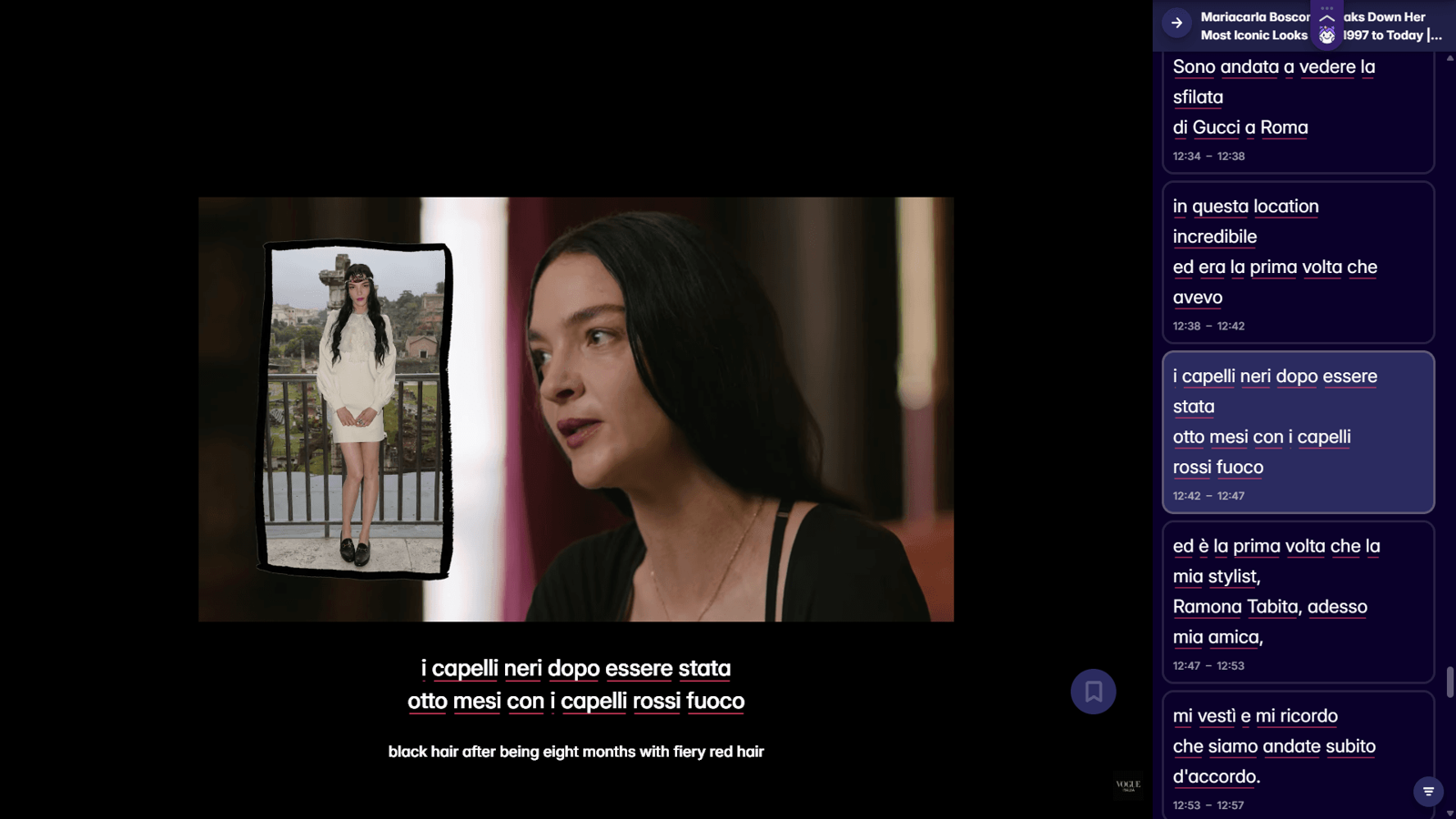
Observe how native speakers use greetings and farewells!
The best way to really internalize these phrases and learn when to use each one is through exposure to real Italian. Watching Italian shows, listening to podcasts, or following Italian content creators will show you these goodbyes in natural contexts. You'll notice how people choose different phrases based on the situation, the relationship, and the specific timing.
If you consume media in Italian, and you understand at least some of the messages and sentences within that media, you will make progress. Period.
Contextual learning beats memorizing lists.