Spain Non-Lucrative Visa: Step-by-Step Guide for 2026
Last updated: May 12, 2026
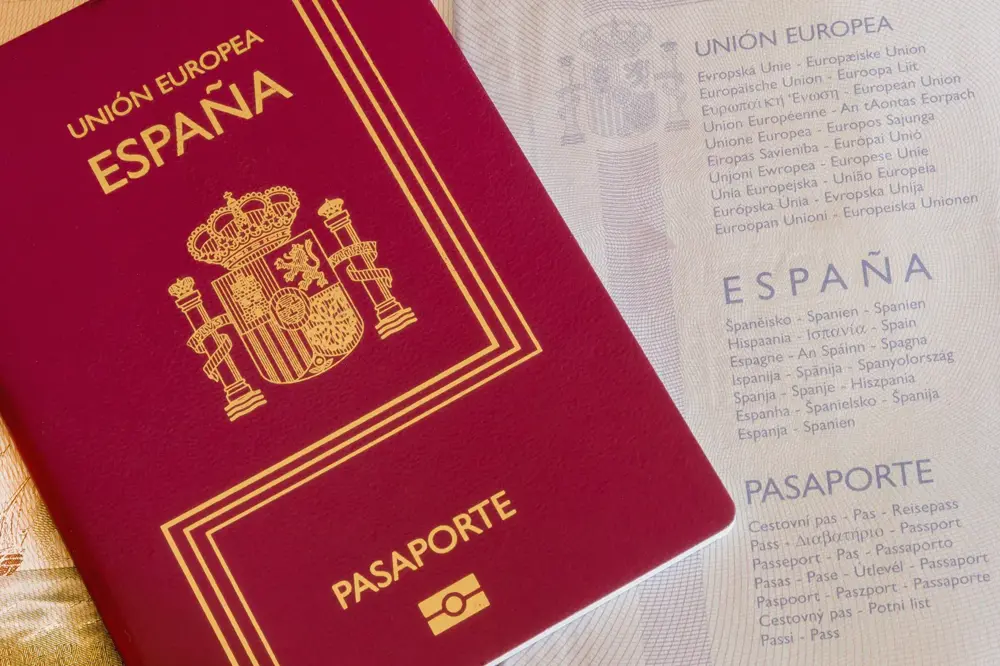
Spain's Non-Lucrative Visa (NLV) is a residence permit for non-EU citizens who can support themselves in Spain without working. It is the main pathway for retirees, financially independent individuals, and people living off passive income, especially now that the Golden Visa investor route closed in April 2025.
Last updated: May 12, 2026
Who the Non-Lucrative Visa Is For
The NLV is designed for non-EU/EEA nationals who want to live in Spain long-term using their own funds. Typical applicants include:
- Retirees living on pensions, Social Security, or annuities.
- Investors and rentiers drawing income from dividends, rental properties, or interest.
- Financially independent individuals taking a career break.
- Family members joining a main applicant who meets the financial threshold.
A critical point that catches many remote workers off guard: the NLV strictly prohibits all employment, freelance work, remote work, and professional activity in Spain. Only passive income is permitted. If you intend to keep working remotely for a foreign employer or freelance clients while living in Spain, the NLV is not the right visa for you, and consulates have become more attentive to this distinction. Remote workers should look at Spain's Digital Nomad Visa instead.
Other EU countries offer similar passive-income or visitor routes worth comparing if Spain is not a firm choice. See the Italy Elective Residence Visa and the France Long Stay Visitor Visa. For job-seekers and skilled workers, the Germany Chancenkarte Opportunity Card is a separate track entirely.
Financial Requirements in 2026
The income threshold is tied to Spain's IPREM (Indicador Público de Renta de Efectos Múltiples). For the NLV, the main applicant must show 400% of IPREM per month, and each additional dependent adds 100% of IPREM. The 2026 IPREM monthly base remains €600 (carried over from 2025, pending any adjustment in Spain's General State Budget).
Household | Monthly requirement | Annual requirement |
|---|---|---|
Single applicant | €2,400 | €28,800 |
Couple | €3,000 | €36,000 |
Family of three | €3,600 | €43,200 |
Family of four | €4,200 | €50,400 |
For each additional dependent beyond the main applicant, add €600/month (€7,200/year).
Funds can be demonstrated through:
- Bank statements (typically the last 6 to 12 months) showing stable balances.
- Pension award letters and payment history.
- Investment account statements showing dividend or interest income.
- Rental income contracts plus tax returns.
- A combination of savings and recurring income.
Consulates generally prefer evidence that funds are liquid, accessible from Spain, and not dependent on Spanish-source work. A lump sum equal to one year of the threshold is usually accepted, but a mix of capital plus passive income is strongest.
For renewal, you must show funds covering two years: €57,600 for a single applicant and €72,000 for a couple.
Document Checklist
Requirements come from the Ministerio de Asuntos Exteriores (Spain's Foreign Ministry) and are applied by the consulate with jurisdiction over your legal residence. Applications cannot be filed from inside Spain.
Core documents:
- National visa application form, completed and signed.
- Form EX-01 (residence permit application).
- Form 790 Code 052 (residence permit fee, box 2.1 for initial temporary residence).
- Passport, valid for at least 1 year, with 2 blank pages, issued less than 10 years ago.
- Two recent passport-size color photos with white background.
- Proof of financial means (bank statements, pension letters, investment statements).
- Private health insurance from an insurer authorized to operate in Spain, covering all risks covered by the Spanish public health system, with no co-payments and no waiting periods.
- Medical certificate referencing the 2005 International Health Regulations, valid for 6 months.
- Criminal record certificate covering the past 5 years of residence, valid for 6 months.
- Proof of residence within the consular jurisdiction (utility bill, residency permit, driver's license).
Supporting documents:
- Marriage certificate and birth certificates for any dependents.
- Proof of relationship and dependency for adult children or elderly parents.
- Accommodation in Spain (rental contract, property deed, or notarized invitation), often requested though not always mandatory.
Legalization rules:
- Public documents issued abroad (criminal records, marriage certificates, birth certificates) must be apostilled under the Hague Convention or, if the issuing country is not a signatory, legalized via the Spanish consulate.
- All foreign documents must be translated into Spanish by a sworn translator (traductor jurado) recognized by Spain's Ministerio de Asuntos Exteriores.
UK state pensioners can use an S1 form for access to Spanish public healthcare in lieu of private insurance.
Step-by-Step Application Process
1. Confirm your consulate
Your application must be filed at the Spanish consulate with jurisdiction over your legal residence. Consulates in the same country often divide the territory by state, region, or postal code. Filing at the wrong consulate is a common reason for rejection at the door.
2. Gather and prepare documents
Allow 6 to 10 weeks. Criminal background checks (FBI in the US, ACRO in the UK, etc.), apostilles, and sworn translations all take time. Remember that the criminal record certificate and medical certificate are valid for only 6 months, so do not start them too early.
3. Book your consular appointment
Most consulates require an in-person appointment booked online. Slots fill weeks or months in advance in major cities. Book the appointment as soon as you have a realistic document timeline.
4. Submit the application in person
The main applicant (and each adult dependent) must appear at the consulate. Bring originals and copies of every document, the completed national visa form, EX-01, and proof of paid Form 790-052. The consulate may take biometrics and conduct a brief interview.
5. Wait for the decision
The legal decision period is 3 months from the day after submission. The clock can pause if the consulate requests additional documents or an interview. Silence beyond 3 months is generally considered a denial (silencio administrativo) and can be appealed.
6. Collect the visa
If approved, you must collect the visa in person within 1 month of the favorable decision notification. Visas issued after May 20, 2025 grant up to 365 days to enter Spain (increased from the previous 90 days), giving applicants much more flexibility to wind down affairs at home.
7. Enter Spain and apply for the TIE
Within 30 days of arrival in Spain, you must initiate the TIE (Tarjeta de Identidad de Extranjero) application at a Foreigners' Office (Oficina de Extranjería) or designated police station. Steps include:
- Registering your address (empadronamiento) at the local town hall.
- Booking a TIE appointment via the Sede Electrónica.
- Paying the TIE fee (Form 790 Code 012).
- Providing fingerprints and photos.
- Returning to collect the physical card weeks later.
Fees and Processing Time
Fees vary by consulate and nationality (the visa fee for US citizens differs from that charged to UK or Indian applicants because of reciprocity rules). Always check the specific consulate page or https://www.exteriores.gob.es for the current Form 790-052 fee schedule.
Item | Notes |
|---|---|
National visa fee | Varies by nationality; check your consulate |
Form 790-052 (residence permit) | Set by central government; current figure on the consulate page |
Form 790-012 (TIE card) | Paid in Spain after arrival |
Sworn translations | Roughly €40 to €80 per document |
Apostille | Varies by country of issue |
Private health insurance | Roughly €50 to €200 per person per month |
Decision period | 3 months (legal maximum) |
Collect visa within | 1 month of approval |
Enter Spain within | Up to 365 days from issuance |
Apply for TIE within | 30 days of arrival |
Renewal, Long-Term Residency, and Citizenship
The NLV grants an initial 1-year residence permit, renewable for two consecutive 2-year periods (1 + 2 + 2). After 5 years of legal continuous residence, you can apply for long-term EU residency. After 10 years you can apply for Spanish citizenship.
Key continuity rules:
- You must spend more than 183 days per year in Spain to qualify for renewal. This also makes you a Spanish tax resident on worldwide income.
- For long-term residency, you cannot leave Spain for more than 10 months total during the first 5 years, with no single absence longer than 6 months.
- Citizenship is available after 10 years of residency, or after just 2 years for nationals of Ibero-American countries, Andorra, the Philippines, Equatorial Guinea, Portugal, or applicants of Sephardic Jewish origin.
Tax and Healthcare Considerations
Spending more than 183 days a year in Spain triggers Spanish tax residency. NLV holders should plan for:
- Income tax (IRPF) on worldwide income, with progressive rates.
- Wealth Tax (Impuesto sobre el Patrimonio) on worldwide assets, though regions like Madrid and Andalusia provide effective 100% exemptions.
- Modelo 720: a declaration of foreign assets exceeding €50,000 (bank accounts, securities, real estate), filed annually.
- NLV holders are not eligible for Spain's "Beckham Law" special expat tax regime, which requires employment-based relocation.
For healthcare, after 1 year of legal residency, NLV holders can opt into Spain's public system through the Convenio Especial scheme (roughly €60 to €80 per month under age 65). Until then, full private insurance meeting the consulate's standards is mandatory.
Double taxation treaties between Spain and your home country usually prevent paying tax twice on the same income, but the mechanics depend on the treaty. Consult a Spanish gestor or tax advisor before your first full Spanish tax year.
Common Pitfalls
- Submitting from inside Spain. You must apply at the consulate with jurisdiction over your foreign residence.
- Insurance that doesn't qualify. Travel insurance, plans with co-payments, deductibles, or waiting periods are routinely rejected. The policy must be from an insurer authorized in Spain and mirror Spanish public coverage.
- Stale criminal or medical certificates. Both expire 6 months after issue. Time them so they remain valid through your appointment.
- Income-only proof for borderline applicants. Consulates often want to see savings as a buffer in addition to monthly income.
- Mentioning remote work. Even casual mentions of "keeping a few clients" or "working remotely part time" can lead to refusal. The visa is for passive income only.
- Skipping the empadronamiento or TIE deadline. Missing the 30-day TIE appointment window in Spain creates administrative headaches and can complicate renewals.
- Underestimating tax exposure. The 183-day rule is strict, and Modelo 720 penalties for omissions have historically been heavy.
- Currency fluctuations. Funds held in non-euro accounts must clearly meet the threshold at the consulate's exchange rate on the day of review.
Frequently Asked Questions
Can I work remotely on the NLV?
No. All employment, freelance, and remote work are prohibited, including for foreign employers. Remote workers should apply for the Digital Nomad Visa.
Can my spouse and children join me?
Yes. Dependents can be included in the initial application or join later through family reunification, provided you meet the additional €600/month per person threshold.
Can I buy property in Spain on an NLV?
Yes. Property ownership is unrestricted for NLV holders, though the visa itself is not tied to a real estate purchase.
Can I appeal a refusal?
Yes. You can file a reposición appeal at the consular section within 1 month, or a judicial review at the High Court of Justice of Madrid (Tribunal Superior de Justicia de Madrid) within 2 months.
Do I need to speak Spanish to get the NLV?
No. There is no language requirement for the visa itself. Spanish is required only later, for citizenship (DELE A2 plus the CCSE cultural test).
How early can I apply before my planned move?
Most consulates accept applications up to 90 days before intended travel, but check your specific consulate's policy. Once approved, the visa allows entry within 365 days.
Can I switch from NLV to a work visa later?
Yes. After your first year of residency, you can apply to modify your status to a work or self-employment permit if you have a job offer or business plan, subject to standard immigration rules.
If you're moving to Spain, daily life, paperwork, and friendships all run more smoothly when you can actually use Spanish; try Migaku to learn from the same shows, news, and books you'll encounter once you arrive.