Swiss Work Permits Explained: B Permit, L Permit, and Quotas
Last updated: May 29, 2026
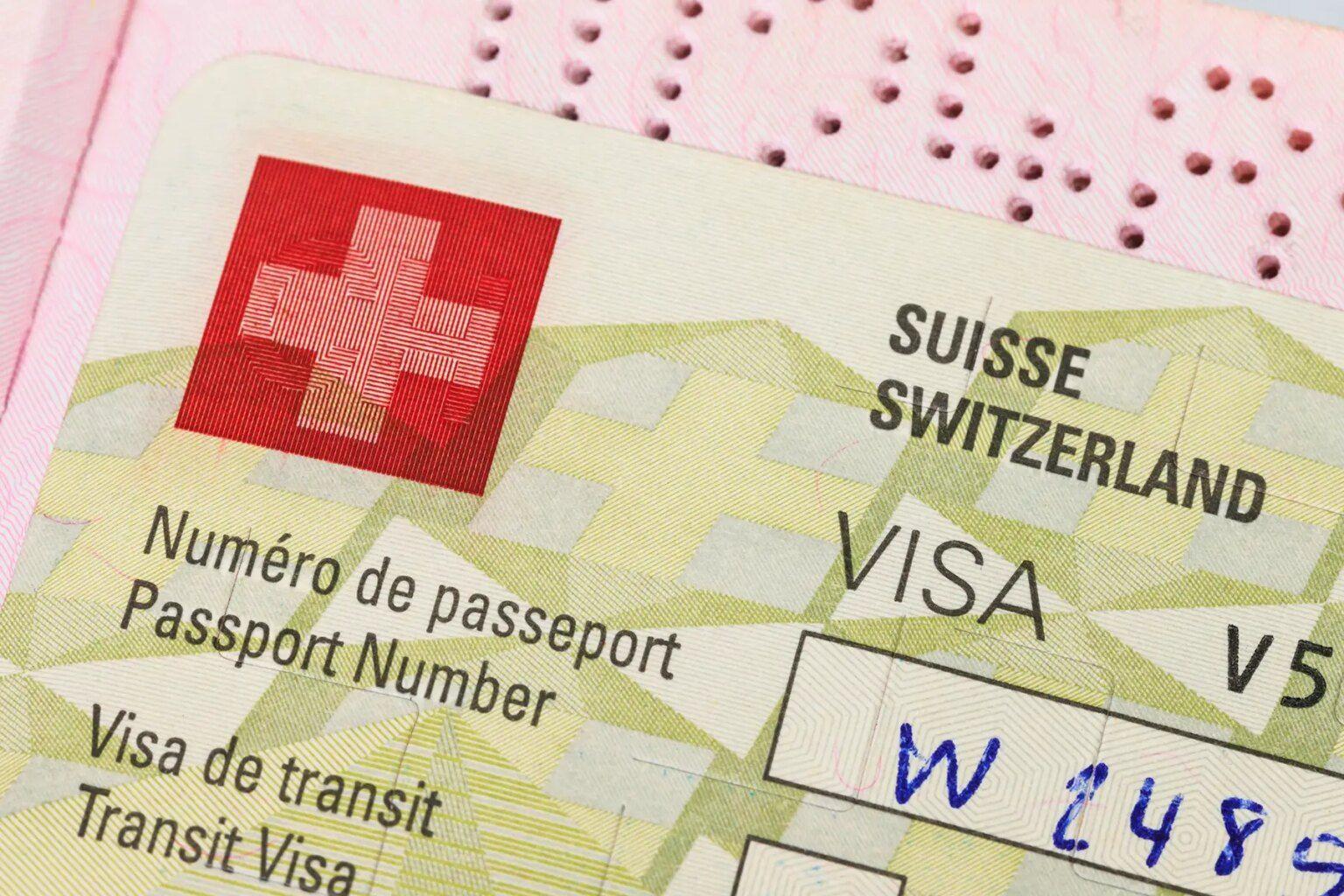
Switzerland issues two main work residency permits: the B permit for longer-term employment of 12 months or more, and the L permit for short-term work contracts under 12 months. For non-EU/EFTA citizens, both fall under a federal quota system, require employer sponsorship, and demand proof that no suitable Swiss or EU candidate could fill the role.
Last updated: May 29, 2026
Who Needs a B or L Permit
If you plan to work in Switzerland for more than three months, you need a work residence permit before starting employment. The category you receive depends on your nationality, contract length, and the canton where you will live.
- EU/EFTA citizens benefit from the Agreement on the Free Movement of Persons (AFMP). They can move to Switzerland with a confirmed job and apply for a B EU/EFTA permit (contract of 12 months or longer, valid for 5 years) or an L EU/EFTA permit (contract of 3 to 12 months, valid for the duration of the contract).
- Non-EU/EFTA citizens (often called third-country nationals) face a more restrictive regime: a labor market test, federal quotas, and admission only for highly qualified profiles, generally meaning a university degree plus several years of relevant professional experience.
- UK nationals have been treated as third-country nationals since January 1, 2021, with a separate quota carved out for them. Pre-2021 UK residents in Switzerland keep grandfathered rights under the Citizens' Rights Agreement.
Employment of less than three months does not require a permit but must be reported through the online notification procedure run by SECO at least 8 working days before work begins (4 working days in certain sectors such as construction and hospitality).
2026 Quotas at a Glance
The Swiss Federal Council adopted the 2026 quota amendment to the Ordinance on Admission, Residence and Gainful Activity (OASA) on November 28, 2025. Quotas were kept unchanged from the previous year, reflecting that cantons had used roughly 52% of third-country quotas and 38% of EU/EFTA service-provider quotas by the end of September 2025.
Group | B permits | L permits |
|---|---|---|
Non-EU/EFTA nationals | 4,500 | 4,000 |
EU/EFTA service providers (over 90 / 120 days) | 500 | 3,000 |
UK nationals (post-Brexit) | 2,100 | 1,400 |
Third-country quotas are distributed by the State Secretariat for Migration (SEM) to the 26 cantons, which manage their allocations independently. UK quotas are released quarterly. In practice, this means availability varies sharply by canton: Zurich, Geneva, Vaud, and Zug tend to exhaust their share faster than smaller cantons.
B Permit vs. L Permit: Key Differences
Both permits authorize residence and gainful employment, but their practical effects on your life in Switzerland are quite different.
Feature | B Permit | L Permit |
|---|---|---|
Contract length | 12 months or unlimited | 3 to 12 months (non-EU: up to 1 year, extendable to 2) |
Validity | 5 years (EU/EFTA); 1 year renewable (non-EU) | Matches contract duration |
Family reunification | Generally allowed | Restricted, often refused for non-EU L holders |
Path to C (settlement) permit | Yes, after 5 or 10 years of continuous residence | No; L years do not count toward the fast-track C |
Housing market access | Easier; landlords often require B | Harder; many landlords reject L applicants |
Mortgage eligibility | Possible | Very limited |
Withholding tax (Quellensteuer) | Yes, until C permit obtained | Yes |
B permit holders from countries with settlement agreements, including the United States and Canada, can apply for a C permit after 5 continuous years. All others typically wait 10 years. Crucially, time spent on an L permit does not count toward this qualifying period, which makes the difference between the two permits a long-term planning issue, not just an administrative one.
Document Checklist
The employer files most of the paperwork with the cantonal migration office, but the employee must supply personal documents. Requirements vary slightly by canton, so confirm with your local Office of Population (Office cantonal de la population, Migrationsamt, Ufficio della migrazione).
From the employer:
- Signed employment contract specifying role, salary, hours, and start date
- Detailed job description and required qualifications
- Proof of advertising the position (labor market test) for non-EU/EFTA hires: job board postings, applicant logs, reasons for rejecting EU/EFTA candidates
- Company registration and confirmation of compliance with Swiss salary and working conditions for the sector and region
- Application form (cantonal template)
From the employee:
- Valid passport with sufficient remaining validity
- Passport-size photographs to cantonal specifications
- CV in chronological order, with dates matching diplomas and contracts
- Diplomas and professional certifications, with certified translations into German, French, or Italian where required
- Criminal record extract from your country of residence (less than 3 months old, often apostilled)
- Proof of accommodation in Switzerland (rental contract or hotel booking for initial weeks)
- Marriage certificate and children's birth certificates if applying with dependents
Keep originals plus two photocopy sets. Swiss authorities are strict about document format, certification, and translation quality.
Step-by-Step Application Process
The procedure differs depending on whether you are EU/EFTA or a third-country national.
For EU/EFTA citizens
- Sign an employment contract with a Swiss employer.
- Enter Switzerland on your national ID or passport. No entry visa is required.
- Register with your commune of residence within 14 days of arrival and before starting work. Bring your passport, contract, rental agreement, and photos.
- The commune forwards the file to the cantonal migration office, which issues the B or L EU/EFTA permit.
- Take out compulsory Swiss health insurance within 3 months of arrival.
For non-EU/EFTA citizens
- Receive a job offer from a Swiss employer willing to sponsor you.
- The employer applies to the cantonal labor market authority for pre-approval, which includes the labor market test and a quota check.
- If the canton approves, the file is forwarded to SEM for federal authorization (only required for third-country files).
- Once SEM issues the entry authorization, the Swiss consulate or embassy in your country of residence issues a Type D long-stay visa.
- Enter Switzerland within the visa validity window, register at your commune within 14 days and before starting work, and collect the physical B or L permit card.
- Take out compulsory health insurance within 3 months of arrival.
EU/EFTA jobseekers can stay up to 6 months looking for work: the first 3 months without any permit, then a short-term EU/EFTA permit valid for 3 months per year, granted on proof of sufficient financial means and active job search.
Fees and Processing Time
Fees are set partly at federal level under the Foreigners and Integration Act and partly at cantonal level. Always budget for both layers.
Item | Typical cost (CHF) |
|---|---|
Federal permit fee (range, depending on nationality and type) | 20 to 95 |
Maximum federal fee for EU/EFTA nationals and posted workers | up to 65 |
Geneva: employer application fee | 50 |
Geneva: initial B or L residence permit | around 250 |
Other cantons publish their own scales. Zurich, Vaud, Bern, and Basel-Stadt each charge separately for the application, the issuance, and any later changes (address, employer, civil status). The Federal Department of Foreign Affairs publishes the official entry visa fee schedule for work permits, which you should consult on the eda.admin.ch portal for your specific situation.
Processing times:
- EU/EFTA nationals: roughly 1 to 4 weeks from commune registration to issuance.
- Third-country nationals: 6 to 12 weeks, because the file must clear both the canton and SEM before the consulate can issue the entry visa.
During quota-tight periods (typically Q3 and Q4 in popular cantons), even strong third-country files can wait longer or be deferred to the next quarter's quota release.
Working Conditions, Tax, and Telework
Holders of B, L, and G (cross-border) permits are subject to withholding tax (Quellensteuer), which the employer deducts monthly according to cantonal tax tables. Once you obtain a C settlement permit, you switch to the standard self-declared annual tax filing.
For cross-border workers with a G permit, telework from an EU neighbor country is permanently allowed for up to 40% of working time without losing Swiss tax and social security status. This rule, finalized for EU neighbors, is one of the biggest post-pandemic changes for the Geneva, Basel, and Ticino labor markets.
For non-EU/EFTA secondments to Switzerland of up to 90 days under the AFMP framework, no separate visa is required if you hold a valid Schengen residence permit; the assignment still has to be notified through the online portal.
Swiss law does not publish a single national minimum salary threshold for work permits. SEM requires that pay match local, sector-specific, and professional standards. In practice, cantonal authorities benchmark against industry surveys and collective labor agreements, and they will reject files where the salary undercuts the market.
Common Pitfalls
- Starting work before the permit is issued. Employing or working without authorization is a criminal offense under Article 117 of the Foreigners and Integration Act. Employer fines can reach CHF 1,000,000 and include up to one year of imprisonment. The employee risks deportation and a re-entry ban.
- Missing the 14-day commune registration deadline. This is the single most common mistake among new arrivals. The clock starts the day you enter Switzerland, not the day you sign your lease.
- Skipping health insurance. Coverage is compulsory within 3 months. If you miss the window, the canton assigns you a provider, often at a higher premium with retroactive billing.
- Assuming the L permit converts to a B. It does not happen automatically. You need a new contract of 12 months or longer and a fresh application, and quota availability still applies for non-EU nationals.
- Underestimating quota timing for third-country files. If your canton has used most of its quota, the file may slip into the next quarter. Coordinate the start date with HR.
- Forgetting to notify changes. Address changes, new employer, marriage, divorce, and new children must all be reported to the cantonal migration office within 14 days. Failure to do so can complicate later permit renewals or your C permit application.
FAQs
Can I switch employers on a B permit?
Yes for EU/EFTA holders, with a notification to the cantonal authority. Non-EU/EFTA B holders must request approval from the cantonal migration office, and the new role is reassessed against labor market criteria during the first years.
Can my family join me?
B permit holders generally have family reunification rights for a spouse and minor children, subject to suitable housing and financial means. For L permit holders, family reunification is restricted and often refused, particularly for non-EU L files.
Does an L permit count toward Swiss citizenship?
Only years of actual residence in Switzerland count toward the 10-year ordinary naturalization requirement, and at least the last three years before the application must be on a C permit. L years count for residence in some cantonal calculations, but they do not bring you closer to the C permit itself.
Is there a points-based skilled migration route?
No. Switzerland uses an employer-sponsored quota model. You need a Swiss employer ready to file on your behalf and to defend the labor market test.
How does Switzerland compare to neighboring work visa routes?
If you are also weighing options elsewhere in Europe, our guides to the Italy Work Visa Employer Sponsorship and Germany's Ausbildung Visa for Foreigners cover two very different systems. For an Asia comparison, see the Korea D-8 Corporate Investor Visa guide.
Where can I verify current rules?
The authoritative sources are the State Secretariat for Migration (sem.admin.ch), your cantonal migration office, and the Swiss embassy or consulate in your country of residence. Fees and processing times should always be confirmed directly with the canton before you plan your move.
Life in Switzerland is much easier when you can read your rental contract, your payslip, and the letters from the Migrationsamt in their original language. If you are heading to a German, French, or Italian speaking canton, try Migaku to learn the language through the shows, news, and articles you already watch and read.