The Deutschlandticket: How Germany's Nationwide Transit Pass Works
Last updated: May 25, 2026
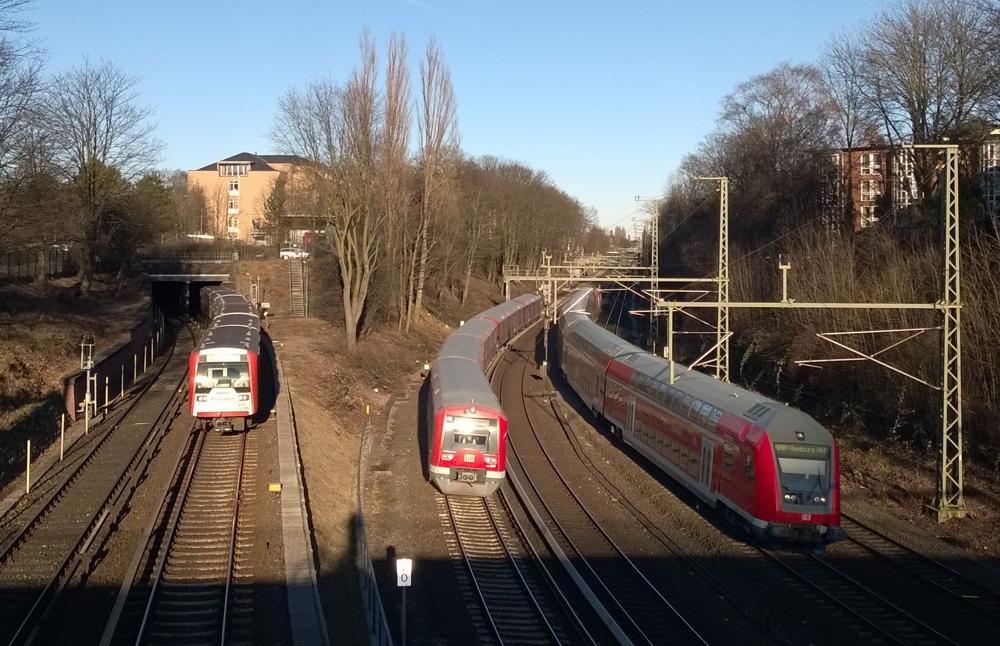
The Deutschlandticket is Germany's nationwide monthly transit pass, valid on almost all local and regional public transport across the country. It launched in May 2023 at €49 per month (which is how most people still remember it), but as of January 1, 2026 the price is €63 per month, sold only as an auto-renewing subscription.
Last updated: May 25, 2026
What the Deutschlandticket Actually Is
The Deutschlandticket (sometimes still called the "49-euro ticket" out of habit) is a single, country-wide subscription that replaces the patchwork of regional monthly passes that used to dominate German public transport. One ticket, valid in every federal state, on:
- U-Bahn (subway) and S-Bahn (suburban rail)
- Trams (Straßenbahn) and city buses
- Regional trains marked RB (Regionalbahn) and RE (Regional-Express)
- Most ferries operated by local transport associations
- Night buses and regional night services run by local operators
It is not valid on:
- Long-distance Deutsche Bahn trains: ICE, IC, EC
- Private long-distance operators such as FlixTrain
- Long-distance coaches like FlixBus
- First class on any train
- Special tourist services (some scenic lines, museum railways)
The ticket is personal and non-transferable. You travel alone on it. Children under 6 ride free with any paying adult (that is national rail policy, not a Deutschlandticket perk), but spouses, friends, and bicycles are not included on a nationwide basis. Some city networks let you take a bike along during off-peak hours under their own rules, so check your local transport association (Verkehrsverbund) before assuming.
The pass exists only in digital form: either as a mobile ticket inside an operator's app (Deutsche Bahn's DB Navigator, BVG, MVG, HVV, and so on) or as a plastic chip card mailed to your address. There are no paper versions, and screenshots are not accepted. Inspectors scan the QR code or read the chip card, and you must also be able to show official photo ID on request.
Price History and What Changed in 2026
The headline number has moved twice since launch:
Period | Monthly price |
|---|---|
May 2023 – December 2024 | €49 |
January 2025 – December 2025 | €58 |
From January 1, 2026 | €63 |
The €63 figure was agreed by Germany's state transport ministers at a special conference on September 18, 2025, with Federal Transport Minister Patrick Schnieder (CDU) confirming the federal funding commitment. The federal government is contributing €1.5 billion annually through 2030, matched by the states for a combined €3 billion per year. Even with that subsidy, costs have risen faster than the original political agreement assumed, hence the increase.
From 2027 onward, the price will no longer be set by annual political haggling. Instead, an index tied to wages and energy costs in the public transport industry will determine the figure. Expect modest, predictable increases rather than the current cliff-edge negotiations.
At the 2026 price, a full year of Deutschlandticket costs €756. For anyone who commutes more than a few times a week, or who occasionally takes a regional train across state lines, this is still cheaper than buying individual tickets, and dramatically cheaper than most pre-2023 city monthly passes.
Who Can Buy It and How
There are no residency or nationality requirements. Tourists, students on exchange, asylum seekers, and short-term visitors can all subscribe, provided they can complete the sign-up process.
What you do need:
- A German address (or sometimes a verifiable EU address, depending on the operator)
- A SEPA-compatible bank account or a credit card. SEPA direct debit and credit card are the only accepted payment methods.
- An email address
- A smartphone, if you want the mobile-ticket version
You can sign up through any of the major operators: Deutsche Bahn (int.bahn.de), the app of your local transport authority (BVG in Berlin, MVG in Munich, HVV in Hamburg, VRR in the Rhine-Ruhr area, RMV in Frankfurt, and so on), or third-party resellers like the Deutschlandticket app. The product is identical regardless of who sells it; pick the operator whose app you will actually use day to day.
Mobile-ticket subscriptions usually require sign-up at least 72 hours before the start date. For mobile tickets covering the following calendar month, the cut-off is typically the 20th of the preceding month (BVG, for example, enforces this). Chip cards take longer to arrive by mail, sometimes two to three weeks, so don't leave it to the last day.
Subscription Rules and How to Cancel
The Deutschlandticket is sold only as an Abo (subscription). It auto-renews on the first of each calendar month and charges your bank account or card automatically.
Key rules:
- The ticket is always valid for one calendar month, from the 1st to the last day.
- You can start on the 15th, but you still pay the full €63 for that month.
- To cancel, your cancellation must reach the operator by the 10th of the month to end the subscription at the end of that same month. Submit it on the 11th and you are billed for the following month too.
- Most operators let you pause the subscription for a future month (useful if you'll be abroad), but the exact mechanism varies.
- The penalty for misuse (e.g., letting someone else travel on your ticket) ranges from €60 to €120, plus the cost of the unpaid fare.
If your bank details change, update them in the app before the next billing cycle. A failed direct debit can suspend your ticket and trigger small admin fees from the operator.
Discounted and Subsidized Versions
The €63 list price is not what everyone pays. Several discounted variants exist, but eligibility and prices vary by state and city.
Deutschlandticket Job (employer-subsidized)
If your employer offers a Jobticket scheme, you can get the Deutschlandticket significantly cheaper. The rules in 2026:
- Employers must subsidize at least 25% of the €63 list price, meaning a minimum employer contribution of €15.75 per month.
- Transport associations then add a further 5% discount, bringing the effective ticket price to €59.85.
- After the employer subsidy, the maximum employee share is €44.10 per month.
- Employer contributions are tax-free and exempt from social security contributions under §3 Nr. 15 of the German Income Tax Act (EStG), up to the full ticket price.
It is worth asking HR directly, because many employers do not advertise this benefit. If they refuse to set it up, you can still buy the ticket privately and, depending on your tax situation, claim relevant portions through the Pendlerpauschale (commuter allowance), which was raised in 2026 to €0.38 per kilometer from the first kilometer.
Student version (Deutschlandsemesterticket)
Many universities have folded the Deutschlandticket into the mandatory semester fee. Where the opt-in version exists separately, students pay 60% of the list price, currently €37.80 per month at the 2026 rate.
Bavaria's reduced-rate ticket
Bavaria runs its own "Bayerisches Ermäßigungsticket" for students, trainees, and volunteers at €43 per month in 2026.
Social tickets (low-income residents)
This is where it gets local. Each state, and sometimes each city, sets its own "Deutschlandticket Sozial" rules. A snapshot of 2026 prices for qualifying low-income residents:
- Berlin (Berlin-Ticket S): €27.50/month
- Hamburg (hvv discounted ticket): €27.50/month
- North Rhine-Westphalia (VRR Deutschlandticket Sozial): €53/month
- Nürnberg (with Nürnberg-Pass): €30/month
- Würzburg: €15/month
- Magdeburg: €53/month
Eligibility usually requires receiving Bürgergeld, housing benefit (Wohngeld), or holding a city social pass. You apply through your municipality (Sozialamt) or local transport association, not through Deutsche Bahn.
Common Pitfalls for Expats and Newcomers
A few things that catch people out repeatedly:
- Assuming it covers ICE trains. It does not. If you book Frankfurt to Berlin and the cheapest connection is an ICE, the Deutschlandticket is useless on that segment. Long regional-only connections exist (and the DB website can filter for them), but they take much longer.
- Forgetting it auto-renews. Leaving Germany after a six-month contract? Cancel by the 10th of your last month, not on departure day.
- No paper backup. If your phone dies mid-journey and you cannot show the ticket, you are treated as fare-evading. Carry a chip card if you rely on it daily, or take screenshots that show the QR code (acceptance varies).
- ID requirement. The ticket displays your name. Inspectors increasingly check that it matches your photo ID. Carry your Aufenthaltstitel, passport, or German ID card.
- First class. A common and expensive mistake. The Deutschlandticket is second class only, even when first-class seats are empty.
- Cross-border travel. The ticket is valid up to the German border on regional services. A handful of cross-border RE trains (to Salzburg, Basel Bad Bf, Venlo, Szczecin) are partly covered, with rules varying by line. Check before boarding.
- Tax interaction. If your employer subsidizes the ticket, the subsidy reduces the kilometer-based Pendlerpauschale you can claim. The math usually still favors taking the subsidy. For broader context on how the tax system treats you, see our explainer on German tax classes for foreigners.
Frequently Asked Questions
Can I use it on the day I buy it?
If you buy a chip card or set up a digital subscription within the operator's cut-off window, yes, but only for the calendar month you signed up for. Mobile-ticket sign-ups generally need 72 hours' lead time.
Is the BahnCard 100 the same thing?
No. The BahnCard 100 (a roughly €4,800/year DB product) includes a Deutschlandticket inside it, plus unlimited travel on long-distance trains. If you only need regional transport, the standalone Deutschlandticket is far cheaper.
Can I take my partner or kids with me?
No extra adults. Children under 6 always travel free in Germany regardless of ticket type. Older children need their own Deutschlandticket or a regular fare.
Does it work for one-off trips?
You must subscribe for at least one full calendar month. If you only need a weekend, buy individual tickets instead.
Why does the official site say €58 in older guides?
Many blogs and even some official pages have not been updated since the September 2025 price change. The current 2026 price is €63. Always check https://int.bahn.de or the Bundesregierung's official Q&A for the live figure.
What happens if Germany lowers the price again?
From 2027 the price is set by an index, not by political negotiation, so sharp reductions are unlikely. Subscribers are automatically billed at the new rate without re-subscribing.
Is it worth it if I work from home?
Do the math: 12 single trips on Berlin's BVG at €3.80 each is already €45.60. Two weekend regional-train round-trips can blow past €63 by themselves. For most occasional users in a metro area, it pays off within a few rides.
If you are also navigating transit systems elsewhere in Europe, our guides to the STIB network in Brussels and ATM's monthly passes in Milan cover the equivalent setups in those cities.
If you're settling into Germany and want to make sense of subscription emails, ticket inspector announcements, and small print without translating everything, try Migaku to learn German straight from real content like the apps and websites you're already using.