# Tongue Twisters for Language Learning: How to Improve Your Pronunciation
> Tongue twisters can improve pronunciation through muscle memory and targeted practice. Get examples for all levels, from Peter Piper to advanced twisters.
**URL:** https://migaku.com/blog/language-fun/tongue-twisters-for-language-learning
**Last Updated:** 2026-03-10
**Tags:** resources, pronunciation, discussion, deepdive
---
If you've ever tried to say "Peter Piper picked a peck of pickled peppers" at full speed, you know that weird feeling when your mouth just refuses to cooperate. Your tongue gets tangled, you stumble over sounds, and suddenly you're saying something that sounds nothing like English. Here's the thing though: that struggle is actually building the exact muscle memory you need for better pronunciation. Tongue twisters aren't just silly party tricks. They're genuinely useful tools for [language learning](https://migaku.com/), and I'm going to show you exactly how to use them to level up your speaking skills.
---
## How tongue twisters help language learning
1. Tongue twisters work because they force your mouth to move in specific, challenging patterns. When you're learning a new language, your mouth muscles literally need to learn new positions and movements. Your native language has trained your tongue, lips, and jaw to move in certain ways for years. Learning a new language means retraining all of that.
2. The repetitive nature of tongue twisters builds muscle memory faster than normal speech practice. When you repeat "She sells seashells by the seashore" over and over, you're drilling the 'sh' and 's' sounds until your mouth can switch between them automatically. That's way more efficient than hoping you'll encounter enough 's' sounds in regular conversation.
3. Tongue twisters also build speaking confidence. There's something satisfying about finally getting a tricky phrase right. That confidence carries over into real conversations where you're less likely to mumble or avoid words with difficult sounds.
4. They improve your speech rhythm and fluency too. Many tongue twisters have natural rhythmic patterns that help you internalize the stress and timing patterns of English. "Betty Botter bought some butter, but she said this butter's bitter" has a bouncy rhythm that teaches you about English stress patterns.
---
## Popular tongue twisters in English and what they teach
Let's look at some classics and break down what makes them useful for language learning.
- "Peter Piper picked a peck of pickled peppers" drills the 'p' sound in different positions and combinations. The 'p' appears at the start of words, after vowels, and in clusters. This teaches you to produce a clear 'p' sound consistently, regardless of what comes before or after it.
- "How much wood would a woodchuck chuck if a woodchuck could chuck wood" works on the 'w' sound and the 'oo' vowel. The 'ch' sound gets a workout too. This one's great for practicing the lip rounding needed for 'w' and 'oo' sounds.
- "She sells seashells by the seashore" is perfect for the 's' and 'sh' distinction. Many language learners struggle with the pronunciation of these sounds. This tongue twister forces you to switch back and forth rapidly, building clear differentiation.
- "I saw a kitten eating chicken in the kitchen" targets the short 'i' vowel sound and the 'ch' consonant. The rhythm also helps with English stress patterns.
---
## Easy tongue twisters to improve your English pronunciation
If you're new to this, don't jump straight into the hardest ones. Start with shorter, simpler phrases and build up.
- "Red lorry, yellow lorry" is deceptively simple but great for 'r' and 'l' practice. Try saying it five times fast.
- "Toy boat" repeated quickly becomes surprisingly difficult. It works on the vowel transition and the 't' and 'b' sounds.
- "Unique New York" drills the 'n' and 'y' sounds along with different vowel combinations.
- "Eleven benevolent elephants" practices the short 'e' sound and 'l' combinations.
- "Freshly fried fresh flesh" targets the 'fr' and 'fl' clusters plus the 'sh' sound. This one's harder than it looks.
---
## Funny tongue twisters that keep pronunciation practice interesting
Let's be real, pronunciation practice can get boring. Funny tongue twisters keep you engaged and make practice feel less like work.
- "I scream, you scream, we all scream for ice cream" is silly and works on vowel sounds and the 'scr' cluster.
- "Fuzzy Wuzzy was a bear, Fuzzy Wuzzy had no hair, Fuzzy Wuzzy wasn't very fuzzy, was he?" The humor comes from the absurdity, and you're drilling the 'f' and 'w' sounds plus the 'z' sound.
- "If a dog chews shoes, whose shoes does he choose?" This one plays with the 'ch' and 'sh' sounds while being genuinely amusing.
- "Six sick hicks nick six slick bricks with picks and sticks" is both ridiculous and challenging. The short 'i' vowel gets a serious workout here.
---
## Tongue twisters for kids to learn English
Kids respond well to playful, rhythmic tongue twisters. The sillier, the better for keeping their attention.
- "She sees cheese" is super simple and great for young learners just starting with 's' and 'sh' sounds.
- "Rubber baby buggy bumpers" is fun to say and works on the 'b' sound.
- "Red leather, yellow leather" teaches color words while drilling the 'l' and 'r' sounds.
- "How can a clam cram in a clean cream can?" has a bouncy rhythm kids enjoy, plus it practices several consonant clusters.
- "Nine nice night nurses nursing nicely" works on the 'n' sound and introduces vocabulary in a memorable way.
---
## Advanced tongue twisters for language learners
Once you've mastered the basics, these will challenge you.
- "The sixth sick sheikh's sixth sheep's sick" is notoriously difficult even for native speakers. It drills the 'th', 's', 'sh', and 'k' sounds in rapid succession.
- "Pad kid poured curd pulled cod" was actually used in a study at MIT as one of the hardest tongue twisters. It targets similar plosive sounds that your mouth wants to blend together.
- "Brisk brave brigadiers brandished broad bright blades, blunderbusses, and bludgeons" works on 'br' and 'bl' clusters extensively.
- "The complex houses married and single soldiers and their families" isn't repetitive like traditional tongue twisters, but the word stress patterns make it super tricky to say clearly.
---
## Tips to use tongue twisters for pronunciation practice
1. Practise slow. Seriously, way slower than you think you need to. Say each word clearly and deliberately. Feel where your tongue goes, how your lips move, where the air flows. Speed comes later.
2. Record yourself. You might think you're nailing it, but recordings reveal the truth. Compare your recordings to native speakers saying the same tongue twister. Notice the differences.
3. Break it down. If a tongue twister is too hard, practice just the first few words until they're smooth. Then add more. "Peter Piper" alone before you attempt the full "Peter Piper picked a peck of pickled peppers."
4. Practice daily but in short sessions. Five minutes of focused tongue twister practice beats one exhausting hour-long session. Your mouth muscles need time to adapt.
5. Focus on trouble spots. If you keep stumbling on the same word or sound combination, isolate it. Practice just that part until it clicks.
6. Use a mirror. Watch your mouth as you practice. Are your lips forming the right shapes? Is your tongue in the right position? Visual feedback helps.
7. Track your progress. Record yourself weekly attempting the same tongue twisters. You'll hear improvement over time, which motivates continued practice.
8. Challenge yourself with speed gradually. Once you can say a tongue twister clearly at slow speed, increase the tempo slightly. Keep pushing until you can maintain clarity at conversational speed.
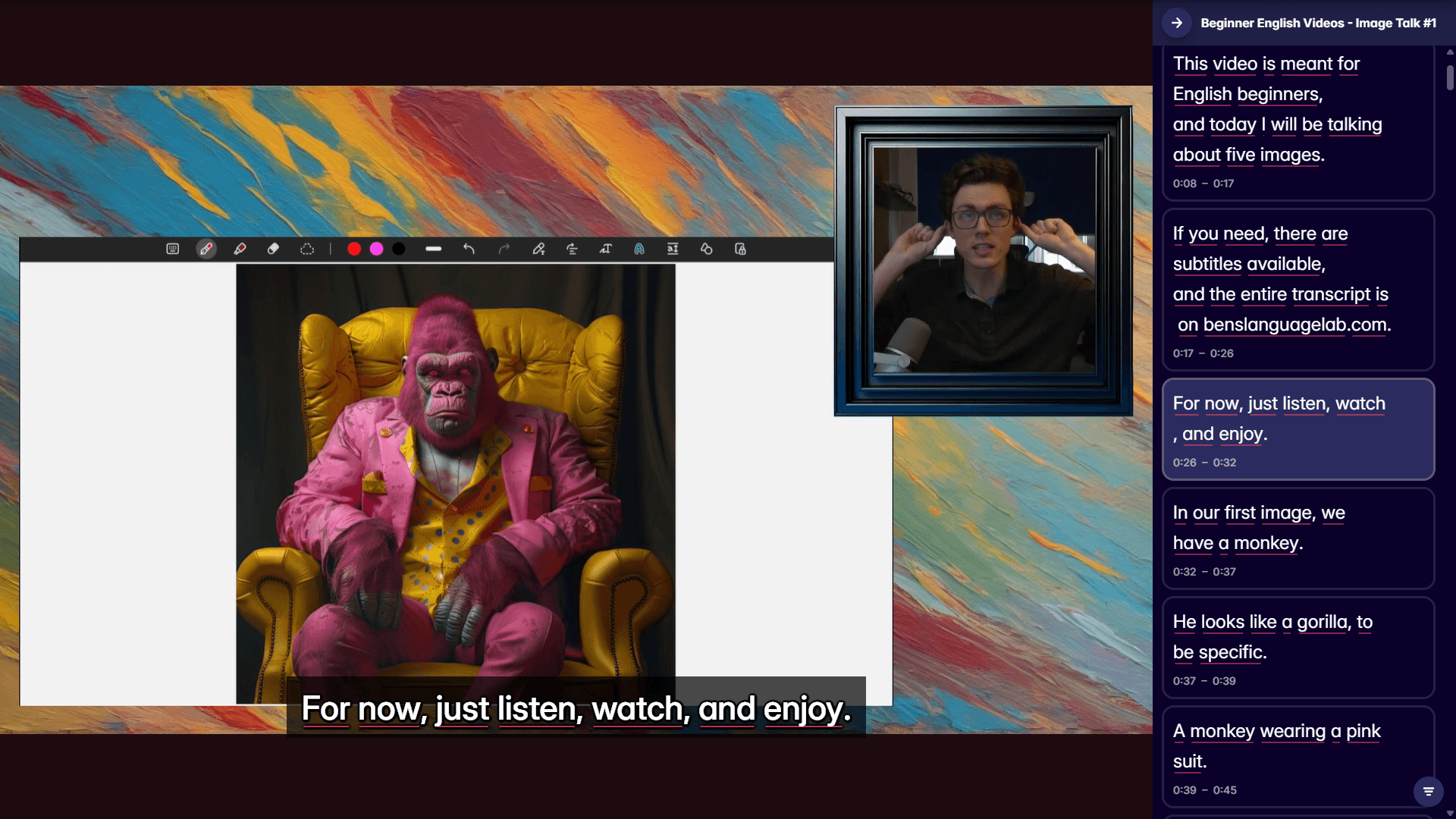
Anyway, if you want to improve pronunciation skills with real content beyond just English tongue twisters, Migaku's browser extension and app let you practice with actual movies, shows, and articles in your target language. You can look up words instantly and build your vocabulary while improving your listening skills. There's a 10-day free trial if you want to check it out.
 ---
## FAQs on tongue twisters for pronunciation
Honestly, it depends on how you use them. If you're expecting tongue twisters alone to fix your pronunciation, you'll be disappointed. But as part of a broader pronunciation practice routine, they're genuinely helpful. They work best when combined with listening practice, speaking practice with real people, and feedback on your pronunciation. Use tongue twisters as targeted drills for specific sounds you struggle with.
---
## The real value of practicing English tongue twisters
Look, tongue twisters aren't a complete pronunciation course. But they're a fun, efficient way to drill specific sounds and build the muscle memory you need for clearer speech. They work because they're concentrated practice on the exact movements your mouth needs to learn. But first, you need to know what your weakness in pronunciation is. Try shadowing practice when watching English videos, and you can find out which sounds you cannot pronounce naturally. That's another practical use of extensive media consumption.
> If you consume media in English, and you understand at least some of the messages and sentences within that media, you will make progress. _Period_.
Many ways, better learning.🎧📚
---
## FAQs on tongue twisters for pronunciation
Honestly, it depends on how you use them. If you're expecting tongue twisters alone to fix your pronunciation, you'll be disappointed. But as part of a broader pronunciation practice routine, they're genuinely helpful. They work best when combined with listening practice, speaking practice with real people, and feedback on your pronunciation. Use tongue twisters as targeted drills for specific sounds you struggle with.
---
## The real value of practicing English tongue twisters
Look, tongue twisters aren't a complete pronunciation course. But they're a fun, efficient way to drill specific sounds and build the muscle memory you need for clearer speech. They work because they're concentrated practice on the exact movements your mouth needs to learn. But first, you need to know what your weakness in pronunciation is. Try shadowing practice when watching English videos, and you can find out which sounds you cannot pronounce naturally. That's another practical use of extensive media consumption.
> If you consume media in English, and you understand at least some of the messages and sentences within that media, you will make progress. _Period_.
Many ways, better learning.🎧📚