Translation vs Immersion Learning: Why Translation Slows You Down
Last updated: March 14, 2026

You know that moment when someone asks you a question in your target language and you freeze? Your brain frantically searches for the right words in English first, then tries to translate them. By the time you've mentally converted everything, the conversation has moved on. That awkward pause happens because you're thinking in translation, and honestly, that's the biggest roadblock between you and actual fluency. Let's talk about why your brain needs to stop playing translator and start thinking directly in your new language.
The learning process of translation vs. immersion
Translation
Here's what's going on when you rely on translation. Someone says something in Spanish, Japanese, or whatever language you're learning. Your brain immediately converts it to English, processes the meaning, formulates a response in English, then translates that response back. That's four separate steps for every single interaction.
The bigger problem? This translation habit becomes deeply ingrained. The more you practice translating, the stronger that neural pathway gets. You're literally training your brain to be slower at the language. Each time you translate a phrase, you reinforce that you need English as a middleman, making it harder to break the habit later.
Language immersion
Immersion flips the entire script. Instead of learning that "dog" equals "perro" equals the concept of a furry four-legged animal, you learn that "perro" directly connects to the actual concept. You see a dog, hear "perro," and your brain links them without English getting involved.
This direct association is how you learned your native language as a kid. Nobody translated for you. You heard words in context, saw what they meant, and your brain figured it out. Immersion recreates this natural learning process, which is why immersion programs consistently produce more fluent speakers than traditional classroom methods.
When you immerse yourself in content, you start recognizing patterns without conscious analysis. You don't think about why a certain grammar structure works, you just develop an intuition for what sounds right. Native speakers don't know all the grammar rules of their own language, they just know what feels correct. That's the kind of fluency immersion builds.
The vocabulary problem with translation
❌1. Translation-based learning creates weird gaps in your vocabulary. You end up knowing formal, textbook words but missing everyday expressions. I've met learners who could translate complex political terms but didn't know how to say "I'm running late" naturally.
❌2. Translation also tricks you into thinking you know a word when you really don't. You might know "casa" translates to "house," but do you know the difference between "casa," "hogar," and "vivienda"? These nuances get lost in translation because English doesn't have perfect one-to-one matches. Immersion teaches you these distinctions naturally by exposing you to real usage.
✅Here's the thing about learning vocabulary through immersion: you acquire words with all their contextual baggage attached. You don't just learn that "ya" means "already" in Spanish. You learn when people actually use it, what tone they use, and which situations call for it. That contextual knowledge makes your vocabulary usable, not just memorizable.
The culture gap translation creates
❌Language and culture are inseparable. When you translate, you're viewing another language through your cultural lens, which distorts everything. You end up with technically correct sentences that sound completely unnatural to native speakers.
✅Immersion teaches you cultural context automatically. You learn what's polite, what's rude, what's funny. You understand why certain phrases exist and when to use them. This cultural fluency matters just as much as linguistic fluency if you want to actually communicate effectively.
I've seen learners who studied Japanese through translation use overly formal language in casual situations because they didn't understand the cultural nuances of different speech levels. Immersion would have taught them naturally by exposing them to various social contexts and how language changes between them.
Real research on immersion vs translation
- The French immersion programs in Canada have been studied extensively since the 1960s. Students who learned French through full immersion, where all subjects were taught in French, significantly outperformed students in traditional translation-based classes. The immersion students developed near-native pronunciation and conversational fluency that translation students rarely achieved.
- The neuroscience backs this up too. Brain imaging studies show that highly fluent speakers who learned through immersion activate very similar brain regions for their second language as their native language.
How to create immersion without moving abroad
You don't need to drop everything and move to another country. Creating an immersion environment for language learning in 2026 is easier than ever.
- Change your phone's language settings.
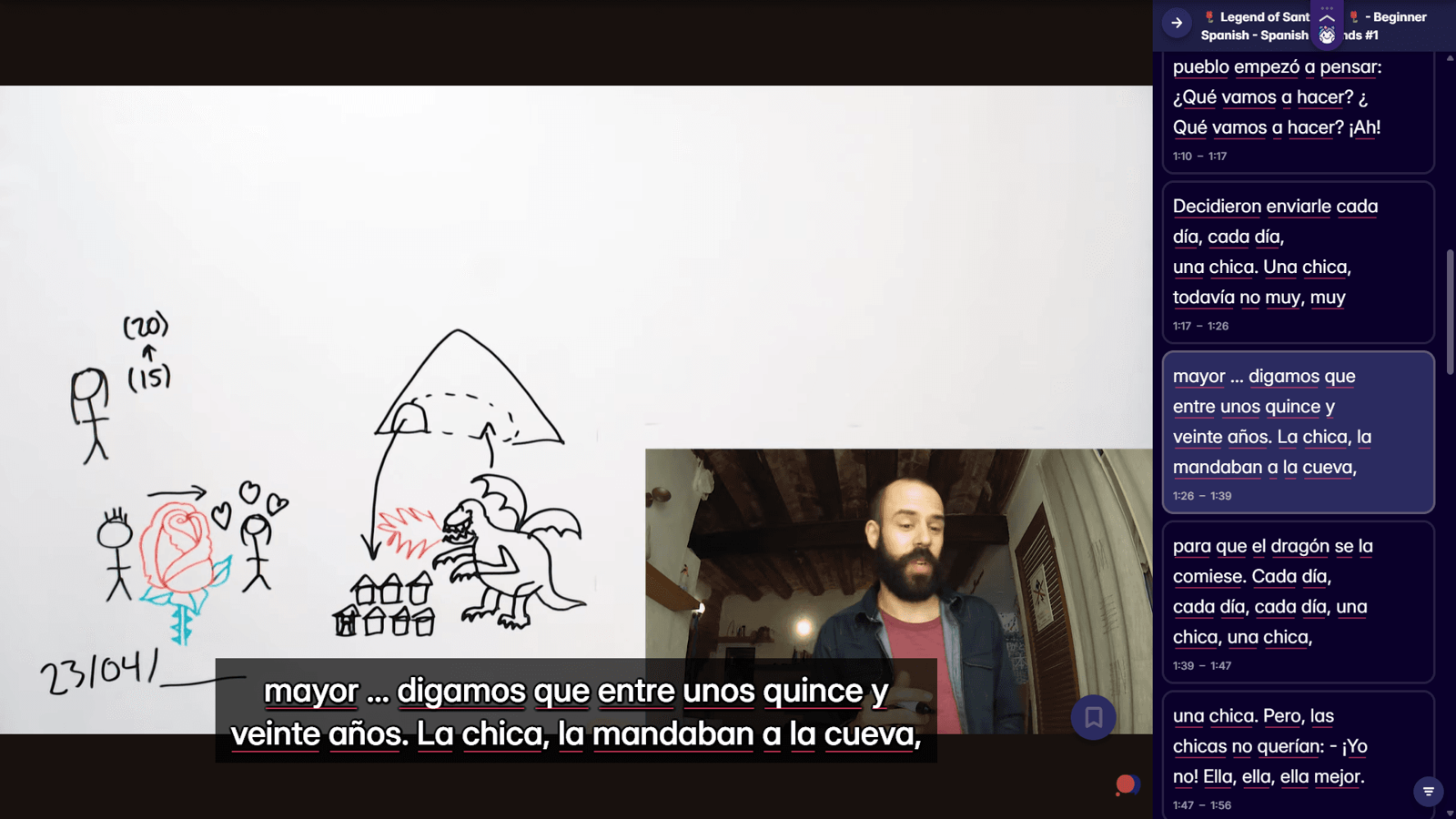
- Watch shows in your target language with subtitles in that language, not English.
- Listen to podcasts during your commute.
- Read news articles.
- Follow social media accounts.
- Join online communities where people speak your target language.
- Find language exchange partners online.
- Use apps that connect you with native speakers.
Even 15 minutes of actual conversation daily beats hours of translation exercises. You need to use the language, not just study it.
Dealing with the frustration phase
Immersion is uncomfortable at first. You won't understand everything. You'll feel lost and confused. That discomfort is actually your brain working, building new neural pathways. Translation feels easier because you're staying in your comfort zone.
The frustration phase usually lasts a few weeks if you're consistent. Your brain needs time to adjust to processing the language directly. Push through it. The breakthrough moment when you suddenly understand without translating is worth the temporary struggle.
Start with comprehensible input at your level. Don't jump into advanced content that's 90% incomprehensible. You want material where you understand maybe 70-80% and can figure out the rest from context. Gradually increase difficulty as your comprehension improves.
Common mistakes people make with immersion
- Biggest mistake? Using English subtitles. You're just reading English and ignoring the actual language. Use subtitles in your target language or no subtitles at all. Your brain will take the easy route if you give it one.
- Another mistake is passive immersion without active engagement. Just having the language playing in the background while you do other things doesn't work. You need focused attention, at least for part of your immersion time. Your brain needs to actively process what it's hearing.
- People also give up too early. They try immersion for a week, don't see magical results, and go back to translation. Immersion is a long game. You need consistent exposure over months to see real results. Stick with it.
Anyway, if you want to actually immerse yourself in real content without constantly looking up words manually, Migaku's browser extension and app let you click any word for instant definitions while watching shows or reading articles in your target language. Makes the whole immersion process way more practical. There's a 10-day free trial if you want to check it out.
FAQs
Balancing immersion with structured study
Immersion works best when combined with some structure. You still need to learn basic grammar patterns and common vocabulary. The difference is how you use that knowledge. Learn a grammar point, then immediately look for it in native content. Learn new vocabulary, then watch for those words in context.
If you consume media in the language you want to learn, and you understand at least some of the messages and sentences within that media, you will make progress. Period.
Explore different ways to learn!