University Teaching Jobs in Korea: Requirements & Tips
Last updated: May 20, 2026
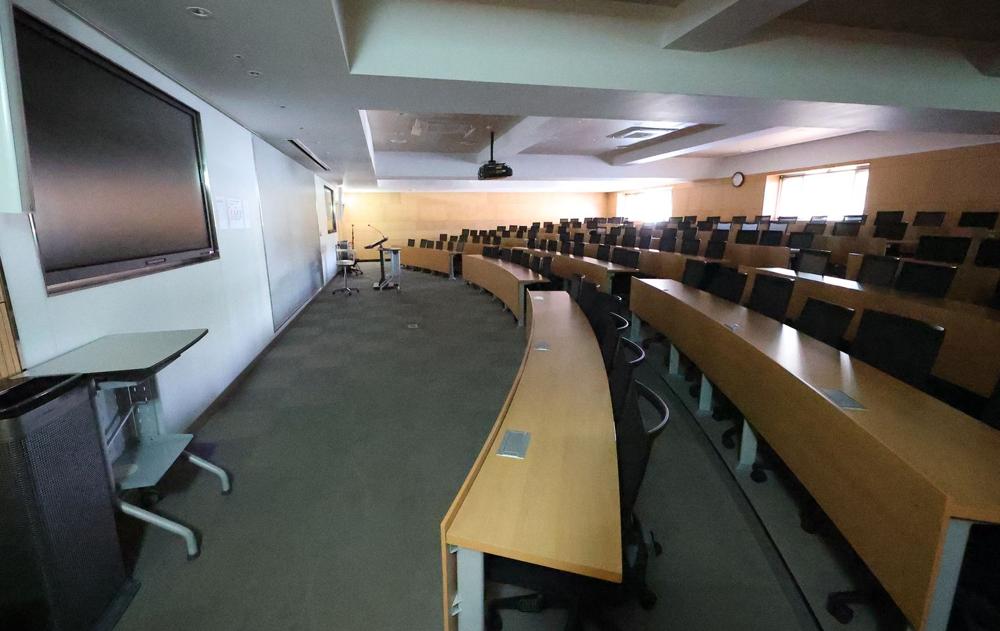
Teaching at a Korean university in 2026 generally requires at minimum a master's degree in the field you'll teach, an E-1 Professor visa (or E-2 in some English-instruction roles), and a signed contract with an accredited institution under Korea's Higher Education Act. The hiring market is competitive, the paperwork is dense, and timelines from offer to classroom can stretch past three months, so it pays to know the rules before you apply.
Last updated: May 20, 2026
Who Qualifies to Teach at a Korean University
Korea's Higher Education Act (Article 16) authorizes universities to appoint foreigners as faculty for teaching or research. In practice, the E-1 Professor visa is the standard route, and it is restricted to people hired as professors, associate professors, assistant professors, or visiting professors. Adjunct and short-term lecturer roles sometimes fall under different categories, so confirm with your hiring department before signing.
The practical academic threshold:
- Master's degree: the working minimum for most teaching positions, especially in English-medium instruction (EMI), language departments, and lecturer-track roles.
- PhD: typically required for tenure-track positions and for most roles at top-ranked universities (SKY schools, KAIST, POSTECH, UNIST, and major nationals).
- Science and engineering researchers: can qualify for E-1 with either a master's plus three or more years of relevant experience, or a doctorate, accompanied by a job recommendation from Korea's Ministry of Education.
If you are being hired specifically to teach English conversation or general English courses, some universities sponsor the E-2 Foreign Language Instructor visa instead of E-1. The E-2 is restricted to citizens of seven countries: the United States, Canada, the United Kingdom, the Republic of Ireland, Australia, New Zealand, and South Africa. E-2 holders must possess a full three- or four-year bachelor's degree; two-year associate degrees are not accepted.
One structural reality worth knowing before you commit: the Korea Times reported in April 2026 that the number of foreign faculty at Korean universities continues to decline, with low pay, rigid employment rules, and housing costs cited as the main reasons. Tuition has been effectively frozen since the 2011 cap that followed the 2010 Higher Education Act revision, which keeps salary budgets tight. Top-30 US economics professors, for comparison, earn upward of 200 million won (about $136,000) per year, while comparable Korean roles pay significantly less. Negotiate housing allowances, airfare, and research stipends carefully.
E-1 vs. E-2: Picking the Right Visa Track
Feature | E-1 (Professor) | E-2 (Foreign Language Instructor) |
|---|---|---|
Typical role | Professor, lecturer, researcher | English/foreign-language instructor |
Education minimum | Master's (PhD often expected) | Bachelor's (3- or 4-year) |
Nationality restriction | Open | 7 designated countries only |
Period of stay | Up to 5 years, extendable | 13 months, renewed with each contract |
Renewal/extension fee | Standard immigration fee schedule | 50,000 KRW |
Status change from inside Korea | Possible from visa-waiver or non-work status | Limited |
If your university offers a choice, E-1 is almost always the better long-term option: longer validity, fewer nationality restrictions, and a smoother path to extensions. If you currently hold an H-1 Working Holiday Visa or are visiting on a tourist visa, confirm whether your status allows in-country conversion before you sign a contract.
Document Checklist
Korean universities and consulates request slightly different supporting documents, but the core E-1 packet is consistent. Plan on collecting these well before your start date, since apostille and notarization steps add weeks.
From you:
- Valid passport (six months' validity minimum, with blank visa pages)
- Passport-style photos taken within the last six months
- Original diploma(s), apostilled (or consular-legalized if your country is not in the Hague Convention)
- Sealed official transcripts
- Updated CV with full employment chronology and publications list
- National-level criminal background check, apostilled, issued within the last six months
- Health statement (the in-Korea medical exam is done after arrival)
- Signed employment contract with the Korean university
From the hiring university:
- Confirmation of Visa Issuance (CVI) number, sent to you after the school files with Korean immigration
- Business registration certificate copy
- Employment contract on institutional letterhead
- For science/engineering researchers under the advanced-researcher track: a recommendation from the Ministry of Education
The criminal background check is the single most common source of delay. It must be a national-level check (FBI for US citizens, ACRO for UK, RCMP for Canada, AFP for Australia, and so on), and the apostille has to be from the issuing country's competent authority. The document is valid for six months from issue date, so do not order it too early.
Application Steps, In Order
- Apply and interview. Most positions are listed on individual university HR sites, the Korean Higher Education site (HiEducation), and academic job boards. Interviews are often conducted on video, with one or two follow-up rounds and a teaching demo.
- Sign the contract. Read carefully for housing terms, severance (퇴직금, toejikgeum, the legally required end-of-contract payment), teaching hours, research expectations, and renewal conditions.
- Collect and apostille documents. Start the background check and diploma apostille immediately after signing. Budget four to eight weeks.
- University files for the Confirmation of Visa Issuance. Your HR contact submits paperwork to the local immigration office in Korea. You will receive a CVI number.
- Apply at a Korean consulate abroad. Submit the CVI number, passport, photos, application form, and the consular fee. Processing typically takes one to two weeks once the consulate has your packet.
- Print your visa grant notice. Korea no longer issues passport stickers. After approval, log in to visa.go.kr and print the notice. Travel with it.
- Enter Korea and complete the medical exam. A mandatory in-Korea medical examination, covering tuberculosis, HIV, and drug screening, must be completed within 30 days of arrival. Failure can result in visa revocation.
- Apply for your Alien Registration Card (ARC). Within 90 days of arrival, register at your local immigration office. Your university usually helps schedule the appointment on HiKorea.
Fees and Processing Times
Korean visa fees are revised semi-annually based on exchange rates. The figures below reflect the schedule current through June 30, 2026.
Item | Amount | Notes |
|---|---|---|
E-1/E-2 visa fee (US citizens) | $45 USD | Flat fee at Korean consulates in the US |
Single-entry long-stay visa (other nationalities) | $50–$200 USD | Varies by reciprocity; check your local consulate |
E-2 extension fee | 50,000 KRW | Via HiKorea or in person |
ARC issuance | ~30,000 KRW | Paid at immigration office |
Apostille (varies by country) | $5–$50 per document | Plus shipping |
National background check | $18–$60 | Varies by country |
In-Korea medical exam | 80,000–150,000 KRW | Designated clinics |
Time budget from accepted offer to first day of class:
- Document collection and apostille: 4–8 weeks
- University files CVI in Korea: 2–4 weeks
- Consulate visa processing: 1–2 weeks
- Total realistic timeline: 8–14 weeks
E-1 visa extensions can be reserved through HiKorea up to four months before the current expiration. Do not wait until the last week; appointment slots fill quickly in Seoul.
Family, Spouses, and Dependents
Spouses and unmarried minor children of E-1 visa holders can accompany you on F-3 dependent family visas. A significant policy change took effect on March 30, 2026: the Ministry of Justice launched a one-year pilot program allowing F-3 spousal visa holders to work without additional requirements. This is a meaningful shift, since F-3 employment was previously prohibited in principle. If your spouse plans to work, confirm the pilot's status with HiKorea, since it could be extended, modified, or ended after the trial year.
Parents of E-1 holders may apply for F-1 status, but the income test is strict: the sponsor's annual income generally must exceed twice the previous year's GNI (or be equal to GNI for those with a Korean bachelor's degree or higher).
Common Pitfalls
- Letting the background check expire. Six months goes faster than you think when your CVI is delayed. Time it after the contract is signed, not before.
- Wrong apostille authority. US documents need state-level apostilles for state-issued diplomas (state Secretary of State) and federal apostilles for FBI background checks (US Department of State). Mixing these up is the top cause of consulate rejections.
- Assuming a two-year degree counts. It does not for E-2, and Korean immigration interprets this strictly.
- Missing the 30-day medical exam window. This single oversight has revoked otherwise valid E-1 and E-2 visas.
- Not registering for the ARC within 90 days. Fines apply, and you cannot open a bank account, sign a long-term lease, or get a Korean phone contract without an ARC.
- Negotiating salary without checking housing terms. Many university contracts include either provided housing or a housing allowance. A higher base with no housing can net less than a lower base with on-campus faculty housing in Seoul.
- Treating the contract as auto-renewing. Most foreign faculty contracts are one to two years and renewal is discretionary. Performance reviews, student evaluations, and publication output matter.
FAQs
Do I need to speak Korean to teach at a Korean university?
For EMI programs and English-language departments, no, though Korean proficiency strengthens applications and helps with departmental life. For most other departments, working Korean is expected. Either way, even basic Korean makes the ARC office, lease signing, and clinic visits dramatically easier. Useful vocabulary to start with appears in this guide to Korean professions vocabulary.
Can I switch from an E-2 to an E-1 visa later?
Yes, status changes are possible from inside Korea if you meet E-1 qualifications and have a confirmed faculty offer. File through HiKorea or your local immigration office.
How long is the E-1 visa good for?
Up to five years per issuance, extendable. The actual sticker length depends on your contract term and the immigration officer's discretion.
Are there minimum salary thresholds for E-1 sponsorship?
Korea adjusts these guidelines periodically and they are not uniformly published. Check HiKorea (www.hikorea.go.kr) or call the Immigration Contact Center at 1345 for the current figure before accepting an offer.
Is tenure available to foreign faculty?
Yes at many universities, though tenure-track lines are competitive and typically require a PhD, a strong publication record, and often Korean-language teaching capability. Adjunct and contract-renewable positions are far more common.
What if my university tries to sponsor me on the wrong visa?
Push back. Some smaller institutions default to E-2 for English-teaching faculty even when E-1 would be appropriate. E-1 offers longer validity and fewer nationality restrictions, so it is worth a direct conversation with HR.
Where do I check the latest official requirements?
HiKorea (www.hikorea.go.kr), the Korea Visa Portal (www.visa.go.kr), and the Ministry of Foreign Affairs site (overseas.mofa.go.kr) are the authoritative sources. Consulate-specific fees and document lists vary by nationality, so always cross-check with your local Korean consulate.
If you're moving to Korea for a university post, daily life, faculty meetings, and your students will go much more smoothly with even working-level Korean. Migaku helps you build that from real Korean shows, news, and books, which is a practical fit for academic life.