USA Work Visas Compared: H-1B, O-1, and EB-1 for Skilled Workers
Last updated: May 30, 2026
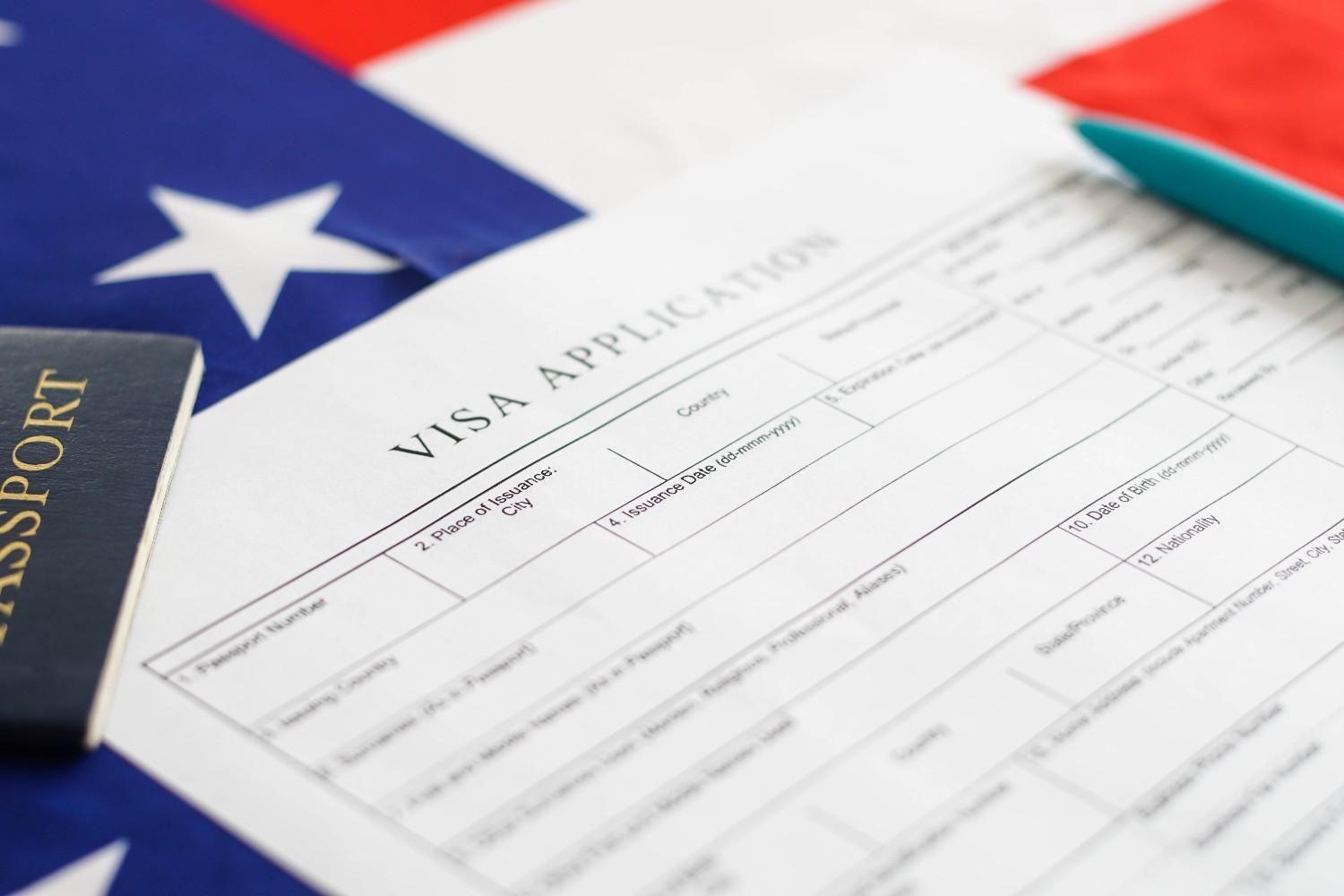
Skilled foreign workers heading to the United States in 2026 usually weigh three routes: the H-1B for specialty occupations, the O-1 for people of extraordinary ability, and the EB-1 immigrant category for permanent residence. Each has different eligibility bars, costs, timelines, and risk profiles, and the right choice depends on your credentials, your employer, and how quickly you need to be on the ground.
Last updated: May 30, 2026
The Three Visas at a Glance
The H-1B, O-1, and EB-1 cover overlapping but distinct populations. The H-1B is a temporary nonimmigrant visa for workers in specialty occupations that normally require a bachelor's degree or higher. The O-1 is a temporary nonimmigrant visa for individuals with extraordinary ability or achievement in sciences, arts, education, business, or athletics. The EB-1 is an employment-based first-preference immigrant category leading directly to a green card.
Feature | H-1B | O-1 | EB-1 |
|---|---|---|---|
Type | Nonimmigrant (temporary) | Nonimmigrant (temporary) | Immigrant (green card) |
Annual cap | 85,000 (65,000 + 20,000 US master's) | None | Part of 140,000 EB worldwide total |
Lottery? | Yes (wage-weighted as of Feb 27, 2026) | No | No |
Employer required? | Yes | Yes (or US agent) | EB-1A no; EB-1B/EB-1C yes |
Self-petition? | No | No | EB-1A only |
Initial validity | Up to 3 years | Up to 3 years | Permanent residence |
Dual intent | Yes | Yes | N/A |
H-1B: The Specialty Occupation Workhorse
The H-1B is the default route for engineers, software developers, financial analysts, doctors, architects, and other degreed professionals sponsored by a US employer. Under the FY 2027 cap season, the 85,000 statutory cap remains in place: 65,000 under the regular cap and 20,000 reserved for holders of US master's degrees or higher.
Eligibility
- The position must qualify as a specialty occupation requiring at least a bachelor's degree (or its equivalent through education and experience) in a specific field.
- The worker must hold the required degree.
- A US employer must file Form I-129 on the worker's behalf and pay the prevailing wage.
- Self-petitioning is not allowed.
The 2026 Selection Process
A DHS final rule took effect February 27, 2026, replacing the random lottery with a wage-weighted selection. Beneficiaries offered higher OES wage levels get more entries in the pool: Level IV gets 4 entries, Level III gets 3, Level II gets 2, and Level I gets 1. The FY 2027 electronic registration period ran from noon ET March 4, 2026 through noon ET March 19, 2026, with selection notifications by March 31, 2026. Petition employment start dates cannot be earlier than October 1, 2026.
Despite the new framework and a $100,000 supplemental fee introduced by the Presidential Proclamation of September 19, 2025, USCIS confirmed on March 31, 2026 that the cap was reached. Total registrations dropped to about 210,000 (from roughly 339,000 in FY 2026 and 442,000 in FY 2025).
Fees
- Electronic registration: $215 per beneficiary, nonrefundable.
- Form I-129 base filing fee: $780, or $460 for small employers (25 or fewer FTEs) and qualifying nonprofits.
- Premium processing: $2,965, with USCIS action within 15 business days (rate effective March 1, 2026).
- $100,000 supplemental fee: applies to certain new H-1B petitions where the worker is outside the US and does not hold a valid H-1B visa. It does not apply to routine extensions, amendments, or most in-country filings. Confirm applicability with counsel before filing.
- Other employer-side fees (ACWIA, fraud prevention, asylum program fee) apply per the official USCIS Fee Schedule at uscis.gov/g-1055.
Processing Time and Validity
Without premium processing, H-1B adjudication can take several months. The initial period of stay is up to three years, extendable to a total of six years (longer in some green card scenarios).
O-1: Extraordinary Ability Without the Lottery
The O-1 is the most attractive route for senior researchers, founders with traction, award-winning artists, athletes, and recognized specialists who do not want to gamble in the H-1B lottery. It has no annual cap and supports dual intent, meaning you can pursue a green card (typically EB-1A) while holding it.
Eligibility
- O-1A (sciences, education, business, athletics): a major internationally recognized one-time achievement (such as a Nobel Prize or Olympic medal), or evidence meeting at least 3 of 8 USCIS evidentiary criteria under 8 CFR 214.2(o). Criteria include nationally/internationally recognized prizes, membership in associations requiring outstanding achievement, published material about you, judging the work of others, original contributions of major significance, scholarly articles, high salary, and critical employment for distinguished organizations.
- O-1B (arts): at least 3 of 6 criteria under the "distinction" standard.
- O-1B (motion picture/TV): the higher "extraordinary achievement" standard.
- A US employer or US agent must file the petition. Self-sponsorship is not permitted, though founders can sometimes use their own US company as the petitioner if there is a separate decision-maker.
- A written advisory opinion from a peer group, labor union, or management organization is required (with limited waivers).
Fees and Processing
- Form I-129 base filing fee: $780, or $460 for small employers/qualifying nonprofits.
- Premium processing: $2,965 (15 business days).
- DS-160 consular MRV fee for O-1 visa stamping: $205.
- Standard O-1 adjudication in 2026 is running approximately 11 months without premium processing.
- USCIS approved roughly 93.8% of O-1 petitions in Q3 2025, with an 18.7% Request for Evidence rate.
Validity and Family
Initial O-1 status is granted for up to three years, with 1-year extensions tied to completing the activity or event. Spouses and unmarried children under 21 qualify for O-3 status. O-3 dependents may study but cannot work in the US.
EB-1: The Direct Green Card Route
The EB-1 is the first-preference employment-based immigrant category. It leads to a green card rather than temporary status, and it skips the PERM labor certification step required for most EB-2 and EB-3 cases.
The Three Subcategories
- EB-1A: Extraordinary Ability. No employer sponsorship and no job offer required. Self-petitioning is allowed. The standard mirrors O-1A but is interpreted more strictly because it grants permanent residence.
- EB-1B: Outstanding Professors and Researchers. Requires a US employer sponsor, at least 3 years of experience in the academic field, and an offer of a tenured, tenure-track, or comparable permanent research position.
- EB-1C: Multinational Executives and Managers. Requires a US employer sponsor and at least 1 year of qualifying employment abroad with a related entity in the 3 years preceding the petition.
Numbers and the Visa Bulletin
The FY 2026 worldwide employment-based annual limit is at least 140,000, with a per-country cap of 7% (25,620) and a dependent-area limit of 2% (7,320). EB-1 receives roughly 28.6% of that worldwide total before any spillover.
Movement on EB-1 depends on country of birth. According to the May 2026 Visa Bulletin, the EB-1 Final Action Date is current for All Chargeability Areas Except Those Listed, Mexico, and the Philippines. The EB-1 cutoff for China and India is April 1, 2023. For both May and June 2026, USCIS requires employment-based adjustment of status applicants to use the Final Action Dates chart rather than the Dates for Filing chart, the first such switch in more than six months. Always confirm the current month's chart before filing Form I-485.
Fees and Processing
EB-1 cases proceed through Form I-140 (immigrant petition), followed by either consular processing abroad or adjustment of status (Form I-485) inside the US. Premium processing is available for I-140 in 15 business days. For exact, consolidated form fees, consult the official USCIS Fee Schedule at uscis.gov/g-1055 and the Form I-907 page, as these have shifted under recent rules.
Direct Comparison: Which One Should You Pursue?
Scenario | Best fit |
|---|---|
Software engineer with a master's, employer wants to sponsor | H-1B (registration in March) |
Founder with press coverage, funding, patents | O-1A, then EB-1A |
Tenure-track university researcher with citations | EB-1B (often filed alongside O-1) |
Senior manager transferring within multinational | L-1A first, then EB-1C |
Award-winning artist or musician | O-1B, then EB-1A |
Worker abroad who needs to start immediately | O-1 (no lottery, dual intent) |
Worker who wants permanent status from day one | EB-1 (especially EB-1A self-petition) |
Common Pitfalls
- Treating O-1 like a consolation prize for the H-1B. The O-1 has a higher evidentiary bar but no cap, no lottery, and a 93%+ approval rate. For candidates with strong publications, press, or awards, it is often the faster path.
- Skipping the advisory opinion for O-1. Without a properly framed peer group letter, the petition can stall on a Request for Evidence.
- Filing EB-1A with thin evidence. USCIS applies a two-step Kazarian analysis: counting criteria first, then evaluating the totality. Meeting 3 of 10 criteria on paper is not the same as a final merits determination.
- Misreading the Visa Bulletin. Indian and Chinese applicants need to track Final Action Dates monthly. The chart USCIS accepts can change month to month.
- Underestimating the $100,000 H-1B supplemental fee. Confirm whether your filing falls inside or outside the proclamation's scope before assuming you owe it.
- Ignoring dual intent. O-1 holders can pursue green cards openly; F-1 and B-1/B-2 holders typically cannot. Plan status transitions carefully.
FAQs
Can I hold H-1B and start an EB-1 case at the same time? Yes. H-1B is dual-intent. Many H-1B workers file EB-1A self-petitions while maintaining nonimmigrant status.
Does O-1 lead to a green card automatically? No. The O-1 is temporary. The natural follow-on is EB-1A (or EB-1B for academics), filed as a separate petition.
Is the H-1B lottery still random in 2026? No. As of February 27, 2026, selection is wage-weighted: higher OES wage levels receive more entries in the pool.
Can my spouse work? H-4 spouses can work only with an EAD (generally tied to an H-1B holder with an approved I-140). O-3 spouses cannot work. EB-1 derivative spouses get green cards and full work authorization.
How long does an EB-1 take? For applicants chargeable to All Chargeability Areas, EB-1 is current as of May 2026, so the bottleneck is USCIS adjudication of the I-140 and I-485, not the bulletin. For India and China, expect multi-year waits.
Do I need a US degree for H-1B? No, but a foreign degree must be evaluated as equivalent to a US bachelor's, and a US master's degree qualifies you for the 20,000-visa advanced-degree allocation.
Beyond the US: Wider Context
If the US route looks too uncertain, it is worth understanding how other skilled worker visa programs globally structure access, what tax benefits for foreign workers might be available elsewhere, and how permanent residency pathways comparison looks in other major destinations. Many candidates run a US strategy in parallel with a second country option.
If you do land a job in the US, written English handles work, but functional Spanish, Mandarin, Korean, or another community language makes daily life smoother depending on where you settle. Try Migaku if you want to build that language using real shows, news, and podcasts from your target country.