Vietnamese Family Vocabulary: Complete Guide to Family Members in Vietnamese
Last updated: March 30, 2026
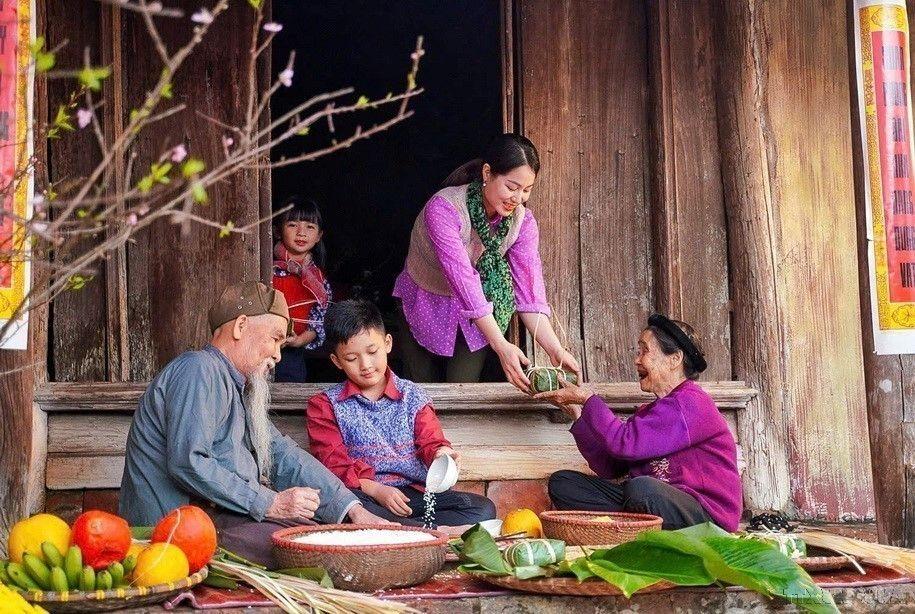
Learning Vietnamese family vocabulary is way more complicated than just memorizing a list of words. The Vietnamese language has this whole system where you call people different things based on whether they're on your mom's side or your dad's side, whether they're older or younger, and even their gender. Pretty cool if you're into languages, but definitely a challenge when you're first getting started.
How Vietnamese family vocabulary works
Vietnamese family terms follow a logic that's completely different from English. In English, you just say "grandmother" or "grandfather" and maybe add "maternal" or "paternal" if you need to be specific. Vietnamese builds all that information right into the word itself.
Vietnamese is what linguists call a "kinship-heavy" language. The culture places huge importance on family relationships and hierarchy, so the language reflects that. When you're talking to or about a family member, you need to know their exact position in the family tree.
The basic building blocks are pretty straightforward. "Ông" means grandfather, "bà" means grandmother. But you can't just stop there. You need to add "nội" for paternal grandparents or "ngoại" for maternal grandparents. So your dad's mom is "bà nội" and your mom's mom is "bà ngoại". Same pattern works for grandfathers.
This system exists because Vietnamese families traditionally lived in extended family units where everyone's role and position mattered. You needed precise language to navigate all those relationships.
Vietnamese family terms for parents and siblings
Parents are the easier part. "Bố" or "ba" means father, and "mẹ" or "má" means mother. Different regions in Vietnam prefer different versions, but they all work.
Siblings are where things get interesting. You don't just have "brother" and "sister" in Vietnamese. You have older brother, younger brother, older sister, and younger sister, each with their own word.
Vietnamese | English |
|---|---|
anh | Older brother |
em trai | Younger brother (trai = male) |
chị | Older sister |
em gái | Younger sister (gái = female) |
When someone asks you "Bạn có anh chị em không?" they're literally asking "Do you have older brothers, older sisters, younger siblings?" This is the standard way to ask if someone has siblings in Vietnamese.
The age distinction matters because Vietnamese culture emphasizes respect for elders. You'd never call your older brother by his name directly. You'd use "anh" as both a title and a pronoun when speaking to him.
Extended family members in Vietnamese
Aunts and uncles follow the same paternal/maternal distinction as grandparents. But they also change based on whether they're older or younger than your parents.
Vietnamese | English |
|---|---|
bác trai | Father's older brother |
bác gái | Father's older sister |
chú | Father's younger brother |
cô | Father's younger sister |
cậu | Mother's brother (regardless of age) |
dì | Mother's sister (regardless of age) |
Yeah, it's a lot to remember. Vietnamese families keep track of all these relationships naturally because they grow up using these terms every day. For learners, it helps to draw out a family tree and label everyone.
Cousins get even more specific. The word "con" appears in cousin terms because it literally means "child". Your uncle's or aunt's child is their "con". So if your "chú" has a son, that cousin would be "con chú". The system tells you exactly how you're related.
Vietnamese vocabulary for marriage and in-laws
Marriage adds another layer to the Vietnamese family vocabulary.
Vietnamese | English |
|---|---|
chồng | Husband |
vợ | Wife |
dâu | Daughter-in-law (suffix) |
rể | Son-in-law (suffix) |
bố chồng / mẹ chồng | Father-in-law / Mother-in-law (from the wife's perspective) |
bố vợ / mẹ vợ | Father-in-law / Mother-in-law (from the husband's perspective) |
The term "dâu" shows up in phrases like "con dâu" for daughter-in-law. Vietnamese culture traditionally placed daughters-in-law in a specific role within the husband's family, and the language reflects those traditional family structures.
Your spouse's siblings use the same age-based terms as your own siblings, but you might add the "chồng" or "vợ" suffix to clarify. So your husband's older brother could be "anh chồng".
Different words for cousins in Vietnamese families
Vietnamese doesn't have one generic word for "cousin" like English does. Every cousin term tells you the specific relationship.
Vietnamese | English |
|---|---|
con bác | Father's older sibling's children |
con chú | Father's younger brother's children |
con cô | Father's younger sister's children |
con cậu | Mother's brother's children |
con dì | Mother's sister's children |
con trai của chú | Paternal uncle's son (literally "male child of younger paternal uncle") |
con gái của dì | Maternal aunt's daughter |
Vietnamese families use these terms in everyday conversation. When someone mentions their "con cậu", everyone immediately knows that's their maternal uncle's child. The precision helps keep family relationships clear, especially in big extended families.
Learning Vietnamese words for family effectively
Memorizing Vietnamese family terms as a simple list doesn't really work. You need to understand the system behind the words.
- Start by mapping out your own family tree in Vietnamese. Label your relatives with their correct Vietnamese terms. This makes the vocabulary personal and relevant instead of abstract.
- Practice by describing your family out loud. "Tôi có một anh trai và một em gái" (I have an older brother and a younger sister). "Ông nội của tôi sống ở Việt Nam" (My paternal grandfather lives in Vietnam).
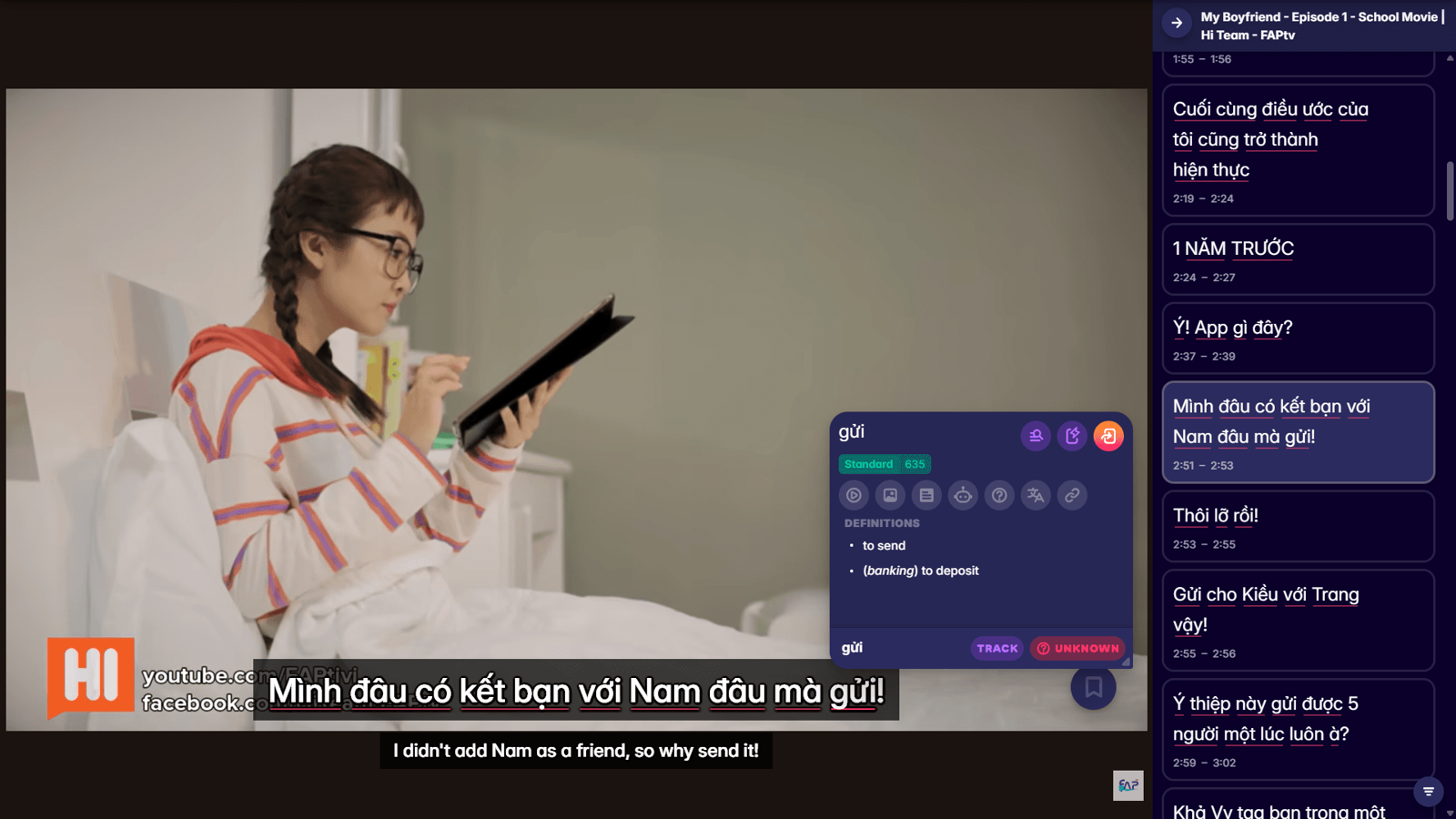
- Watch Vietnamese family dramas or reality shows. Family interactions come up constantly, and you'll hear these terms used naturally. Pay attention to how characters address each other versus how they talk about family members to outsiders.
- Create flashcards that include relationship context, not just translations. Instead of "chú = uncle", write "chú = father's younger brother" with an example sentence. The extra context helps the terms stick.
If you're serious about learning Vietnamese through real content, Migaku's browser extension and app let you look up words and save sentences while watching Vietnamese shows or reading articles. Makes the whole immersion process way more practical. There's a 10-day free trial if you want to check it out.
Family words in Vietnamese work as a window into Vietnamese culture
The language doesn't just describe family members, it encodes hierarchy, respect, and social roles into every term. You can absolutely learn this system, even though it's different from English. The more Vietnamese content you consume, the more natural these terms become. You'll start recognizing patterns and predicting which term fits which relationship. That's when Vietnamese family vocabulary clicks from memorized lists into actual working knowledge.
If you consume media in Vietnamese, and you understand at least some of the messages and sentences within that media, you will make progress. Period.
Social harmony flows through words.🏠📚