# Vietnamese Food Vocabulary: Know Common Vietnamese Food Before Your Trip
> Explore Vietnamese food vocabulary for dishes, ingredients, and restaurant phrases. Navigate menus confidently and order like a local.
**URL:** https://migaku.com/blog/language-fun/vietnamese-food-vocabulary
**Last Updated:** 2026-03-10
**Tags:** vocabulary, phrases
---
If you're planning to eat your way through Vietnam or just want to understand what you're ordering at your local Vietnamese restaurant, you'll need more than just pointing at menu pictures. [Learning essential Vietnamese](https://migaku.com/learn-vietnamese) food vocabulary opens up a whole new world of flavors, helps you navigate street food stalls with confidence, and honestly makes the entire dining experience way more enjoyable.
---
## Essential Vietnamese dishes you need to know
Let's start with the dishes you'll encounter most frequently.
- **Phở ** is probably the most famous Vietnamese dish worldwide. This noodle soup typically comes with beef (phở bò) or chicken, rice noodles, and aromatic broth. You'll see it everywhere from street stalls to upscale restaurants.
- **Bánh mì ** deserves its own spotlight. These Vietnamese sandwiches combine French baguettes with Vietnamese fillings like pâté, pickled vegetables, cilantro, and various meats. The fusion of French colonial influence with Vietnamese flavors creates something totally unique.
- **Gỏi cuốn **, or fresh spring rolls, appear on nearly every restaurant menu. These translucent rice paper rolls contain shrimp, pork, fresh herbs, and vermicelli noodles. They're lighter than fried spring rolls and usually served with peanut or fish sauce for dipping.
- **Cơm ** refers to cooked rice, which forms the foundation of most Vietnamese meals. You'll see it in dishes like cơm tấm (broken rice), typically served with grilled pork chop, shredded pork skin, and a fried egg. Rice is so fundamental that the Vietnamese greeting "Ăn cơm chưa?" literally translates to "Have you eaten rice yet?" but means "How are you?"
- **Bún chả ** is a Hanoi specialty featuring grilled pork served with rice noodles and herbs. The meat sits in a bowl of sweet and savory sauce where you dip the noodles. This dish gained international attention when Obama ate it with Anthony Bourdain in Hanoi.
---
## Meat, seafood, and protein vocabulary
When you order food in Vietnam, you'll need to know protein names.
**Thịt ** means meat in general, but you'll see it combined with other words.
| Vietnamese | English |
| - | - |
| thịt bò | beef |
| thịt gà | chicken |
| thịt heo / thịt lợn | pork |
These combinations appear constantly on menus.
Seafood vocabulary comes in handy, especially in coastal regions.
| Vietnamese | English |
| - | - |
| cá | fish |
| tôm | shrimp |
| mực | squid |
| cua | crab |
| nghêu | clams |
Vietnamese cuisine uses seafood extensively, so recognizing these words helps you navigate menus effectively.
For vegetarian travelers, knowing how to communicate dietary preferences is crucial. **Chay ** means vegetarian, and đậu hũ refers to tofu. You can ask "Có món chay không?" which means "Do you have vegetarian dishes?" Many Buddhist restaurants serve exclusively vegetarian food, which you'll recognize by signs saying "Cơm chay" or "Quán chay."
Eggs appear in many dishes.
| Vietnamese | English |
| - | - |
| trứng | egg |
| trứng ốp la | fried egg |
| trứng luộc | boiled egg |
The Vietnamese love adding a fried egg on top of rice dishes, which adds richness and makes the meal more filling.
---
## Noodle varieties and rice dishes
Vietnamese cuisine features an impressive variety of noodles, each with distinct names and uses.
- **Phở ** noodles are flat rice noodles used specifically in phở soup.
- **Bún ** refers to round rice vermicelli noodles, thinner than phở noodles and used in dishes like bún bò Huế and bún chả.
- **Bánh canh ** are thick, chewy tapioca or rice noodles. They're substantially thicker than other Vietnamese noodles and appear in hearty soups.
- **Miến ** are glass noodles made from mung bean starch, almost transparent when cooked.
- **Hủ tiếu ** is another noodle variety popular in southern Vietnam. These rice noodles come in soup or dry versions with pork, shrimp, and various toppings. The texture falls somewhere between phở and bún noodles.
Beyond cơm (cooked rice), you'll encounter rice in various forms.
| Vietnamese | English |
| - | - |
| cơm chiên | fried rice |
| cơm tấm | broken rice (smaller grains with a different texture) |
| xôi | sticky rice, often eaten for breakfast with savory or sweet toppings |
---
## Vegetables and herbs in Vietnamese cooking
Fresh herbs define Vietnamese cuisine. **Rau ** means vegetables or greens generally. **Rau thơm ** specifically refers to aromatic herbs, which appear in massive platters alongside many dishes. You pick and add them yourself.
| Vietnamese | English |
| - | - |
| ngò / rau mùi | cilantro, probably the most common herb you'll encounter |
| húng quế | Thai basil, with its distinctive anise-like flavor |
| rau răm | Vietnamese coriander, has a spicy, citrusy taste that's hard to describe but totally addictive |
| giá đỗ | bean sprouts, which add crunch to phở and other noodle soups |
| dưa chua | pickled vegetables, usually carrots and daikon radish, appearing in bánh mì and as side dishes |
| cà chua | tomato |
| cà rốt | carrot |
| hành | onion |
| hành lá | green onions or scallions |
| ớt | chili pepper, crucial vocabulary if you want to control spice levels |
---
## Drinks and desserts
Vietnamese coffee culture deserves attention.
- **Cà phê sữa đá ** is iced coffee with sweetened condensed milk, incredibly strong and sweet.
- **Cà phê đen ** is black coffee, served hot or iced. The coffee drips slowly through a metal filter directly into your cup.
- **Trà ** means tea, and you'll find various types. Trà đá is iced tea, often served free at restaurants.
- **Nước mía ** is sugarcane juice, pressed fresh from sugarcane stalks.
- **Nước dừa ** means coconut water, refreshing and naturally sweet.
- **Sinh tố ** refers to smoothies or shakes, made with fresh fruit, ice, and sometimes condensed milk.
- **Chè ** is a category of sweet desserts or drinks, typically served in a glass with various layers of beans, jellies, fruits, and coconut milk.
- **Kem ** means ice cream, and you'll find both Western-style ice cream and Vietnamese versions using tropical flavors like durian, jackfruit, and avocado.
- **Bánh flan ** is Vietnamese crème caramel, showing French influence on Vietnamese desserts.
---
## Seasoning and condiments
- Fish sauce, or **nước mắm **, is the backbone of Vietnamese cooking. This fermented sauce made from fish and salt appears in nearly every savory dish, either cooked into the food or served as a dipping sauce. The smell can be intense, but the flavor it adds is irreplaceable.
- **Nước chấm ** is a general term for dipping sauce, usually based on fish sauce mixed with lime juice, sugar, garlic, and chili. Each region and family has slightly different recipes. You'll get this sauce with spring rolls, grilled meats, and many other dishes.
- **Tương ớt ** is chili sauce, similar to Sriracha. Tương đen refers to dark soy sauce, used less frequently than in Chinese cooking but still present in certain dishes. Dầu hào is oyster sauce, another common seasoning.
- **Muối ** means salt, **đường** means sugar, and **tiêu** is pepper. These basic seasonings appear on most restaurant tables so you can adjust flavors to your preference. Vietnamese food balances sweet, salty, sour, and spicy flavors, so don't hesitate to customize.
---
## Street food vocabulary and etiquette
Vietnamese street food represents some of the best eating experiences you'll have.
- **Quán ** means small restaurant or food stall. You'll see signs like "Quán phở" or "Quán cơm" indicating what they specialize in.
- **Xe đẩy ** refers to food carts, which vendors push through streets selling everything from fresh fruit to complete meals.
- **Chợ ** means market, where you'll find incredible food stalls alongside produce vendors.
When eating street food, you'll often sit on tiny plastic stools. Don't expect elaborate service, just point at what you want and watch vendors prepare it fresh. Most street vendors have limited English, so knowing basic Vietnamese food vocabulary makes the experience smoother.
Hygiene concerns are valid, but Vietnamese street food is generally safe if you follow basic rules. Eat where locals eat, choose stalls with high turnover, and make sure food is cooked fresh and served hot.
---
## Cooking methods and taste descriptors
Understanding how dishes are prepared helps you order what you'll actually enjoy.
- **Nướng ** means grilled, and you'll see this method used for meats, seafood, and even rice paper.
- **Chiên ** means fried, as in gà chiên (fried chicken) or nem chiên (fried spring rolls).
- **Luộc ** means boiled or steamed, a common preparation for vegetables and proteins.
- **Xào ** means stir-fried, typically with vegetables and seasonings.
- **Hấp ** specifically means steamed, used for dishes like bánh bao (steamed buns).
Taste vocabulary lets you describe preferences or ask about flavors.
| Vietnamese | English |
| - | - |
| ngon | delicious |
| ngọt | sweet |
| mặn | salty |
| chua | sour |
| cay | spicy hot |
| đắng | bitter |
| nóng | hot (temperature) |
| lạnh | cold |
You'll use these when ordering drinks. **"Cà phê nóng" ** is hot coffee, while **"cà phê đá" ** (literally coffee ice) is iced coffee.
---
## How to order food in Vietnamese restaurants
Walking into a Vietnamese restaurant and confidently ordering food requires knowing a few key phrases.
- **"Cho tôi" ** means "Give me" or "I'd like," followed by the dish name. For example, "Cho tôi một phở bò" means "I'd like one beef phở."
- **Món ** means dish or item. You can ask "Món này là gì?" which means "What is this dish?" when pointing at something on the menu.
- **"Có cay không?" ** asks "Is it spicy?" which helps you avoid surprise spice levels.
- When you're ready to pay, say **"Tính tiền" ** or **"Cho tôi hóa đơn" ** to ask for the bill. Can I have the bill? translates to "Cho tôi hóa đơn được không?" Adding "được không?" makes requests more polite.
[Numbers](https://migaku.com/blog/language-fun/vietnamese-numbers) are essential for ordering. Một is one, hai is two, ba is three, bốn is four, năm is five. You'll use these constantly when specifying quantities.
---
## Regional variations in Vietnamese food
Vietnamese cuisine varies significantly by region, which affects the vocabulary you'll encounter.
Northern Vietnamese food tends to be less sweet and spicy than southern versions. Hanoi specialties include bún chả and phở, with clearer, more delicate broths.
Central Vietnamese cuisine, particularly from Huế, is known for spiciness and complexity. Bún bò Huế is a spicy beef noodle soup that's thicker and more robust than phở. Bánh bèo are small steamed rice cakes topped with shrimp and pork.
Southern Vietnamese food incorporates more sugar and coconut milk, reflecting the region's agricultural abundance. The food tastes sweeter overall, and you'll find more tropical fruits and vegetables in dishes.
These regional differences mean the same dish name might refer to slightly different preparations depending on where you are. Phở in Hanoi tastes different from phở in Saigon, though both are delicious.
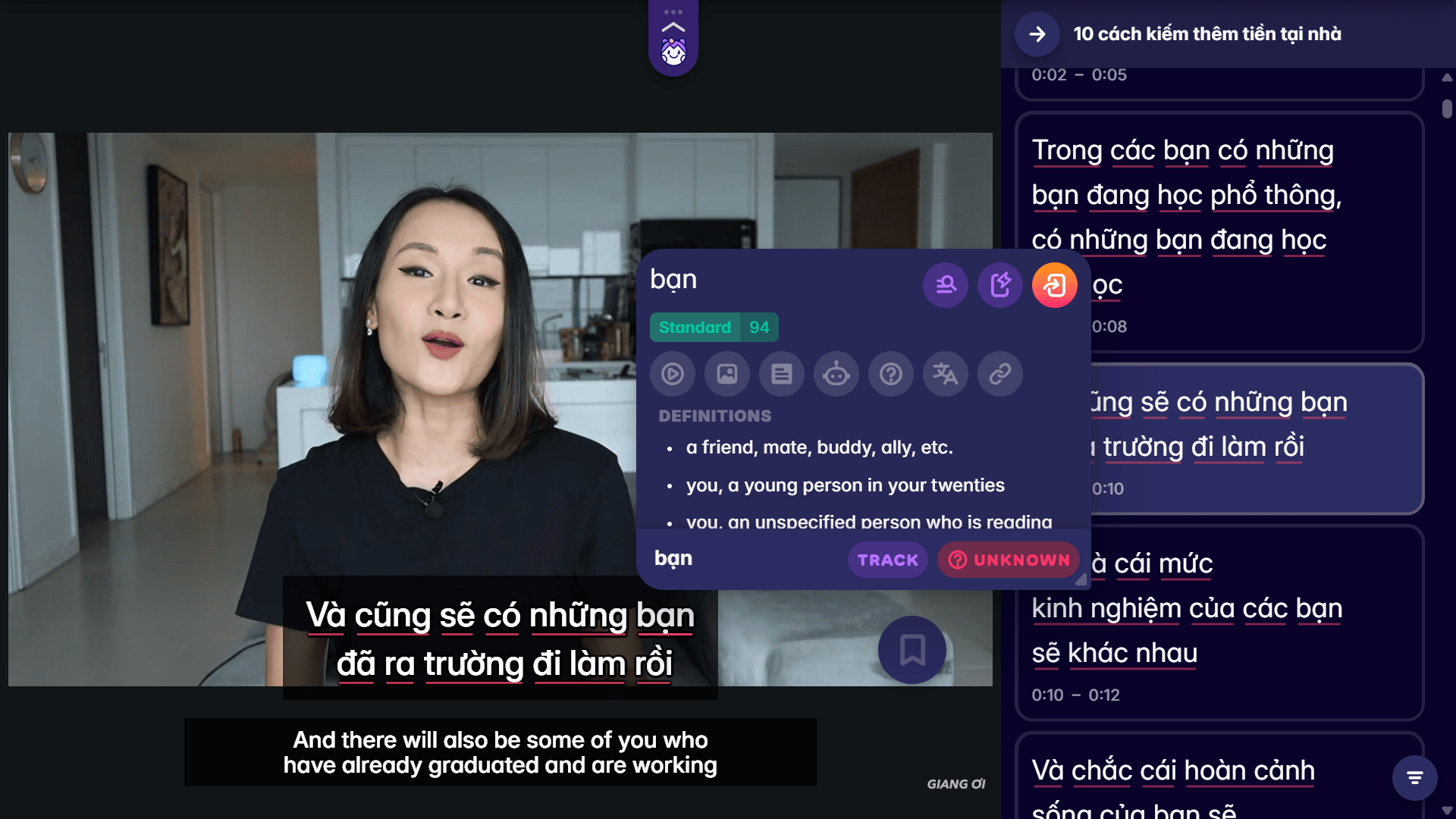
Anyway, if you want to build your Vietnamese vocabulary beyond just food terms, Migaku's browser extension and app let you look up words instantly while watching Vietnamese shows or reading articles. Makes [learning from real content](https://migaku.com/blog/language-fun/comprehensible-input-method-language-learning) way more practical. There's a 10-day free trial if you want to check it out.
 ---
## Vietnamese cuisine is incredibly diverse
If you don't know the basic food vocabulary, you'll miss out on understanding what ingredients are in your meal, what special dishes the restaurants offer, and what you can explore at local food stalls. With these basic words, you can also understand more if you want to watch some Vietnamese food documentaries and get a real understanding of Vietnamese food culture.
> If you consume media in Vietnamese, and you understand at least some of the messages and sentences within that media, you will make progress. _Period_.
What can be more fun than discussing food?🍜🥬
---
## Vietnamese cuisine is incredibly diverse
If you don't know the basic food vocabulary, you'll miss out on understanding what ingredients are in your meal, what special dishes the restaurants offer, and what you can explore at local food stalls. With these basic words, you can also understand more if you want to watch some Vietnamese food documentaries and get a real understanding of Vietnamese food culture.
> If you consume media in Vietnamese, and you understand at least some of the messages and sentences within that media, you will make progress. _Period_.
What can be more fun than discussing food?🍜🥬