Vietnamese Personal Pronouns: How They Actually Work
Last updated: March 28, 2026

If you've ever tried learning Vietnamese, you probably noticed pretty quickly that pronouns work completely differently than in English. Instead of just saying "I" or "you" all the time, Vietnamese speakers pick different words based on who they're talking to, how old that person is, and what kind of relationship they have. The whole system is tied to respect, family roles, and social hierarchy. Getting these right matters a lot in Vietnamese culture, and honestly, it's one of the trickier parts of learning Vietnamese for English speakers.
How Vietnamese pronouns reflect relationships
Here's the thing about Vietnamese personal pronouns: they're not fixed like English pronouns. When you say "I" in English, you always say "I" regardless of who you're talking to. But in Vietnamese, the pronoun you use for yourself changes depending on whether you're talking to your boss, your younger sibling, or a stranger at the coffee shop.
The Vietnamese language uses kinship terms as pronouns. Words that literally mean "older brother," "younger sister," "aunt," or "uncle" get used as personal pronouns in everyday conversation. This system reflects the Confucian values that influenced Vietnamese culture, where age and social position determine how people interact.
When you meet someone in Vietnam, you're basically doing a quick mental calculation: Are they older or younger than me? What's our relationship? Are we the same gender? All of these factors determine which pronoun you'll use.
Basic first-person pronouns in Vietnamese
Let's start with how to say "I" or "me" in Vietnamese. The most neutral option is tôi , which works in formal situations or when you're not sure what else to use. Think of tôi as the safe choice when you're talking to strangers, in business settings, or in official contexts.
But you'll hear plenty of other first-person pronouns too.
If you're a guy talking to someone around your age or younger, you might use anh to refer to yourself (Yes, the same word also means "you" when addressing others, which I know sounds confusing at first). Similarly, a woman might use chị in the same way.
The pronoun ta is an older, more literary form that you'll see in books or formal writing. Some people use it in everyday speech, but it has a somewhat elevated or old-fashioned feel to it.
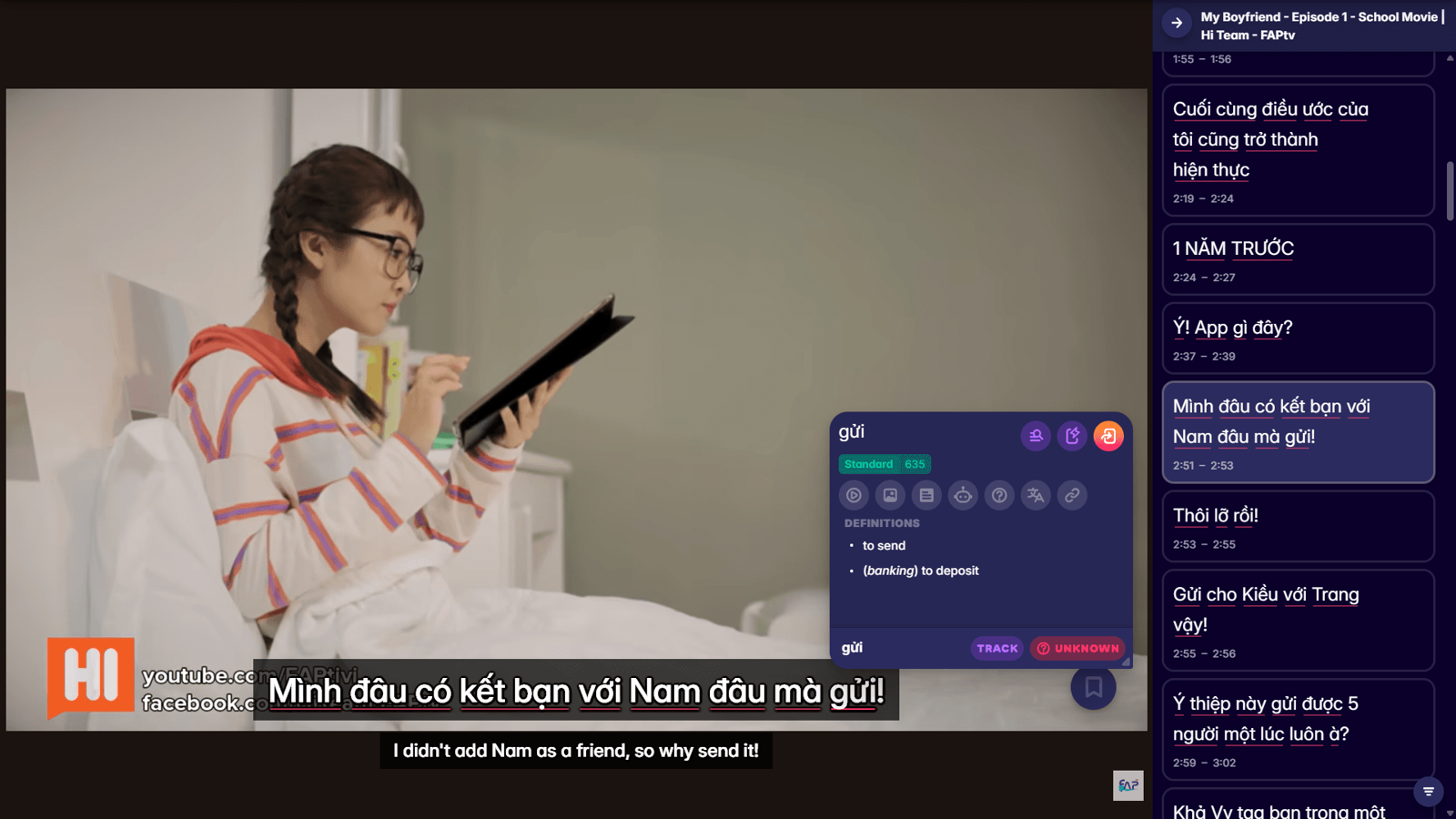
Then there's mình , which is pretty casual and friendly. Couples often use mình when talking to each other, and close friends might use it too. It creates an intimate, warm feeling in conversation.
The pronouns tao and tớ are informal options you'd use with close friends. Tao is pretty rough and can sound rude if you use it with the wrong person, so save it for people you're really comfortable with. Tớ is softer and more playful.
For plural first-person, you've got chúng tôi and chúng ta . Both mean "we," but chúng tôi excludes the listener (like "we, but not you"), while chúng ta includes everyone in the conversation ("we, including you").
Second-person pronouns and how to address others
Figuring out how to say "you" in Vietnamese is where things get really interesting.
The pronoun bạn literally means "friend" and works as a neutral "you" when talking to peers or people around your age. You'll hear it a lot among students and colleagues.
But most of the time, Vietnamese speakers use kinship terms as second-person pronouns.
If you're talking to an older man who's roughly your parents' age, you'd call him chú (uncle) or bác (older uncle). For an older woman in that age range, you'd use cô (aunt) or dì (aunt), depending on the region and specific family position.
When addressing someone slightly older than you, anh works for men and chị for women. These literally mean "older brother" and "older sister," but you use them for anyone who's a bit older, regardless of whether they're actually related to you.
The pronoun em is super common and means "younger sibling." You'd use it to address anyone younger than you. So if you're the older person in a conversation, you might call yourself anh or chị and call the other person em.
Here's where it gets tricky: mày is an informal, sometimes rude way to say "you." Friends use it with each other all the time, but if you say mày to someone you don't know well, they'll think you're being disrespectful. Same goes for using it with anyone older than you.
The pronoun nó is used to refer to a third person (like "he," "she," or "it"), but it can sound dismissive or rude when talking about people. You'd use it for close friends in casual conversation or when talking about someone younger, but never for someone you need to show respect to.
Possessive pronouns work with của
💡Making possessive pronouns in Vietnamese is actually more straightforward than the personal pronoun system. You just add của before the pronoun.
So "my" becomes của tôi, "your" becomes của bạn or của anh/chị depending on who you're talking to, and so on.
Sometimes Vietnamese speakers drop của in casual conversation, especially when the possessive relationship is obvious from context. You might hear someone say "anh xe" instead of "xe của anh" (your car), but technically the của should be there.
The word của itself means "of" or "belonging to," so you're basically saying "the car of older brother" when you say "xe của anh." Pretty logical once you get used to it.
Plural forms and saying they in Vietnamese
💡Creating plural pronouns in Vietnamese usually involves adding chúng before the pronoun. So while nó means "he/she/it" (in an informal or neutral way), chúng nó means "they." Same pattern works with other pronouns.
But here's something interesting: Vietnamese doesn't always require you to specify plural the way English does. Context often makes it clear whether you're talking about one person or multiple people, so speakers might skip the plural marker entirely.
The pronoun họ is another way to say "they," and it's pretty neutral. You'll hear it in all kinds of contexts when referring to groups of people.
Remember that chúng ta versus chúng tôi distinction I mentioned earlier? That inclusive versus exclusive "we" difference matters in real conversations. If you're talking to a customer and say "chúng tôi can help you," you're saying "we (the company, not including you) can help you." But if you say "chúng ta can solve this together," you're including the customer in the "we."
Cultural tips for using Vietnamese personal pronouns correctly
Getting Vietnamese pronouns wrong can create awkward situations or accidentally offend people. Here are some practical tips from real-life usage.
- When you first meet someone, pay attention to how they introduce themselves or how others address them. That gives you a clue about which pronoun to use. If you're unsure about someone's age relative to yours, it's usually safer to use a pronoun that shows more respect (treating them as slightly older) rather than less.
- In business settings, stick with tôi for yourself and anh/chị for others until you know people better. Once you've established a friendly relationship, you might switch to more casual pronouns, but let the Vietnamese person guide that shift.
- Regional differences exist too. Southern Vietnamese speakers might use different pronouns than northern speakers in some situations. For example, you'll hear ba (which means "father") used as a pronoun for older men in the south more than in the north.
- One common mistake learners make is using the same pronoun consistently instead of switching based on context. You might call yourself em when talking to your Vietnamese teacher, but if you then talk to a younger student, you need to switch to calling yourself anh or chị. It feels weird at first, but that's how the system works.
If you're serious about learning Vietnamese through real content, Migaku's browser extension and app let you look up words and save example sentences while watching Vietnamese shows or reading articles. Makes the whole immersion process way more practical. There's a 10-day free trial if you want to check it out.
Say Vietnamese sentences with the correct pronouns
The pronoun system isn't just a grammar challenge. It's a window into how Vietnamese culture values respect, acknowledges hierarchy, and builds relationships through language. Every time you choose the right pronoun, you're showing cultural understanding that goes way beyond just vocabulary. As you spend more time on Vietnamese media, you will internalize the social norms of how to refer to yourself and others naturally and respectfully.
If you consume media in Vietnamese, and you understand at least some of the messages and sentences within that media, you will make progress. Period.
Language is the roadmap of a culture.