Where to Live in Shenzhen: Futian vs Nanshan vs Shekou
Last updated: May 23, 2026
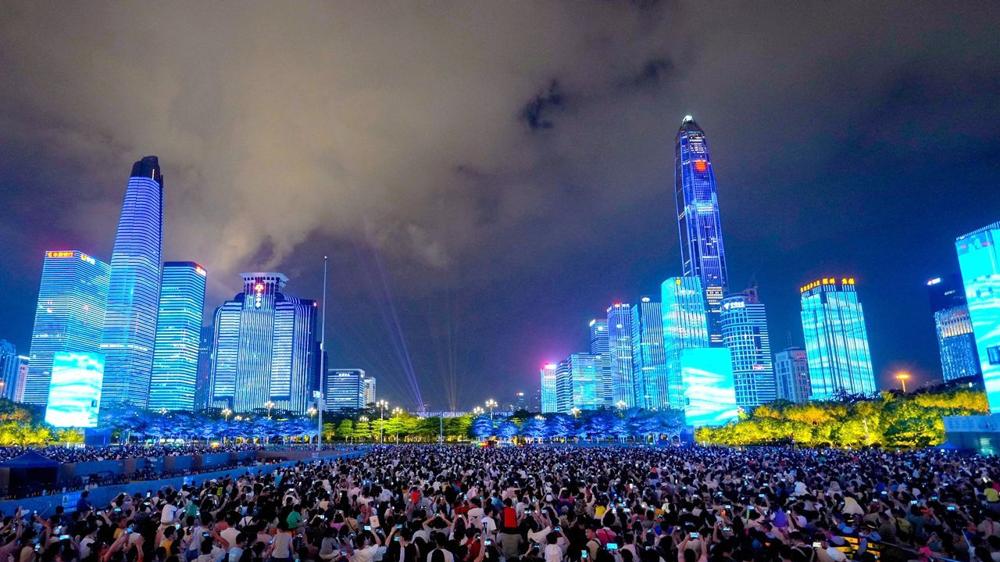
If you're moving to Shenzhen and trying to pick a neighborhood, the short answer is this: Futian for central convenience and business access, Nanshan for tech jobs and family life, Shekou for a more international, walkable expat enclave. The longer answer depends on your commute, your budget, whether you have kids, and how much Mandarin you speak.
Last updated: May 23, 2026
- The three districts at a glance
- Futian: the central business core
- Nanshan: tech jobs, newer buildings, growing families
- Shekou: the international peninsula
- Rent, utilities and what you'll actually pay
- Buying property as a foreigner
- Subsidized and public housing (mostly not for foreigners)
- Visas, social insurance and the paperwork
- Common pitfalls
The three districts at a glance
Shenzhen is huge. Its permanent resident population was roughly 17.99 million at the end of 2024, the last official figure published, and the city spans more than a dozen districts. Most foreigners end up in three of them: Futian, Nanshan, or the Shekou peninsula (which is technically part of Nanshan but functions as its own world).
Here is how they compare on the things that matter day to day:
Factor | Futian | Nanshan (excl. Shekou) | Shekou |
|---|---|---|---|
Vibe | Central, dense, business-focused | Tech campuses, newer high-rises, family suburbs | Walkable, international, seafront |
Typical industry | Finance, government, trade | Tech (Tencent, Huawei-adjacent), R&D | Logistics, education, expat services |
English usage | Moderate in CBD, low elsewhere | Low to moderate | High by Chinese-city standards |
Metro density | Highest in the city | Strong, growing | Decent, edge-of-network |
Green space | Lianhuashan, Bijia Park | Talent Park, Shenzhen Bay | Sea View Park, coastal promenade |
Best for | Single professionals, commuters to HK | Tech workers, mid-career families | Families wanting an international bubble |
Futian: the central business core
Futian is the administrative and financial heart of Shenzhen. The municipal government, the stock exchange, and most major bank headquarters sit here. If you work in finance, consulting, government affairs, or anything that needs proximity to Hong Kong via the Futian Checkpoint or Lok Ma Chau crossing, this is the obvious choice.
What it's like to live there. Futian feels like a Chinese version of Midtown Manhattan: high-rises packed tightly, wide avenues, malls stacked on top of metro stations. Nightlife clusters around Coco Park and Shopping Park. Lianhuashan Park gives you a green lung in the middle of the district, and the view from its summit (Deng Xiaoping's statue looking south over the skyline) is the postcard image of the city.
Rent. Futian is the most expensive district for foreigners in Shenzhen alongside parts of Nanshan. According to Wise's 2026 cost-of-living data, a one-bedroom in a central Shenzhen location averages around £554 per month, and a three-bedroom around £1,333. In practice, modern serviced apartments near Shopping Park or Huaqiangbei push above that, while older walk-ups in Shangbu or Huanggang come in noticeably lower.
Transport. Futian is the metro hub of the city. Lines 1, 2, 3, 4, 7, 9, 10, and 11 all converge here, and Futian Station is the terminus of the high-speed rail link to Hong Kong West Kowloon. With Shenzhen Metro now operating more than 635 km of track across roughly 441 stations after the late-2025 expansions, getting from Futian to almost anywhere takes under an hour. Fares are distance-based, from ¥2 to ¥14, with a four-hour limit between tap-in and tap-out.
Who Futian suits. Single professionals, couples without kids, anyone commuting to Hong Kong, and people who want to live without owning a car. It's less ideal if you want low-rise streets, English-speaking neighbors, or quick access to nature beyond a city park.
Nanshan: tech jobs, newer buildings, growing families
Nanshan is where Shenzhen's tech identity lives. Tencent's headquarters, the OCT cultural cluster, Shenzhen Bay Technology Park, and the Houhai financial district all sit in Nanshan. If you have an offer from a Chinese tech company or an R&D-heavy multinational, your office is almost certainly here or in adjacent Bao'an.
Sub-areas worth knowing.
- Houhai / Shenzhen Bay. Newest skyline in the city, premium rents, family-friendly malls (Coastal City, Hai Ya Mega Mall), and the Shenzhen Bay coastal park for running and cycling.
- Nanshan Center / Nanshan Avenue. Older, more local, cheaper rents, decent metro access.
- OCT (Overseas Chinese Town). Leafy, mid-density, full of cafes, museums (OCAT), and the original expat housing stock around Window of the World.
- Xili. Inland, university-adjacent (Shenzhen University Town, SUSTech), cheaper, longer commutes downtown. Metro Line 13's Phase 2 South and the new Xili High Speed Railway Station are expected to open in 2027, which will reshape this area significantly.
Rent. Houhai and the Shenzhen Bay strip are at the top of the market, often matching or exceeding Futian. Move inland a few metro stops and prices drop sharply. A three-bedroom in suburban Nanshan averages around £663 per month per Wise's 2026 data, less than half the central figure.
Who Nanshan suits. Tech workers who want a short commute, families looking for newer buildings and international schools (QSI, ISNS, Shekou International School all sit in or near Nanshan), and people who like sea-facing parks. The downside: outside of a few clusters, daily life is conducted almost entirely in Mandarin, and the district is sprawling enough that you'll want to live close to your office or a major metro interchange.
If you're trying to model out what your monthly budget will actually look like in this district, our cost of living in Shenzhen for tech workers breakdown goes into specific salary-to-rent ratios.
Shekou: the international peninsula
Shekou is administratively part of Nanshan, but expats treat it as a separate place because it functions like one. It sits on the southwest tip of the city, facing Hong Kong across the bay, and has been a foreign-friendly enclave since the 1980s when it was one of the first parts of the Shenzhen Special Economic Zone opened to international companies.
What's different about Shekou. You can spend a whole weekend speaking English. Sea World plaza is the social center: bars, restaurants, a permanent docked cruise ship converted into a venue, and weekend markets. International schools (Shekou International School, QSI Shekou) are walking distance from most of the residential blocks. Grocery stores stock Western products without markup-shock. The Shenzhen Bay Sports Center and the coastal promenade give you actual running and cycling space.
Rent. Shekou rents sit roughly between central Futian and inland Nanshan, but the variance is high. Older compounds like Peninsula or Coastal Rose can be reasonable, while newer high-rises along Wanghai Road command premium prices because of the international-school demand.
Transport. Metro Line 2 runs the length of Shekou, with Line 12 (opened in stages through 2022 and extended in 2025) adding more options on the western side. The Shekou Ferry Terminal runs direct boats to Hong Kong International Airport, Hong Kong Central, and Macau, which is a genuine quality-of-life perk if you travel often. The trade-off is that Shekou is at the far western edge of Shenzhen, so a job in Futian means 45 to 60 minutes on the metro each way.
Who Shekou suits. Families with school-age children, expats who don't speak Mandarin yet, people who want to live near the water, and anyone whose work involves frequent Hong Kong trips. It suits you less if you work in Futian, want to be in the middle of Chinese city life, or are on a tight budget.
Rent, utilities and what you'll actually pay
Shenzhen's housing market has softened. New-home prices fell 5.3% year-on-year in April 2026, the 34th consecutive month of national contraction, and the average residential property price was RMB 46,552.7 per square meter in 2024, down from RMB 48,831.7 the year before. Rents have followed, which is good news if you're signing a new lease in 2026.
Typical monthly figures (Wise, 2026):
- One-bedroom, city center: ~£554
- One-bedroom, outside center: ~£334
- Three-bedroom, city center: ~£1,333
- Three-bedroom, outside center: ~£663
- Basic utilities for an 85 m² apartment: ~£48
Most landlords ask for two or three months' deposit plus one month's rent up front, paid through an agent who typically charges half a month's rent as a fee. Leases are usually one year. Pay in RMB by bank transfer or WeChat Pay; cash is unusual at this price point.
Buying property as a foreigner
Most expats rent, but buying is possible. Foreigners must hold a valid residence permit, can purchase only for self-residence (not investment), and are generally limited to one property in China. Confirm current rules with the Shenzhen Municipal Housing and Construction Bureau before signing anything.
For Chinese buyers, Shenzhen relaxed restrictions significantly in September 2025. Six outer districts (including Luohu, Bao'an and Longgang) removed home-purchase restrictions for local families and for non-hukou buyers who have paid social security or individual income tax for at least one year. In the core districts (Futian, Luohu, Nanshan, and Bao'an's Xin'an/Xixiang subdistricts), non-hukou buyers now need one year of continuous tax or social insurance contributions, reduced from three years.
Non-hukou families and singles are still capped at one home in the city. Hukou families can buy up to two, and non-hukou families with two or more underage children can buy one additional home above the existing limits. The new "Management Measures for Allocated Affordable Housing," effective 1 March 2026, restrict subsidized housing purchases to Shenzhen hukou holders only.
Subsidized and public housing (mostly not for foreigners)
Shenzhen runs a large subsidized housing system, but it's designed for hukou holders. The new category of government-subsidized rental housing requires Shenzhen hukou plus at least one year of local social security contributions, and applicants must not own property in the city. Sample listing: an 86 m² three-bedroom in Pingshan at 1,800 yuan/month (about US$257). Original-category public rental housing is capped at 30% of market rate, and shared-ownership housing is offered at 50% of market prices.
Demand vastly exceeds supply. More than 430,000 households were on the original-type public rental housing waiting list at the end of 2024. As a foreigner, treat these programs as background context rather than a realistic option.
Visas, social insurance and the paperwork
A few practical numbers for 2026:
- Shenzhen's monthly minimum wage: RMB 2,520, effective 1 January 2026.
- Social insurance contribution base: minimum RMB 4,492/month, maximum RMB 27,501/month.
- Foreigners on a work-type residence permit are required to participate in social insurance, though specific contribution categories vary by employer and bilateral totalization agreement.
Your employer typically handles the work permit and residence permit. You then register your address at the local Public Security Bureau within 24 hours of moving in (your landlord or building management usually walks you through it). This step matters: without an up-to-date temporary residence registration, you can't renew your visa, open most bank accounts, or sign a lease in your own name.
Common pitfalls
- Underestimating commute time. Shenzhen looks compact on a map. It isn't. Futian to Shekou is 45-60 minutes on the metro. Pick a neighborhood within 30 minutes of your office.
- Signing a lease before seeing the building at night. Some compounds are next to elevated metro lines or 24-hour construction. Visit twice, once after 9pm.
- Trusting only English-language listing sites. They show maybe 20% of available units at 30% above market rate. Use a local agent and a Mandarin-speaking friend, or work through a relocation service if your employer offers one.
- Forgetting school catchments. Public schools require hukou. International schools are concentrated in Shekou and Nanshan, with a few in Futian. If you have kids, pick the school first and the neighborhood second.
- Assuming you can pay rent on a foreign card. You'll need a Chinese bank account and either WeChat Pay or Alipay linked to it. Set this up in your first week.
FAQs
Is Shenzhen good for expats who don't speak Mandarin?
Shekou is workable. Parts of Futian CBD and Houhai in Nanshan are workable. Most of the rest of the city expects Mandarin for daily tasks. Translation apps cover transactions; they don't cover landlord disputes, hospital visits, or making friends.
Should I live in Shenzhen or Hong Kong and commute?
If your job is in Hong Kong and you have a Hong Kong work visa, Shenzhen-side living is significantly cheaper but the daily border crossing wears thin. Most people who try it for a year move back to Hong Kong. The reverse (living in Hong Kong, working in Shenzhen) is more common and more sustainable, especially via the Futian high-speed rail link.
How does Shenzhen's metro compare to other Asian systems?
It's newer, cleaner, and bigger than most. After the December 2025 expansions it covers 622-635 km depending on which official source you use, with Line 13 Phase 2 North expected in late June 2026. If you're used to navigating Tokyo, the logic is similar; our guide on how to use the Tokyo Metro translates well in spirit.
What about districts beyond these three?
Luohu is the oldest part of the city, cheaper, with a faded charm and direct access to the Lo Wu border crossing. Bao'an is closer to the airport and increasingly popular with younger professionals as Metro Line 11 makes the commute manageable. Longgang and Longhua are affordable but feel suburban. For most first-time expats, the Futian-Nanshan-Shekou triangle is still the right starting point.
How long do leases run, and can I break one?
Standard leases are 12 months. Breaking early usually forfeits your deposit unless you find a replacement tenant the landlord approves of. Negotiate a diplomatic-clause (job-loss or transfer escape) before signing if your employment is uncertain.
Where else have you covered neighborhood guides like this?
For a similar district-by-district breakdown in Europe, see our guide to where to live in Munich.
Living in Shenzhen is a lot easier once you can read a lease, chat with a landlord, and follow what your neighbors are saying in the elevator. If you want to get conversational in Mandarin using the shows, news and short videos people in Shenzhen actually watch, try Migaku.