How to Say Congratulations in Spanish (All the Ways)
Last updated: March 31, 2026

You just found out your friend got promoted, your cousin graduated, or your Spanish-speaking colleague is getting married. And you want to learn to say something nice in Spanish. Turns out there are several ways to express congratulations depending on the context, the region, and how formal you want to sound. Some phrases work great for a birthday text, while others fit better at a wedding toast. Let me walk you through the most common ways to say congratulations in Spanish so you can pick the right one for any situation.
The three main ways to say congratulations
Spanish gives you three core options when you want to congratulate someone. Each one works in slightly different contexts, and knowing when to use which one makes you sound way more natural.
Felicidades
This is probably the most common way to say congratulations in Spanish across Latin America. You'll hear "¡Felicidades!" at birthdays, graduations, weddings, and pretty much any celebration. The word literally means "happinesses" or "felicities," and it carries a warm, joyful vibe.
People use this phrase when they want to express genuine happiness for someone's achievement or special moment. If you're texting a friend about their new job, "¡Felicidades!" works perfectly. At a birthday party? Same word. Just got engaged? Yep, felicidades again.
The pronunciation is feh-lee-see-DAH-des, with the stress on the second-to-last syllable. Pretty straightforward once you get the hang of it.
Felicitaciones
This version sounds a bit more formal than felicidades, though many Spanish speakers use them interchangeably. "¡Felicitaciones!" tends to show up more in professional settings or when congratulating someone on a significant achievement.
You might see this in a work email congratulating a colleague on their promotion, or in a formal speech at a graduation ceremony. The word comes from the verb "felicitar," which means "to congratulate." Some regions prefer this version over felicidades, especially in certain parts of South America.
The pronunciation is feh-lee-see-tah-see-OH-nes. A bit longer to say, but it adds a touch of formality when you need it.
Enhorabuena
This one is super popular in Spain but less common in Latin America. "¡Enhorabuena!" literally translates to something like "in a good hour," which is a pretty cool way to wish someone well.
Spanish speakers in Madrid, Barcelona, or Seville reach for this phrase constantly. It works for both casual and formal situations, from congratulating your neighbor on their new car to celebrating a business deal. If you're learning European Spanish or planning to visit Spain, this word should definitely be in your vocabulary.
The pronunciation is en-or-ah-BWEH-nah. The "h" is silent in Spanish, so don't try to pronounce it like the English "h."
Making it personal with direct phrases
Sometimes you want to make your congratulations feel more personal and direct. Spanish has several phrases that let you do exactly that.
Te felicito
This phrase means "I congratulate you" and feels more intimate than just shouting "¡Felicidades!" You're directly telling someone that YOU are congratulating them, which adds a personal touch.
Use "te felicito" when you're talking one-on-one with someone. Maybe your friend just finished a marathon, or your sibling got accepted to their dream university. "Te felicito por tu logro" (I congratulate you on your achievement) sounds genuinely warm.
For formal situations, switch to "le felicito" when addressing someone with respect, like a boss or an elder. The grammar changes based on formality, which is pretty common in Spanish.
Me alegro por ti
This translates to "I'm happy for you" and conveys genuine joy about someone else's success. While not technically the word "congratulations," Spanish speakers use this phrase constantly in congratulatory contexts.
"Me alegro por ti" works beautifully when someone shares good news with you. Your coworker tells you they're expecting a baby? "¡Me alegro mucho por ti!" Your roommate got the apartment they wanted? Same phrase. It feels authentic and caring.
The formal version is "me alegro por usted," following the same formality rules as before.
Congratulations for specific occasions
Different celebrations call for different phrases in Spanish. Here's how to match your congratulations to the actual event.
🎂Birthdays
The standard birthday greeting is "¡Feliz cumpleaños!" which means "happy birthday." But you can absolutely add "¡Felicidades!" right after it for extra warmth. A complete birthday message might look like: "¡Feliz cumpleaños! ¡Felicidades en tu día especial!" (Happy birthday! Congratulations on your special day!)
Some regions have their own variations. In some parts of Latin America, people say "¡Felicidades en tu día!" or just stick with the classic feliz cumpleaños.
🔔Weddings
Wedding congratulations in Spanish often include phrases like "¡Felicidades a los novios!" (Congratulations to the bride and groom!) or "¡Enhorabuena por su boda!" (Congratulations on your wedding!).
You can also say "¡Les deseo mucha felicidad!" (I wish you much happiness!) or combine phrases: "¡Felicitaciones! Les deseo lo mejor en esta nueva etapa" (Congratulations! I wish you the best in this new chapter).
🎓Graduations
For someone finishing school or university, try "¡Felicidades por tu graduación!" or "¡Enhorabuena por terminar tus estudios!" Both work great and show you recognize their hard work.
You might also hear "¡Felicitaciones por tu logro!" (Congratulations on your achievement!) which acknowledges the effort they put in.
💰New jobs and promotions
Professional achievements call for phrases like "¡Felicidades por tu nuevo trabajo!" (Congratulations on your new job!) or "¡Enhorabuena por el ascenso!" (Congratulations on the promotion!).
In work emails, you might write something more formal: "Le felicito por su nuevo puesto" (I congratulate you on your new position) or "Felicitaciones por este logro profesional" (Congratulations on this professional achievement).
Regional differences you should know
Spanish varies quite a bit across different countries, and congratulations phrases are no exception. What sounds natural in Mexico might seem odd in Argentina.
- In Spain, enhorabuena dominates everyday conversation. Walk into any Spanish office or family gathering, and you'll hear "¡Enhorabuena!" way more than the other options.
- Mexico and Central America lean heavily on felicidades for most situations. It's the go-to word that works everywhere from casual hangouts to formal events.
- Argentina and Uruguay use felicitaciones frequently, especially in more formal contexts. You'll also hear "te felicito" quite often in these regions.
- Colombia and Venezuela mix all three options pretty freely, though felicidades probably edges out the others in everyday use.
- The Caribbean (Cuba, Puerto Rico, Dominican Republic) tends toward felicidades as well, with lots of warmth and enthusiasm in how people deliver it.
Slang and informal congratulations
When you're chatting with friends or texting, Spanish speakers often use more casual expressions to congratulate each other.
- "¡Qué bien!" (How great!) works as a simple, enthusiastic response to good news. Your friend tells you they passed their exam? "¡Qué bien! Me alegro mucho" sounds natural and friendly.
- "¡Qué chido!" or "¡Qué padre!" in Mexico, both mean something like "How cool!" and serve as informal congratulations among friends. These are super casual, so save them for people you're comfortable with.
- "¡Genial!" (Great!) or "¡Increíble!" (Incredible!) also work as enthusiastic responses that show you're happy about someone's news, even if they're not traditional congratulations phrases.
- In some regions, you might hear "¡Bacano!" (Colombia) or "¡Chévere!" (various countries) as excited responses to good news. These regional expressions add flavor to your Spanish, but stick with the standard phrases if you're unsure.
Toasts and celebratory phrases
When you're raising a glass at a celebration, you need the right words to match the moment.
"¡Salud!" is the universal Spanish toast, meaning "health!" Everyone clinks glasses and says this at parties, dinners, and celebrations across the Spanish-speaking world.
For more elaborate toasts, try "¡Brindemos por (person/occasion)!" which means "Let's toast to (person/occasion)!" Example: "¡Brindemos por los novios!" (Let's toast to the bride and groom!) or "¡Brindemos por tu éxito!" (Let's toast to your success!).
You can combine congratulations with toasts: "¡Felicidades! ¡Salud por muchos años más!" (Congratulations! Cheers to many more years!).
How to write congratulations in Spanish
When you're writing a card, email, or text message, you have a few formatting options to make your congratulations look right.
Always use exclamation marks at both the beginning and end in proper Spanish: ¡Felicidades! The upside-down exclamation mark at the start is standard Spanish punctuation, though many people skip it in casual texting.
For formal cards or letters, you might write something like:
"Estimado/a (name),
Le envío mis más sinceras felicitaciones por (occasion).
Le deseo mucho éxito en esta nueva etapa.
Cordialmente,
(Your name)"
For casual messages, keep it simple:
"¡Felicidades! Me alegro muchísimo por ti. Te lo mereces 🎉"
Learning these phrases through immersion
The best way to really internalize when and how to use these congratulations phrases is to hear them in context.
- Spanish-language TV shows, movies, and videos show you exactly how native speakers congratulate each other in real situations.
- Watch a Spanish telenovela and you'll hear "¡Felicidades!" at every wedding, pregnancy announcement, and birthday party. Pay attention to which phrase characters use and when.
- Spanish YouTube channels covering topics you enjoy give you exposure to natural language use. When a creator announces good news or congratulates someone, notice their exact wording.
- If you're watching content with subtitles, you can catch both the audio pronunciation and the written form simultaneously. This helps reinforce the spelling and usage patterns.
- Podcasts in Spanish often include conversations where people share good news and receive congratulations. These unscripted moments show you authentic usage.
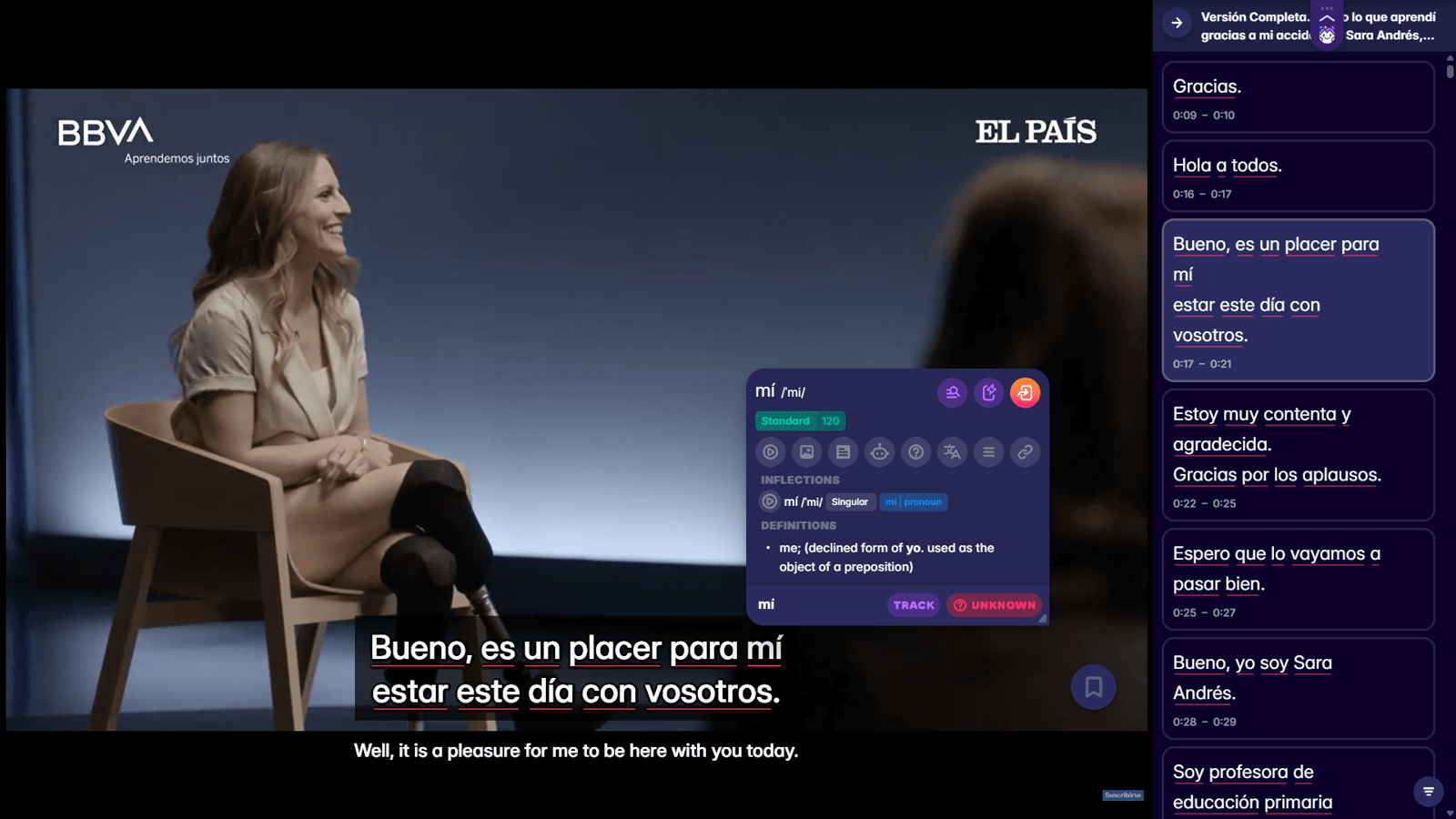
Anyway, if you want to actually learn Spanish through the shows and content you're already watching, Migaku's browser extension and app let you look up words instantly and save them to flashcards. Makes immersion learning way more practical. There's a 10-day free trial if you want to check it out.
You now have the words to congratulate Spanish speakers properly in any situation
The key is matching your phrase to the context, the region, and your relationship with the person. Start with the basics like felicidades and felicitaciones, then add the personal touches and regional variations as you get more comfortable. The more you hear these phrases used in real Spanish media, the more naturally you'll know which one fits each moment.
If you consume media in Spanish, and you understand at least some of the messages and sentences within that media, you will make progress. Period.
Sincere congratulations strengthen relationships.🎉