# Ir Preterite Conjugation: Complete Spanish Guide
> Conjugate ir in the Spanish preterite tense with full charts, examples, and tips. Master fui, fuiste, fue, and more irregular forms quickly.
**URL:** https://migaku.com/blog/spanish/ir-preterite-conjugation-spanish-guide
**Last Updated:** 2026-04-30
**Tags:** vocabulary, conjugation, grammar, verbs
---
[Learning Spanish](https://migaku.com/learn-spanish) verb conjugations can feel like a marathon sometimes, especially when you hit the irregular verbs. The verb **ir** (to go) in the preterite tense is one of those verbs that makes Spanish learners do a double-take. It's completely irregular, and it shares identical forms with another verb entirely. This guide will walk you through everything you need to know about conjugating this essential Spanish verb in the past tense.
----
## The complete ir preterite conjugation chart
Let's get straight to what you came here for. Here's the full conjugation table for ir in the preterite tense:
| Person | Verb Form | English |
| - | - | - |
| Yo | fui | I went |
| Tú | fuiste | You went (informal singular) |
| Él / Ella / Usted | fue | He / She went, You went (formal) |
| Nosotros / Nosotras | fuimos | We went |
| Vosotros / Vosotras | fuisteis | You all went (informal plural, Spain) |
| Ellos / Ellas / Ustedes | fueron | They went, You all went |
Notice how none of these forms look anything like "ir"? That's the irregular nature of this verb showing up in full force. When you're memorizing these conjugations, you're essentially learning a completely new set of forms that have no predictable pattern based on the infinitive.
----
## Understanding the preterite tense in Spanish
Before we go deeper into ir specifically, let's talk about what the preterite tense actually does. The **preterite tense** (also called pretérito indefinido or pretérito perfecto simple) is used to talk about completed actions in the past. These are actions that happened at a specific point in time and are now finished.
For example:
- Fui al supermercado ayer.
*I went to the supermarket yesterday.*
- Fueron a México el año pasado.
*They went to Mexico last year.*
[The preterite is different from the imperfect tense](https://migaku.com/blog/spanish/spanish-preterite-vs-imperfect), which describes ongoing or habitual actions in the past. When you use the preterite conjugation of ir, you're talking about a specific trip or journey that's done and dusted.
----
## Breaking down each form of -ir verbs in the preterite
### Yo fui
The first person singular form **fui** is used when you're talking about yourself going somewhere. This is probably the form you'll use most often in conversation.
- Fui a la playa el fin de semana pasado.
*I went to the beach last weekend.*
- Fui con mis amigos.
*I went with my friends.*
Remember, fui can also mean "I was" when it comes from ser, so context matters. If someone says "Fui estudiante," they mean "I was a student," but "Fui a la universidad" means "I went to the university."
### Tú fuiste
The informal second person singular **fuiste** is what you'd use when talking to a friend, family member, or someone you're on casual terms with.
- ¿Fuiste al concierto anoche?
*Did you go to the concert last night?*
- Fuiste muy rápido.
*You went very quickly.*
The pronoun tú is often dropped in Spanish since the verb conjugation makes it clear who you're talking about.
### Él/Ella/Usted fue
The third person singular form **fue** covers he, she, and the formal "you." This is one of the most common forms you'll encounter in Spanish texts and conversations.
- Mi hermana fue a España.
*My sister went to Spain.*
- Él fue al médico.
*He went to the doctor.*
- ¿Usted fue a la reunión?
*Did you go to the meeting?* (formal)
### Nosotros/Nosotras fuimos
The first person plural **fuimos** means "we went." This form is pretty straightforward and gets used whenever you're talking about a group that includes yourself.
- Fuimos al cine el sábado.
*We went to the movies on Saturday.*
- Fuimos juntos.
*We went together.*
Interestingly, fuimos is one of the easier forms to remember because it has that characteristic "imos" ending that shows up in many first person plural conjugations, even though ir is irregular.
### Vosotros/Vosotras fuisteis
The informal plural form **fuisteis** is primarily used in Spain. If you're learning Latin American Spanish, you'll rarely encounter this form since "ustedes" is used instead for both formal and informal plural "you."
- ¿Fuisteis a la fiesta?
*Did you all go to the party?* (Spain)
- Fuisteis muy amables.
*You all were very kind.* (could be from ser)
The vosotros form is something you need to recognize even if you don't actively use it, especially if you're reading Spanish literature or watching content from Spain.
### Ellos/Ellas/Ustedes fueron
The third person plural **fueron** means "they went" or "you all went" (formal or Latin American). This is another super common form.
- Mis padres fueron a Italia.
*My parents went to Italy.*
- ¿Ustedes fueron al museo?
*Did you all go to the museum?*
- Fueron en tren.
*They went by train.*
----
## The ir vs. ser confusion in the preterite
This is where things get interesting. The verb **ser** (to be) has the exact same preterite conjugation as ir. Both verbs use fui, fuiste, fue, fuimos, fuisteis, and fueron.
So how do you tell them apart? Context is everything.
- Fui profesor durante cinco años.
*I was a teacher for five years.* (This is *ser*)
- Fui a la biblioteca.
*I went to the library.* (This is *ir*)
When you see these preterite forms, look at what comes after the verb. If there's a destination or direction (with "a" meaning "to"), it's ir. If there's a description, profession, or characteristic, it's ser.
- Fueron estudiantes.
*They were students.* (ser)
- Fueron a la escuela.
*They went to school.* (ir)
This overlap rarely causes confusion for native speakers because the context makes it immediately clear which verb is being used. As a learner, you'll develop this instinct too with practice.
----
## Tips for memorizing Spanish conjugations of irregular verbs
Irregular verbs in Spanish, including ir conjugation, require dedicated memorization. Here are some strategies that actually work:
1. **Group similar verbs together.** While ir and ser sharing forms is unusual, other irregular preterite verbs share patterns. Learning them in groups helps.
2. **Use them in personal sentences.** Create sentences about your actual life using each form. Personal connection makes memorization stick better.
3. **Practice with music and media.** Spanish songs and shows use the preterite constantly. When you hear "fui" or "fueron" in context, it reinforces the conjugation.
4. **Write short diary entries.** Write a few sentences each day about what you did, forcing yourself to use different forms of ir in the preterite.
5. **Focus on the most common forms first.** You'll use "fui," "fue," and "fueron" way more often than "fuisteis," so prioritize accordingly.
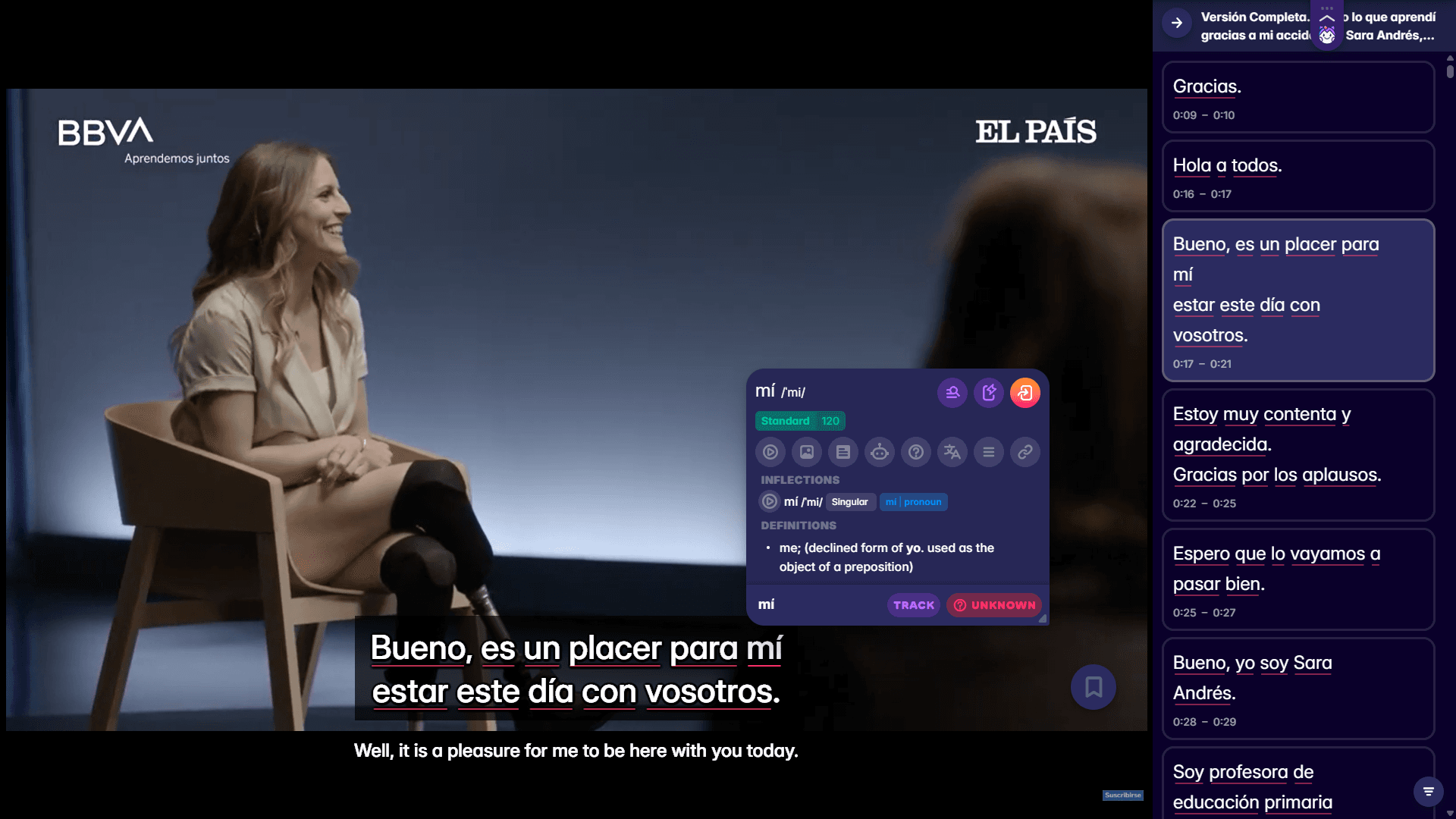
Anyway, if you want to practice Spanish verb conjugations with actual content you care about, Migaku's browser extension and app let you look up words and create flashcards instantly while watching Spanish shows or reading articles. It makes learning verbs like ir way more engaging than staring at conjugation charts. There's a 10-day free trial if you want to check it out.
 ----
## Learning Spanish verb conjugation takes time
And the preterite conjugation of ir is something every Spanish learner needs to master. With consistent practice and exposure, it'll become second nature. You'll stop thinking about whether to use "fui" or "fue" and just know based on who's doing the going. The best way to truly internalize these conjugations is to encounter them repeatedly in real Spanish content. Reading articles, watching shows, and listening to podcasts in Spanish will expose you to these verb forms over and over in natural contexts.
> If you consume media in Spanish, and you understand at least some of the messages and sentences within that media, you will make progress. _Period_.
The grammar is challenging, but not out of reach.🏃
----
## Learning Spanish verb conjugation takes time
And the preterite conjugation of ir is something every Spanish learner needs to master. With consistent practice and exposure, it'll become second nature. You'll stop thinking about whether to use "fui" or "fue" and just know based on who's doing the going. The best way to truly internalize these conjugations is to encounter them repeatedly in real Spanish content. Reading articles, watching shows, and listening to podcasts in Spanish will expose you to these verb forms over and over in natural contexts.
> If you consume media in Spanish, and you understand at least some of the messages and sentences within that media, you will make progress. _Period_.
The grammar is challenging, but not out of reach.🏃