# Saber Verb Conjugation: Complete Spanish Guide
> Conjugate saber in Spanish across all tenses. Complete conjugation tables, saber vs conocer differences, and practical examples for every level.
**URL:** https://migaku.com/blog/spanish/saber-verb-conjugation-spanish-guide
**Last Updated:** 2026-04-29
**Tags:** vocabulary, conjugation, grammar, verbs
---
So you're [learning Spanish](https://migaku.com/learn-spanish) and you've hit the verb "saber." Good news: Once you understand how saber works, you'll be able to express knowledge, skills, and information in pretty much any tense you need. And honestly? The irregularities follow predictable patterns once you see them a few times. Let me walk you through everything you need to know about saber verb conjugation, from the basic present tense to the more advanced subjunctive moods.
----
## What does saber mean
Before we dive into conjugation tables, let's be clear about what saber means. This verb translates to **"to know"** in English, but specifically for **facts, information, and skills**. When you say "I know Spanish" or "I know how to swim," you're using saber.
The verb conocer also means "to know," but it refers to being familiar with people, places, or things. So you'd use conocer to say "I know Maria" or "I know Madrid." Getting this distinction right is crucial for sounding natural in Spanish.
----
## Present tense verb conjugation of saber
Let's start with the present tense, which is where you'll use saber most often as a beginner. The present tense of saber is irregular, especially in the first person singular form.
Here's the full conjugation:
| Person | Verb Form | English |
| - | - | - |
| Yo | sé | I know |
| Tú | sabes | You know (informal) |
| Él / Ella / Usted | sabe | He / She knows, you know (formal) |
| Nosotros | sabemos | We know |
| Vosotros | sabéis | You all know (Spain) |
| Ellos / Ellas / Ustedes | saben | They know, you all know |
Notice that **sé** is the big irregular form here. If this verb followed regular patterns, it would be "sabo," but that's wrong. The accent mark on sé is important because it distinguishes it from "se," which is a reflexive pronoun.
Some quick examples:
- Yo sé la respuesta.
*I know the answer.*
- Ella sabe hablar francés.
*She knows how to speak French.*
- Sabemos dónde está el restaurante.
*We know where the restaurant is.*
- Ellos saben la verdad.
*They know the truth.*
The vosotros form "sabéis" is used primarily in Spain. In Latin America, you'd typically use "ustedes saben" instead for addressing multiple people.
----
## Preterite tense: Where saber gets really irregular
The [preterite tense](https://migaku.com/blog/spanish/preterite-tense-spanish-guide) is where saber shows its truly irregular nature. This is the past tense you use for completed actions, and the stem changes completely.
Here's the preterite conjugation:
| Person | Verb Form | English |
| - | - | - |
| Yo | supe | I knew / found out |
| Tú | supiste | You knew / found out (informal) |
| Él / Ella / Usted | supo | He / She / You knew / found out (formal) |
| Nosotros | supimos | We knew / found out |
| Vosotros | supisteis | You all knew / found out (Spain) |
| Ellos / Ellas / Ustedes | supieron | They / You all knew / found out |
The stem changes from "sab" to "sup," which is a pretty significant shift. There's no way around it, you just have to memorize these forms.
An interesting thing about saber in the preterite: it often translates to "found out" rather than just "knew." For example:
- Supe la noticia ayer.
*I found out the news yesterday.*
- ¿Cuándo supiste que ella venía?
*When did you find out she was coming?*
This subtle meaning shift happens because the preterite emphasizes the specific moment of gaining knowledge.
----
## Imperfect tense of Spanish verb saber: The easy one
The imperfect tense of saber is completely regular. This is the past tense you use for ongoing or habitual actions in the past.
| Person | Verb Form | English |
| - | - | - |
| Yo | sabía | I knew / used to know |
| Tú | sabías | You knew / used to know (informal) |
| Él / Ella / Usted | sabía | He / She / You knew / used to know (formal) |
| Nosotros | sabíamos | We knew / used to know |
| Vosotros | sabíais | You all knew / used to know (Spain) |
| Ellos / Ellas / Ustedes | sabían | They / You all knew / used to know |
Examples:
- Yo sabía la respuesta pero no dije nada.
*I knew the answer but didn't say anything.*
- Sabíamos que era difícil.
*We knew it was difficult.*
The imperfect of saber describes knowledge that existed over a period of time in the past, rather than the moment you acquired that knowledge.
----
## Future tense conjugation in Spanish
The future tense of saber is regular, which makes life easier. You just add the future endings to the infinitive form.
| Person | Verb Form | English |
| - | - | - |
| Yo | sabré | I will know |
| Tú | sabrás | You will know (informal) |
| Él / Ella / Usted | sabrá | He / She / You will know (formal) |
| Nosotros | sabremos | We will know |
| Vosotros | sabréis | You all will know (Spain) |
| Ellos / Ellas / Ustedes | sabrán | They / You all will know |
Examples:
- Mañana sabré los resultados.
*Tomorrow I'll know the results.*
- Pronto sabrás la verdad.
*Soon you'll know the truth.*
----
## Conditional tense
The conditional tense is also regular for saber. You use this to express what you would know under certain conditions.
| Person | Verb Form | English |
| - | - | - |
| Yo | sabría | I would know |
| Tú | sabrías | You would know (informal) |
| Él / Ella / Usted | sabría | He / She / You would know (formal) |
| Nosotros | sabríamos | We would know |
| Vosotros | sabríais | You all would know (Spain) |
| Ellos / Ellas / Ustedes | sabrían | They / You all would know |
Example:
- Yo sabría qué hacer si tuviera más información.
*I would know what to do if I had more information.*
The conditional often appears in "if-then" type sentences where you're describing hypothetical situations.
----
## Present subjunctive: Another irregular pattern
The [subjunctive](https://migaku.com/blog/spanish/spanish-subjunctive-guide) mood is where Spanish gets interesting. You use it for doubt, wishes, emotions, and uncertainty. The present subjunctive of saber has an irregular stem.
| Person | Verb Form | English |
| - | - | - |
| Yo | sepa | (that) I know |
| Tú | sepas | (that) you know (informal) |
| Él / Ella / Usted | sepa | (that) he / she / you know (formal) |
| Nosotros | sepamos | (that) we know |
| Vosotros | sepáis | (that) you all know (Spain) |
| Ellos / Ellas / Ustedes | sepan | (that) they / you all know |
The stem changes to "sep," which you need to memorize. The subjunctive often follows the word "que" in Spanish sentences.
Examples:
- Espero que sepas la respuesta.
*I hope that you know the answer.*
- No creo que ella sepa la verdad.
*I don't think she knows the truth.*
- Dudo que sepan dónde estamos.
*I doubt they know where we are.*
----
## Imperfect subjunctive in Spanish grammar
The imperfect subjunctive has two forms in Spanish, both acceptable. For saber, they're based on the preterite stem "sup."
Form 1:
| Person | Verb Form | English |
| - | - | - |
| Yo | supiera | I knew |
| Tú | supieras | You knew (informal) |
| Él / Ella / Usted | supiera | He / She / You knew (formal) |
| Nosotros | supiéramos | We knew |
| Vosotros | supierais | You all knew (Spain) |
| Ellos / Ellas / Ustedes | supieran | They / You all knew |
Form 2:
| Person | Verb Form | English |
| - | - | - |
| Yo | supiese | I knew |
| Tú | supieses | You knew (informal) |
| Él / Ella / Usted | supiese | He / She / You knew (formal) |
| Nosotros | supiésemos | We knew |
| Vosotros | supieseis | You all knew (Spain) |
| Ellos / Ellas / Ustedes | supiesen | They / You all knew |
The first form is more common in everyday speech. You'd use this in sentences like:
- Si yo supiera la respuesta, te la diría.
*If I knew the answer, I would tell you.*
----
## Commands (Imperative mood)
When you're telling someone to know something (which sounds weird in English but works in Spanish), you use the imperative forms.
Positive commands:
| Person | Command | English |
| - | - | - |
| Tú | sabe | Know! |
| Usted | sepa | Know! |
| Nosotros | sepamos | Let's know! |
| Vosotros | sabed | Know! |
| Ustedes | sepan | Know! |
Negative commands:
| Person | Negative Command | English |
| - | - | - |
| Tú | no sepas | Don't know! |
| Usted | no sepa | Don't know! |
| Nosotros | no sepamos | Let's not know! |
| Vosotros | no sepáis | Don't know! |
| Ustedes | no sepan | Don't know! |
Honestly, you won't use these forms super often with saber, but they exist.
----
## Common phrases with saber
Here are some super useful phrases you'll hear all the time:
- No sé.
*I don't know.* (probably the most common phrase ever)
- ¿Sabes qué?
*You know what?*
- Yo qué sé.
*How should I know?*
- A saber.
*Who knows / namely.*
- Saber de memoria.
*To know by heart.*
- Que yo sepa.
*As far as I know.*
These idiomatic expressions show up constantly in conversation, so they're worth memorizing as chunks rather than trying to construct them from scratch.
----
## Tips for mastering saber conjugation
Look, I'll be straight with you. The irregular forms of saber (especially sé, supe, and sepa) just need [repetition](https://migaku.com/blog/spanish/best-spanish-anki-decks). Here's what actually works:
1. **Practice with real content.** Reading Spanish articles, [watching shows](https://migaku.com/blog/spanish/best-spanish-shows-guide), and listening to podcasts will expose you to these forms naturally. You'll start recognizing patterns without consciously memorizing tables.
2. **Focus on the most common tenses first.** You'll use present tense and preterite way more than future perfect subjunctive. Master the basics before worrying about advanced [grammar](https://migaku.com/blog/spanish/spanish-grammar-guide).
3. **Write your own example sentences.** Creating personal examples helps the conjugations stick way better than copying textbook sentences. Write about things you actually know or want to know.
4. **Pay attention to the stem changes.** The pattern goes: sab (present), sup (preterite), sep (present subjunctive). Once you internalize these three stems, the rest follows logically.
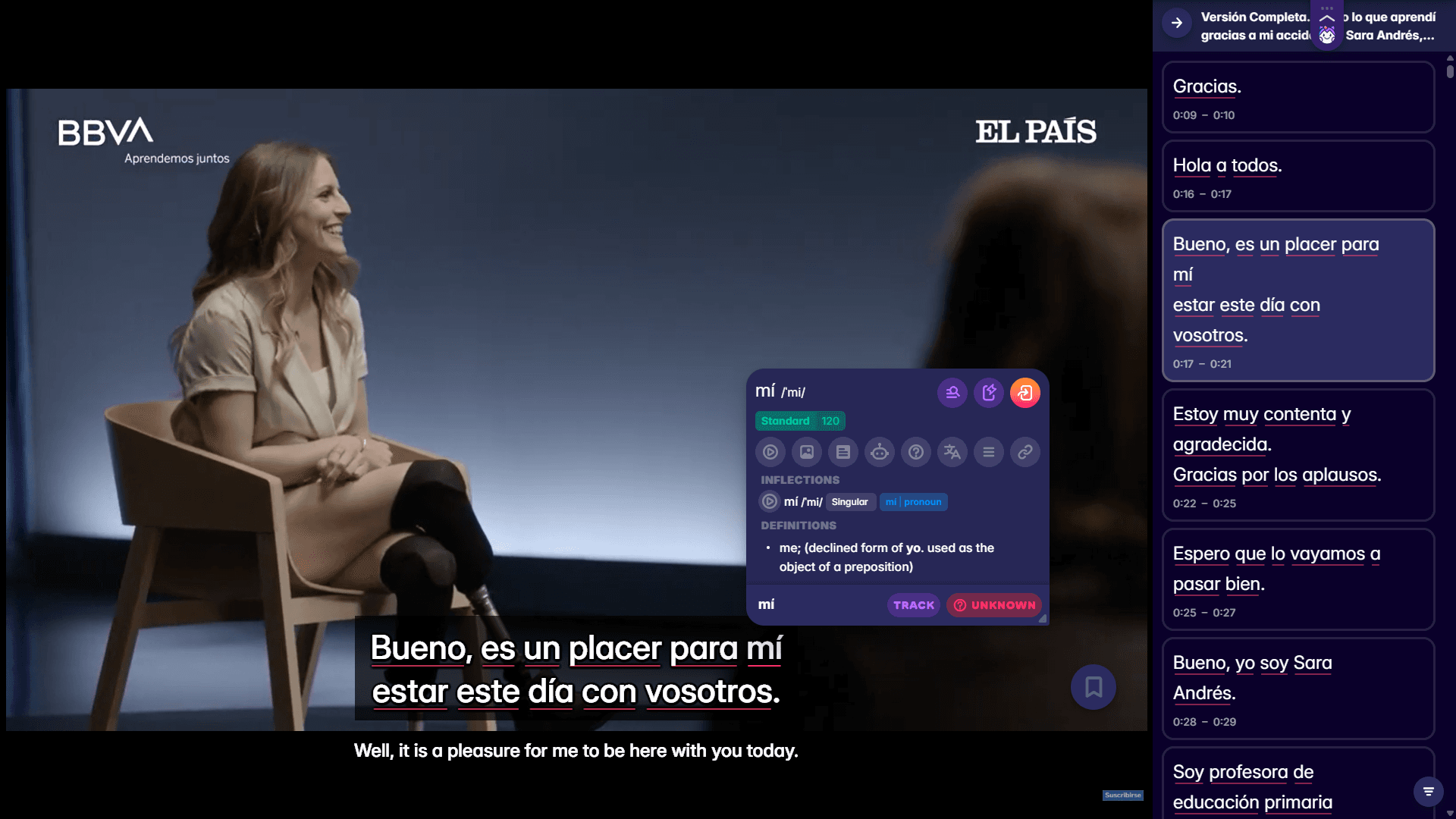
Anyway, if you want to actually practice saber and other Spanish verbs in context, Migaku's browser extension and app let you look up conjugations instantly while watching Spanish shows or reading articles. Makes learning grammar way more practical when you see it used naturally. There's a 10-day free trial if you want to check it out.
 ----
## Practice with patience!
Mastering saber verb conjugation takes time, but you don't need to memorize every single form before you start using it. Focus on the present tense and preterite first, since those cover most everyday conversations. Add in the subjunctive forms as you get more advanced.
The key is exposure and practice. The more you read, listen, and speak Spanish, the more natural these conjugations will become. Your brain will start producing the right forms automatically without you having to think through conjugation tables every time.
> If you consume media in Spanish, and you understand at least some of the messages and sentences within that media, you will make progress. _Period_.
Keep going! You've already come so far.
----
## Practice with patience!
Mastering saber verb conjugation takes time, but you don't need to memorize every single form before you start using it. Focus on the present tense and preterite first, since those cover most everyday conversations. Add in the subjunctive forms as you get more advanced.
The key is exposure and practice. The more you read, listen, and speak Spanish, the more natural these conjugations will become. Your brain will start producing the right forms automatically without you having to think through conjugation tables every time.
> If you consume media in Spanish, and you understand at least some of the messages and sentences within that media, you will make progress. _Period_.
Keep going! You've already come so far.