# Spanish Connectors: Link Sentences Like a Native Speaker
> Link sentences naturally with Spanish connectors. Categorized lists with examples for addition, contrast, cause-effect, and more.
**URL:** https://migaku.com/blog/spanish/spanish-connectors-linking-words
**Last Updated:** 2026-03-20
**Tags:** fundamentals, grammar
---
Spanish connectors are the glue that holds your sentences together and makes you sound way more natural when speaking or writing. If you've been [learning Spanish](https://migaku.com/learn-spanish) for a while, you probably know plenty of vocabulary and [grammar](https://migaku.com/blog/spanish/spanish-grammar-guide) rules, but your sentences might still feel choppy or disconnected. That's where linking words come in. They help you express complex ideas, show relationships between thoughts, and generally make your Spanish flow like an actual conversation instead of a robot reading a dictionary. Let's dig into the most useful connectors you'll actually need.
----
## What are Spanish connectors
Connectors are words or phrases that **link ideas, sentences, and paragraphs together**. Think of them as the bridges between your thoughts. In English, we use words like "however," "therefore," "because," and "also" all the time without even thinking about it. Spanish works the same way.
Here's the thing: you can technically communicate without connectors. A beginner might say "Me gusta el café. No me gusta el té" (I like coffee. I don't like tea). But someone with more fluency would naturally say "Me gusta el café pero no me gusta el té" (I like coffee but I don't like tea). See how pero makes it sound more connected and natural?
Using connectors properly is one of those things that separates intermediate learners from advanced speakers. When you master these linking words, your Spanish grammar improves and your overall fluency gets a serious boost.
----
## Addition and expansion connectors in Spanish
These connectors help you **add information or expand on what you've already said**. They're super common in everyday conversation.
- **Y ** (and) is the most basic connector you might already know.
- **También ** means "also" or "too." You'll use this constantly. "Me gusta la pizza y también me gusta la pasta" (I like pizza and I also like pasta).
- **Además ** means "furthermore" or "in addition." It sounds a bit more formal than también. "El restaurante es barato. Además, la comida es deliciosa" (The restaurant is cheap. Furthermore, the food is delicious).
- **Igualmente ** translates to "equally" or "likewise." You might hear this when someone returns a greeting or sentiment.
- **Por otra parte ** and **por otro lado ** both mean "on the other hand" or "moreover." These phrase connectors help you introduce additional perspectives.
- **Así como ** means "as well as" and helps you list multiple things elegantly. "Habla español así como francés" (He speaks Spanish as well as French).
- **Aparte de eso ** means "apart from that" and works great when you're adding extra information. "La película fue aburrida. Aparte de eso, era demasiado larga" (The movie was boring. Apart from that, it was too long).
----
## Contrast and opposition linking words
These are essential Spanish connectors for **showing disagreement, contrast, or unexpected results**. You'll use these all the time in real conversations.
- **Pero ** is probably the most common connector in this category. It means "but" and works exactly like you'd expect. "Quiero ir pero no tengo tiempo" (I want to go but I don't have time).
- **Sin embargo ** means "however" or "nevertheless." It's a bit more formal than pero. "Estudió mucho. Sin embargo, no aprobó el examen" (He studied a lot. However, he didn't pass the exam).
- **Aunque ** means "although" or "even if." This one's super useful for complex sentences. "Voy a salir aunque esté lloviendo" (I'm going out even if it's raining).
- **No obstante ** translates to "nevertheless" or "nonetheless." Pretty formal, you'll see this more in writing than casual speech.
- **A pesar de ** means "despite" or "in spite of." "A pesar del frío, fuimos a la playa" (Despite the cold, we went to the beach).
- **En cambio ** means "on the other hand" or "instead." "No me gusta el fútbol. En cambio, prefiero el baloncesto" (I don't like soccer. Instead, I prefer basketball).
- **Por el contrario ** means "on the contrary" and helps you present opposing viewpoints.
----
## Common Spanish connectors for cause and effect
When you want to explain **why something happened or what the result was**, these connectors are your friends.
- **Porque ** means "because" and answers the question "why?" This is super basic but absolutely essential. "No fui porque estaba enfermo" (I didn't go because I was sick).
- **Por eso ** means "that's why" or "therefore." "Llovía mucho. Por eso me quedé en casa" (It was raining a lot. That's why I stayed home).
- **Así que ** means "so" or "therefore." It's very conversational. "Tengo hambre, así que voy a comer" (I'm hungry, so I'm going to eat).
- **Por lo tanto ** is more formal and means "therefore" or "consequently." You'll see this in academic or professional Spanish.
- **Como ** means "since" or "as" when used at the beginning of a sentence to explain cause. "Como no tenía dinero, no compré nada" (Since I didn't have money, I didn't buy anything).
- **Debido a ** means "due to" and works with nouns. "Debido a la lluvia, cancelaron el partido" (Due to the rain, they canceled the game).
- **Por esta razón ** means "for this reason" and helps you explain your logic clearly.
----
## Spanish connector words for time and sequencing
These connectors help you **tell stories, give instructions, or explain processes** in the right order.
- **Primero, segundo, tercero ** (first, second, third) are straightforward sequencing words you'll use when listing steps or priorities.
- **Luego ** and **después ** both mean "then" or "afterwards." "Primero desayuné, luego fui al trabajo" (First I had breakfast, then I went to work).
- **Mientras ** means "while" and helps you talk about simultaneous actions. "Escucho música mientras estudio" (I listen to music while I study).
- **Cuando ** means "when" and connects actions in time. "Cuando llegues, llámame" (When you arrive, call me).
- **Antes de ** means "before" and **después de ** means "after." These work with infinitives or nouns. "Antes de comer, lávate las manos" (Before eating, wash your hands).
- **Finalmente ** and **por fin ** both mean "finally." "Finalmente terminé el proyecto" (I finally finished the project).
- **En ese momento ** means "at that moment" and helps you pinpoint specific times in your narrative.
----
## Examples and emphasis words in Spanish language
Sometimes you want to **illustrate your point or really drive something home.** These connectors help with that.
- **Por ejemplo ** means "for example" and you'll use this constantly when explaining things. "Me gustan las frutas tropicales, por ejemplo, el mango y la papaya" (I like tropical fruits, for example, mango and papaya).
- **Es decir ** means "that is to say" or "in other words." It helps you clarify or rephrase. "Llegó tarde, es decir, a las 10 en vez de las 8" (He arrived late, that is to say, at 10 instead of 8).
- **De hecho ** means "in fact" or "actually." Great for adding emphasis or correcting assumptions. "No es difícil. De hecho, es bastante fácil" (It's not difficult. In fact, it's quite easy).
- **En realidad ** means "actually" or "in reality." Similar to de hecho but slightly different nuance.
- **Sobre todo ** means "especially" or "above all." "Me gusta viajar, sobre todo a países hispanohablantes" (I like traveling, especially to Spanish-speaking countries).
----
## Conditions and summaries
These help you **wrap up thoughts or present hypothetical situations.**
- **Si ** means "if" and introduces conditional statements. "Si estudias, aprobarás" (If you study, you'll pass).
- **En caso de que ** means "in case" and takes the subjunctive mood. "En caso de que llueva, lleva paraguas" (In case it rains, bring an umbrella).
- **En resumen ** means "in summary" or "to sum up." Useful when you're concluding a discussion.
- **En conclusión ** means "in conclusion." Pretty self-explanatory, you'll use this for formal writing or presentations.
- **Al final ** means "in the end" or "at the end." "Al final, decidimos quedarnos en casa" (In the end, we decided to stay home).
----
## How to learn Spanish connectors and use them naturally in Spanish conversations
Reading lists of connectors is one thing. Actually using them in conversation is another. Here's what works:
1. Start with three to five connectors and use them obsessively for a week. Pick ones from different categories, like pero, porque, luego, por ejemplo, and además. Force yourself to use them in every conversation or writing practice. Once they feel automatic, add more.
2. Pay attention when you're consuming Spanish content. Watch shows, read articles, listen to podcasts, and notice which connectors appear most frequently. Native speakers use certain connectors way more than others, and you'll pick up on the natural rhythm.
3. Practice with full sentences, not isolated words. Don't just memorize "por lo tanto means therefore." Create actual sentences you might say: "Estaba cansado, por lo tanto me fui a dormir temprano" (I was tired, therefore I went to sleep early).
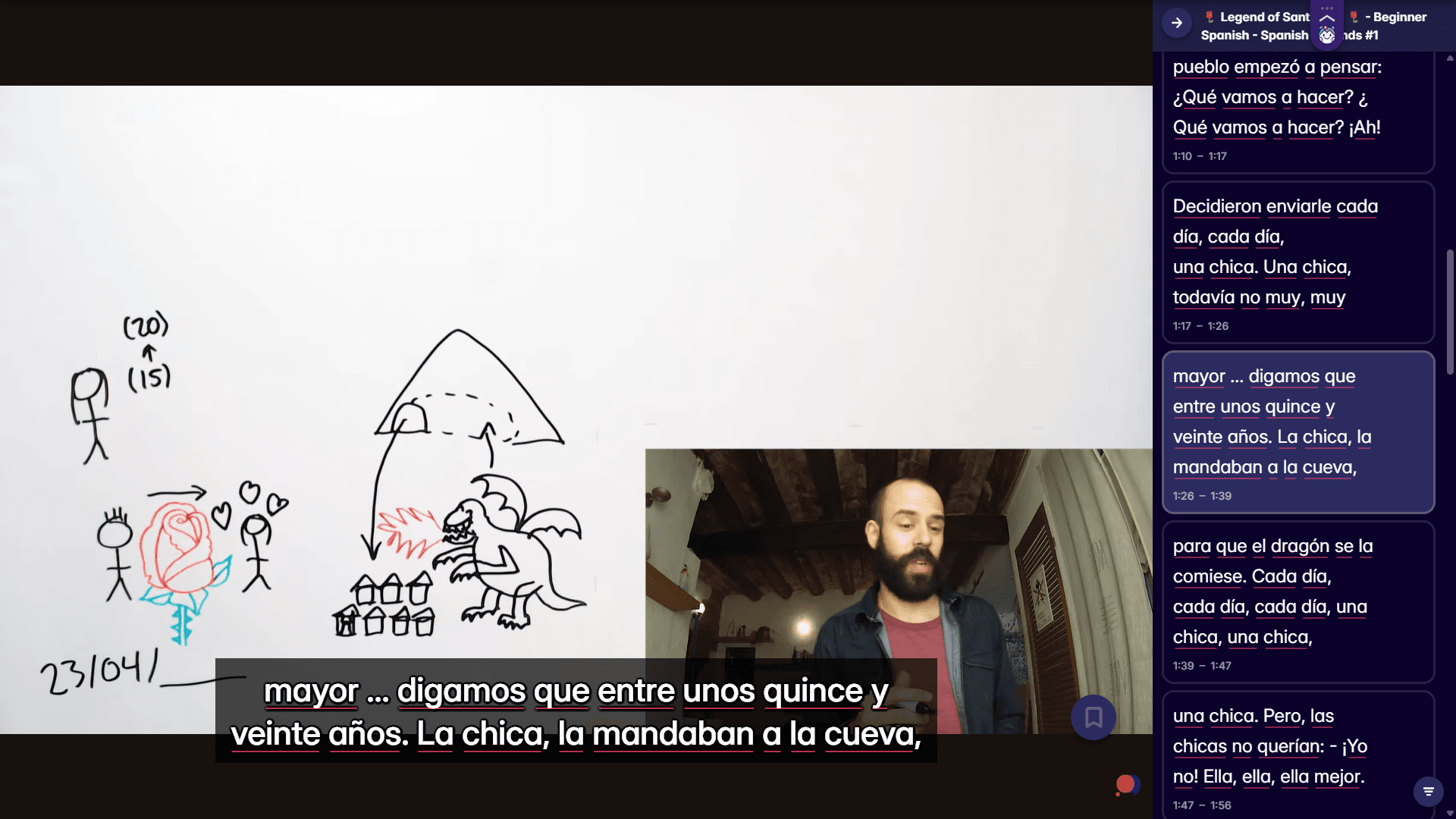
Anyway, if you want to practice spotting these connectors in real Spanish content, Migaku's browser extension and app let you look up words and phrases instantly while watching shows or reading articles. Makes [learning from native content](https://migaku.com/blog/spanish/best-spanish-shows-guide) way more practical. There's a 10-day free trial if you want to check it out.
 ----
## Your Spanish fluency depends on connectors!
You could know 5,000 Spanish words and still sound awkward if you don't use connectors properly. They're what make the difference between sounding like a textbook and sounding like a real person. When you use connectors naturally, you can express complex ideas, tell engaging stories, make persuasive arguments, and generally communicate at a higher level. Similarly, if you know everything about Spanish connectors, you can understand complicated sentences and ideas even when the speakers talk very fast in Spanish videos or podcasts.
> If you consume media in Spanish, and you understand at least some of the messages and sentences within that media, you will make progress. _Period_.
Start practicing these linking words; You'll notice the difference in your Spanish within weeks.🔥
----
## Your Spanish fluency depends on connectors!
You could know 5,000 Spanish words and still sound awkward if you don't use connectors properly. They're what make the difference between sounding like a textbook and sounding like a real person. When you use connectors naturally, you can express complex ideas, tell engaging stories, make persuasive arguments, and generally communicate at a higher level. Similarly, if you know everything about Spanish connectors, you can understand complicated sentences and ideas even when the speakers talk very fast in Spanish videos or podcasts.
> If you consume media in Spanish, and you understand at least some of the messages and sentences within that media, you will make progress. _Period_.
Start practicing these linking words; You'll notice the difference in your Spanish within weeks.🔥