Spanish Office Vocabulary: Spanish Words and Phrases You Need to Talk Professionally
Last updated: March 15, 2026

Learning Spanish for work is one of the smartest moves you can make in 2026. Whether you're preparing for a job in a Spanish-speaking country, working with international clients, or just want to diversify your career options, knowing the right office vocabulary makes a huge difference. I've seen so many learners struggle because they can study Spanish for years, but still freeze up when they need to talk about spreadsheets or schedule a meeting. This guide covers all the essential workplace terms you need.
- Office roles and positions in Spanish
- Spanish words and phrases for company departments
- Spanish vocabulary for office supplies and furniture
- Workplace actions and verbs
- Work contracts and job types in business Spanish
- Common workplace phrases and expressions in Spanish language
- Tips to learn Spanish office vocabulary effectively
Office roles and positions in Spanish
Let's start with the people you'll interact with at work. Knowing these terms helps you understand org charts, introduce colleagues, and navigate office politics.
The basic structure starts with "el jefe" or "la jefa" (the boss). Pretty straightforward. But workplaces have layers:
Spanish | English |
|---|---|
el director / la directora | Director, executive |
el gerente / la gerente | Manager |
el supervisor / la supervisora | Supervisor |
el empleado / la empleada | Employee |
el colega / la colega | Colleague |
el compañero de trabajo / la compañera de trabajo | Coworker |
el asistente / la asistente | Assistant |
el becario / la becaria | Intern |
el secretario / la secretaria | Secretary |
el contador / la contadora | Accountant |
el abogado / la abogada | Lawyer |
el recepcionista / la recepcionista | Receptionist |
el jefe de proyecto | Project manager |
el representante de ventas | Sales representative |
el director de recursos humanos | Human resources director |
el técnico de soporte | Support technician |
Notice how Spanish uses gendered articles and often changes the word ending based on gender. This trips up a lot of learners at first, but you get used to it fast when you're using these words daily.
Spanish words and phrases for company departments
Every company splits into departments, and you need to know where to send people or who handles what. These terms come up constantly in emails and conversations.
Spanish | English |
|---|---|
el departamento de recursos humanos (RRHH) | Human resources department |
el departamento de ventas | Sales department |
el departamento de marketing | Marketing department |
el departamento de contabilidad | Accounting department |
el departamento de finanzas | Finance department |
el departamento legal | Legal department |
el departamento de tecnología | IT department |
el departamento de servicio al cliente | Customer service department |
el departamento de producción | Production department |
el departamento de investigación y desarrollo | R&D department |
When you're navigating a Spanish-speaking workplace, knowing these helps you direct questions properly. "Eso es del departamento de RRHH" (That's from the HR department) becomes a phrase you'll use weekly.
Spanish vocabulary for office supplies and furniture
Now for the physical stuff around your workspace. This vocabulary helps you request supplies, set up your desk, or explain what you need.
Basic furniture terms:
Spanish | English |
|---|---|
el escritorio | Desk |
la silla | Chair |
la mesa de reuniones | Meeting table |
el archivador | Filing cabinet |
la estantería | Bookshelf |
el cubículo | Cubicle |
Office supplies you'll use constantly:
Spanish | English |
|---|---|
el bolígrafo / la pluma | Pen |
el lápiz | Pencil |
el papel | Paper |
la grapadora | Stapler |
las grapas | Staples |
el clip | Paper clip |
la carpeta | Folder |
el cuaderno | Notebook |
la calculadora | Calculator |
la impresora | Printer |
el escáner | Scanner |
la fotocopiadora | Photocopier |
la pizarra | Whiteboard |
el rotulador | Marker |
la cinta adhesiva | Tape |
las tijeras | Scissors |
Tech equipment:
Spanish | English |
|---|---|
la computadora / el ordenador | Computer (computadora in Latin America, ordenador in Spain) |
el teclado | Keyboard |
el ratón | Mouse |
la pantalla | Screen |
el monitor | Monitor |
la impresora | Printer |
el teléfono | Telephone |
el móvil / el celular | Cell phone (móvil in Spain, celular in Latin America) |
Workplace actions and verbs
Verbs are where Spanish office vocabulary really comes alive. These are the actions you'll perform daily, and knowing them helps you understand instructions and participate in discussions.
Communication verbs:
Spanish | English |
|---|---|
llamar | To call |
enviar | To send |
recibir | To receive |
contestar | To answer |
responder | To respond |
hablar | To speak |
comunicar | To communicate |
informar | To inform |
Work task verbs:
Spanish | English |
|---|---|
trabajar | To work |
completar | To complete |
terminar | To finish |
empezar / comenzar | To start |
organizar | To organize |
planificar | To plan |
programar | To schedule |
archivar | To file |
imprimir | To print |
escanear | To scan |
fotocopiar | To photocopy |
revisar | To review / to check |
corregir | To correct |
firmar | To sign |
Meeting and collaboration verbs:
Spanish | English |
|---|---|
reunirse | To meet |
asistir | To attend |
presentar | To present |
discutir | To discuss |
colaborar | To collaborate |
coordinar | To coordinate |
delegar | To delegate |
Work contracts and job types in business Spanish
Understanding employment terms helps you navigate job offers, contracts, and workplace conversations about roles. This vocabulary becomes critical when you're job hunting or negotiating.
Contract types:
Spanish | English |
|---|---|
el contrato | Contract |
el contrato indefinido | Permanent contract |
el contrato temporal | Temporary contract |
el contrato a tiempo completo | Full-time contract |
el contrato a tiempo parcial | Part-time contract |
el periodo de prueba | Probation period |
Job and work terms:
Spanish | English |
|---|---|
el trabajo | Work / Job |
el empleo | Employment |
el puesto | Position |
la vacante | Vacancy |
el sueldo / el salario | Salary |
el aumento | Raise |
el bono | Bonus |
los beneficios | Benefits |
las vacaciones | Vacation |
el día libre | Day off |
la baja por enfermedad | Sick leave |
la licencia de maternidad / paternidad | Maternity / Paternity leave |
el horario | Schedule |
el turno | Shift |
las horas extras | Overtime |
Common workplace phrases and expressions in Spanish language
Knowing individual words helps, but phrases make you sound natural. These are expressions you'll hear in Spanish offices constantly.
Greeting and basic interaction:
- Buenos días.
Good morning. - Buenas tardes.
Good afternoon. - ¿Cómo estás? / ¿Cómo está?
How are you? (informal / formal) - Mucho gusto.
Nice to meet you. - Encantado / Encantada.
Pleased to meet you.
Phone phrases:
- ¿Aló? / ¿Dígame?
Hello? (when answering the phone) - ¿De parte de quién?
Who's calling? - Un momento, por favor.
One moment, please. - Le paso con...
I'll transfer you to... - Está ocupado / Está ocupada.
He's busy. / She's busy.
Meeting language:
- Tenemos una reunión a las...
We have a meeting at... - ¿Podemos agendar una reunión?
Can we schedule a meeting? - Vamos a discutir...
We're going to discuss... - ¿Alguna pregunta?
Any questions? - Pasemos al siguiente punto.
Let's move to the next point.
Email and communication:
- Estimado / Estimada...
Dear... (formal) - Adjunto el documento.
I'm attaching the document. - Quedo a la espera de su respuesta.
I await your response. - Saludos cordiales.
Kind regards. - Atentamente.
Sincerely.
Tips to learn Spanish office vocabulary effectively
Learning vocabulary lists feels boring, I get it. But here are some strategies that actually work for workplace terms.
- First tip: context matters way more than memorization. Instead of drilling "el escritorio" fifty times, imagine yourself at a desk and describe what you see in Spanish. "Estoy sentado en mi escritorio, usando mi computadora, con mi teclado y ratón." You're building connections.
- Second, group words by category like I've done here. Your brain remembers related terms better than random lists. Learn all the office supplies together, then all the job titles, then all the verbs.
- Third, use the vocabulary immediately. If you're working in a bilingual environment, label items around your desk with Spanish sticky notes. Write your to-do list in Spanish. Send practice emails to yourself using business phrases.
- Fourth, consume Spanish workplace content. Watch Spanish business news, read company websites in Spanish, listen to podcasts about entrepreneurship in Spanish. You'll hear this vocabulary used naturally, which helps it stick way better than flashcards alone.
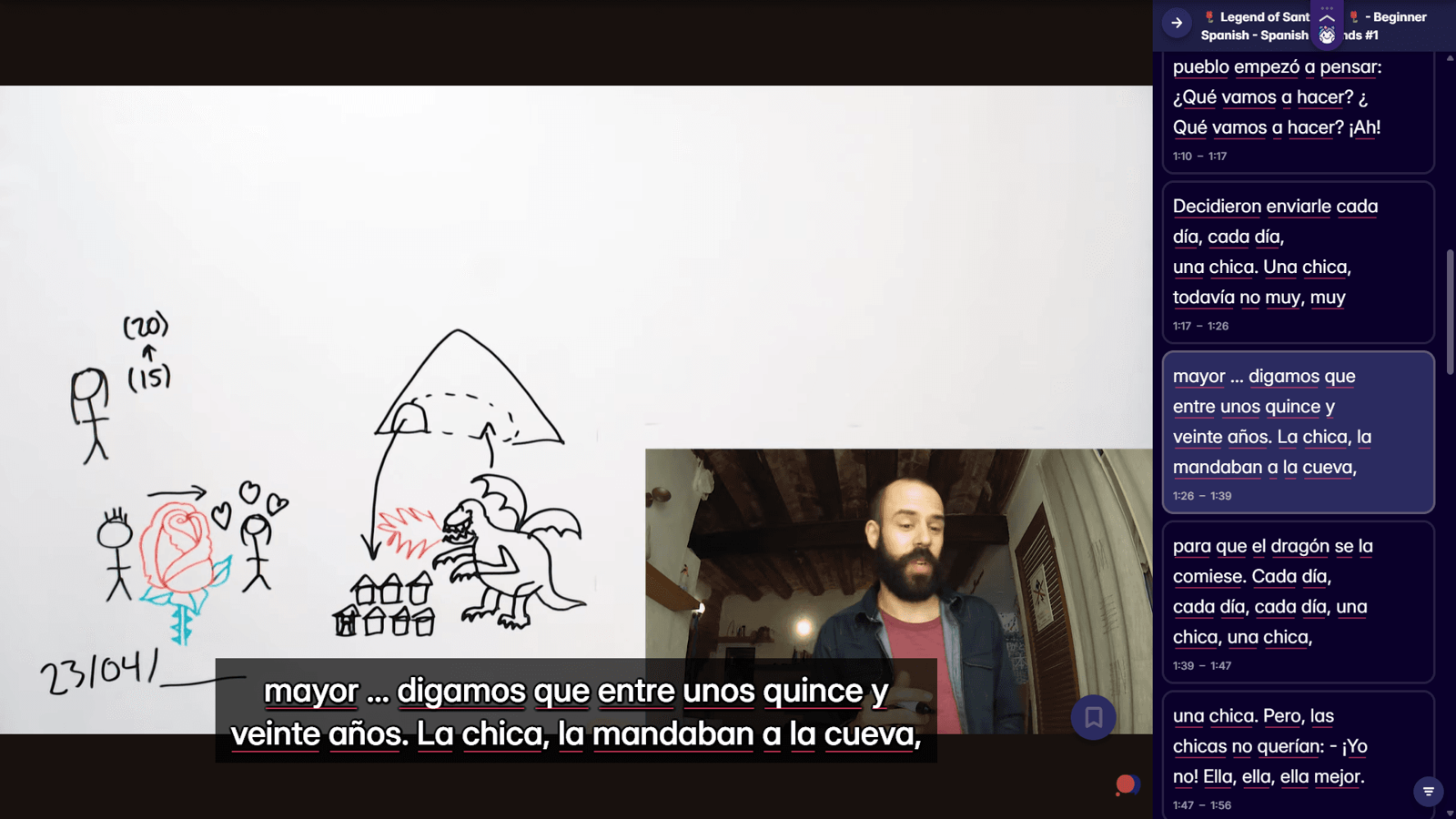
If you want to practice this vocabulary with real Spanish content, Migaku's browser extension and app let you look up words instantly while watching Spanish business videos or reading articles. You can save workplace terms directly into your study decks as you encounter them. There's a 10-day free trial if you want to check it out.
Mistakes can help you improve
You'll make mistakes, forget words, and probably accidentally use the wrong formality level a few times. That's completely normal and expected. Start with the basics: master greetings, common verbs, and the vocabulary specific to your role. Improve from there. You don't need to memorize every term in this guide before your first day. You need enough to function, then you'll pick up more through immersion.
If you consume media in Spanish, and you understand at least some of the messages and sentences within that media, you will make progress. Period.
A mistake taught is a mistake never repeated.✅