# Spanish School Vocabulary: Useful Spanish Words for Learners
> Spanish school vocabulary you should learn to talk about classroom objects, supplies, people, and verbs. Regional variations explained.
**URL:** https://migaku.com/blog/spanish/spanish-school-vocabulary
**Last Updated:** 2026-03-21
**Tags:** vocabulary, phrases
---
[Learning Spanish](https://migaku.com/learn-spanish) school vocabulary is one of those topics that feels super practical right from day one. Whether you're planning to study in a Spanish-speaking country, teaching Spanish to kids, or just want to understand what's happening in those classroom scenes in your favorite Spanish shows, knowing these words makes everything click into place. School vocabulary is pretty straightforward because you already know the concepts. You're just learning new labels for stuff you've been around your whole life.
----
## Essential classroom objects and furniture
Let's start with the physical stuff you'd find in any classroom. These are the words you'll use constantly if you're learning Spanish in a class setting or talking about school environments.
| Spanish | English |
| - | - |
| el pupitre | Student desk |
| el escritorio | Desk (general term) |
| el escritorio del profesor / la mesa del profesor | Teacher's desk |
| la silla | Chair |
| la pizarra | Blackboard |
| la pizarra blanca / el pizarrón blanco | Whiteboard |
| el tablero | Board (general term) |
| la pizarra interactiva | Interactive board |
| la ventana | Window |
| la puerta | Door |
| el reloj | Clock |
| el mapa | Map |
| la papelera / el basurero | Trash can |
| la estantería / el librero | Bookshelf |
----
## School supplies vocabulary in Spanish
This is probably the most practical list for students. These are the things you'd pack in your backpack or ask to borrow from a classmate.
| Spanish | English |
| - | - |
| el lápiz | Pencil |
| el bolígrafo / la pluma | Pen |
| la goma (Spain) / el borrador (Latin America) | Eraser |
| el cuaderno | Notebook |
| el papel | Loose paper |
| la mochila | Backpack |
| la carpeta | Binder / Folder |
| el libro de texto | Textbook |
| las tijeras | Scissors (always plural in Spanish) |
| el pegamento / la cola | Glue |
| la regla | Ruler |
| los colores | Crayons / Colored pencils |
| la pintura | Paint |
| el pincel | Paintbrush |
| la calculadora | Calculator |
| el diccionario | Dictionary |
----
## People you'll meet at school
Understanding the roles and people in a school setting helps you navigate conversations about education way more smoothly.
| Spanish | English |
| - | - |
| el profesor / la profesora | Teacher |
| el maestro / la maestra | Teacher (especially in elementary settings) |
| el estudiante / el alumno (la estudiante / la alumna ) | Student |
| el compañero de clase / la compañera de clase | Classmate |
| el director / la directora | Principal |
| el secretario / la secretaria | Secretary |
| el bibliotecario / la bibliotecaria | Librarian |
| el conserje | Janitor / Custodian |
| el rector | University president |
| el decano | Dean |
| el catedrático | Professor with tenure |
----
## Words for different areas around the school
Schools have lots of different spaces, and knowing how to talk about them helps you give directions or understand where you're supposed to be.
| Spanish | English |
| - | - |
| el aula / la clase / el salón de clases | Classroom |
| el pasillo | Hallway |
| la cafetería / el comedor | Cafeteria |
| la biblioteca | Library (note: librería means bookstore) |
| el gimnasio | Gym |
| el patio de recreo / el patio | Playground |
| el campo deportivo / la cancha | Sports field |
| el baño / los servicios | Bathroom |
| la oficina / la secretaría | Main office |
| el auditorio / el salón de actos | Auditorium |
| el laboratorio / el laboratorio de ciencias | Science lab |
----
## Spanish words for academic subjects and areas of study
When people ask what you're studying, you'll need these words to explain your schedule or interests.
| Spanish | English |
| - | - |
| las matemáticas / las mates | Mathematics |
| las ciencias | Science |
| la biología | Biology |
| la química | Chemistry |
| la física | Physics |
| el español | Spanish |
| el inglés | English |
| la literatura | Literature |
| la historia | History |
| la geografía | Geography |
| las ciencias sociales / los estudios sociales | Social studies |
| el arte / las artes | Art |
| la música | Music |
| la educación física / la edu física | Physical education |
| la informática / las computadoras | Computer science / IT |
----
## Activities and actions in the educational setting
Knowing the verbs and actions related to school helps you talk about what you do there, which is way more useful than just memorizing nouns.
| Spanish | English |
| - | - |
| estudiar | To study |
| aprender | To learn |
| enseñar | To teach |
| leer | To read |
| escribir | To write |
| escuchar | To listen |
| hacer la tarea | To do homework |
| hacer un examen / tomar un examen | To take a test |
| aprobar | To pass |
| reprobar / suspender | To fail |
| preguntar | To ask |
| responder / contestar | To answer |
| explicar | To explain |
| entender / comprender | To understand |
| levantar la mano | To raise your hand |
| prestar atención | To pay attention |
----
## Regional variations you should know
Spanish varies quite a bit depending on where you are, and school vocabulary is no exception. Being aware of these differences helps you understand people from different countries and sound more natural wherever you're learning.
- The word for computer is "la computadora" in Latin America but "el ordenador" in Spain.
- A pen can be "el bolígrafo," "la pluma," or "el lapicero" depending on the region.
- The eraser is "la goma" in Spain but "el borrador" in most of Latin America.
- In some countries, "colegio" means primary or secondary school, while "universidad" is university. In others, "colegio" can refer to any educational institution.
- The word for grade level also varies: "el grado" in some places, "el curso" in others, or "el año" elsewhere.
- The backpack can be "la mochila" almost everywhere, but you might hear "el morral" in some regions.
These variations aren't huge obstacles, but knowing they exist helps you avoid confusion.
----
## How to learn school vocabulary in Spanish efficiently
Here's what works for retention: [spaced repetition](https://migaku.com/blog/spanish/best-spanish-anki-decks) and active recall. Don't just read through lists of Spanish vocabulary over and over. Test yourself, use flashcards, and come back to words multiple times over days and weeks.
Create associations between Spanish words and their English equivalents. Some words sound similar (like "estudiante" and student), which makes them easier. For words that don't have obvious connections, practice making up your own memory tricks.
The most effective method is using the vocabulary in communication. Find a language exchange partner and have a conversation about school experiences. Join Spanish language classes where you'll naturally use this vocabulary. The more you actively produce these words in speech or writing, the faster they become automatic.
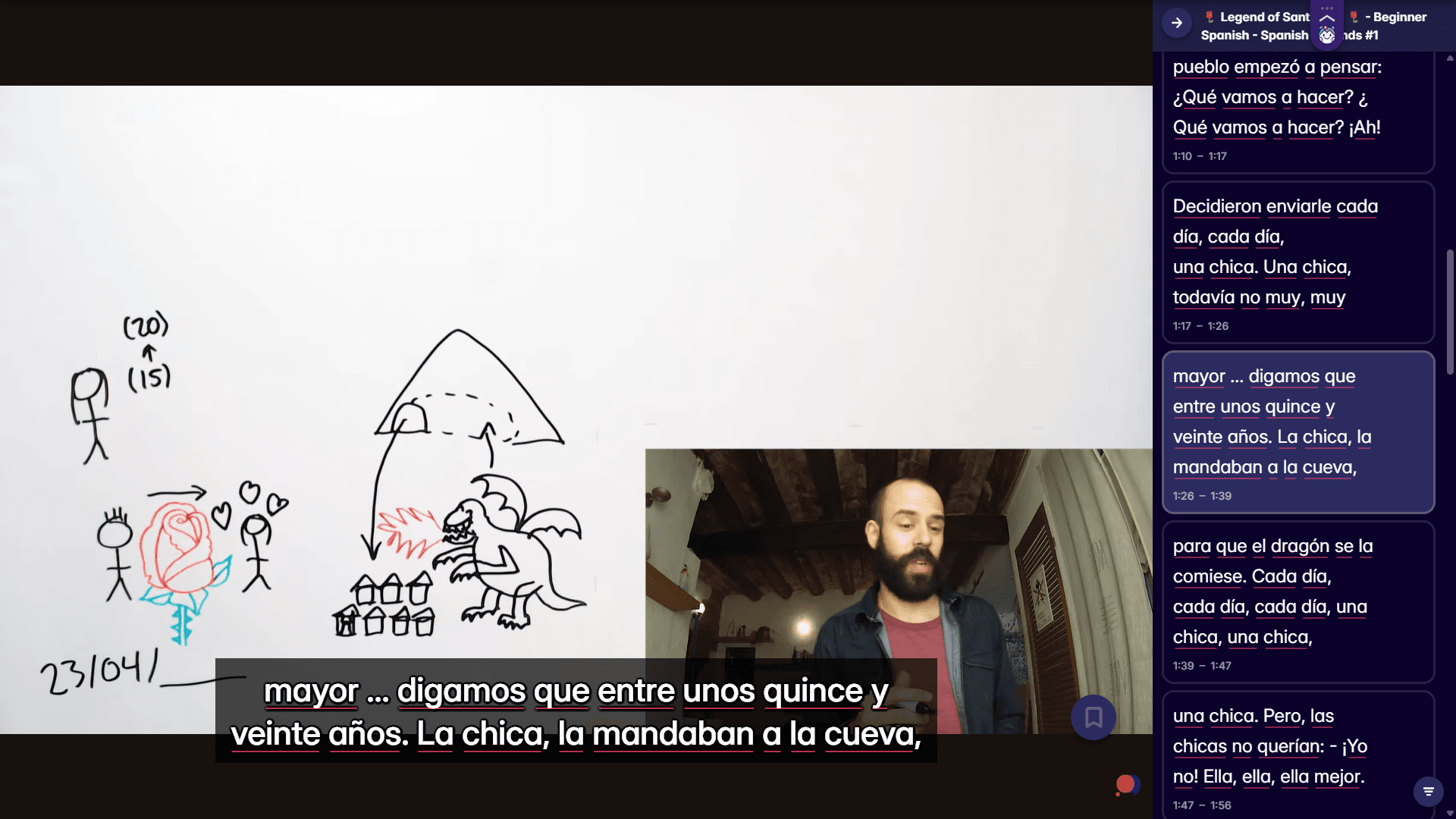
Anyway, if you want to use these Spanish words and phrases with real Spanish content, Migaku's browser extension and app let you look up words instantly while watching shows or reading articles. Makes learning from context way more practical. There's a 10-day free trial if you want to check it out.
 ----
## Context matters for learning Spanish vocabulary
Memorizing word lists only gets you so far. You need to actually use these words in sentences and real situations to make them stick. When you're [watching Spanish content](https://migaku.com/blog/spanish/best-spanish-shows-guide) online, pay attention to school scenes. You'll hear these words used naturally, which helps you understand how they fit into real conversations. Kids' shows in Spanish often feature school settings and use this vocabulary repeatedly, making them surprisingly useful for adult learners too.
> If you consume media in Spanish, and you understand at least some of the messages and sentences within that media, you will make progress. _Period_.
Explore the best resource to help you learn!
----
## Context matters for learning Spanish vocabulary
Memorizing word lists only gets you so far. You need to actually use these words in sentences and real situations to make them stick. When you're [watching Spanish content](https://migaku.com/blog/spanish/best-spanish-shows-guide) online, pay attention to school scenes. You'll hear these words used naturally, which helps you understand how they fit into real conversations. Kids' shows in Spanish often feature school settings and use this vocabulary repeatedly, making them surprisingly useful for adult learners too.
> If you consume media in Spanish, and you understand at least some of the messages and sentences within that media, you will make progress. _Period_.
Explore the best resource to help you learn!