# Spanish Shopping Vocabulary: Master These Expressions Before You Go Shopping
> Go shopping at stores and markets confidently with this Spanish shopping vocabulary. Includes essential phrases, verbs, and audio for language learners.
**URL:** https://migaku.com/blog/spanish/spanish-shopping-vocabulary
**Last Updated:** 2026-03-22
**Tags:** vocabulary, phrases
---
[Learning Spanish](https://migaku.com/learn-spanish) shopping vocabulary is one of those practical skills that pays off immediately when you travel or live in a Spanish-speaking country. Whether you're grabbing groceries at the supermercado, browsing clothes at a tienda de ropa, or haggling at a local market, knowing the right words and phrases makes everything smoother. This guide covers all the essential vocab and expressions you need to shop confidently in Spanish, from asking prices to paying at checkout.
----
## Essential verbs for shopping in Spanish
Before diving into specific store types and items, you need the action words that make shopping happen. These verbs show up in almost every shopping scenario.
- The most important verb is **"comprar" ** (to buy). You'll hear "voy a comprar" (I'm going to buy) constantly. When someone asks what you're doing, you might say "voy de compras" (I'm going shopping) or simply "**ir de compras" ** (to go shopping).
- Another crucial verb is **"buscar" ** (to look for). When you walk into a tienda, and the employee asks if they can help, you might respond "Busco una camisa azul" (I'm looking for a blue shirt).
- **"Probar" ** (to try on) becomes essential when [shopping for clothes](https://migaku.com/blog/spanish/spanish-clothing-vocabulary). "¿Puedo probar esto?" (Can I try this on?) is a phrase you'll use repeatedly at any tienda de ropa.
- **"Pagar" ** (to pay) obviously matters at checkout. "¿Dónde puedo pagar?" (Where can I pay?) helps when you can't find the register.
- **"Costar" ** (to cost) appears in questions about price. While you won't conjugate this verb yourself much, you'll hear "cuesta" (it costs) in every price conversation.
- **"Llevar" ** (to take/carry) works when you've decided to purchase something. "Me lo llevo" (I'll take it) signals you're ready to buy.
----
## Types of stores you'll encounter
Different stores have specific names in Spanish, and knowing them helps you find what you need. The general word for store is **"tienda," ** but you'll want to know the specific types too.
- The **"supermercado" ** (supermarket) is where most grocery shopping happens in Spanish-speaking countries. Larger chains might be called "hipermercado" for really big stores.
- A **"panadería" ** (bakery) sells fresh bread and pastries. In many Spanish-speaking countries, people buy bread daily from their local panadería rather than getting it at the supermercado.
- The **"carnicería" ** (butcher shop) specializes in meat. Even in cities with large supermarkets, dedicated carnicerias often have better quality and service.
- A **"frutería" ** or **"verdulería" ** (fruit shop or vegetable shop) focuses on produce. Markets often have multiple vendors selling fruits and vegetables.
- The **"farmacia" ** (pharmacy) is where you get medications and health products. Unlike some countries, farmacias in Spanish-speaking places often provide medical advice too.
- A **"mercado" ** (market) typically refers to an open-air or covered market with multiple vendors. These are amazing for fresh produce, meat, and local specialties.
- For clothes, you'll visit a **"tienda de ropa" ** (clothing store) or specific shops like a **"zapatería" ** (shoe store).
----
## Useful phrases for shopping interactions in Spanish language
When you walk into any shop in Spanish, certain phrases come up repeatedly. Mastering these makes transactions way easier.
- **"¿Cuánto cuesta?" ** (How much does it cost?) is probably the single most important question. For plural items, use "¿Cuánto cuestan?"
- Adding **"por favor" ** (please) to any request makes you sound polite. "¿Tiene esto en otra talla, por favor?" (Do you have this in another size, please?) works better than demanding.
- **"¿Dónde está...?" ** (Where is...?) helps you navigate stores. "¿Dónde está el baño?" (Where is the bathroom?) or "¿Dónde están las frutas?" (Where are the fruits?) get you where you need to go.
- **"¿Puedo pagar con tarjeta?" ** (Can I pay with a card?) matters since cash is still common in many Spanish-speaking countries. Some smaller shops only accept "efectivo" (cash).
- **"¿Aceptan tarjetas de crédito?" ** (Do you accept credit cards?) is another way to ask about payment methods before you start shopping.
- **"¿Tiene una bolsa?" ** (Do you have a bag?) helps when stores don't automatically bag your items.
- **"Estoy solo mirando" ** (I'm just looking) politely tells salespeople you don't need help yet.
- **"¿Me puede ayudar?" ** (Can you help me?) brings assistance when you do need it.
----
## Grocery shopping in Spanish
The supermercado deserves its own section because you'll spend tons of time there. Knowing department and product names saves you from wandering aimlessly.
The **"pasillo" ** (aisle) is where most products live. "¿En qué pasillo están los cereales?" (In which aisle are the cereals?) is super practical.
| Category | Spanish | English |
| - | - | - |
| **Fruits and vegetables** | sección de frutas y verduras | Fruits and vegetables section |
| **Fruits** | manzanas | Apples |
| | plátanos | Bananas |
| | naranjas | Oranges |
| | fresas | Strawberries |
| **Vegetables** | tomates | Tomatoes |
| | lechugas | Lettuces |
| | zanahorias | Carrots |
| | cebollas | Onions |
| **Dairy** | lácteos | Dairy section |
| | leche | Milk |
| | queso | Cheese |
| | yogur | Yogurt |
| | mantequilla | Butter |
| **Meat** | carnes | Meat products |
| | pollo | Chicken |
| | res / carne de vaca | Beef |
| | cerdo | Pork |
| | pescado | Fish |
| **Bread and baked goods** | pan y productos de panadería | Bread and baked goods |
| | pan | Bread |
| | pasteles | Cakes |
| | galletas | Cookies |
| **Checkout** | la caja / el mostrador | Checkout area |
| | el cajero / la cajera | Cashier |
----
## Clothing and accessories shopping vocabulary
Shopping for clothes in a Spanish-speaking country requires different vocabulary from groceries. Size and fit conversations become important.
- **"Talla" ** means size for clothing. "¿Qué talla usa?" (What size do you wear?) or "¿Tiene esto en talla mediana?" (Do you have this in medium?) come up constantly.
- For shoes, use **"número" ** instead. "¿Qué número calza?" (What shoe size do you wear?) helps the salesperson find your size.
- **"El probador" ** or **"el vestidor" ** is the fitting room. "¿Dónde está el probador?" (Where is the fitting room?) gets you there.
- **"Me queda bien" ** means "it fits me well," while **"me queda grande" ** (It's too big) or **"me queda pequeño" ** (It's too small) express fit problems.
- **"Está en rebaja" ** or **"está en oferta" ** means something is on sale. **"Descuento" ** is a discount.
Common clothing items include:
| Spanish | English |
| - | - |
| camisa | Shirt |
| pantalones | Pants |
| vestido | Dress |
| falda | Skirt |
| chaqueta | Jacket |
| zapatos | Shoes |
[Colors matter when describing](https://migaku.com/blog/spanish/spanish-colors-complete-guide) what you want:
| Spanish | English |
| - | - |
| rojo | Red |
| azul | Blue |
| verde | Green |
| negro | Black |
| blanco | White |
| amarillo | Yellow |
----
## Payment and checkout terms
The final step of any shopping trip involves payment, and this vocabulary prevents awkward moments at the register.
- **"Efectivo" ** means cash. Many smaller shops and market vendors prefer or only accept efectivo, so always ask about payment options first.
- **"Tarjeta de crédito" ** (credit card) and **"tarjeta de débito" ** (debit card) are your electronic payment options. Some places accept one but not the other.
- **"El recibo" ** or **"la factura" ** is your receipt. "¿Me da un recibo, por favor?" (Can you give me a receipt, please?) ensures you get one.
- **"El cambio" ** means change (money returned). If someone asks "¿Tiene cambio?" they're asking if you have smaller bills or coins.
- **"Propina" ** is a tip, though tipping culture varies across Spanish-speaking countries. It's less expected in retail stores than in restaurants.
- **"El total" ** is the total amount. The cashier might say "El total es veinte dólares" (The total is twenty dollars).
----
## Practice strategies before you go shopping in Spanish
Knowing vocabulary lists doesn't mean much until you can use the words in real situations. Here are strategies that help the vocab stick.
1. Create shopping lists in Spanish before going to stores. Even if you're shopping in your home country, write your list as "manzanas, leche, pan, pollo" instead of English. This builds the habit of thinking in Spanish for shopping.
2. [Watch YouTube videos](https://migaku.com/blog/spanish/best-spanish-learning-apps) of people shopping in Spanish-speaking countries. Search "compras en el supermercado" or "de compras en México" to find vlogs showing real shopping experiences. You'll hear authentic conversations and see how transactions actually flow.
3. [Use flashcard apps](https://migaku.com/blog/spanish/best-spanish-anki-decks) to drill the vocabulary, but make sure your cards include full phrases like "¿Cuánto cuesta?" rather than just isolated words. Context makes memorization easier.
4. Role-play shopping scenarios with a language partner or tutor. One person plays the shopkeeper, the other the customer. Switch roles to practice both sides of the conversation.
5. If you live near Spanish-speaking communities, go shopping at their stores. Even if you're nervous, trying to use Spanish in a real tienda de ropa or supermercado beats any textbook exercise.
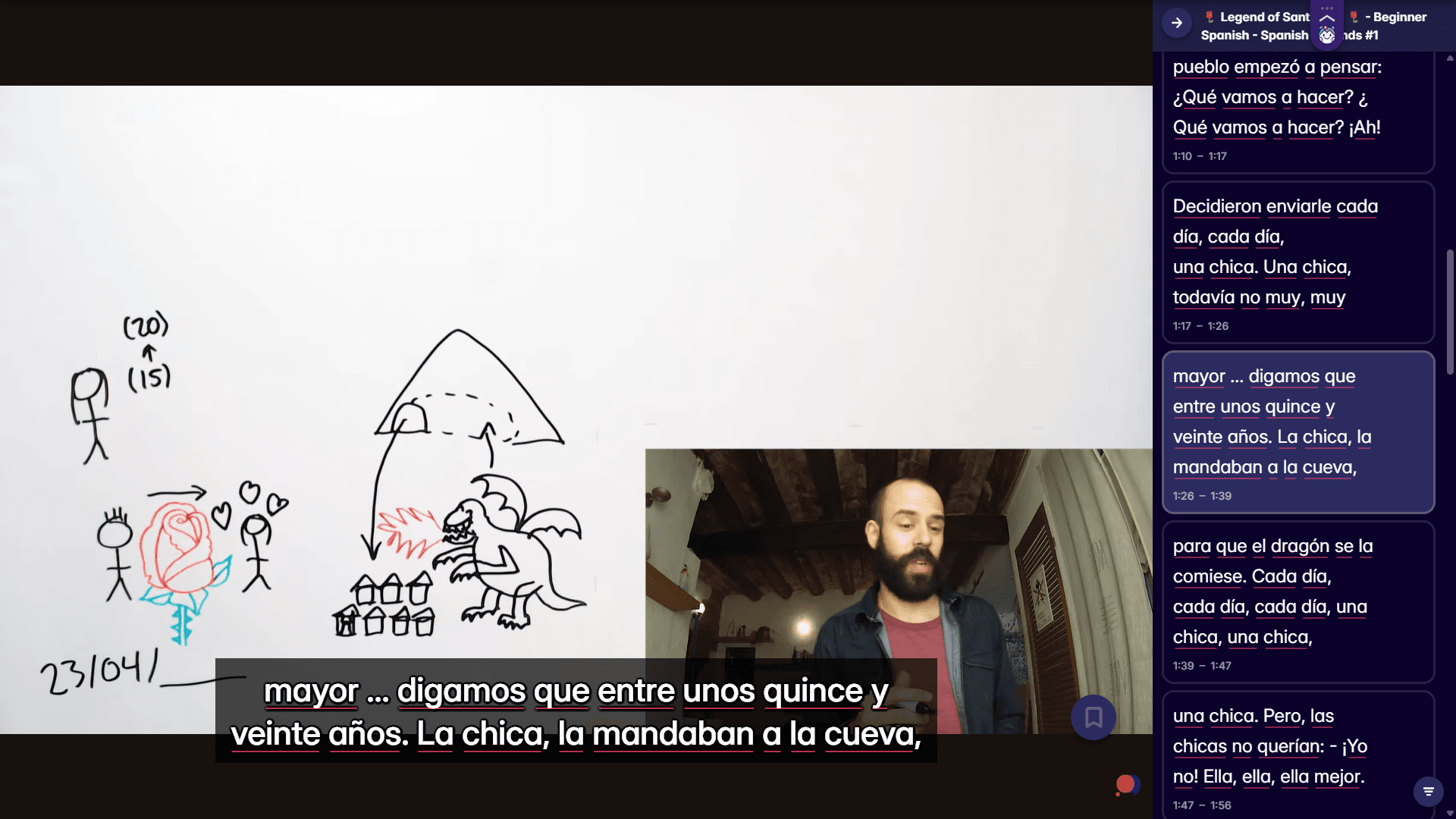
If you want to practice this vocabulary with real Spanish content, Migaku's browser extension and app let you look up words instantly while watching Spanish YouTube videos or reading articles about shopping. Makes learning from authentic material way more practical. There's a 10-day free trial if you want to check it out.
 ----
## Learning how to shop in Spanish gives you immediate wins
You'll use these Spanish shopping words within hours of learning them. That kind of instant application makes the vocab stick way better than memorizing random word lists from a textbook. If you enjoy consuming media, Spanish shopping vocabulary appears constantly in news articles, literary works, dramas, and movies. You can definitely remember the important phrases and vocabulary if you actively pay attention to what you are reading or watching.
> If you consume media in Spanish, and you understand at least some of the messages and sentences within that media, you will make progress. _Period_.
The more you practice, the more automatic the language becomes.
----
## Learning how to shop in Spanish gives you immediate wins
You'll use these Spanish shopping words within hours of learning them. That kind of instant application makes the vocab stick way better than memorizing random word lists from a textbook. If you enjoy consuming media, Spanish shopping vocabulary appears constantly in news articles, literary works, dramas, and movies. You can definitely remember the important phrases and vocabulary if you actively pay attention to what you are reading or watching.
> If you consume media in Spanish, and you understand at least some of the messages and sentences within that media, you will make progress. _Period_.
The more you practice, the more automatic the language becomes.