Spanish Sports Vocabulary: Learn 50+ Sports in Spanish with Examples
Last updated: March 12, 2026

Learning Spanish sports vocabulary opens up a whole new world of conversations, whether you're watching a football match in Spain, playing basketball with friends in Mexico, or just trying to understand what's happening on Spanish TV. Sports are everywhere in Spanish-speaking cultures, and knowing the right words makes everything from casual chats to understanding commentary way easier. Here's everything you need to know about sport vocabulary in Spanish, from basic terms to specific phrases you'll actually use.⚽🥅
- Basic sport names in Spanish
- Learn verbs to talk about sports in Spanish
- Sports equipment vocabulary in Spanish
- Venues and locations for sports
- Player roles and positions
- Spanish vocabulary of sport-specific movements and actions
- Learn Spanish regional variations
- Where to find resources for learning sports in Spanish
Basic sport names in Spanish
Let's start with the fundamentals. Are you a fan of the world of sports? Then you'll want to know how to talk about your favorites in Spanish.
The word "sport" in Spanish is "deporte" (masculine). When you're talking about multiple sports, you'd say "deportes." Pretty straightforward. Here's a list of common sports you'll hear about:
English | Spanish |
|---|---|
Soccer / Football | fútbol |
Basketball | baloncesto (or básquetbol in Latin America) |
Tennis | tenis |
Baseball | béisbol |
Volleyball | voleibol |
Swimming | natación |
Running | atletismo (or carrera ) |
Cycling | ciclismo |
Boxing | boxeo |
Golf | golf |
The thing about Spanish sports vocabulary is that many words look similar to English because they share Latin roots or were borrowed directly. Basketball becomes "baloncesto" in Spain but you'll hear "básquetbol" in most Latin American countries. Football (what Americans call soccer) is always "fútbol" across Spanish-speaking countries.
Here are some example sentences to see these in action:
- Me gusta jugar al fútbol los fines de semana.
I like to play soccer on weekends. - El baloncesto es mi deporte favorito.
Basketball is my favorite sport. - ¿Practicas algún deporte?
Do you practice any sport?
Learn verbs to talk about sports in Spanish
When you're talking about playing or doing a sport, you need to know which verb to use. This trips up a lot of learners, but the pattern is actually consistent once you get it.
For most sports, you use "jugar a" (to play) or "practicar" (to practice):
- Jugar al fútbol (play soccer)
- Jugar al tenis (play tennis)
- Jugar al baloncesto (play basketball)
Notice the "al" part? That's a contraction of "a" + "el" (to + the). So you're literally saying "play to the soccer."
For individual sports or activities, you often use "hacer" (to do) or "practicar" :
- Hacer natación (do swimming)
- Practicar ciclismo (practice cycling)
- Hacer yoga (do yoga)
Some sports use "correr" (to run), "nadar" (to swim), or other specific verbs:
- Correr maratones (run marathons)
- Nadar en la piscina (swim in the pool)
- Montar en bicicleta (ride a bicycle)
Sports equipment vocabulary in Spanish
Knowing the sport names is one thing, but you'll also want to talk about the equipment. This vocabulary comes up constantly in conversation when you're actually playing or watching sports.
Here's a practical list of common equipment terms:
English | Spanish |
|---|---|
Ball (general) | pelota |
Ball (larger, for soccer/basketball) | balón |
Racket | raqueta |
Bat | bate |
Glove | guante |
Helmet | casco |
Sports shoes | zapatos deportivos / zapatillas |
Jersey | camiseta |
Shorts | pantalones cortos |
Net | red |
Soccer ball | balón de fútbol |
Basketball hoop | canasta / aro |
Tennis ball | pelota de tenis |
Baseball glove | guante de béisbol |
Swimming goggles | gafas de natación |
Bicycle | bicicleta |
Example sentences:
- Necesito una raqueta nueva para jugar al tenis.
I need a new racket to play tennis. - ¿Dónde está el balón de fútbol?
Where is the soccer ball? - Me olvidé las zapatillas en casa.
I forgot my sports shoes at home.
Venues and locations for sports
Where you play matters just as much as what you play. These location terms show up constantly when making plans or discussing where a match is happening.
Common sports venues:
English | Spanish |
|---|---|
Stadium | estadio |
Court | cancha / pista |
Field | campo |
Pool | piscina |
Gym | gimnasio |
Track | pista |
Arena | arena / pabellón |
Soccer field | campo de fútbol |
Basketball court | cancha de baloncesto |
Tennis court | pista de tenis |
Baseball diamond | campo de béisbol |
Swimming pool | piscina |
Running track | pista de atletismo |
Boxing ring | ring de boxeo |
You'll use these with prepositions like "en" (in/at):
- El partido es en el estadio.
The match is at the stadium. - Vamos a la cancha de baloncesto.
We're going to the basketball court. - Entreno en el gimnasio todos los días.
I train at the gym every day.
Player roles and positions
Are you a sports fan? Then you probably want to talk about different positions and roles. This vocabulary gets specific depending on the sport.
General terms:
English | Spanish |
|---|---|
Player | jugador / jugadora |
Team | equipo |
Captain | capitán / capitana |
Coach | entrenador / entrenadora |
Referee | árbitro / árbitra |
Goalkeeper | portero / portera |
Soccer positions:
English | Spanish |
|---|---|
Forward | delantero / delantera |
Midfielder | centrocampista / mediocampista |
Defender | defensa |
Striker | delantero centro |
Basketball positions:
English | Spanish |
|---|---|
Guard | escolta / base |
Forward | alero / alera |
Center | pívot |
Baseball positions:
English | Spanish |
|---|---|
Pitcher | lanzador / lanzadora |
Catcher | receptor / receptora |
Outfielder | jardinero / jardinera |
Example conversation:
- ¿En qué posición juegas?
What position do you play? - Soy delantero en mi equipo de fútbol.
I'm a forward on my soccer team. - El portero hizo una parada increíble.
The goalkeeper made an incredible save.
Spanish vocabulary of sport-specific movements and actions
This is where your Spanish vocabulary really comes alive. These action words let you describe what's actually happening during a game.
Common sport actions:
English | Spanish |
|---|---|
To score (a goal) | marcar |
To score (points) | anotar |
To pass | pasar |
To shoot | tirar / lanzar |
To kick | patear |
To throw | lanzar |
To catch | atrapar / coger |
To run | correr |
To jump | saltar |
To win | ganar |
To lose | perder |
To tie | empatar |
Soccer-specific verbs:
English | Spanish |
|---|---|
Dribble | regatear |
Header | cabecear |
Tackle | entrar / hacer una entrada |
Save | parar / atajar |
Basketball verbs:
English | Spanish |
|---|---|
Dunk | machacar / hacer un mate |
Rebound | rebotear |
Dribble | driblar / botar |
Tennis verbs:
English | Spanish |
|---|---|
Serve | sacar |
Volley | volear |
Smash | rematar |
Using these in sentences:
- Messi marcó tres goles en el partido.
Messi scored three goals in the match. - Tienes que pasar el balón al jugador abierto.
You have to pass the ball to the open player. - El equipo ganó el campeonato.
The team won the championship.
Learn Spanish regional variations
Spanish sports vocabulary has changed over time and varies by region. What you hear in Spain might differ from what people say in Mexico or Argentina.
Basketball terminology:
- Spain: baloncesto
- Latin America: básquetbol or basquetbol
- Both regions: básquet (informal)
Swimming pool:
- Spain: piscina
- Mexico: alberca
- Argentina: pileta
Team:
- Universal: equipo
- Argentina/Uruguay: cuadro (informal for soccer team)
Soccer field:
- Spain: campo de fútbol
- Latin America: cancha de fútbol (cancha is more common)
These variations matter when you're consuming content from different regions or traveling. The good news is that people generally understand all variants, even if they prefer one locally.
Where to find resources for learning sports in Spanish
You can find comprehensive lists on language learning websites that offer downloadable PDF files with Spanish words on sports organized by category. Many Spanish learning apps include sports vocabulary decks you can study.
Honestly though, the best way to learn this vocabulary in Spanish language is by using it. Watch sports in Spanish, read sports news from Spanish-language sources, or join a local team where people speak Spanish. The vocabulary sticks way better when you're actually talking about sports and using it in context.
Anyway, if you want to practice this vocabulary with real Spanish content, Migaku's browser extension and app let you look up sports terms instantly while watching games or reading articles in Spanish. Makes learning from actual content way more practical. There's a 10-day free trial if you want to check it out.
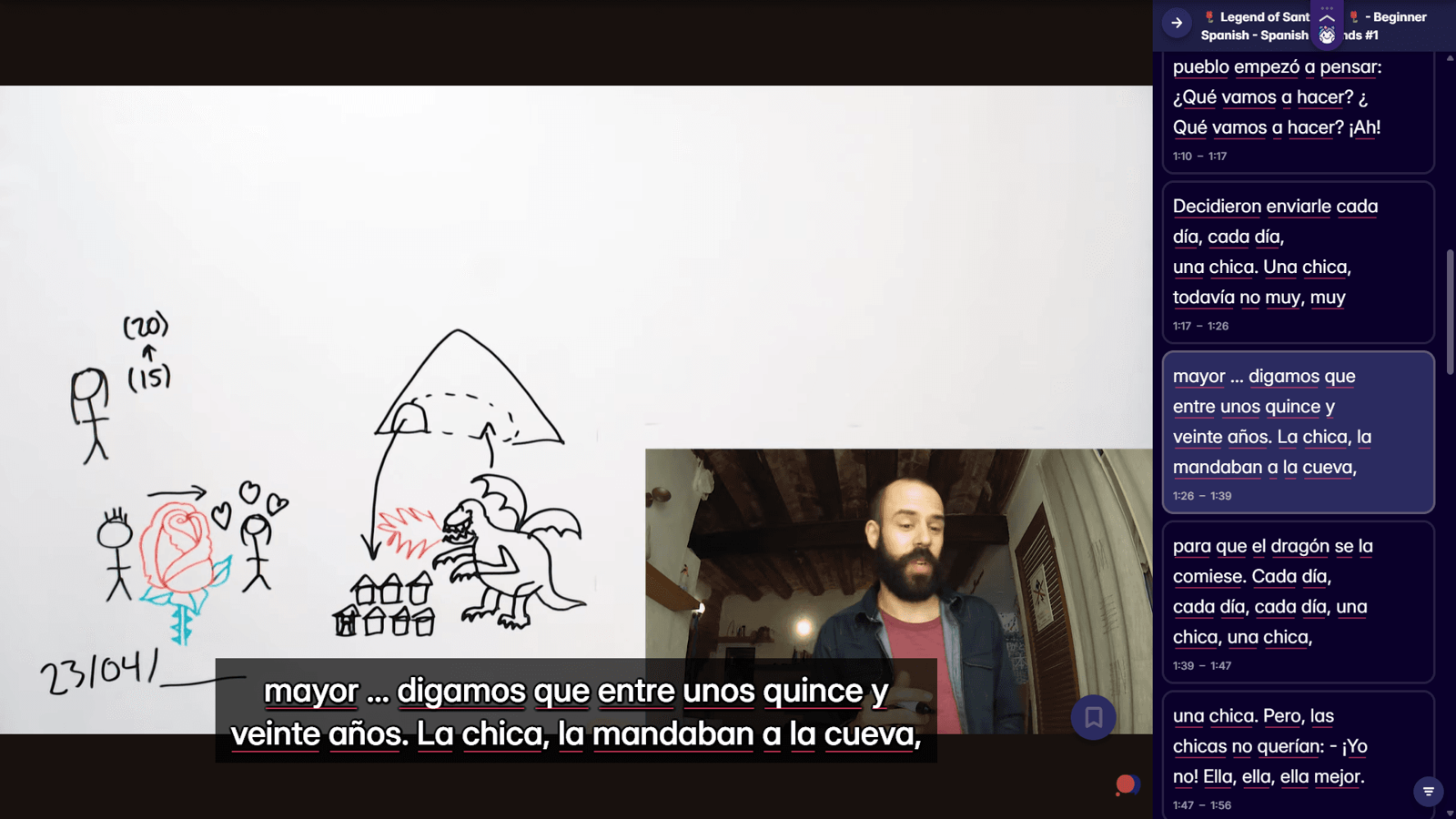
Learn Spanish sports vocabulary while enjoying videos of your favorite sports
Learning a language can be fun and entertaining, once you know how to mine vocabulary and sentences with immersion practice. You can try watching popular sports livestreams or your favorite sports shows, and add new words to your flashcards. It's true that it takes time to collect new words, but the words you learned from context, you never forget.
If you consume media in Spanish, and you understand at least some of the messages and sentences within that media, you will make progress. Period.
Learn with joy, not with force.😀🏃