Italian vs Spanish: Which Language Should You Learn?
Last updated: April 3, 2026
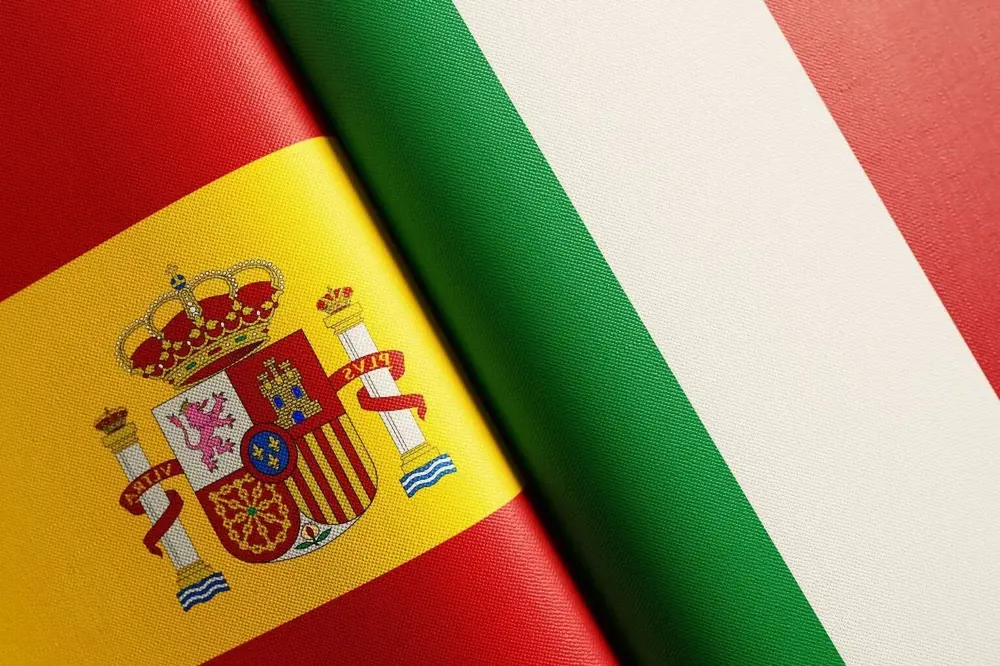
So you're trying to decide between Spanish and Italian? Both languages sound beautiful, both open up amazing opportunities for travel and culture, and honestly, both are pretty accessible for English speakers. The good news is that you can't really make a wrong choice here. The better news? Understanding the actual differences between these two romance languages will help you pick the one that fits your goals, learning style, and interests. Let's break down everything you need to know about Spanish vs Italian.
Where Italian and Spanish come from
Both Spanish and Italian descended from Vulgar Latin, the everyday spoken form of Latin used by regular people across the Roman Empire. When the empire fell apart, different regions developed their own versions of Latin, which eventually became distinct languages. This shared ancestry is why Italian and Spanish share so much in common today.
- Spanish evolved primarily in the Iberian Peninsula, influenced by Arabic during the Moorish occupation and later spreading to the Americas through colonization.
- Italian developed from the Tuscan dialect, which became the standard partly because of influential writers like Dante. Each romance language took its own path, picking up different influences and developing unique characteristics along the way.
Portuguese also came from Vulgar Latin, which is why you'll notice Spanish, Italian, and Portuguese speakers can often pick up bits of each other's languages. They're all part of the same language family, like cousins who share family traits but have their own personalities.
Similarity between Spanish and Italian
The similarity between these two languages is pretty striking. Linguists estimate that Spanish and Italian share about 82% lexical similarity, meaning roughly 8 out of 10 words have common roots. When you see written text, the overlap becomes even more obvious.
Take a simple sentence: "The cat drinks milk." In Spanish, that's "El gato bebe leche." In Italian, it's "Il gatto beve latte." You can spot the patterns immediately. The articles are nearly identical, the noun is the same, the verb is almost the same, and even "leche" and "latte" clearly come from the same Latin root.
This high degree of similarity means that learning one language gives you a serious head start on the other. Spanish speakers often find they can read Italian newspapers or menus with decent comprehension, even without formal study. The reverse is also true.
However, mutual intelligibility gets trickier with spoken language. While reading might feel comfortable, listening comprehension is another story. Italian pronunciation differs enough from Spanish that conversations between native speakers can get confusing quickly.
Pronunciation differences
Spanish pronunciation is generally more straightforward for English speakers. The language has five vowel sounds that stay pretty consistent, and most letters sound the way you'd expect. Once you learn the basic rules, you can usually pronounce new words correctly just by reading them.
Italian has seven vowel sounds instead of five, with open and closed versions of "e" and "o." This adds complexity that Spanish doesn't have. The double consonants in Italian also matter for meaning. "Penne" (pasta) and "pene" (pain) are different words, and you need to hold that "n" sound longer to make the distinction clear.
Spanish has sounds that don't exist in Italian, like the "j" sound (similar to the "h" in "hello" but raspier) and the soft "c" or "z" sound (which varies by dialect). Italian has its own unique sounds, like "gli" which doesn't really exist in Spanish or English.
The rhythm and melody of the languages feel different too. Italian tends to have a more musical quality with clear syllable separation. Spanish flows differently, with certain consonants softening or disappearing in casual speech, especially in some Latin American dialects.
Vocabulary overlap and differences between Italian and Spanish
The vocabulary similarity is real, but it comes with traps. These are called false friends, words that look or sound similar but mean different things. "Embarazada" in Spanish means pregnant, not embarrassed. "Burro" means butter in Italian but donkey in Spanish.
Many everyday words are recognizably similar. "Book" is "libro" in both languages. "Water" is "agua" in Spanish and "acqua" in Italian. You'll find these patterns everywhere.
The real vocabulary differences show up in modern terms and regional expressions. Italian uses "macchina" for car, while Spanish uses "coche" or "carro" depending on the region. These differences accumulated over centuries of separate development.
Italian vs Spanish grammar structures
Both languages follow similar grammatical patterns because of their Latin roots. They use gendered nouns (masculine and feminine), require article-noun agreement, and place adjectives mostly after nouns. The basic sentence structure is flexible in both languages, more so than in English.
Verb conjugation is where both languages get complex, but in slightly different ways. Spanish has more verb tenses overall, including a future subjunctive that's basically extinct in modern usage but technically exists. Italian has fewer tenses but uses them differently.
The subjunctive mood exists in both languages and trips up English speakers constantly. You use it to express doubt, wishes, emotions, and hypothetical situations. Spanish speakers use the subjunctive frequently in everyday conversation. Italian speakers use it too, but the rules for when it's required differ slightly between the languages.
One grammatical difference that matters: Italian uses the passato prossimo (present perfect) for most past actions, while Spanish distinguishes more carefully between the preterite and present perfect. This means Italian speakers say "ho mangiato" (I have eaten) for "I ate," while Spanish speakers choose between "comí" and "he comido" depending on whether the action feels connected to the present.
Noun and adjective agreement works similarly in both languages, but Italian has some extra complications with possessive adjectives. Spanish says "mi casa" (my house) regardless of who's speaking. Italian says "la mia casa" with the article included, and the possessive adjective changes based on what you possess, not just who possesses it.
How many people speak each language
Spanish absolutely dominates in terms of speaker numbers. Around 500 million people speak Spanish as a native language, making it the second most spoken native language in the world after Mandarin. Add in second-language speakers, and you're looking at over 580 million Spanish speakers worldwide.
Italian has roughly 65 million native speakers, mostly concentrated in Italy and parts of Switzerland. When you include heritage speakers and second-language learners, the number grows to maybe 85 million total. That's still significant, but nowhere near Spanish numbers.
Spanish spread across the Americas, becoming the official language in 20 countries. You'll find Spanish speakers throughout Central and South America, Mexico, the Caribbean, and increasingly in the United States, which has the second-largest Spanish-speaking population in the world.
Italian remained more geographically concentrated. Besides Italy, you'll find Italian speakers in parts of Switzerland, San Marino, Vatican City, and immigrant communities worldwide, particularly in Argentina, the United States, and Australia.
For practical purposes, Spanish opens more doors globally. You can travel through massive parts of the world using Spanish. Italian gives you deep access to Italian culture, history, and the Italian peninsula, but the geographic reach is smaller.
Is Italian or Spanish easier to learn
Is Spanish or Italian easier?
For English speakers, Spanish edges ahead slightly. The pronunciation is more straightforward, the spelling is more phonetic, and you'll find more learning resources available. Spanish also has a simpler verb system in some ways, despite having more tenses.
Italian pronunciation requires more attention to detail with those vowel distinctions and double consonants. The grammar is complex in different ways than Spanish, particularly with article usage and certain verb constructions.
That said, both languages are rated as Category I languages by the Foreign Service Institute, meaning they're among the easiest languages for English speakers to learn. The FSI estimates about 600-750 hours of study to reach professional proficiency in either language.
Your personal background matters too. If you already know another romance language, you'll find both Spanish and Italian pretty accessible. If you've studied Latin, same deal. If you're starting from scratch as an English speaker with no romance language experience, Spanish might feel slightly more intuitive at first.
Choosing based on your goals
Think about why you want to learn a language. If you're interested in business opportunities in Latin America, Spanish is the obvious choice. If you're passionate about Renaissance art, opera, or Italian cuisine, Italian makes more sense.
Travel plans matter too. Want to explore Mexico, Argentina, Colombia, or Spain? Learn Spanish. Planning to spend time in Italy, studying Italian history, or working in Italian fashion or design? Go with Italian.
Career considerations play a role. Spanish speakers are in high demand in the United States for healthcare, education, customer service, and countless other fields. Italian has more niche professional applications, valuable in specific industries like luxury goods, classical music, or art history.
Some people choose based on which culture resonates more personally. If Italian films, literature, and music speak to you, that emotional connection will fuel your motivation to learn. Same goes for Spanish-language content from Spain or Latin America.
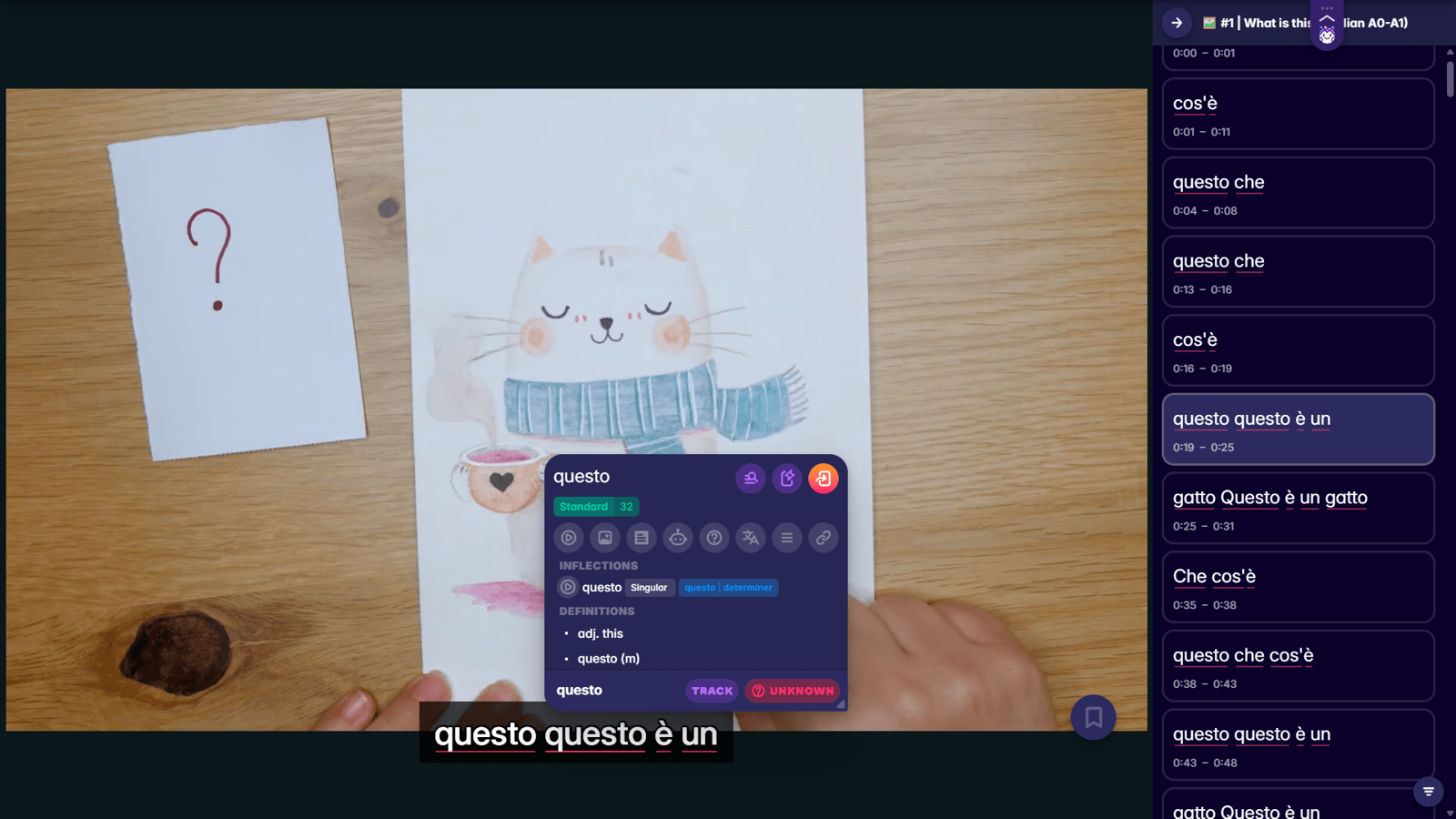
If you're ready to dive into real Spanish or Italian content, Migaku's browser extension and app let you look up words instantly while watching shows or reading articles in your target language. You can save sentences, build flashcards, and actually learn from the stuff you enjoy watching. There's a 10-day free trial if you want to check it out.
Spanish vs Italian for your language journey
Both Spanish and Italian are beautiful, useful languages that connect you to rich cultures and millions of speakers worldwide. The best choice depends on your personal goals, interests, and circumstances. Whichever language you choose, immersion is how you'll actually get good at it. Textbooks and apps build foundation, but consuming real content in your target language is what takes you from studying to actually understanding and using the language.
If you consume media in Spanish or Italian, and you understand at least some of the messages and sentences within that media, you will make progress. Period.
A good choice becomes great through effort!💪