Living in Hamburg: Cost of Living, St. Pauli, and Top Districts
Última actualización: 19 de mayo de 2026
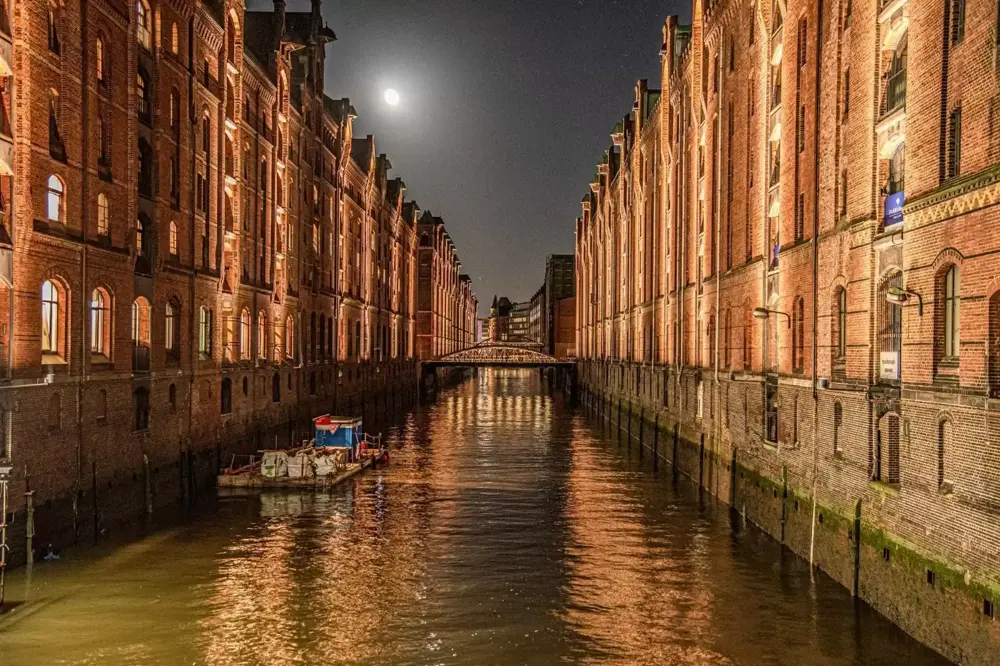
Hamburg combines port-city grit, canals, and a strong job market into one of Germany's most livable cities, with a 2025 median net cold rent of €9.94 per square meter and reliable public transport across HVV. This guide covers what it actually costs to live there in 2026, which districts suit which lifestyles, and the paperwork you cannot skip.
Last updated: May 19, 2026
Why Hamburg Works for Expats
Hamburg is Germany's second-largest city and its biggest port, home to media, logistics, aerospace (Airbus has a major plant in Finkenwerder), and a growing tech scene. English is widely spoken in international offices, though German is still essential for daily life, dealing with authorities, and most service jobs.
The city is greener and more spread out than Berlin, with the Alster lake at its center and the Elbe river to the south. Cycling infrastructure is solid, and you can cross most of the inner city by S-Bahn or U-Bahn in under 30 minutes. Winters are gray and wet rather than brutally cold, and summers are mild, with long evenings on the canals.
Compared with Munich or Frankfurt, Hamburg offers slightly lower rents and a more relaxed pace, while still paying competitive salaries in finance, shipping, and media.
Cost of Living in Hamburg in 2026
Here is what a single adult should budget per month, based on official 2026 figures and typical market rates.
Item | Monthly cost (EUR) |
|---|---|
Rent, 50 m² apartment at median €9.94/m² cold | ~500 cold, ~700–900 warm |
Deutschlandticket (HVV) | 63 |
Deutschlandticket, students/apprentices | 37.80 |
Deutschlandticket, social tariff | 27.50 |
Rundfunkbeitrag (broadcasting fee) | 18.36 |
Water (per m³, plus 7% VAT) | 2.05 |
Wastewater (per m³) | 2.49 |
Water meter charge | 3.42 |
The Hamburg Mietenspiegel 2025, published by the Senate, gives a median net cold rent of €9.94 per square meter as of 1 April 2025. That is the cold rent only. Add Nebenkosten (utilities, heating, water, building costs), which typically push the warm rent 25–40% higher, and then electricity on top.
District heating customers (around 260,000 Hamburg apartments are on the Fernwärme network) face a sharp 2026 increase: Hamburger Energiewerke raised the working price from roughly 10.9 ct/kWh net to about 14.2 ct/kWh, a roughly 30% jump. Household waste fees rose 3.4% as well, adding around €8.88 per year for an average flat.
The statutory minimum wage in Germany rose to €13.90 gross per hour on 1 January 2026 and is set to rise to €14.60 on 1 January 2027. The official subsistence reference for one adult (Regelbedarfsstufe 1) from January 2026 is €563.00 per month excluding housing, which is a useful floor when planning.
For broader comparisons with other European hubs, see this overview of the cost of living in European cities.
Top Districts to Live In
Hamburg's 104 quarters cluster into a handful of broad areas. Here are the ones expats ask about most.
St. Pauli
St. Pauli is the city's loudest, most countercultural district, wrapped around the Reeperbahn. It has cheap döner, late-night bars, music venues, and a strong leftist identity tied to FC St. Pauli. Rents are below the city median for older stock but climbing fast in renovated buildings. Suitable for people in their twenties and thirties who want nightlife on their doorstep and do not mind noise. Families usually move out.
Altona and Ottensen
Altona, west of the center, blends a major S-Bahn hub with quiet residential streets. Ottensen, just south, is the favorite of young families and creative professionals: indie cafés, weekly markets, parks, and good schools. Rents are above the city median. Apartments turn over slowly.
Eimsbüttel
A broad middle-class district northwest of the Alster, Eimsbüttel is popular with young professionals and families who want central living without St. Pauli's chaos. Streets are tree-lined, the U-Bahn and S-Bahn cover the area well, and Schanzenviertel sits on its southern edge for nightlife when you want it.
HafenCity and Speicherstadt
The newest district, built on former port land south of the Altstadt. Modern architecture, high rents, and the Elbphilharmonie as its landmark. Suits relocating professionals with company housing budgets. Quieter at night than most central districts.
Winterhude and Uhlenhorst
East of the Alster, these are calm, upscale neighborhoods with leafy streets, the Stadtpark, and good cafés. Rents are high. Families and older professionals dominate.
Wilhelmsburg and Veddel
South of the Elbe on islands between the river arms. Historically working-class and home to large migrant communities, Wilhelmsburg is the most affordable inner-city option, with rents well below the median. Gentrification is underway. Transport to the center takes 10–15 minutes by S-Bahn.
Barmbek and Dulsberg
Northeast of the center, mixed residential areas with 1950s rebuilt blocks and good transport. Cheaper than Eimsbüttel or Winterhude, popular with students and first-time renters.
For a comparable breakdown of another German city, this neighborhood guide for foreigners covering Munich uses a similar framework.
Registration, Visas, and Paperwork
Germany runs on paperwork, and Hamburg is no exception. Here is the order in which to handle it.
Anmeldung (address registration)
You must register your address at a Kundenzentrum within 2 weeks of moving in. Late registration can be punished with a fine. On-site processing usually takes 15–20 minutes once you are called. Book the appointment online through the city's service portal; same-week slots are usually findable if you check early mornings.
You will need:
- Passport or ID
- Wohnungsgeberbestätigung (signed confirmation from your landlord)
- Rental contract
- Completed Anmeldung form
A registration certificate (Meldebescheinigung), which you will need for opening bank accounts and other services, costs €16.00 per copy.
Residence permit
If you are not an EU citizen, you usually need a residence permit. Citizens of Australia, Israel, Japan, Canada, New Zealand, South Korea, and the United States can enter Germany without a visa but must register their address and apply for a residence permit within 90 days of arrival.
A standard residence permit (Aufenthaltstitel) in Hamburg costs around €100. The online residence permit service itself is free to use.
For skilled workers, the EU Blue Card in 2026 requires a minimum gross annual salary of €50,700. For shortage occupations (MINT fields, IT, medicine), the reduced threshold is €45,934.20.
Health insurance
Health insurance is mandatory before you can complete most other paperwork. Statutory insurance (gesetzliche Krankenversicherung) is the default for employees earning below the threshold; private insurance is an option for higher earners, the self-employed, and civil servants. Check the current general rate plus Zusatzbeitrag on the GKV-Spitzenverband site before signing up.
Vehicle registration
First-time vehicle registration in Hamburg costs between €26.30 and €60.00, per the federal GebOSt fee schedule.
Broadcasting fee
The Rundfunkbeitrag is €18.36 per month, paid quarterly at €55.08, and is mandatory for every household with a registered address in Germany. You cannot opt out.
Getting Around
The HVV network covers buses, U-Bahn, S-Bahn, regional trains, and ferries on the Elbe and Alster. A single ticket for the inner ring costs more than most people want to pay daily, so almost every commuter buys the Deutschlandticket.
As of January 2026, the Deutschlandticket costs €63 per month and is valid on all local and regional public transport across Germany. HVV implemented an average 5.4% tariff increase for 2026.
Reduced versions of the ticket:
- Students, apprentices, and jobticket users: €37.80 per month
- Social tariff (Grundrente, Asylbewerberleistungen, other social benefits): €27.50 per month
- From 1 May 2026, Hamburg residents aged 67+ with main residence in Hamburg: €49 per month
Cycling is practical most of the year. The StadtRAD bike-share system has stations across the inner city and is free for the first 30 minutes per ride after a small annual registration.
Family Life and Childcare
Hamburg has one of Germany's more generous childcare systems. Up to 5 hours of daily Kita care, or up to 30 hours per week in childminding (Tagespflege), is free from birth until school entry. Beyond that, parental fees are staggered by income, family size, age group, and care extent.
Families receiving certain SGB II, SGB XII, or Asylbewerberleistungsgesetz benefits, Kinderzuschlag, or Wohngeld pay no Kita parental fee at all for children up to school entry. This has been the case since 1 August 2019.
There are international schools in Hamburg (the International School of Hamburg in Niendorf is the largest), but state schools are free and generally good. Bilingual state schools exist but waitlists are long.
Working in Hamburg
The big employers are Airbus, Lufthansa Technik, Beiersdorf (Nivea), Otto Group, Olympus Europa, and the Port of Hamburg's logistics network. Media is concentrated around Gruner + Jahr and Der Spiegel. English-speaking roles are easiest to find in IT, aerospace engineering, shipping, and international logistics.
Networking through XING (still bigger than LinkedIn in northern Germany), industry meetups, and Hamburg@Work events tends to be more productive than cold applications. For a sense of how European job markets work compared to North America, this guide to job hunting in Europe lays out the recruiter expectations and CV norms.
Common Pitfalls
- Signing a rental contract without checking Nebenkosten. The cold rent is only part of the picture. Ask for the previous year's Nebenkostenabrechnung.
- Missing the 14-day Anmeldung deadline. This delays everything else: bank account, tax ID, work contract activation.
- Forgetting the Rundfunkbeitrag. You will be billed automatically once you register your address.
- Underestimating heating costs. The 2026 Fernwärme price jump will hit district-heating tenants hard.
- Buying property without budgeting for the new Grundsteuer. From 2025 Hamburg's Hebesätze are Grundsteuer A at 100%, Grundsteuer B at 975%, and Grundsteuer C at 8,000% for unbuilt, building-ready plots. From 2026 the tax is due quarterly on 15 February, 15 May, 15 August, and 15 November.
- Assuming everyone speaks English at the Bürgeramt. Officials are not required to speak English, and forms are in German.
FAQs
Is Hamburg cheaper than Berlin or Munich?
Hamburg sits between the two. Munich is clearly more expensive on rent; Berlin is now close to Hamburg on rent but generally cheaper on services and dining out.
How much do I need to earn to live comfortably?
A single person can live reasonably on around €2,800–3,200 net per month in most central districts. Families need substantially more, especially with private health insurance or international schooling.
Do I need a German bank account?
Yes, for rent, utilities, and salary. Most landlords and employers require a SEPA-compatible German IBAN. You can open one before Anmeldung with some online banks, but you will need to register your address to keep it active long-term.
How hard is it to find an apartment?
Hard. The market is competitive, especially in Eimsbüttel, Ottensen, and Winterhude. Expect to provide Schufa (credit check), proof of income for the last three months, and a copy of your passport at viewings.
Do I need to speak German?
For work in international companies, often no. For everything else (doctors, landlords, the Bürgeramt, neighbors, school parents' evenings), yes. Even basic B1 German changes daily life significantly.
If you are settling into Hamburg and want to actually use the German you hear at the bakery, on the U-Bahn, and at the Bürgeramt, try Migaku for learning German from real shows, news, and conversations.