Moving to Mallorca: A Practical Expat Guide to Island Life
Última actualización: May 22, 2026
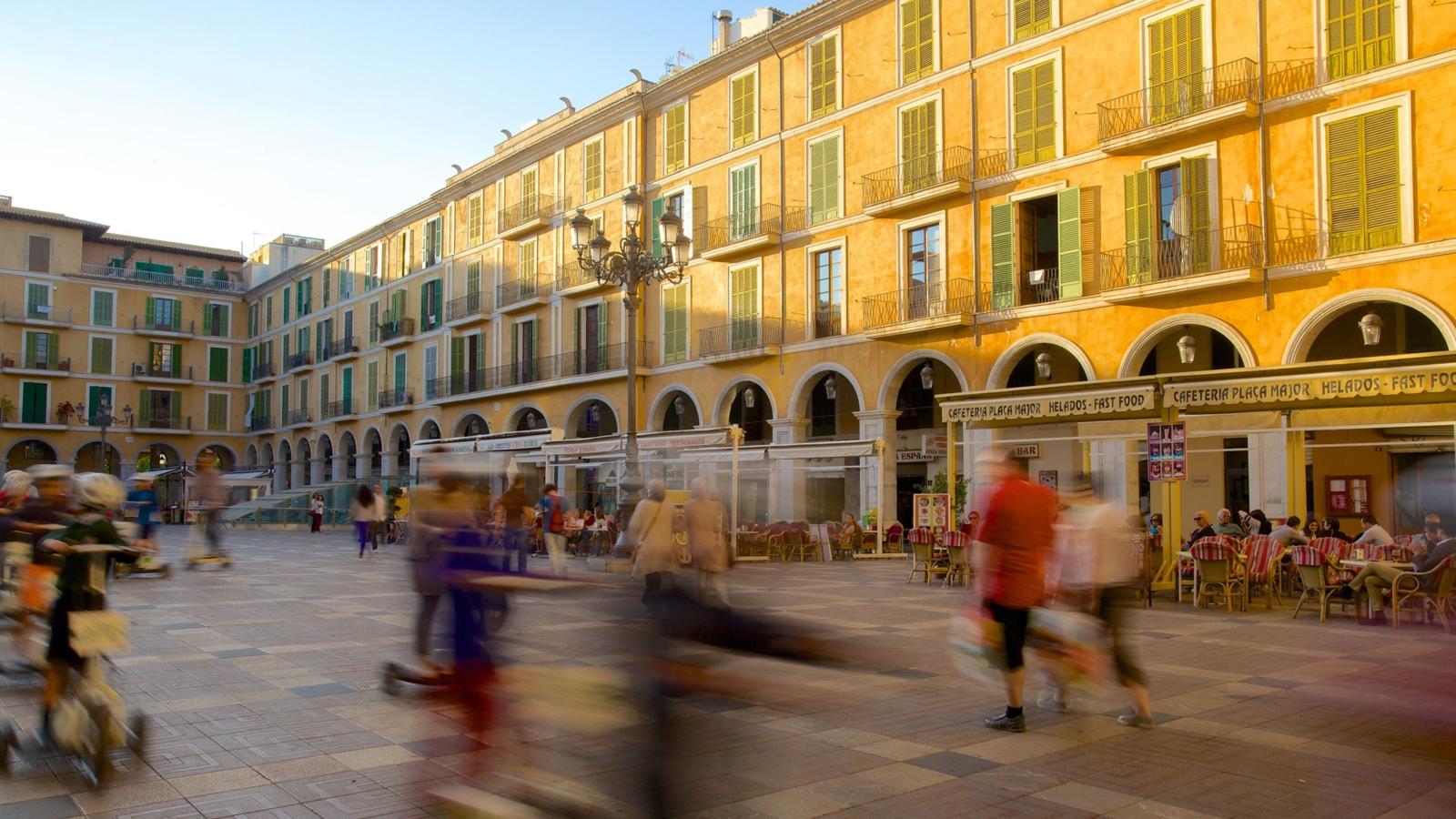
Moving to Mallorca means trading one rhythm for another: Mediterranean light, slower lunches, and a year-round community that fills back in once the August crowds leave. This guide walks through the practical side, residence permits, property and rental rules, taxes, and what daily life actually costs in 2026.
Last updated: May 22, 2026
- Who Can Move to Mallorca, and How
- Digital Nomad Visa vs Non-Lucrative Visa
- The Beckham Law for DNV Holders
- Documents and Application Steps
- Government Fees in 2026
- Housing: Buying, Renting, and the Tourist Licence Trap
- Healthcare on the Island
- Cost of Living: What Mallorca Really Costs
- Tax Residency and the 183-Day Rule
- Common Pitfalls
Who Can Move to Mallorca, and How
Mallorca is part of Spain and the Schengen Area, so the legal pathways are Spain's national ones. EU/EEA and Swiss citizens can register and stay without a visa. Everyone else needs a residence route. The Golden Visa property route was abolished by Organic Law 1/2025, and no new applications have been accepted since 3 April 2025, so the realistic options for non-EU expats in 2026 are:
- Digital Nomad Visa (DNV): for remote workers and freelancers with foreign clients or employers.
- Non-Lucrative Visa (NLV): for financially self-sufficient retirees and passive-income residents who will not work in Spain.
- Work or highly qualified employee visas: tied to a specific Spanish employer.
- Student visas: tied to enrolment at a recognised institution.
- Family reunification: for relatives of legal residents or Spanish citizens.
For most lifestyle movers and remote professionals, the DNV and NLV are the two routes worth comparing carefully.
Digital Nomad Visa vs Non-Lucrative Visa
The two main civilian routes have very different financial thresholds and tax implications.
Item | Digital Nomad Visa (2026) | Non-Lucrative Visa (2026) |
|---|---|---|
Main applicant income | €2,849/month (€34,188/year) | €2,400/month (€28,800/year) |
Per dependent (adult) | €1,069/month | €600/month |
Per dependent (child) | €357/month | €600/month |
Work allowed in Spain? | Yes, remote/foreign clients | No |
Initial validity (consulate) | 1 year | 1 year (long-stay residence) |
Initial validity (applied in Spain) | 3 years | n/a |
Processing time | ~4 months | Varies by consulate |
Beckham Law eligible? | Yes (flat 24% up to €600,000) | No |
Minimum physical presence | Standard residency rules | 183 days/year |
The DNV income floor rose to €2,849/month from 1 January 2026, tracking 200% of Spain's 2026 minimum wage (SMI of €1,221/month over 14 payments). NLV thresholds are pegged to IPREM, which stayed at €600/month for 2026; the headline figure is 400% IPREM for the main applicant plus 100% per dependent.
A critical NLV change: Spain reinstated the 183-day physical presence requirement to maintain residency, so the NLV is no longer a workable "backup residence" for people who plan to spend most of the year elsewhere.
The Beckham Law for DNV Holders
Digital Nomad Visa holders who become Spanish tax residents can elect the special expatriate regime, often called the Beckham Law. It allows a flat 24% income tax rate on employment income up to €600,000 per year, for up to six tax years. You must file Form 149 within six months of registering with Spanish Social Security. Outside this regime, ordinary IRPF rates in 2026 run progressively from 19% to 47%, depending on the autonomous community. The Balearic Islands set their own regional brackets, which can push the top combined rate toward the upper end of that range.
Documents and Application Steps
The paperwork is broadly similar across visa types, with extra financial proof for the DNV/NLV. Plan on three to five months from first appointment to landing.
Core document checklist:
- Valid passport (at least one year of remaining validity).
- National visa application form, signed.
- Recent passport photos meeting Spanish consular specs.
- Apostilled and translated birth certificate (and marriage certificate if applying with a spouse).
- Apostilled criminal background check from every country lived in during the last 2–5 years.
- Private Spanish health insurance with full coverage, no co-pays, no deductibles, valid for the full year.
- Medical certificate stating you are free of diseases listed under the 2005 International Health Regulations.
- Proof of accommodation in Mallorca (rental contract or property deed).
- Proof of funds (bank statements, payslips, contracts with foreign clients for the DNV).
Typical sequence:
- Gather and apostille civil and police documents at home.
- Book a visa appointment with the Spanish consulate covering your jurisdiction.
- Submit the application and pay the visa fee.
- Wait for approval (often 1–3 months for NLV, around 4 months for DNV).
- Enter Spain on the long-stay visa.
- Within 30 days of arrival, book a TIE (residence card) appointment at the Palma immigration office.
- Register at your local town hall (empadronamiento).
- Register with Spanish Social Security if employed, or with the tax authority (AEAT) for tax residency matters.
Government Fees in 2026
The administrative side of moving to Spain is, mercifully, cheap. The big costs are private (translations, lawyers, insurance), not state fees.
Item | Fee (2026) |
|---|---|
NIE assignment (Form 790) | €9.84–€12 |
TIE initial issuance (Modelo 790, code 012) | €16.32 |
TIE renewal | €23.60 |
Long-term residency TIE | €21.87 |
EU registration certificate | €12 |
Citizenship by residence application | €104.05 |
Visa fees themselves vary by consulate and nationality and are paid separately to the consulate at the time of application.
Housing: Buying, Renting, and the Tourist Licence Trap
Mallorca's housing market is the single biggest practical issue for new arrivals, and the rules changed materially in 2025–2026.
Renting Long-Term
Long-term residential leases governed by the LAU (Spain's urban leases act) must allow a minimum term of 5 years (7 if the landlord is a company), with rent increases capped to the official index. As a tenant, you have stronger protection than in most of Europe.
In Palma in early 2026, expect roughly:
- One-bedroom (about 50 m²): ~€1,000/month.
- Two-bedroom (about 75 m²): ~€1,400/month.
- Citywide average: ~€18.70/m².
Village and inland prices drop, but family-sized homes in coveted areas like Sóller, Pollença, or Santanyí have caught up with Palma. Average tenants in the Balearics spend around €12,044 per year on housing alone, and total household basic costs sit around €33,400, well above the Spanish national average of ~€21,350.
Buying a Property
Median housing prices in Palma in the first half of 2026 sit around €369,000, roughly €4,100/m² for a typical 90 m² apartment. Coastal villages and the southwest (Andratx, Bendinat, Santa Ponsa) run substantially higher.
Balearic property purchase taxes in 2026:
- Resale (ITP): progressive from 8% up to 13% depending on price band, paid within 30 days via Form 600 to ATIB.
- New build: 10% VAT plus 1.5% AJD (stamp duty); AJD rises to 2% for properties above €1,000,000.
- Primary residence ITP relief: from 1 March 2026, Mallorca raised the reduced-rate threshold by 14% to €307,089. (Ibiza and Formentera rose 40% to €378,212.)
- Annual IBI: 0.4%–1.1% of cadastral value, set by your municipality.
- Total transaction costs: typically 10%–13% of the purchase price once notary, registry, and legal fees are included.
High-net-worth buyers should also check the Balearic Wealth Tax. For non-residents, the minimum exemption is €3 million in 2026 on Spanish assets.
Tourist Rentals: Don't Assume You Can Let It Out
This is where people lose money fastest. The Mallorca ETV (tourist rental licence) moratorium, in place since 2022, remains in effect through 2026, and no new licences are being issued in most areas. The only way to legally short-term let in Mallorca is to buy a property that already has a valid ETV attached.
Palma went further: as of 3 February 2026, the municipal government banned all new tourist rental accommodation licences across the entire municipality. One person can hold ETV licences on a maximum of three properties.
Fines for unlicensed short-term lets start at €5,000 and can exceed €50,000, with breaches of licence conditions attracting fines up to €400,000. Spain's national short-term rental registry (Ventanilla Única) has also required a unique registration number on platforms like Airbnb and Booking since 1 July 2025.
If rental income is part of your business plan, verify the ETV status in writing before you sign anything, and read other Spanish expat guides to compare how different regions handle this.
Healthcare on the Island
Mallorca is covered by the Servei de Salut de les Illes Balears (IB-Salut). Once you have residency, register at your local centro de salud with your TIE, empadronamiento, and Social Security number. DNV holders typically access public healthcare via Social Security contributions; NLV holders must show full private cover at visa stage and can convert later under certain conditions. For specifics on enrolment, prescription co-payments, and how the system treats long-stay residents, see Spain's public healthcare for expats.
Private insurance remains common as a top-up: shorter waits for specialists, English-speaking clinics, and access to private hospitals like Quirónsalud and Juaneda. Plans for a healthy adult in their 40s typically run €60–€150/month.
Cost of Living: What Mallorca Really Costs
Mallorca is not a budget destination. The Balearics are consistently the most expensive autonomous community in Spain for everyday costs after Madrid and the Basque Country. Compared with mainland alternatives covered in our cost of living in Spanish cities breakdowns, expect to spend 20%–35% more for groceries, dining, and services.
A rough monthly budget for a single person renting a one-bedroom in Palma in 2026:
- Rent (1-bed): €1,000
- Utilities (electricity, water, internet): €130–€180
- Groceries: €350–€450
- Eating out (a few times a week): €200–€300
- Transport (mostly bus + occasional taxi): €40–€80
- Private health top-up: €80
- Total: roughly €1,800–€2,100
A family of three should plan for €3,500–€4,500 depending on schooling choices and whether a car is needed (most non-Palma residents need one).
Visitors and short-stay tenants also pay the Balearic Sustainable Tourism Tax (ITS). In 2026, the high-season rate (1 May–31 October) is up to €4/night for 5-star and 4-star superior hotels, plus VAT. Children under 16 are exempt. Long-term residents are not charged.
Tax Residency and the 183-Day Rule
Spend more than 183 days in a calendar year in Spain and you become a Spanish tax resident, which means worldwide income taxation and Modelo 720/721 reporting on foreign assets above thresholds. Plan this in advance, particularly the first calendar year you arrive. Speak to a gestor or tax adviser before December of your arrival year to avoid accidentally splitting residency in the wrong direction.
Key timing rules:
- Permanent residency: available after 5 years of continuous legal residence.
- Citizenship: after 10 years (2 years for Ibero-American, Andorran, Filipino, Equatorial Guinean, Portuguese nationals, or persons of Sephardic origin).
- Beckham Law election: within 6 months of Social Security registration.
- ITP payment: within 30 days of property purchase.
- TIE appointment: within 30 days of arrival on a residence visa.
Common Pitfalls
- Buying a property assuming you can short-let it. Verify the ETV in writing. Without it, you cannot operate legally.
- Underestimating winter. Many coastal villages effectively close from November to March. If you want year-round amenities, look at Palma, Sóller, Pollença town, or Manacor.
- Skipping the empadronamiento. You need it for healthcare, schools, residency renewals, and proof of address. Do it immediately after moving in.
- Forgetting NIE before signing anything. No NIE, no bank account, no mortgage, no utilities transfer.
- Health insurance gaps for NLV. Travel insurance is not enough. Buy a compliant Spanish private plan with zero co-pays before your consulate appointment.
- Ignoring the 183-day NLV minimum. If you cannot commit to spending half the year on the island, the NLV is not the right route.
FAQs
Do I need to speak Spanish to live in Mallorca?
In Palma and tourist zones, no, English will get you through. For paperwork, healthcare, and life in inland villages, yes, functional Spanish makes a substantial difference. Catalan (specifically the Mallorquí dialect) is the co-official language; locals appreciate even modest attempts.
Can I work for a Spanish company on the Digital Nomad Visa?
Only partially. The DNV is designed for foreign income; up to 20% of your income may come from Spanish clients, but the bulk must be from outside Spain.
How long does it take to get a TIE in Palma?
The legal window is 30 days from arrival. Actual appointment availability in Palma's Oficina de Extranjería has been a chronic bottleneck. Book the appointment from abroad, the moment your visa is stamped.
Is the Golden Visa still an option?
No. The Spain Golden Visa was abolished by Organic Law 1/2025, effective 3 April 2025. Holders of existing Golden Visas can renew under transitional rules, but no new applications are accepted.
Can I bring my dog or cat?
Yes. EU pet passport rules apply, with rabies vaccination and microchipping required. Some apartment rentals restrict pets, so verify before signing.
Which areas suit families best?
Palma's Santa Catalina, Génova, and Son Vida areas, plus Sóller, Pollença town, and Santa María del Camí are popular for international families thanks to international schools (Agora Portals, Bellver International College, King Richard III College) and good transport links.
If you're planning a move to Mallorca, getting comfortable in Spanish (and a little Catalan) will change how the island treats you, especially outside Palma. Try Migaku to learn from real Spanish content you'll actually use once you arrive.