1 Week Italy Itinerary for a First Trip: Rome, Florence, Venice
Última actualización: May 25, 2026
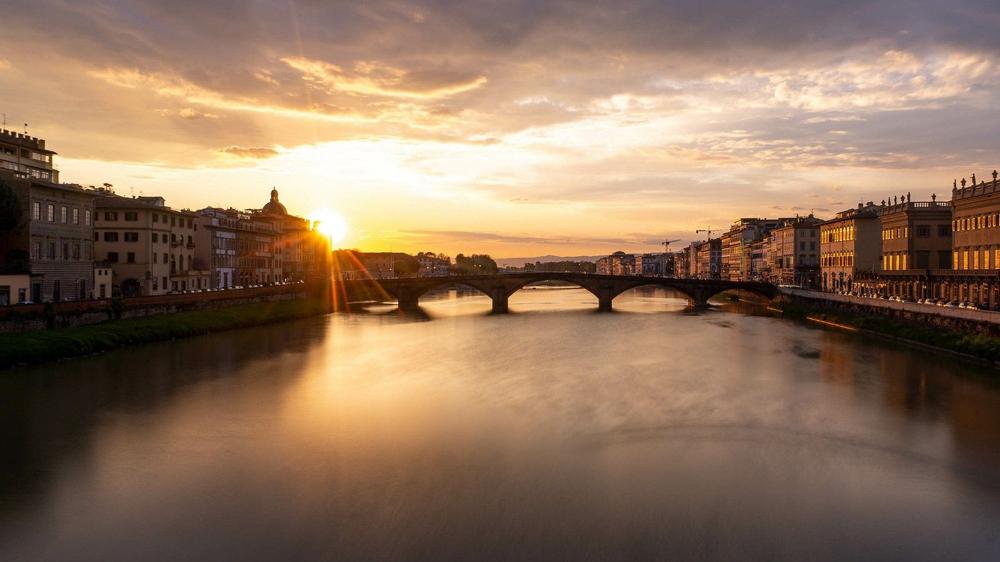
Seven days is enough for a first trip to Italy if you stick to three cities, sleep close to the historic centers, and book the major sights before you leave home. This itinerary moves Rome to Florence to Venice by high-speed train, with realistic time at each stop so you actually enjoy the food and the streets instead of standing in queues.
Last updated: May 25, 2026
Why Rome, Florence, Venice (and Why in That Order)
These three cities form Italy's classic triangle for a reason. Rome gives you ancient ruins and Vatican art. Florence is walkable Renaissance Italy with the best concentration of paintings and sculpture in Europe. Venice is one of the few places on earth without cars, and you can cover it on foot in a day and a half.
Go south to north (Rome → Florence → Venice) for two practical reasons:
- Most long-haul flights land in Rome Fiumicino (FCO), which makes Rome the natural entry point.
- Venice Marco Polo (VCE) and Treviso (TSF) have good budget connections back to other European hubs, so flying home from Venice avoids a backtrack.
Trenitalia's Frecciarossa connects all three cities at up to 300 km/h. Rome to Florence runs about 1h 16m to 1h 30m, and Florence to Venice is roughly 2h. Booking 90 to 120 days ahead can drop Super Economy fares to €15 to €20, versus €70 to €80 on the day of travel.
Entry Rules for 2026 (Read This Before You Book)
A few things have changed for non-EU visitors. None are difficult, but skipping them at the airport will ruin your first day.
- Passport validity. U.S. passports must be valid at least 3 months beyond your planned departure from the Schengen area, with 2 blank pages for entry.
- 90/180 rule. U.S., U.K., Canadian, and Australian citizens can stay up to 90 days in any rolling 180-day period without a visa. The new EU Entry/Exit System (EES), fully operational since 10 April 2026, now tracks this automatically using fingerprints and a facial image instead of passport stamps. Biometric data is retained for 3 years, so repeat visitors won't re-register every trip.
- ETIAS. The European Travel Information and Authorisation System is scheduled to begin operations in the last quarter of 2026 (October to December). It costs €20 per application (free for under 18s and over 70s), is valid for 3 years or until your passport expires, and applies to 59 visa-exempt nationalities. Apply only through the official site at europa.eu/etias. Third-party sites charging "service fees" are not authorized.
- U.S. Travel Advisory. Italy is currently at Level 2, "Exercise Increased Caution," due to terrorism risk. The U.S. Embassy recommends enrolling in STEP at step.state.gov before you go. The emergency line from abroad is +1-202-501-4444.
- Cash. Amounts of €10,000 or more must be declared at the border.
- Olympics caveat. The Milan-Cortina 2026 Winter Olympics drew more than 2 million spectators across northern Italy earlier this year, and the U.S. Embassy still recommends booking accommodations and trains well in advance through the rest of 2026 due to lingering pressure on transit and hotel inventory in the north.
Days 1 to 3: Rome
Give Rome three full nights. Two is too few; you'll spend half of one day jet-lagged.
Getting in from Fiumicino
The Leonardo Express runs non-stop between FCO and Roma Termini in 32 minutes, every 15 minutes, for €14 one-way. First train from Termini is 05:35, last at 22:35. Children under 4 ride free, and ages 4 to 12 are free with a paying adult. Taxis from FCO to the historic center are a flat €55, but with luggage and rush hour the train is faster.
Day 1: Centro Storico on foot
Don't book anything heavy on arrival day. Walk a loop: Piazza Navona, the Pantheon (free entry), Trevi Fountain, the Spanish Steps. Note that Rome introduced a €2 pre-booked entry fee at the Trevi Fountain in 2026 (locals exempt), so reserve a slot if you want to get close to the water rather than viewing from the upper terrace. Eat dinner in Monti or Trastevere.
Day 2: Ancient Rome
The Colosseum standard adult ticket is €18 in 2026 and includes 24-hour access to the Roman Forum, Palatine Hill, and Imperial Fora. The Full Experience ticket with Arena Floor is €24. EU citizens aged 18 to 24 pay €2, and under-18s are free but must still reserve a slot (about a €2 booking fee). Tickets release exactly 30 days in advance on ticketing.colosseo.it and they are personalized, so the name on the ticket must match the ID you bring.
Free entry days are the first Sunday of each month, 25 April, 2 June, and 4 November, but expect long queues, no online booking, and no Arena or Underground access.
After the Colosseum, walk up through the Forum and Palatine using the same ticket, then have a late lunch near Campo de' Fiori.
Day 3: Vatican
Reserve the Vatican Museums online: €25 (€20 + €5 booking fee) for adults, €13 reduced for ages 6 to 18 and students, under-6s free. The on-site price is €20 but lines can stretch over two hours in peak season. Free entry is the last Sunday of each month from 09:00 to 14:00 (last admission 12:30), but again, expect crowds and no online booking.
Entry to St. Peter's Basilica is free. The dome climb costs €8 by stairs (551 steps) or €10 with the elevator to the first level. Do the museums first (book a 09:00 slot), exit through the Sistine Chapel into St. Peter's, then climb the dome in the afternoon.
If you want a slower-paced day, swap the Vatican for the Galleria Borghese (timed-entry, book ahead) and the Villa Borghese gardens.
Day 4: Rome to Florence
Take a mid-morning Frecciarossa from Roma Termini to Firenze Santa Maria Novella. Buy tickets on trenitalia.com or Italo. Super Economy fares are non-refundable; Trenitalia offers a "tiRimborso" add-on for €2 that allows a refund up to midnight two days before departure with a 10% deduction.
Drop bags at your hotel (most don't allow check-in before 14:00 but will store luggage). Spend the afternoon walking: the Duomo and Baptistery exterior, Piazza della Signoria, Ponte Vecchio at sunset. If you have energy, climb up to Piazzale Michelangelo for the panorama.
Florence tourist tax in 2026 is about €8/night at 5-star hotels, around €6 at most mid-range hotels and B&Bs, and €3.50 at campsites or 1-star properties, capped at 7 nights. Under-12s are exempt. The tax is collected at checkout, in cash or card, separate from your room rate.
Day 5: Florence Proper
Book the Uffizi Gallery in advance. The 2026 standard adult ticket is €25 on-site or €29 online (with the €4 booking fee). A new afternoon discount took effect on 1 January 2026: entry from 4 PM costs €16 on-site or €20 online. Under-18s are free. The Uffizi is closed Mondays, 1 January, and 25 December. The first Sunday of each month is free entry. Official booking is through CoopCulture at tickets.uffizi.it.
If you want more art, the PassPartout 5-day combined ticket covers the Uffizi, Pitti Palace, and Boboli Gardens for €58, which pays off if you'll see all three.
Other Day 5 priorities:
- Accademia (David). Book ahead or you'll queue an hour.
- Mercato Centrale for lunch upstairs.
- An evening aperitivo in Santo Spirito across the river.
For food culture context before you travel, see The Slow Food Movement in Italy.
Day 6: Florence to Venice
Morning Frecciarossa from Firenze SMN to Venezia Santa Lucia, around 2 hours. Santa Lucia is on the main island, walking distance to your hotel or a vaporetto stop. Do not get off at Venezia Mestre; that's the mainland.
If you're an overnight guest in Venice (which you are), you're exempt from the Venice day-tripper access fee, but you still need to register online to obtain an exemption QR code through cda.ve.it. Day-trippers over 14 pay €5, rising to €10 if booked less than 4 days before, applied on 60 peak days from 3 April through 26 July 2026 between 08:30 and 16:00. Fines for non-compliance reach €300.
Spend the afternoon getting lost on purpose. Walk from Santa Lucia to San Marco without using a map. Stop for cicchetti (Venetian small plates) at any standing-room bacaro along the way.
Day 7: Venice and Departure
Do St. Mark's Basilica early (free entry, but reserve a slot online to skip the queue). Walk through the Doge's Palace if you have time, then take a vaporetto down the Grand Canal (line 1 is the slow scenic route).
If you're flying from VCE, allow 90 minutes between leaving your hotel and arrival at the airport (vaporetto to Piazzale Roma, then bus or Alilaguna boat).
Fees and Budget Snapshot
Item | 2026 price |
|---|---|
Colosseum standard adult | €18 |
Colosseum Full Experience | €24 |
Vatican Museums online | €25 |
St. Peter's dome (elevator) | €10 |
Trevi Fountain pre-booked entry | €2 |
Uffizi adult online | €29 (€20 after 4 PM) |
Uffizi PassPartout (5 days) | €58 |
Leonardo Express FCO to Termini | €14 |
Frecciarossa Rome to Florence (Super Economy) | €15 to €20 |
Rome tourist tax (5-star) | up to €10/night, max 10 nights |
Florence tourist tax (mid-range) | ~€6/night, max 7 nights |
ETIAS (from Q4 2026) | €20 |
Common Pitfalls
- Buying tickets from third-party resellers. Stick to colosseo.it, museivaticani.va, uffizi.it, and trenitalia.com. Resellers charge 2x to 3x with no real benefit.
- Renting a car for this itinerary. Don't. Trains are faster between these three cities, and Italy legally requires U.S. license holders to carry a valid International Driving Permit (IDP) alongside their domestic license. Fines for driving without one are €300 to €600. Only AAA and the American Automobile Touring Alliance (AATA) are authorized to issue IDPs in the U.S.; they're valid 1 year and cannot be renewed. If you drive at all, note the limits: 50 km/h urban, 90 km/h rural, 130 km/h highway, and a 0.05% blood alcohol limit.
- Skipping the Venice exemption QR code. Overnight guests are exempt from the access fee but must still register. The fine for not having proof is up to €300.
- Booking the cheapest Trenitalia fare without the tiRimborso add-on. Super Economy is non-refundable. The €2 add-on buys flexibility if your plans shift.
- Forgetting the EES queue on arrival. First-time biometric registration adds time at passport control. Build in 30 extra minutes.
- Trying to fit in Naples, Cinque Terre, or the Amalfi Coast. In one week, you'll just be moving luggage. Save those for trip two.
FAQs
Do I need ETIAS for this trip in 2026?
Only if you travel after ETIAS goes live, which is scheduled for the last quarter of 2026 (October to December). Until then, no application is needed for visa-exempt nationals. Check europa.eu/etias for the live date before booking.
Is 7 days enough for Italy?
For Rome, Florence, and Venice, yes. For anything more (south of Rome, the Dolomites, Sicily), no. Two and a half days per city is the realistic minimum.
When should I book Colosseum and Vatican tickets?
Colosseum tickets release exactly 30 days ahead; book the day they drop for a morning slot. Vatican Museums can be booked further out on museivaticani.va; aim for at least 6 weeks ahead in summer.
What's the best time of year for this itinerary?
Late April to mid-June and mid-September to October. July and August are hot and crowded. Late November through February is quiet but cold and many smaller attractions cut hours.
Should I get an eSIM?
Yes. A 10 GB Italy or Europe eSIM from any major provider runs €10 to €20 and activates before you land. You'll need data for vaporetto tickets, train QR codes, and the Venice exemption portal.
Is tap water safe?
Yes, in all three cities. Public fountains (nasoni in Rome) are drinkable. Skip the €3 bottled water at restaurants and ask for acqua del rubinetto.
How much cash should I carry?
Most places take cards, but small trattorias, bacari, and tourist tax payments often want cash. €100 to €150 in small bills per person for the week is plenty.
If you liked this itinerary, similar guides are available for One Week in France: Paris, Loire Valley and One Week in Spain: Madrid, Barcelona & Seville.
A bit of Italian goes a long way at the trattoria, the ticket counter, and the bacaro. If you want to pick up real, useful phrases before your trip (or learn the language properly afterward) using Italian TV, news, and YouTube, try Migaku.