Belgium's Professional Card: Self Employed Visa for Non EU Citizens
Última actualización: 31 de mayo de 2026
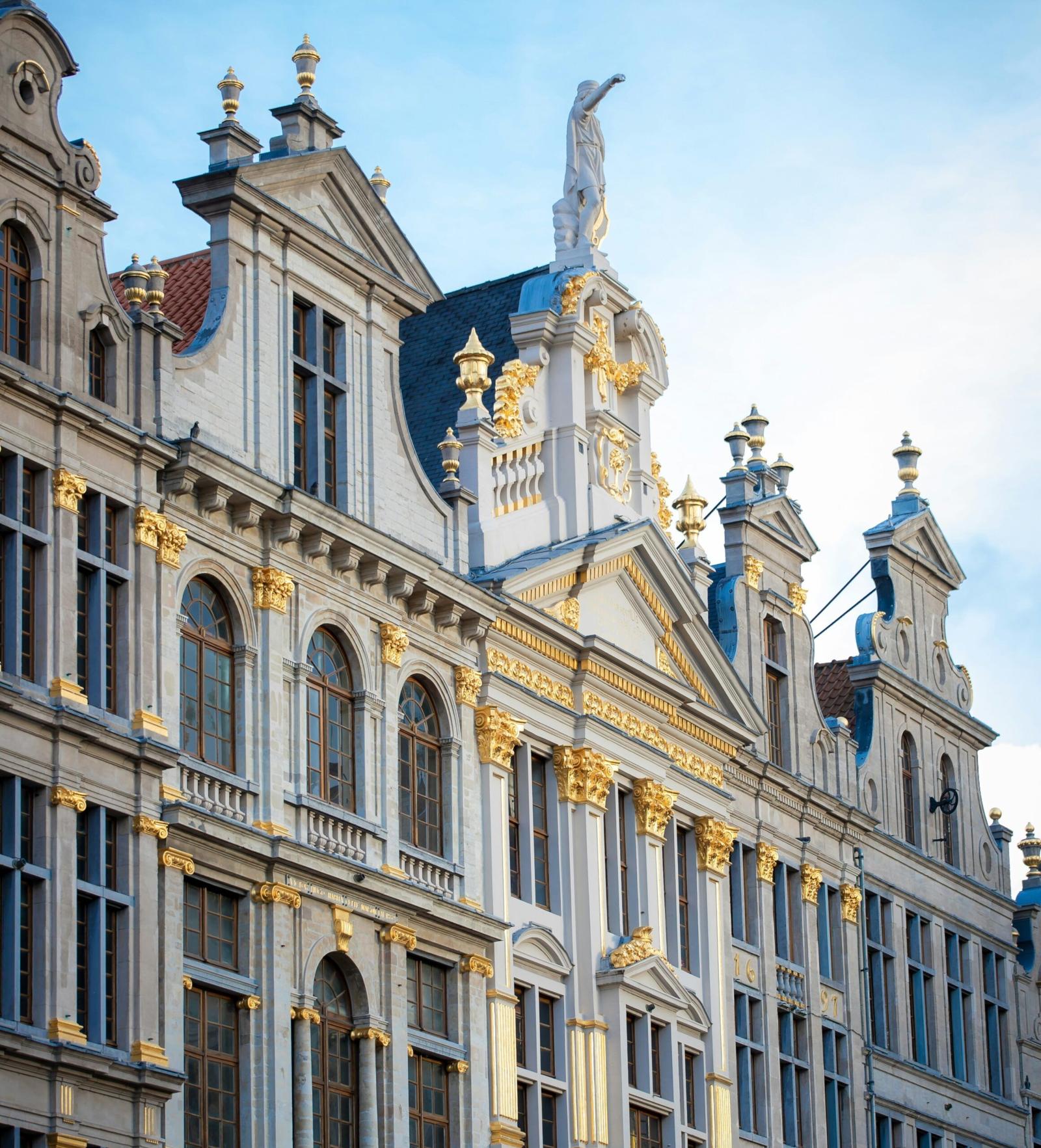
Belgium’s Professional Card (Carte Professionnelle / Beroepskaart) is the single permit that allows non-EU/EEA nationals to live and work as self-employed persons in Belgium. You apply once, receive a combined residence and work permit, and renew every one to five years depending on your business performance.
Last updated: May 31, 2026
Who Qualifies: Eligibility and Requirements
Nationality
Only third-country nationals (non-EU/EEA/Swiss) need the card. EU citizens simply register with their local municipality.
Professional Qualifications
- Demonstrated expertise relevant to the intended activity.
- Proof of diplomas, licences, or at least three years professional experience in the sector.
- For regulated professions (e.g. architect,physiotherapist), recognition by the competent Belgian authority is mandatory.
Economic Contribution
You must show that your activity will create economic added value for Belgium. Acceptable evidence includes:
- A business plan projecting turnover, job creation, and investment.
- Evidence of signed client contracts or letters of intent.
- Proof of sufficient financial means: minimum €15,000 in liquid assets or a bank guarantee covering projected living and business costs.
No Threat to Public Order
Standard police clearance from every country in which you have lived for more than six months since age 18.
Health Insurance
Full coverage valid in Belgium from day one. Travel insurance is not accepted.
Document Checklist
Gather originals plus one set of copies translated into Dutch, French, or German by a sworn translator. Apostille or legalisation is required unless exempt under bilateral agreements.
Category | Required Documents |
|---|---|
Identity | Passport valid for at least one year beyond the intended stay. |
Purpose | Completed application form for the Professional Card (model available on the Immigration Office site). |
Qualifications | Diplomas, professional licences, certificates of experience. |
Business Formation | Articles of association if forming a company; draft deed if still in formation. |
Business Plan | Minimum 15 pages covering market analysis, marketing strategy, financial projections (P&L, cash flow, balance sheet) for three years. |
Financial Proof | Recent bank statements, loan agreements, investment commitments, or bank guarantee letter. |
Legal Records | Police clearance certificates (less than six months old). |
Accommodation | Lease contract or property deed in Belgium. |
Insurance | Health insurance policy certificate. |
Fee Payment | Proof of payment for the application fee. |
Step-by-Step Application Process
1. Choose Your Belgian Location
Applications are handled by the Immigration Office (Dienst Vreemdelingenzaken / Office des Étrangers), but your file is assessed by the regional economic authorities where you will establish your activity. The three regions are:
- Flanders: Agentschap Innoveren & Ondernemen (VLAIO)
- Wallonia: Direction générale Opérationnelle de l'Économie, de l'Emploi & de la Recherche (DGO6)
- Brussels-Capital: Brussels Economy & Employment (BEE)
2. Draft and Notarise Business Documents
If forming a company, a Belgian notary must prepare the deed of incorporation. Sole proprietors instead register with the Crossroads Bank for Enterprises (KBO/BCE) after approval.
3. Submit the Application
Mail or courier the complete file to:
Immigration Office
Professional Cards Unit
Boulevard Pacheco 44, 1000 Brussels, Belgium
There is no online portal for first-time applicants. Double-check the address on the official page before sending, as street-level renovations sometimes move reception counters.
4. Regional Economic Assessment ( up to 90 days)
The regional authority evaluates:
- Economic viability and market need.
- Your professional background vs. the activity.
- Financial capacity.
You may be invited for an interview in person or via video call.
5. Immigration Security Check (up to 60 days)
The Immigration Office verifies identity, public-order threat, and completeness of documentation.
6. Decision and Collection
If approved, the Immigration Office issues an "Annex 15" authorisation. You have 90 days to:
- Apply for a long-stay D visa at the Belgian consulate in your country of residence.
- Travel to Belgium.
- Register at the municipal administration within eight working days of arrival.
- Collect the actual Professional Card from the commune.
Fees and Processing Time
Item | Fee (€) | Notes |
|---|---|---|
Application | 350 | Non-refundable, payable by bank transfer to the Immigration Office. |
Visa (consular) | 200 | Varies slightly by consulate; paid in local currency. |
Residence card | 25 – 30 | Charged by the municipality upon first registration. |
Standard processing is 90 to 150 calendar days from the date the complete file is received. Complex cases or incomplete files can exceed six months.
Common Pitfalls and How to Avoid Them
- Under-financed business plan
- Show liquid capital equal to at least 12 months of projected living costs plus start-up investment. A notarised bank guarantee is the cleanest proof.
- Weak market analysis
- Include Belgian market size data, competitor benchmarking, and specific client references. Generic SWOT templates are rejected.
- Missing legalisation
- Chinese documents, for example, must have an apostille from the Ministry of Foreign Affairs and a Belgian embassy verification. Start this step early; queues are long.
- Wrong regional submission
- If your registered office is in Flanders but you plan to serve Walloon clients, the file still goes to Flanders. Make sure the address on the lease matches the region.
- Health insurance gaps
- Travel insurance with a €30,000 ceiling is not accepted. Buy Belgian statutory insurance (e.g. Partena, CM) and provide the certificate page showing unlimited medical coverage.
After Approval: Renewals and Permanent Residency
Initial validity is one year with possibility of renewal for two or five years if the business meets targets. After five years of continuous legal residence and demonstrable economic contribution, you may apply for long-term resident status (type B card). Keep quarterly VAT filings and annual accounts because the regional authority reviews them at renewal.
Frequently Asked Questions
Can family members join immediately?
Yes. Once you hold the Annex 15, your spouse and minor children can apply for family reunification under the standard procedure. They receive residence cards without quota limits.
Is there a minimum turnover requirement for renewal?
No fixed figure, but the regional authority expects the business to generate at least taxable income equal to the minimum social-security threshold for self-employed persons (currently around €15,000 per year). Persistent losses trigger refusal.
Can I switch to employee status later?
You can, but you must surrender the Professional Card and apply for a single permit as a salaried worker. The employer needs to obtain the work authorisation before you change status.
Do I need to speak Dutch or French?
Language is not a formal requirement for the card itself. However, municipalities and tax offices will communicate in the regional language, so basic proficiency helps daily life. Clients also expect it in most sectors.
What happens if I move to another region?
Notify the Immigration Office and the new regional authority within 30 days. Your card remains valid but renewal will be handled by the new region.
Can I hold a Professional Card and be a director of other companies?
Yes, provided the self-employed activity you declared remains your main occupation (>50 % of working time and income).
Are student-to-professional-card switches allowed?
Yes, but you must leave Belgium and apply from your home country unless you qualify for the single permit change-of-status procedure introduced in 2024.
Is freelance IT consulting eligible?
Absolutely. IT services are considered high-added-value activities, and Flanders specifically fast-tracks applications in digital sectors.
If you’re planning to set up shop in Belgium, a solid business plan and meticulous paperwork are what stand between you and the Professional Card. For related residency routes, see our guides on Austria's Red-White-Red Card and Germany's Permanent Residency Paths.
To get comfortable with Dutch or French vocabulary used in Belgian legal and accounting documents, Migaku helps you learn with real native content.