One Week in Austria: Salzburg, Hallstatt & Salzkammergut
Última actualización: May 21, 2026
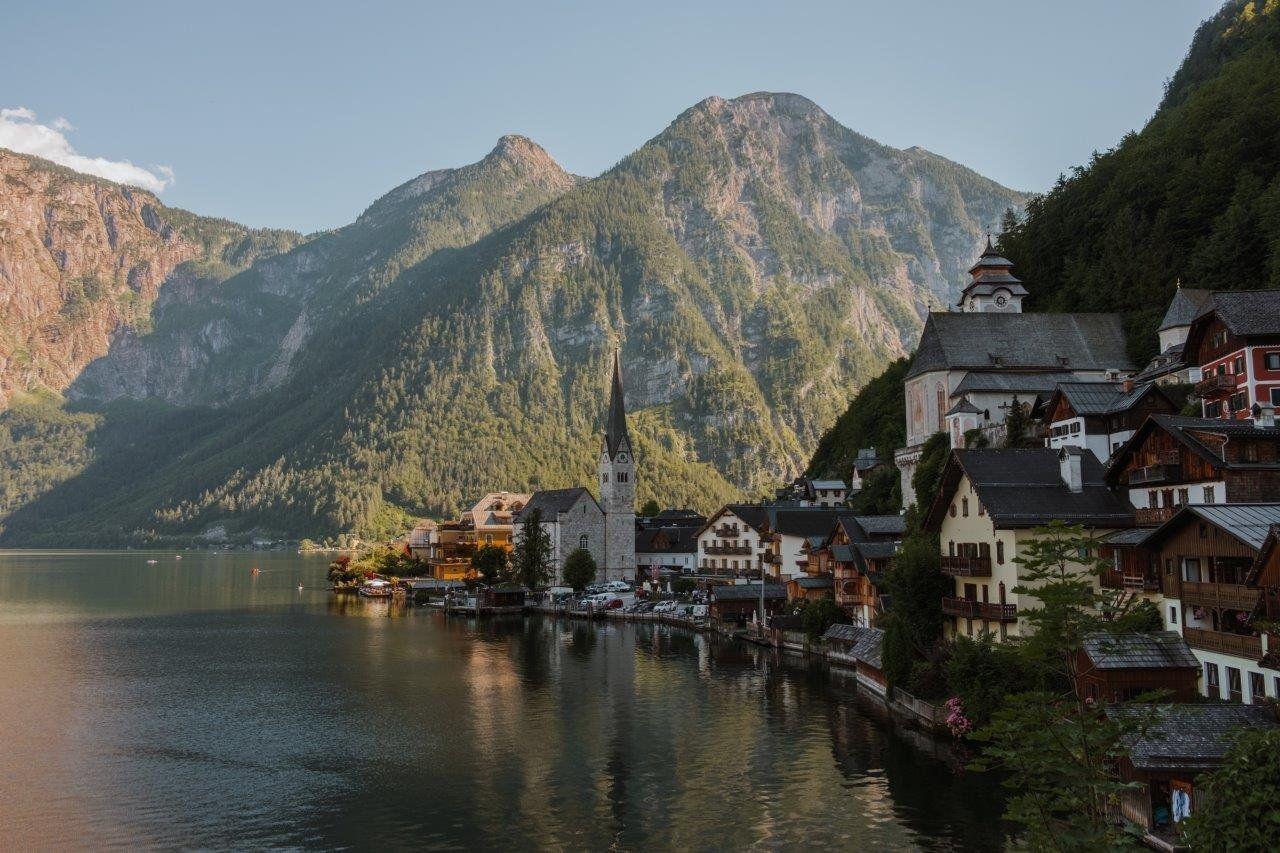
Seven days is enough time to base yourself in Salzburg, day-trip into the Salzkammergut lake district, and spend two nights in Hallstatt without rushing. This itinerary lays out a workable route for 2026, with the current fares, the closures you need to plan around, and the small logistical details that trip up first-time visitors.
Last updated: May 21, 2026
Before you go: what's different in 2026
A few things have changed recently that affect this trip directly. Build your plans around them rather than discovering them at the train station.
- Hallstatt Salzwelten (the salt mine, funicular and skywalk) is closed until summer 2026 for major construction that began on 1 September 2025. While it's shut, the operator runs an all-inclusive shuttle to Salzwelten Altaussee as a substitute. Check the reopening date before you build a day around the mine.
- The Salzkammergut rail line is under construction through 22 May 2026. During this window, the Lake Hallstatt ferry between Hallstatt Bahnhof and Hallstatt Markt is suspended (specifically 20 April to 22 May 2026), and rail replacement buses are in operation. If you're traveling in late May or earlier, expect bus transfers rather than the scenic train-and-ferry arrival.
- Tourist tax in Salzburg rose to €3.05 per adult per night in May 2025 (children under 15 exempt). Hallstatt and the rest of Upper Austria charge a per-night Ortstaxe as well; your host will add it to the bill.
- Hallstatt has no entry fee and no ticket cap as of early 2026, despite local proposals. The village is open 24/7 to pedestrians, but private vehicles can't enter unless you're a resident or have a hotel parking reservation.
Non-EU visitors enter under standard Schengen rules. Your passport should be valid for at least six months beyond your departure date. No registration or tourist permit is required for short stays.
Suggested 7-day route
This itinerary assumes arrival into Salzburg (W. A. Mozart Airport or Salzburg Hbf). If you're flying into Vienna, add a 2h30 train ride at the start and budget for the Vienna tourist tax of 3.2% of net accommodation cost (rising to 5% from 1 July 2026).
Day | Base | Focus |
|---|---|---|
1 | Salzburg | Altstadt, Mozart sites, Salzach river |
2 | Salzburg | Hohensalzburg Fortress, DomQuartier |
3 | Salzburg | Hellbrunn, Untersberg or Berchtesgaden |
4 | Salzburg → Hallstatt | Train transfer, evening in village |
5 | Hallstatt | Dachstein Krippenstein, Obertraun |
6 | Hallstatt → Salzkammergut | St. Wolfgang or Bad Ischl, return to Salzburg |
7 | Salzburg | Mirabell, museums, depart |
Days 1–3: Salzburg
Salzburg's Altstadt is compact and walkable. Most travelers find a 48-hour Salzburg Card pays for itself if they're doing more than two paid attractions plus public transport. In high season (1 April to 31 October 2026), the card costs €38 for 24 hours, €45 for 48 hours and €49 for 72 hours; children 6 to 15 pay €19, €22.50 and €24.50. Low-season rates (January to March, November to December) are €35, €41 and €44. The card covers free one-time entry to roughly 30 attractions and unlimited rides on Obus lines 1–14, Albus and certain Postbus routes.
Day 1: Old town and Mozart
Start in the Altstadt on the left bank of the Salzach. Walk Getreidegasse, see Mozart's Birthplace (€15 adult, €4.50 child) and cross to the right bank for Mozart's Residence. A combo ticket for both museums is €23. The DomQuartier (cathedral complex, residence and gallery) is €15 adult, €5 child, and gives you a full afternoon of indoor sightseeing if the weather turns.
Day 2: Hohensalzburg Fortress
Hohensalzburg dominates the skyline and deserves a half-day. From 1 February 2026, the Festungscard "Basic" with the funicular is €15.50 adult and €6.30 child; the "Sperrbogen" walking-path ticket (no funicular) is €12 adult, €4.90 child. The All Inclusive version, which adds the Princes' Rooms and Magic Theater, is €19.20 with funicular or €14.50 on foot. Hours are 9:30 to 17:00 from October to April and 8:30 to 19:00 from May to September. The funicular runs every 10 minutes and takes about a minute to climb.
In the afternoon, walk the Mirabell Gardens and cross back to the Altstadt via the Makartsteg footbridge.
Day 3: Out of town
Pick one of these depending on the weather and your interests:
- Hellbrunn Palace and Trick Fountains (€15 adult, €6.50 child). Best on a warm day; you will get wet. Salzburg Zoo Hellbrunn is next door for €16 adult, €6.50 child.
- Untersbergbahn cable car to the 1,776m summit on the German-Austrian border. Round-trip is €34 adult, €16.50 child, and the cable car is included in the Salzburg Card. Note that the Untersbergbahn is closed for maintenance from 2 to 29 March 2026.
- Haus der Natur (€15 adult, €10 child), a strong natural history museum if you have kids and it's raining.
Day 4: Salzburg to Hallstatt
The journey takes about 2h35 with one change at Attnang-Puchheim. ÖBB Sparschiene advance fares start at €9.90 in second class and €19.90 in first class; flexible same-day tickets cost more. Salzburg to Attnang-Puchheim runs 47 minutes on ÖBB railjet or Westbahn, and Attnang-Puchheim to Hallstatt takes 1h16 on the REX or 1h39 on the regional service.
Normally you'd arrive at Hallstatt Bahnhof on the far side of the lake and take the "Stefanie" ferry across (€3.50 cash, children under 4 free, 15 to 20 minute crossing). The ferry is suspended from 20 April to 22 May 2026 because of the Salzkammergutbahn rail works. If your trip falls in that window, rail replacement buses run to Hallstatt Lahn or the village itself, depending on the schedule. Check ÖBB's live timetable the morning of travel.
Driving to Hallstatt
If you drive, you cannot park in the village proper. Use the official Hallstatt PEB lots:
Lot | Spaces | Open | Notes |
|---|---|---|---|
P1 (Salinenplatz 4) | 300 | Year-round | EV charging; ~20 min walk to centre |
P2 | 140 | Summer only | Next to Salzwelten; ~15 min to centre |
P3 / P4 | Variable | Seasonal | Overflow |
Parking rates: first 15 minutes free, then €5 for 1 hour, €9 for 2 hours, €10 for 3 to 4 hours, €11 for 5 to 6 hours, €12 for 7 to 12 hours, and €18 for a 13 to 24 hour day ticket. A lost ticket is €36; a bus slot is €45 per day.
In the village
The classic postcard view is from the Marktplatz waterfront and the small wooden walkway near the Evangelische Kirche. The Charnel House (Beinhaus) at St. Michael's Chapel holds over 600 painted skulls and charges €2 adult, €0.50 child, cash only.
The Hallstatt tourist office at Seestraße 114 is open Monday to Friday 08:00 to 12:00 and 12:30 to 16:30, Saturday 09:00 to 15:00, closed Sundays and holidays. Pick up the Salzkammergut Summer Card here. If you stay three nights or more in the Dachstein Salzkammergut region, the card is free and gives discounts on cable cars and sights.
Day 5: Dachstein Krippenstein
Obertraun, across the lake from Hallstatt, is the base station for the Dachstein Krippenstein cable car. The summer 2026 season is when the upper sections come fully online: section III (Gjaidalm) opens on 4 June 2026, and full service runs from 4 July to 13 September 2026, with the last ascent at 18:00.
Tickets for summer 2026:
- 6 Peaks – 1 Ticket (4 freely chosen ascents/descents from 6 peaks in the region): €95 adult cash, €92 online; youth €86/€83; child €53/€51.
- Salzkammergut Ticket (one ascent and descent per mountain, all 6 peaks): €135 adult cash, €129 online; youth €121/€116; child €74/€71.
If the Hallstatt Salzwelten is still closed when you visit, Krippenstein and the surrounding viewpoints (the 5fingers platform, the Welterbespirale, the Mammuthöhle and Rieseneishöhle ice cave) are the strongest alternatives. Wear layers; it's noticeably cooler at altitude.
Day 6: Salzkammergut day, return to Salzburg
Depending on transport status, pick a Salzkammergut stop on your way back:
- Bad Ischl: the imperial spa town and Kaiservilla, easily reached by train. Walkable centre, good cafés.
- St. Wolfgang am Wolfgangsee: pretty lakefront, the Schafbergbahn cog railway if it's running, and the pilgrimage church with the Pacher altar.
- Gosau: the Vorderer Gosausee gives you the classic Dachstein reflection shot if you have a car.
Get back to Salzburg in time for a relaxed dinner. Most travelers find Salzburg's restaurants noticeably better than Hallstatt's, which leans heavily on quick tourist meals.
Day 7: Salzburg loose ends
Use the morning for anything you skipped: a Sound of Music location tour, the Salzburg Museum in the Neue Residenz, or simply coffee at Café Tomaselli and a walk through the Mirabell gardens. The airport is a 20-minute Obus ride from the centre (line 2 from the Hauptbahnhof, line 10 from elsewhere); both are covered by an active Salzburg Card.
Costs at a glance (2026)
Item | Price |
|---|---|
Salzburg Card 48h (high season) | €45 adult / €22.50 child |
Hohensalzburg Basic with funicular | €15.50 / €6.30 |
Mozart Birthplace + Residence combo | €23 |
Hellbrunn Trick Fountains | €15 / €6.50 |
Untersbergbahn round-trip | €34 / €16.50 |
Salzburg–Hallstatt train (Sparschiene from) | €9.90 second class |
Lake Hallstatt ferry one-way | €3.50 (suspended 20 Apr–22 May 2026) |
Hallstatt parking, day ticket | €18 |
Charnel House | €2 / €0.50 |
Krippenstein 6 Peaks–1 Ticket (online) | €92 / €83 / €51 |
Salzburg tourist tax | €3.05 per adult per night |
Common mistakes
- Driving into Hallstatt without a parking reservation. Non-resident vehicles are turned away. Book a P1 or P2 slot, or arrive by train and bus.
- Counting on the salt mine. The Hallstatt Salzwelten is closed until summer 2026. If salt mining is the point of the trip, check the official reopening date or plan to use the Altaussee shuttle.
- Assuming the ferry runs. Between 20 April and 22 May 2026, it doesn't. Use the rail replacement bus.
- Buying the Salzburg Card for one day. If you're only doing the fortress and a museum, individual tickets are usually cheaper. The card pays off at three or more attractions plus transport.
- Underestimating Hallstatt's size. The village is small. Half a day covers the photo spots. Spend your second day in Obertraun, on the Echerntal hike, or up at Krippenstein rather than wandering the same streets.
- Cash-only blind spots. The ferry, the Charnel House and some small bakeries still take cash only. Keep €30 to €40 in coins and small notes on you.
FAQs
Is one week enough for Salzburg, Hallstatt and the Salzkammergut?
Yes. Three nights in Salzburg, two in Hallstatt, and the rest flexible covers the highlights without rushing. If you want to add Vienna, plan ten days minimum.
Can I do Hallstatt as a day trip from Salzburg?
It's possible (about 2h35 each way by train) but tight, and you'll arrive when day-tour buses are at their peak. An overnight stay gives you the village in the early morning and evening, when it's much quieter.
Do I need to book Hohensalzburg in advance?
Not usually, but in July and August the funicular queues can be 30 to 45 minutes. Online tickets with a time slot skip the worst of it.
Is the Salzburg Card worth it?
If you're doing the fortress (with funicular), one Mozart museum, Hellbrunn and a couple of bus rides over 48 hours, yes. Add up the individual prices against €45 and decide.
What about healthcare if something goes wrong?
EU visitors should carry an EHIC/GHIC. Non-EU travelers should have travel insurance. For an overview of how the Austrian system works once you're a resident, see our healthcare in Austria guide.
How does this compare to a week in southern Europe?
If you're choosing between routes for a future trip, we have similar one-week breakdowns for Spain and Portugal.
What language do I need?
German is the official language, with a strong Austro-Bavarian flavor in the Salzkammergut. English is widely spoken in tourist-facing settings in Salzburg and Hallstatt, less so in smaller villages. A few phrases (Grüß Gott, Danke, Zahlen bitte) go a long way.
If Austria is more than a one-week trip for you and you're thinking about staying longer, picking up German with real Austrian films, news and YouTube makes everyday life much easier. Migaku is built to turn that kind of native content into study material, so try Migaku if you want to keep learning after the trip.