Retirement Visa Options in Japan: What's Actually Available
Última actualización: 27 de mayo de 2026
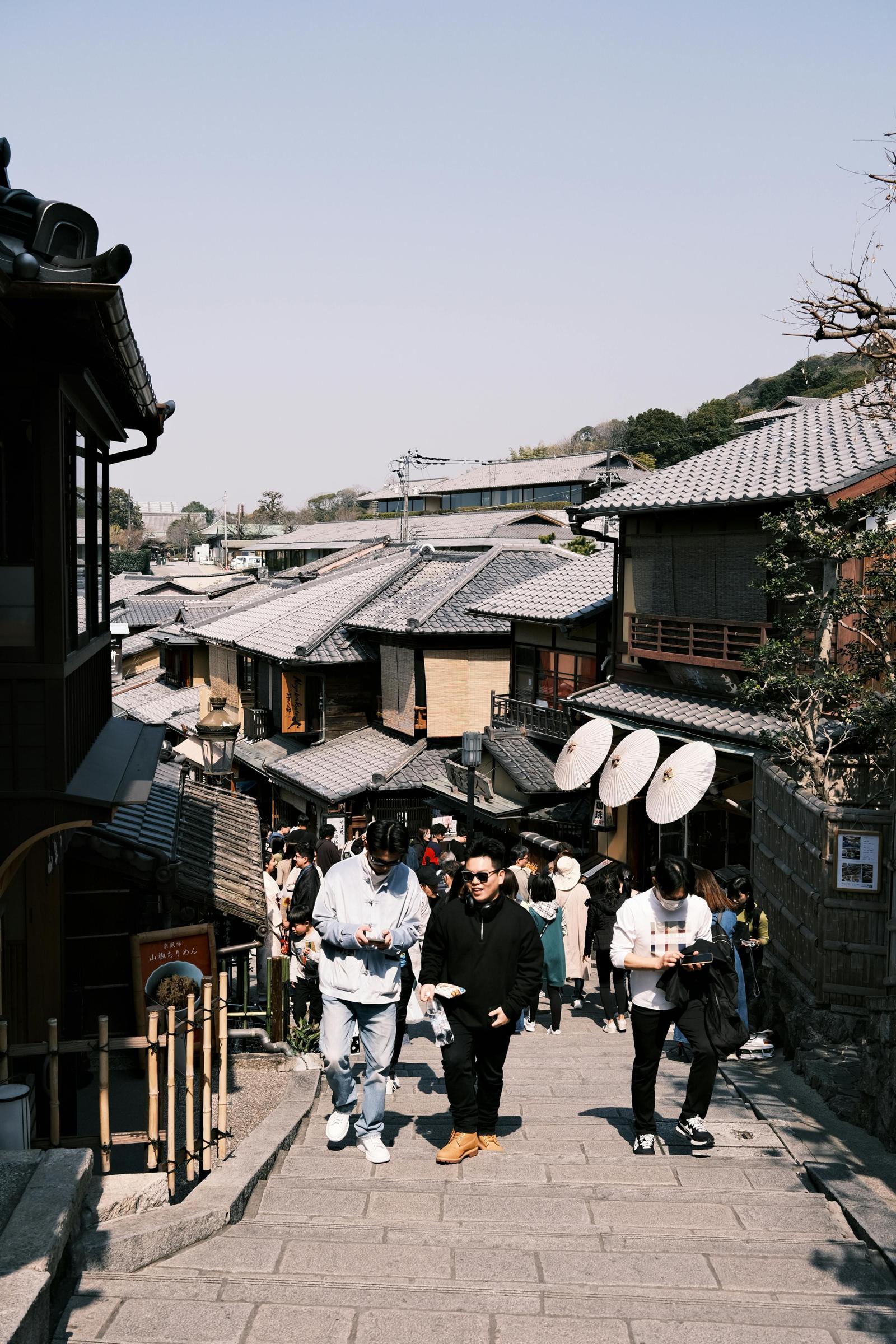
Japan does not issue a dedicated retirement visa. Foreigners hoping to retire there must qualify under an existing long-stay category, the closest match being the Designated Activities "Long Stay" visa, or build toward Permanent Residency through another status.
Last updated: May 27, 2026
- The short answer: Japan has no retirement visa
- Option 1: The Long Stay (Designated Activities No. 40) visa
- Option 2: Spouse or Child of a Japanese National
- Option 3: Long-Term Resident (定住者)
- Option 4: Business Manager visa
- Option 5: Permanent Residency (永住者)
- Fees and processing times (2026)
- Document checklist for the Long Stay (Designated Activities No. 40) visa
- Practical living costs and obligations
- Common pitfalls
The short answer: Japan has no retirement visa
Unlike Thailand, Malaysia, Portugal, or the Philippines, Japan offers no visa category labeled "retirement." The Ministry of Foreign Affairs (MOFA) and the Immigration Services Agency (ISA) have repeatedly declined to create one. Foreign retirees instead rely on a small set of existing statuses:
- Designated Activities No. 40 (Long Stay for sightseeing and recreation)
- Spouse or Child of a Japanese National
- Long-Term Resident (定住者)
- Business Manager (経営・管理)
- Highly Skilled Professional (transitioning into retirement)
- Permanent Residency (永住者)
Each has its own eligibility test, financial bar, and ceiling on how long you can stay. None is perfect for a traditional "sell the house and move to Kyoto" retirement plan, but with the right combination most retirees can make it work.
Option 1: The Long Stay (Designated Activities No. 40) visa
This is the visa most often described in English-language media as "Japan's retirement visa." It is not really a retirement visa, but it is the only category specifically designed for older foreign visitors who want to live in Japan for extended sightseeing and recreation without working.
Who qualifies (2026 rules):
- Nationals of countries with a visa-waiver agreement with Japan (most of the EU, the UK, the US, Canada, Australia, New Zealand, and others).
- Age 18 or older. In practice, consulates apply this visa overwhelmingly to applicants in their 50s and above.
- Personal or jointly held savings of more than ¥30 million (roughly US$190,000–US$200,000 depending on the exchange rate). If a spouse will travel separately on the same scheme, combined savings of ¥60 million are required.
- Private medical insurance covering death, injury, and illness for the full duration of stay.
- No paid employment in Japan, ever, while on this status.
- No dependents (children) may accompany the visa holder.
Duration: Initially 6 months, renewable once for a total of 12 months. After that, you must leave Japan. You can reapply from abroad, but it is not a continuous residency path and time on this visa does NOT count toward Permanent Residency.
For anyone wanting a long Japanese retirement, the Long Stay visa works best as a trial year, not as a permanent solution.
Option 2: Spouse or Child of a Japanese National
If you are married to a Japanese citizen, this is the cleanest path. The Spouse visa allows unrestricted work, full access to national health insurance and pension, and counts toward Permanent Residency on an accelerated timeline (3 years of marriage plus 1 year of residence in Japan).
The consular interview and document checks are serious, and immigration officers look closely at the genuineness of the relationship. If you are going through this process, our guide to the Japan Spouse Visa Interview process walks through what officers ask and how applications are evaluated.
For retirees, the Spouse visa is the single most flexible option, since it has no minimum income threshold from the applicant, no ban on work, and no time limit on renewal.
Option 3: Long-Term Resident (定住者)
The Long-Term Resident status is discretionary, granted by the Minister of Justice. It is not generally available to retirees on demand. The typical recipients are:
- Third-generation Japanese descendants (Nikkei Sansei), most commonly from Brazil and Peru.
- Foreign spouses or children of deceased or divorced Japanese nationals in specific circumstances.
- Refugees and other humanitarian cases.
It grants unrestricted work rights and a clear path to PR. Average change-of-status processing time was 294.5 days according to Ministry of Justice statistics as of January 2026. If you have Japanese ancestry, this is worth investigating with an immigration lawyer.
Option 4: Business Manager visa
For retirees with capital who do not mind running a small business, the Business Manager visa is a real pathway. The minimum threshold is an investment of ¥5,000,000 (about US$32,000) in a Japanese business entity, plus a physical office, a business plan, and ongoing evidence that the company is operating.
Many foreign retirees use this to run a small guesthouse, online business, or consultancy. It is renewable indefinitely, leads to PR eligibility after 10 years (with the same 5-year visa requirement described below), and allows you to remain in Japan as long as the business stays compliant. Tax, accounting, and labor obligations are not trivial, so budget for a Japanese accountant.
Option 5: Permanent Residency (永住者)
Most long-term foreign retirees in Japan eventually move onto PR. The standard requirement is 10 years of continuous residence, with at least 5 of those years on a work or family visa. As of June 2025 there were 932,090 people living in Japan under PR status.
Important 2026 and 2027 changes:
- Effective February 24, 2026, the ISA tightened its guidelines: applicants must now hold the maximum (5-year) period of stay on their current visa rather than a 3-year visa, which used to be accepted.
- The strict 5-year visa requirement will be fully enforced from April 1, 2027. A transitional grace period runs through March 31, 2027.
- Under a January 2026 "Comprehensive Measures" framework, the government is moving toward a standard income threshold of ¥3.5 million per year plus a Japanese language proficiency requirement for PR applicants.
- Under the revised Immigration Control and Refugee Recognition Act effective April 2027, PR can be revoked for intentional non-payment of taxes or social insurance, failure to renew the residence card, or certain criminal convictions. In 2025, 1,446 foreign nationals had their residency status revoked (a 20% increase), and seven permanent residents lost their status.
Accelerated PR pathways still in force:
- Spouse of a Japanese national: 3 years of marriage plus 1 year of residence in Japan.
- Highly Skilled Professional: 1 year at 80 points or 3 years at 70 points. The scoring mechanics are explained in our breakdown of the Highly Skilled Professional Visa points system.
The PR card itself must be physically renewed every 7 years, although the status is indefinite as long as you stay compliant.
Fees and processing times (2026)
Japan's visa fees were revised on April 1, 2026, the first such revision since 1978. Fees are now adjusted annually each April 1.
Item | 2026 fee | Notes |
|---|---|---|
Single-entry visa | ¥15,000 (~US$100) | Up from ¥3,000 |
Multiple-entry visa | ¥30,000 (~US$200) | Up from ¥6,000 |
PR application | ¥8,000 | Proposed increases to ¥15,000–¥20,000 are in the FY2026 budget; not finalized |
In-Japan residence procedures (e.g., renewals) | ¥6,000 currently | A proposed increase to roughly ¥40,000 is at budget-proposal stage; check ISA |
Departure (International Tourist) tax | ¥1,000, rising to ¥3,000 on July 1, 2026 | Paid as part of airline ticket |
Citizens of the United States, Canada, and many European countries are exempt from paying the visa fee itself.
Typical processing times:
- Long Stay (Designated Activities No. 40): 1 to 3 months at the consulate, depending on country.
- Spouse visa Certificate of Eligibility: 1 to 3 months.
- Permanent Residency: 4 to 8 months on average; some cases exceed 1 year.
- Change of status to Long-Term Resident: averaged 294.5 days as of January 2026.
For all fee and processing specifics, the authoritative sources are MOFA (mofa.go.jp), the Immigration Services Agency (moj.go.jp/isa), and your nearest Japanese embassy or consulate.
Document checklist for the Long Stay (Designated Activities No. 40) visa
For most applicants this is the relevant retirement-adjacent option, so we cover it in detail:
- Valid passport with at least 1 year remaining.
- Completed visa application form (consulate-specific).
- Recent passport photo (45mm × 45mm in most consulates).
- Proof of nationality of a visa-waiver country.
- Bank statements or investment statements proving more than ¥30 million in savings (¥60 million if applying with a spouse traveling separately). Statements usually must be from the last 3 months and translated into English or Japanese.
- Proof of pension or other passive income, if applicable.
- Private medical insurance policy covering death, injury, and illness in Japan.
- Itinerary or stated plan describing your intended activities in Japan (sightseeing, cultural pursuits, language study).
- Proof of accommodation in Japan (rental contract, hotel reservation, or letter from a host).
- Tax records from your home country, sometimes requested.
The consulate may request additional documents depending on country. Greek, Italian, and US consulates in particular have been known to add interview steps for higher-asset applicants.
Practical living costs and obligations
National Pension: All residents of Japan aged 20–59 must enroll in the National Pension. The monthly premium is ¥17,510 in 2026. To receive any Japanese pension benefit at retirement age you need at least 10 years of contributions (reduced from 25 years in 2017); the full benefit (about ¥831,700 per year) requires 40 years of contributions. If you arrive in Japan in your 60s, you will likely never collect a Japanese pension, but you may still owe into the system if you fall within the age range.
Tax residency: Foreign residents staying over 183 days per year become Japanese tax residents and are subject to Japanese tax on worldwide income. National income tax ranges from 5% to 45%, plus about 10% local inhabitant tax. Tax treaties with the US, UK, Canada, Australia, and most EU countries prevent double taxation, but you must file properly.
Health insurance: Long Stay visa holders cannot enroll in National Health Insurance and must carry private insurance. All other long-term visa holders enroll in National Health Insurance or employer-based health insurance, with premiums tied to income.
Banking: Opening a bank account as a new resident is famously slow. Japan Post Bank is one of the few institutions that will open an account for foreign residents within the first 6 months of arrival. We have a step-by-step guide to opening a Japan Post Bank Account if that is your next step.
Common pitfalls
- Assuming the Long Stay visa renews indefinitely. It does not. The hard cap is 12 months, after which you must leave Japan.
- Underestimating the ¥30 million threshold. Consulates check the source and stability of those funds. Brokerage accounts with high volatility are sometimes discounted.
- Buying property and assuming it grants residency. Owning real estate in Japan gives you no immigration status whatsoever.
- Skipping the language requirement signal. The 2026 PR guidelines move toward an explicit Japanese language test for PR applicants. Starting Japanese in your first month in Japan is now a practical immigration requirement, not just a quality-of-life choice.
- Letting taxes or social insurance slip. From April 2027, intentional non-payment is grounds for PR revocation. Pay on time and keep records.
- Confusing the Long-Term Resident (定住者) visa with the Long Stay visa. Completely different categories, despite the overlapping English names.
FAQs
Is there a Japan retirement visa for Americans?
No. American retirees use the same options as everyone else: the Long Stay (Designated Activities No. 40) visa, a Spouse visa if married to a Japanese citizen, the Business Manager visa, or transitioning from a work visa to Permanent Residency.
Can I retire in Japan on a tourist visa?
No. The tourist (temporary visitor) visa is capped at 90 days and explicitly does not permit residence. Repeated back-to-back entries to live in Japan as a "perpetual tourist" will be refused at the border.
How much money do I need to retire in Japan?
For the Long Stay visa, more than ¥30 million in savings (¥60 million for a couple traveling separately). For PR or a Spouse visa, the proposed standard income threshold under the 2026 Comprehensive Measures framework is ¥3.5 million per year.
Can I work part-time on the Long Stay visa?
No. Paid employment of any kind is prohibited. Remote work for a foreign employer occupies a legal gray zone and is best discussed with an immigration lawyer.
Does time on the Long Stay visa count toward Permanent Residency?
No. Only time on work or family visas counts toward the 10-year PR requirement.
Can I bring my adult children?
Not on the Long Stay visa. Dependents cannot accompany the holder. Adult children would need their own visa status.
What happens if my PR is revoked?
Under the revised Immigration Control and Refugee Recognition Act effective April 2027, you would be downgraded to another residence status or, in serious cases, ordered to leave Japan. Seven permanent residents lost their status in 2025.
Living in Japan with limited Japanese closes a lot of doors, from apartment hunting to clinic visits to dealing with city hall. If you're planning to retire there, building real reading and listening ability in Japanese, using the shows, news, and books you already enjoy, is the most useful thing you can do before you arrive. Try Migaku if you want a tool built for exactly that kind of immersion learning.