German Shopping Vocabulary: Words and Phrases for Grocery Shopping and More
Última actualización: 7 de abril de 2026
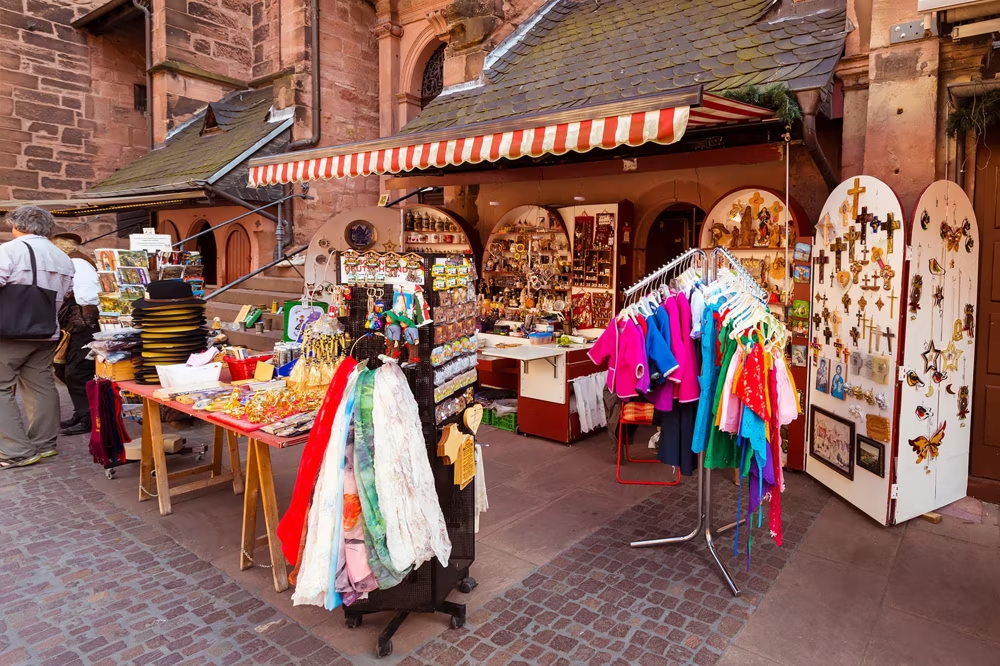
If you're learning German and want to actually use it in real life, shopping is one of the first places you'll need your vocabulary to work for you. Whether you're grabbing groceries at a supermarket in Berlin, browsing clothes in Vienna, or haggling at a weekend market in Zurich, knowing the right German words and phrases makes everything smoother. This guide covers the essential German shopping vocabulary you need to navigate stores, ask questions, understand prices, and communicate with confidence in German-speaking countries.
- Essential German vocabulary for stores and shopping locations
- Navigating the supermarket in German
- German words for prices and payments
- Useful shopping phrases for interactions
- Words and phrases for clothes and sizes
- German shopping words for beginners (A1 level)
- Learn German shopping phrases through real shopping experiences
Essential German vocabulary for stores and shopping locations
Before you can shop anywhere, you need to know where you're actually going. German has specific words for different types of stores, and using the right one helps you sound natural.
German | English |
|---|---|
der Laden | General store (from small corner shops to boutiques) |
der Supermarkt | Supermarket |
das Kaufhaus | Department store |
das Einkaufszentrum / die Mall | Shopping mall |
die Bäckerei | Bakery |
die Metzgerei | Butcher shop |
die Apotheke | Pharmacy (only for medicine, not general drugstore items) |
die Drogerie | Drugstore (for toiletries and cosmetics) |
die Buchhandlung | Bookstore |
der Kiosk | Newsstand / Small convenience shop |
The word der Markt means market, and you'll find these outdoor markets in most German cities on specific days of the week. They're perfect for fresh produce and local goods. Der Flohmarkt is a flea market, great for secondhand finds.
Navigating the supermarket in German
Supermarkets in German-speaking countries work similarly to anywhere else, but knowing the vocabulary makes the experience way less stressful.
First, you'll grab der Einkaufswagen (shopping cart) or der Einkaufskorb (shopping basket) at the entrance. Most German supermarkets require a coin deposit for carts, usually 50 cents or 1 euro, which you get back when you return it.
The aisles are called der Gang (plural: die Gänge), and the shelves are das Regal (plural: die Regale). Products are arranged by sections, and here's the vocabulary that helps you find what you need:
German | English |
|---|---|
das Obst | Fruit |
das Gemüse | Vegetables |
die Obst- und Gemüseabteilung | Produce section |
die Milchprodukte | Dairy products |
die Fleischabteilung | Meat section |
die Brotabteilung / die Backwaren | Bread and baked goods section |
die Tiefkühlkost | Frozen foods |
die Konserven | Canned goods |
die Getränke | Drinks |
When you're ready to check out, head to die Kasse. The cashier is der Kassierer (male) or die Kassiererin (female). You'll need to bag your own groceries in most German supermarkets, and you usually have to buy bags (die Tüte ) if you didn't bring your own.
German words for prices and payments
Understanding prices and how to pay is fundamental shopping vocabulary.
Der Preis means price. If you want to ask how much something costs, you say "Wie viel kostet das?" This phrase alone will get you pretty far. The response will include numbers and euros: "Das kostet fünf Euro fünfzig" (That costs five euros fifty).
Das Geld is money in general.
- Cash is das Bargeld .
- Die Kreditkarte is a credit card.
- Die EC-Karte is a debit card (specific to German banking systems).
Many smaller shops in German-speaking countries still prefer cash, so don't assume everywhere takes cards.
Der Rabatt means discount, and der Ausverkauf is a sale. You might see signs saying "Sonderangebot" which means special offer.
Die Mehrwertsteuer (MwSt.) is the value-added tax, already included in displayed prices in Germany, Austria, and Switzerland.
Die Quittung is a receipt. If you need one, you can ask "Kann ich bitte eine Quittung haben?" The cashier might also ask "Brauchen Sie den Kassenbon?" which means the same thing (Kassenbon is another word for receipt).
Useful shopping phrases for interactions
Knowing vocabulary is great, but you need phrases to actually communicate. Here are the essential ones that work in almost any shopping situation.
- "Können Sie mir helfen?" means "Can you help me?" This is your go-to phrase when you need assistance. The staff will usually respond positively and ask what you need.
- "Wo finde ich...?" means "Where can I find...?" Follow this with whatever you're looking for. "Wo finde ich das Brot?" (Where can I find the bread?) or "Wo finde ich die Milchprodukte?" (Where can I find the dairy products?).
- "Haben Sie...?" means "Do you have...?" This works when you're looking for a specific item. "Haben Sie Äpfel?" (Do you have apples?) or "Haben Sie diese Schuhe in Größe 42?" (Do you have these shoes in size 42?).
- "Ich suche..." means "I'm looking for..." and works similarly. "Ich suche einen blauen Pullover" (I'm looking for a blue sweater).
- "Kann ich das anprobieren?" means "Can I try this on?" Essential for clothing shopping. The changing room is die Umkleidekabine or die Umkleide for short.
- "Das ist zu teuer" means "That's too expensive." You probably won't haggle in regular stores, but this phrase is useful at markets or flea markets. At a Flohmarkt, you might ask "Können Sie mir einen besseren Preis machen?" (Can you give me a better price?).
- "Ich nehme das" means "I'll take it." Simple and direct when you've decided to buy something.
- "Ich schaue nur" means "I'm just looking." Useful when store staff approach you and you want to browse alone.
- For returns or exchanges, "Ich möchte das umtauschen" means "I'd like to exchange this," and "Kann ich das zurückgeben?" means "Can I return this?"
Words and phrases for clothes and sizes
Shopping for clothes requires its own specific vocabulary set. Check all the fashion vocabulary here!
Die Größe means size, and this is crucial vocabulary. German sizes differ from US or UK sizes, so you'll need to ask about this. "Welche Größe haben Sie?" means "What size do you have?" or "What size are you?"
Clothing sizes in Germany use numbers: 36, 38, 40, 42, etc. for women's clothing. Men's pants use waist measurements in centimeters. Shoe sizes also differ, so a US women's size 8 is roughly a European 39.
German shopping words for beginners (A1 level)
If you're just starting to learn German, focusing on A1-level vocabulary makes sense. This is the foundational stuff you'll use constantly.
- Start with basic items you buy regularly. Der Apfel (apple), die Banane (banana), die Orange (orange), die Tomate (tomato), die Kartoffel (potato), die Zwiebel (onion). These are everyday grocery items.
- For quantities, you need ein Kilo (one kilogram), ein halbes Kilo (half a kilogram), 100 Gramm (100 grams). In markets, you might say "Ich möchte ein Kilo Äpfel, bitte" (I'd like one kilogram of apples, please).
- Basic numbers are essential: eins, zwei, drei, vier, fünf, sechs, sieben, acht, neun, zehn. For prices, you need to understand Euro amounts: "Das kostet drei Euro zwanzig" (That costs three euros twenty).
- Simple phrases at A1 level include "Ich brauche..." (I need...), "Ich möchte..." (I would like...), and "Bitte" (please) and "Danke" (thank you). These basics get you surprisingly far.
Learn German shopping phrases through real shopping experiences
The best way to actually learn this vocabulary is through immersion and real practice. Reading vocabulary lists helps, but using the words in actual situations makes them stick.
- If you're in a German-speaking country, challenge yourself to complete one shopping task entirely in German each day. Start small: buy bread at a bakery using only German. Then work up to more complex interactions like returning an item or asking detailed questions about products.
- If you're not in Germany, Austria, or Switzerland, you can still practice. Watch German YouTube videos about grocery shopping or hauls. German vloggers often film shopping trips and talk through what they're buying. This exposes you to natural vocabulary use and regional variations.
- Another approach is changing your device language to German and browsing German online stores. Amazon.de, Zalando, or REWE online show you product categories, descriptions, and checkout processes all in German. You learn the vocabulary in context without the pressure of a real transaction.
- Create flashcards for the vocabulary you actually need. If you're vegetarian, skip the meat vocabulary and focus on produce and dairy. If you're shopping for an apartment, prioritize household items. Personalized vocabulary sticks better than generic lists.
- Listen to how native speakers actually talk in stores. They use contractions, drop words, and speak quickly. "Haben Sie das in Größe 40?" might sound like "Hamse das in vierzig?" in fast speech. Exposure to real spoken German prepares you better than textbook phrases.
If you want to pick up this vocabulary naturally from real German content, Migaku's browser extension and app let you look up words instantly while watching German shows or browsing German websites. You can save shopping vocabulary directly from context, which makes it way easier to remember. There's a 10-day free trial if you want to check it out.
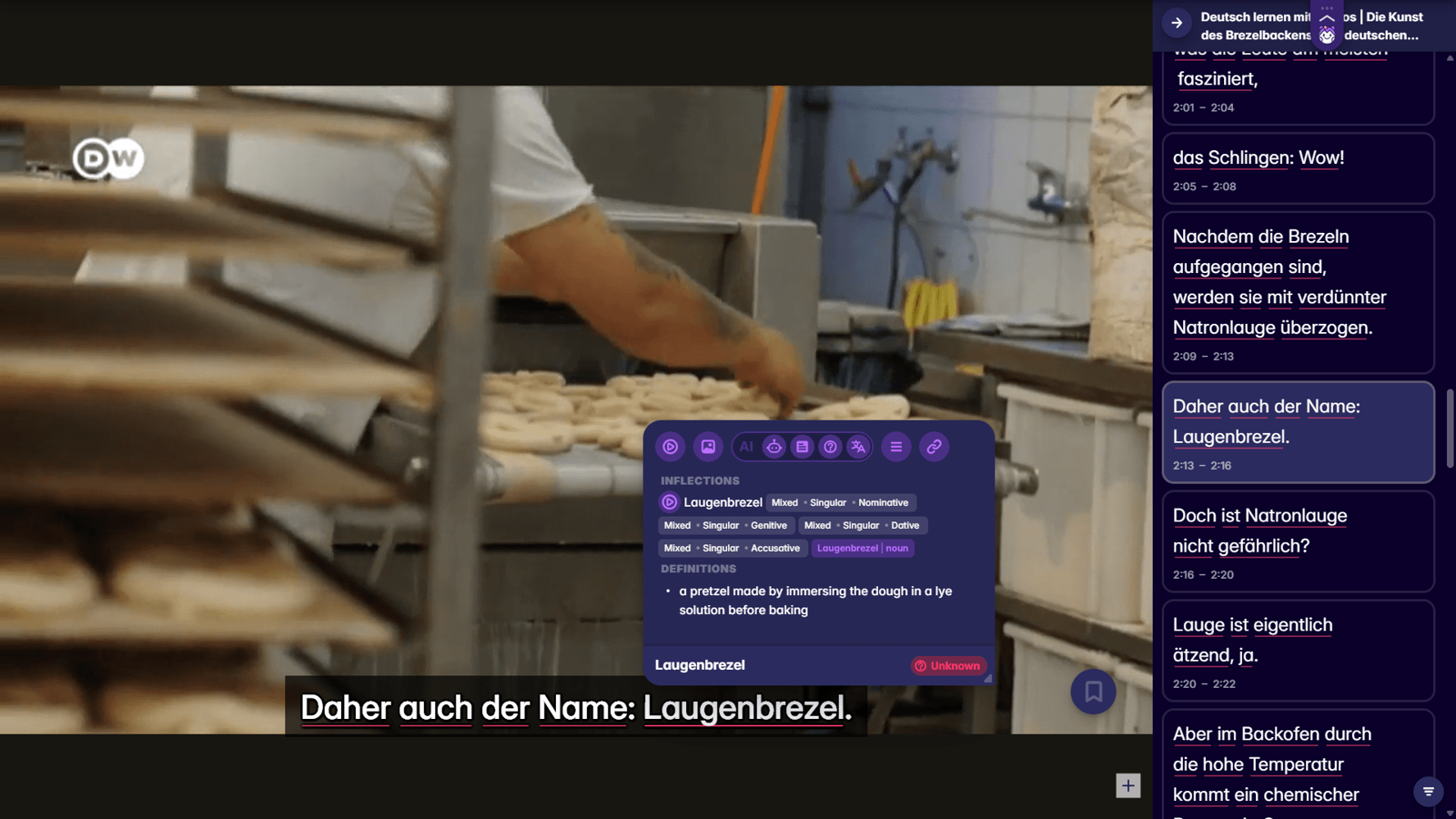
German shopping vocabulary gives you independence and confidence in everyday situations
You don't need thousands of words to navigate a supermarket, buy clothes, or ask for help in a store. The essentials covered here, maybe 200-300 words and a couple dozen phrases, handle the majority of shopping scenarios you'll face. The key is using what you learn. Active vocabulary (words you can produce on demand) comes from practice and repetition in real contexts.
If you consume media in German, and you understand at least some of the messages and sentences within that media, you will make progress. Period.
Practical learning is the best place to begin!