Swiss Food Beyond Fondue: Regional Dishes Worth Seeking Out
Última actualización: May 25, 2026
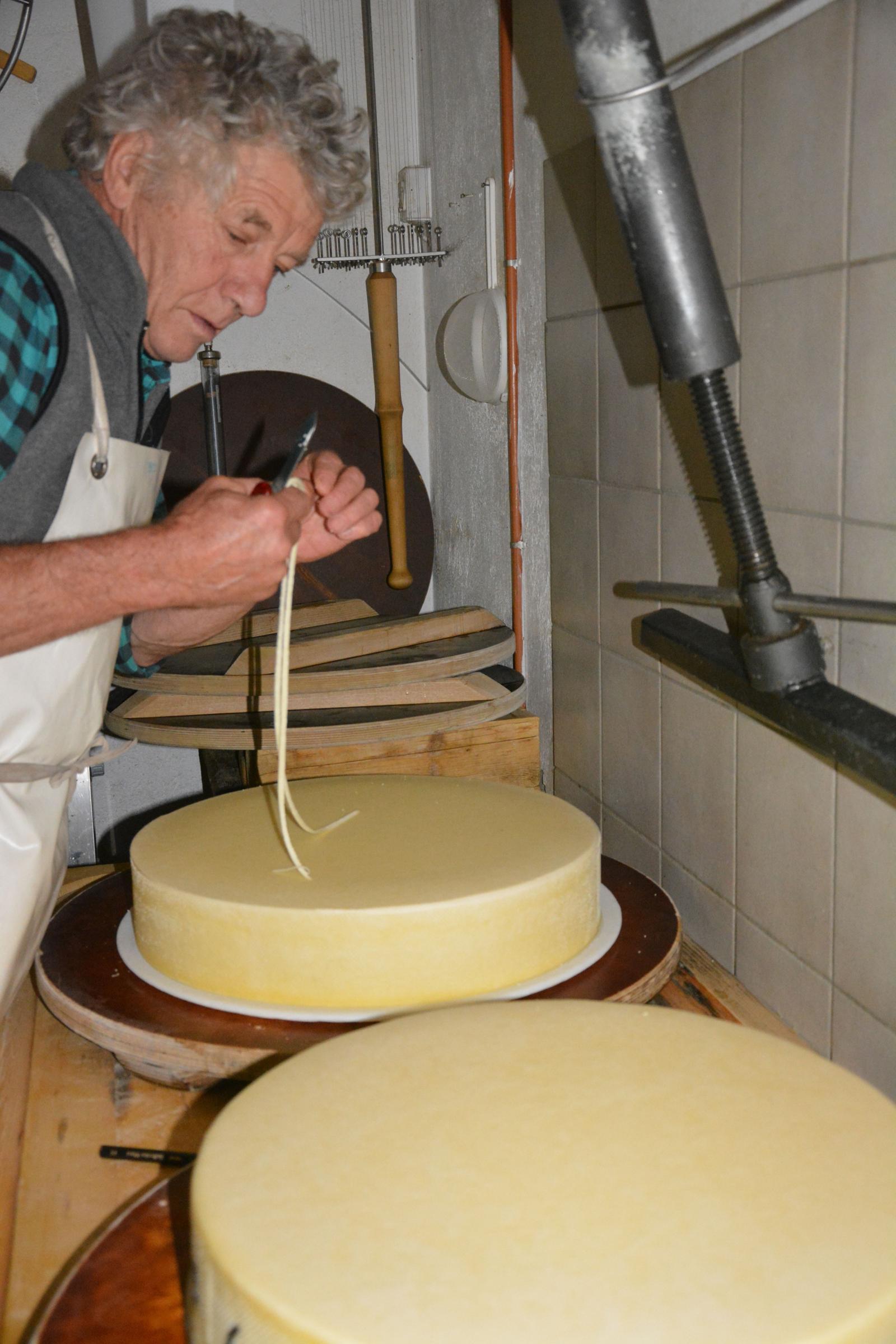
Switzerland's food culture stretches far beyond melted cheese in a communal pot. The country has 25 Protected Designation of Origin (AOP) products and 16 Protected Geographical Indication (IGP) products registered as of 2025, covering everything from saffron grown at 1,200 meters in the Valais to air-dried beef cured in the dry valleys of Graubünden. If you're moving to Switzerland or traveling through it, knowing what to order in each canton will change your trip.
Last updated: May 25, 2026
Why Swiss Regional Food Is Worth the Effort
Switzerland is small but linguistically and gastronomically fragmented. The cheese you eat in Fribourg is not the cheese you eat in Appenzell, and the sausage you grill in Vaud has nothing in common with the one served in canton Jura. This fragmentation is protected by law. The AOP/IGP system was established through the Ordinance on the Protection of Designations of Origin enacted on 28 May 1997 by the Swiss Federal Council, and it is administered by the Federal Office for Agriculture (FOAG).
That means when you buy a wheel of Le Gruyère AOP, the milk came from a defined geographic zone, the cheese was made in open copper vats with a maximum capacity of 6,600 litres, and it was aged in cellars kept between 12 and 18°C. The label is a guarantee, not a marketing flourish.
For expats settling in, learning to read these labels saves money and prevents disappointment. A generic "Swiss cheese" at a supermarket is not the same product as the AOP version, even when the name looks similar.
The AOP Cheeses You Should Actually Try
Most visitors know Gruyère and Emmentaler. The AOP register includes many more cheeses that rarely leave their home cantons. Here is the short list worth tracking down.
Cheese | Region | Notes |
|---|---|---|
Le Gruyère AOP | Fribourg, Vaud, Neuchâtel, Jura, parts of Bern | Granted AOC status on 6 July 2001, EU recognition since December 2011 |
Emmentaler AOP | Bern (excluding Moutier district), Aargau, Lucerne, several others | Aged at least four months, made at around 110 dairies |
Sbrinz | Central Switzerland | Hard grating cheese, often shaved into curls |
Tête de Moine | Jura | Shaved with a girolle into thin rosettes |
Vacherin Mont-d'Or | Vaud | Soft, seasonal, eaten with a spoon in winter |
Vacherin Fribourgeois | Fribourg | One of the two cheeses in moitié-moitié fondue |
L'Etivaz | Vaud (Pays-d'Enhaut) | Made only in summer from alpine pasture milk |
Berner Alpkäse | Bernese Oberland | Produced on high pasture during summer months |
Walliser Raclette | Valais | The original raclette, melted on a half-wheel |
Formaggio d'Alpe Ticinese | Ticino | Italian-speaking Switzerland's alpine cheese |
Glarner Alpkäse | Glarus | Often paired with Glarner Schabziger, a green herb cheese |
Bloder-Sauerkäse | St. Gallen, Liechtenstein border | A rare sour-milk cheese |
A Le Gruyère AOP Vorderfultigen Spezial aged 18+ months, made by Pius Hitz in canton Bern, won the 2025 World Champion Cheese title at the 37th World Cheese Awards in Bern on 13 November 2025, beating over 5,200 entries from 46 countries. If you can find a wheel from that dairy, buy it.
Cured Meats and Sausages by Canton
Switzerland's IGP register is heavy on charcuterie. Each region has its signature, and most do not travel well beyond canton borders.
- Bündnerfleisch IGP (Graubünden): Air-dried beef pressed into rectangular bricks, sliced paper-thin. Registered as a Protected Geographical Indication by the Swiss Federal Office for Agriculture on 24 September 1999, with amendments in 2003, 2010, and 2017. All essential production steps must occur in canton Graubünden. Annual production is around 1,850 tonnes, of which roughly 1,000 tonnes stays in Switzerland. Nutritionally it contains on average 40 g of protein per 100 g and about 5 g of fat per 100 g.
- Saucisson neuchâtelois IGP and Saucisse aux choux vaudoise IGP: Cooking sausages from the French-speaking western cantons, usually simmered and served with leeks, potatoes, or papet vaudois.
- Longeole IGP (Geneva): Pork sausage with fennel seeds, cooked slowly and sliced.
- Saucisse d'Ajoie IGP (Jura): Smoked pork sausage from the canton of Jura.
- Boutefas AOP (Vaud, Fribourg): A large pork sausage, served sliced and warm.
- Appenzeller Mostbröckli IGP, Pantli IGP, and Siedwurst IGP: Three distinct Appenzell specialties, ranging from cured beef to smoked sausage.
- Glarner Kalberwurst IGP: A pale veal sausage from canton Glarus, fried with onion sauce.
- Berner Zungenwurst IGP: Tongue sausage from Bern.
- Jambon de la Borne AOP: Smoked ham from Fribourg, cured in traditional chimneys.
If you're in Zurich or Geneva, look for these in butcher shops (Metzgerei or boucherie) rather than supermarkets. Authenticity is certified by ProCert AG under certification SCESp 0038 on behalf of the Verband Bündner Fleischfabrikanten for Bündnerfleisch.
Regional Specialties That Aren't Meat or Cheese
Several AOP products are agricultural rather than animal-based, and they define their regions just as strongly.
- Munder Safran AOP: Awarded its AOP designation in 2004. The village of Mund in canton Valais, at 1,200 m altitude, is the only place in Central Europe cultivating Crocus sativus for saffron. Quantities are tiny, and most of the harvest is sold locally. It flavors a regional risotto and a saffron bread.
- Poire à Botzi AOP: Small pears protected by AOP since 2007, grown between the southern shores of Lake Neuchâtel and the Alpine foothills of canton Fribourg. They are usually cooked with cinnamon and served with smoked ham or as a dessert.
- Rheintaler Ribelmais AOP: The second Swiss product to obtain an AOP label in 2000 after L'Etivaz cheese. Sold in 500 g bags as "Original" (fine semolina) or "Bramata" (coarse grind). Cooked into Ribel, a porridge-like dish from the Rhine Valley in St. Gallen.
- Cuchaule AOP: A saffron-flavored brioche from Fribourg, traditionally eaten at Bénichon harvest festival with moutarde de Bénichon.
- Walliser Roggenbrot AOP: Valais rye bread, dense and long-keeping. It was developed for storage in mountain communities.
- Damassine AOP and Abricotine AOP: Fruit eaux-de-vie from Jura and Valais respectively, served as digestifs.
- Cardon épineux genevois AOP: A thistle vegetable from Geneva, eaten at Christmas with a marrow-bone gratin sauce.
- Eau-de-vie de poire du Valais AOP and Zuger Kirsch und Rigi Kirsch AOP: Pear and cherry spirits used in baking and cooking.
- Huile de noix vaudoise AOP: Walnut oil from canton Vaud, pressed in small quantities.
Food Markets and Seasonal Events to Plan Around
If you want to taste these products at their source, the calendar matters. The single best one-day food event in Switzerland is the Zibelemärit, Bern's Onion Market.
The 2025 edition was held on Monday, 24 November 2025. The 2026 edition is scheduled for 23 November 2026, with official hours of 6:00 to 18:00, though locals start shopping from 4:00 AM. The market features more than 200 stalls and roughly 50 metric tons of onions and garlic in artistically woven braids. Entry is free.
Practical note for 2026: based on 2025 closures, expect a large portion of Bern's historic city center to be closed to private traffic from around 1:00 AM to 10:00 PM. In 2025, tram lines 6, 7, 8, 9 and bus line 12 were re-routed. Take the train into Bern HB and walk.
Other seasonal markets worth knowing:
- Désalpe (late September, various alpine cantons): The cattle descent from summer pastures, when alpine cheeses like Berner Alpkäse and L'Etivaz become available.
- Bénichon (Fribourg, September-October): Multi-course traditional feast featuring Cuchaule, jambon, Poire à Botzi, and meringues with double cream.
- Saffron harvest (Mund, Valais, mid-October): A small festival around the Munder Safran fields.
What Things Cost in 2026
Swiss prices remain high, and dining out is not cheap. Some current reference points for cheese-based meals:
Item | Price (CHF) | Source |
|---|---|---|
Typical restaurant fondue or raclette | 35-50 per person | service included |
Château de Villa raclette (Sierre, VS) | 36 per person | 2025 figure |
Restaurant Gitz-Gädi fondue (Zermatt) | 39 per person | 2025 figure |
Engstligenalp fondue igloo | 39 per person | 2025 figure |
Alpenchalet fondue (Zurich), adult | 65 | runs Oct to mid-April |
Alpenchalet fondue, child 6-11 | 32.50 | runs Oct to mid-April |
Chalet au Lac at Baur au Lac (Zurich) | 145 per person | luxury, 2025 figure |
Buying AOP products in a grocery store (Migros, Coop, or specialty shops like Globus Delicatessa) is much cheaper than restaurant prices. A 200 g piece of Le Gruyère AOP at retail typically runs well under CHF 10. Cross-check the AOP-IGP Association register at aop-igp.ch and Switzerland Tourism at myswitzerland.com for current-year pricing.
Common Pitfalls When Buying Swiss Regional Food
- Generic vs. AOP labels: Outside Switzerland, names like "Gruyère" may be generic. A 2023 US federal appeals court ruling deemed the term "gruyère" generic in the US, allowing Wisconsin-produced cheese to legally be labeled "gruyère." If you want the original, look for "Le Gruyère Switzerland AOP" with the red-and-white certification mark. Inside Switzerland and the EU, the AOP designation is legally protected.
- Supermarket pre-packaged raclette: Often industrial cheese from non-AOP producers. For Walliser Raclette AOP, check the label or buy from a Valais producer directly.
- "Bündnerfleisch" from outside Graubünden: Only product cured entirely in canton Graubünden can carry the IGP label. Cheaper versions exist but are not the protected product.
- Seasonality: Vacherin Mont-d'Or is only produced from mid-August to mid-March. L'Etivaz is made only in summer on alpine pastures. Out of season, you will not find authentic versions.
- Restaurant assumptions: A "fondue moitié-moitié" should be half Gruyère AOP and half Vacherin Fribourgeois AOP. Cheaper restaurants substitute industrial cheese. Ask before ordering.
- New labeling rules: As of 1 July 2025, Swiss producers must comply with new labeling rules requiring disclosure of animal welfare practices in production chains. Expect more information on packs from late 2025 onward.
Frequently Asked Questions
What is the most popular Swiss food besides fondue?
Raclette is the closest competitor, followed by rösti (grated potato cake) and älplermagronen (alpine macaroni with cheese, potato, cream, and onions, usually served with applesauce). For cured meat, Bündnerfleisch is the most recognized.
Are Swiss AOP products available outside Switzerland?
Many are, thanks to the 1999 Agreement between Switzerland and the EU on Trade in Agricultural Products (Annex 11), which entered into force in 2002 and was amended in 2004. Switzerland's EFTA-Mercosur Free Trade Agreement signed on 16 September 2025 also provides mutual protection for over 110 Swiss GIs in Argentina, Brazil, Paraguay, and Uruguay. In the US, however, several names are not protected.
Which Swiss region has the best food?
There is no single answer. Fribourg and Vaud are strongest for AOP cheeses and traditional French-Swiss cuisine. Graubünden owns the cured meat category. Valais combines wine, saffron, rye bread, and raclette. Ticino offers Italian-influenced dishes including Formaggio d'Alpe Ticinese and polenta. Bern's strength is markets and sausages.
Is Swiss food expensive for expats on a budget?
Eating out is expensive, but cooking AOP products at home is reasonable. Markets, Migros, and Coop carry most regional products at prices comparable to high-quality European supermarkets elsewhere. The expensive part is the restaurant markup, not the ingredients.
How do I verify an AOP/IGP product is real?
Look for the red-and-yellow AOP or red-and-blue IGP certification mark. Inspections are regulated under Decree RS 910.124 of the Federal Department of the Economy of 11 June 1999. Certification bodies must comply with ISO/IEC 17065 and be accredited by the Swiss Accreditation Service (SAS).
What should I bring home from Switzerland?
Vacuum-packed Bündnerfleisch IGP, a wedge of aged Le Gruyère AOP, a bottle of Abricotine AOP or Damassine AOP, and Munder Safran AOP if you can find it. All travel well in checked baggage within EU rules.
For more on European regional food traditions, see our guides to Italian regional cuisine, the Slow Food movement in Italy, and a Normandy itinerary covering Camembert country.
If you're moving to Switzerland, picking up German, French, or Italian (depending on your canton) makes reading menus, market signs, and AOP labels much easier. Try Migaku to learn from the kind of native content you'll actually encounter once you arrive.