Using Wise in Japan to Receive Salary in JPY: What to Know
Última actualización: 25 de mayo de 2026
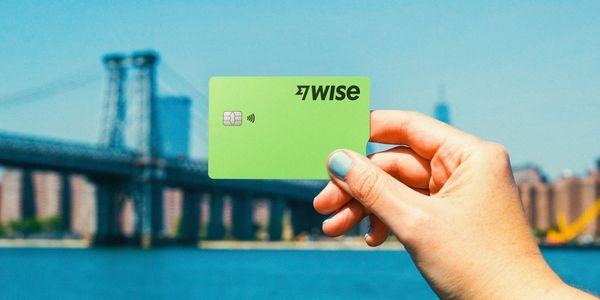
Short answer: as of 2026, you cannot receive your Japanese salary directly into a Wise account. Wise's own terms refuse incoming salary payments, and Wise Payments Japan K.K. is not on the Ministry of Health, Labour and Welfare's list of providers approved for direct digital salary payment. Expats in Japan typically receive salary into a regular Japanese bank account first, then move funds to Wise for spending or sending abroad.
Last updated: May 25, 2026
- Why Wise Cannot Receive Your Salary Directly
- The Legal Background: Article 24 and Digital Salary Payment
- What Wise in Japan Actually Is
- Holding Limits for Japan Residents
- The Realistic Setup: Japanese Bank Account + Wise
- How to Move Salary from Your Japanese Bank to Wise
- Sending Money Abroad from Wise in Japan
- Wise Business: A Different Case
- Common Pitfalls
- FAQs
Why Wise Cannot Receive Your Salary Directly
This is the core point and it surprises a lot of new arrivals. Wise's pay-in account terms in Japan explicitly state that the JPY pay-in account cannot process payments received as salary, a bonus, or cryptocurrency exchange. If your employer wires your monthly pay (給与, kyūyo) to your Wise JPY details, the transfer is rejected and returned, typically within 2 working days.
There are two overlapping reasons:
- Wise's own internal policy. Wise Payments Japan K.K. operates as a Funds Transfer Service Provider (資金移動業者), not a bank. Its pay-in account is designed to fund outgoing transfers, not to act as a salary-receiving account.
- Japan's Labor Standards Act (労働基準法). Article 24 sets out the "five principles of wage payment": wages must be paid in Japanese currency, directly to the worker, in full, at least once a month, and on a fixed date. Payment into any non-cash account is a legal exception that requires written consent and, since April 2023, requires the receiving provider to be on a specific government list if it is not a bank.
Even if your employer were willing to send your salary to Wise, Wise itself would bounce it back. The combination makes direct salary deposit a non-starter in 2026.
The Legal Background: Article 24 and Digital Salary Payment
Before April 2023, Japanese salaries could only legally be paid to a bank account (with the employee's written consent). On April 1, 2023, the government opened a second route called digital salary payment (デジタル給与), which allows wages to be paid into accounts at Designated Funds Transfer Service Providers approved by the Minister of Health, Labour and Welfare (MHLW).
For digital salary payment to be legal, three things must happen at the employer level:
- The company's employment rules (就業規則) must be revised.
- A labor-management agreement must be signed with the majority employee representative.
- The individual employee must give written consent.
There are also account-side rules. Under the digital salary framework, the balance at a Designated Funds Transfer Service Provider cannot exceed 1,000,000 yen. Any excess must be automatically transferred to a designated backup bank account that the worker owns.
The practical question for Wise users is whether Wise Payments Japan K.K. appears on the MHLW's designated provider list. As of this writing, it is not. The MHLW list is the official source of truth here. Check it directly at https://www.mhlw.go.jp before assuming any provider is eligible.
What Wise in Japan Actually Is
Wise Payments Japan K.K. has operated in Japan since 2016. Its current status, as of 2026:
- Licensed by the Kanto Local Finance Bureau as a Type 1 and Type 2 Funds Transfer Service Provider, registration number 00040.
- Received its Type 1 licence in March 2024, removing the previous 1,000,000 JPY per-transaction cap on outgoing cross-border transfers.
- Approved in October 2024 as the first non-bank in Japan to join the Zengin domestic payment network, enabling near-instant (under 20 seconds) cross-border payments.
- Pay-in account details use bank code 0200 and the bank name ワイズ・ペイメンツ・ジャパン.
A known quirk: some Japanese ATMs display the entity as "Wise Payments Japan Bank." This is a display error. Wise is not a bank. That distinction matters for salary law, deposit insurance, and how your employer's HR system categorizes the account.
Holding Limits for Japan Residents
Even if Wise accepted salary deposits, Japan-resident users face a hard balance ceiling. The default holding limit is 1,000,000 JPY equivalent across all currencies and Jars combined. This is a local regulatory cap, not an internal Wise choice.
What happens at the limit:
- Wise emails a reminder when the balance approaches or exceeds 1,000,000 JPY.
- You are required to refund the excess to a bank account in your own name.
- You can request a temporary custom holding limit, but only when your current balance is already at or below 1,000,000 JPY. The custom limit auto-resets on its expiry date.
For most full-time employees in Tokyo, Osaka, or Fukuoka, a single month's net salary will hit or exceed this ceiling. The cap alone makes Wise unworkable as a primary salary account.
The Realistic Setup: Japanese Bank Account + Wise
The pattern almost every expat in Japan settles on:
- Open a Japanese bank account for salary deposit. Common starter banks for foreigners include Japan Post Bank (ゆうちょ銀行), SMBC Prestia, Shinsei, Sony Bank, and the major megabanks (MUFG, SMBC, Mizuho) once you have a residence card and (usually) a My Number.
- Give your employer the Japanese bank account details during onboarding. They will ask for the bank name, branch code (支店コード), account type (普通 for standard savings), account number, and account holder name in katakana.
- Receive salary on the standard payday. Most Japanese employers pay monthly on the 25th in Japanese yen.
- Move funds to Wise as needed for international transfers, multi-currency holding, or card spending abroad.
This setup keeps you compliant with Article 24, avoids the Wise salary refusal, and respects the 1,000,000 JPY balance cap by treating Wise as a transit and spending account rather than a savings vault.
How to Move Salary from Your Japanese Bank to Wise
Once your salary lands in your Japanese bank account, funding Wise is straightforward. The available methods:
Method | Typical Speed | Notes |
|---|---|---|
Domestic bank transfer (Zengin) to Wise JPY pay-in account | Under 20 seconds to a few hours | Sender name must match your Wise account holder name exactly |
Debit card | 5–10 working days, sometimes up to 1–2 months | Slower than transfer; varies by issuing bank |
Cash, cheques, credit cards, third-party PSPs | Not accepted | Wise does not support these for funding |
The sender-name rule trips up a lot of people. If your Wise account is registered as "YAMADA TARO" but your bank transfer arrives under a slightly different romanization or a company name, Wise will refuse and return the funds within 2 working days. Always send from an account in your own name, with the name matching your Wise registration.
After Wise receives JPY, domestic delivery to your balance is usually within 1 working day. Currency conversion (for example, JPY to USD or EUR) can take up to 2 working days.
Sending Money Abroad from Wise in Japan
This is where Wise becomes useful for salaried expats. With the Type 1 licence, Japan-resident Wise users can send up to 150,000,000 JPY equivalent per cross-border transfer in 40+ currencies. Some practical points:
- Sending money directly from your Wise balance is still capped at 1,000,000 JPY per transfer under the Type 2 rules that govern in-app balance transfers.
- To send more than 1,000,000 JPY in a single transfer, you fund the transfer from an external Japanese bank account or card, which routes it through the Type 1 licence.
- Wise's average fee for transfers from Japan is around 0.67%, compared with over 7% for Japanese banks per World Bank data cited by Wise in 2024.
For expats sending money home each month (student loans in the US, mortgage in the UK, family support in the Philippines), this is the main reason to keep a Wise account in Japan even though it cannot be your salary account.
Wise Business: A Different Case
If you are a freelancer, sole proprietor (個人事業主), or you run a small company in Japan, Wise Business is a separate product with its own rules.
- One-time setup fee of 3,000 JPY to activate international bank details.
- You can receive client payments in multiple currencies through local account details (USD, EUR, GBP, AUD, and others).
- Client payments for invoiced work are not the same category as employment salary under Japanese law, so the Wise pay-in restriction on "salary" does not block typical freelance invoicing.
- The 1,000,000 JPY balance cap for Japan-resident accounts still applies.
If you invoice overseas clients in foreign currency, Wise Business is one of the cleanest ways to receive those payments without paying megabank-level conversion fees. It is not, however, a substitute for a Japanese business bank account, which you will still need for domestic tax, payroll, and supplier payments.
Common Pitfalls
Issues that come up repeatedly in expat forums:
- Giving the employer Wise details on day one. New hires sometimes hand over their Wise pay-in details thinking it works like a bank account. The first salary run bounces back, payroll has to be redone, and the second payday is delayed.
- Name mismatches. Account name in Latin letters on Wise vs. katakana at the Japanese bank vs. how the employer types your name. All three need to align.
- Hitting the 1,000,000 JPY ceiling mid-month. Common when you receive a transfer from abroad and a bonus in the same period. Set up automatic withdrawals to your Japanese bank account.
- Assuming Wise's Type 1 licence changed the salary rule. It did not. Type 1 affects outgoing transfer size, not the ability to receive salary.
- Confusing digital salary payment with Wise. The digital salary system exists in Japan, but only for MHLW-designated providers. Always verify a provider's status on the official MHLW list before relying on it.
- Forgetting tax reporting. Whatever account your salary lands in, it is taxable Japanese income. Holding funds in Wise across currencies does not change your residency-based tax obligation.
FAQs
Can my employer pay my salary directly into Wise?
No. Wise's terms refuse incoming salary payments, and the transfer will be returned within 2 working days. You need a Japanese bank account (or an MHLW-designated digital salary provider) for legal salary receipt.
Is Wise Payments Japan a bank?
No. It is a licensed Funds Transfer Service Provider under the Kanto Local Finance Bureau, registration number 00040. Some ATM screens incorrectly show it as a bank, but this is a display error.
What is the maximum I can hold in Wise as a Japan resident?
1,000,000 JPY equivalent across all currencies and Jars combined. Excess must be refunded to a bank account in your own name.
Can I send my full salary abroad through Wise each month?
Yes, once the salary is in your Japanese bank account. Under the Type 1 licence, you can send up to 150,000,000 JPY equivalent per cross-border transfer when the transfer is funded from an external bank or card.
Does Wise support digital salary payment (デジタル給与)?
As of 2026, Wise Payments Japan K.K. is not on the MHLW's list of Designated Funds Transfer Service Providers for direct digital salary payment. Check the MHLW list directly for the current status.
What about freelance income from overseas clients?
That is invoiced income, not employment salary. Wise Business with international account details is a common option, subject to the same 1,000,000 JPY holding cap.
Useful Background Reading for New Arrivals
If you are still settling in, a few related guides may help:
Navigating payroll forms, bank counters, and HR conversations in Japan is far easier when you can read the kanji on the documents and follow the spoken instructions. If you are settling into life in Japan, learning Japanese with real native content (employment contracts, HR emails, bank forms) makes everything from salary setup to apartment hunting noticeably less stressful. Migaku is built for learning a language directly from the content you already encounter day to day. Try Migaku.