Understanding Japan Work Culture: Overtime, Hierarchy, Balance
Última actualización: May 23, 2026
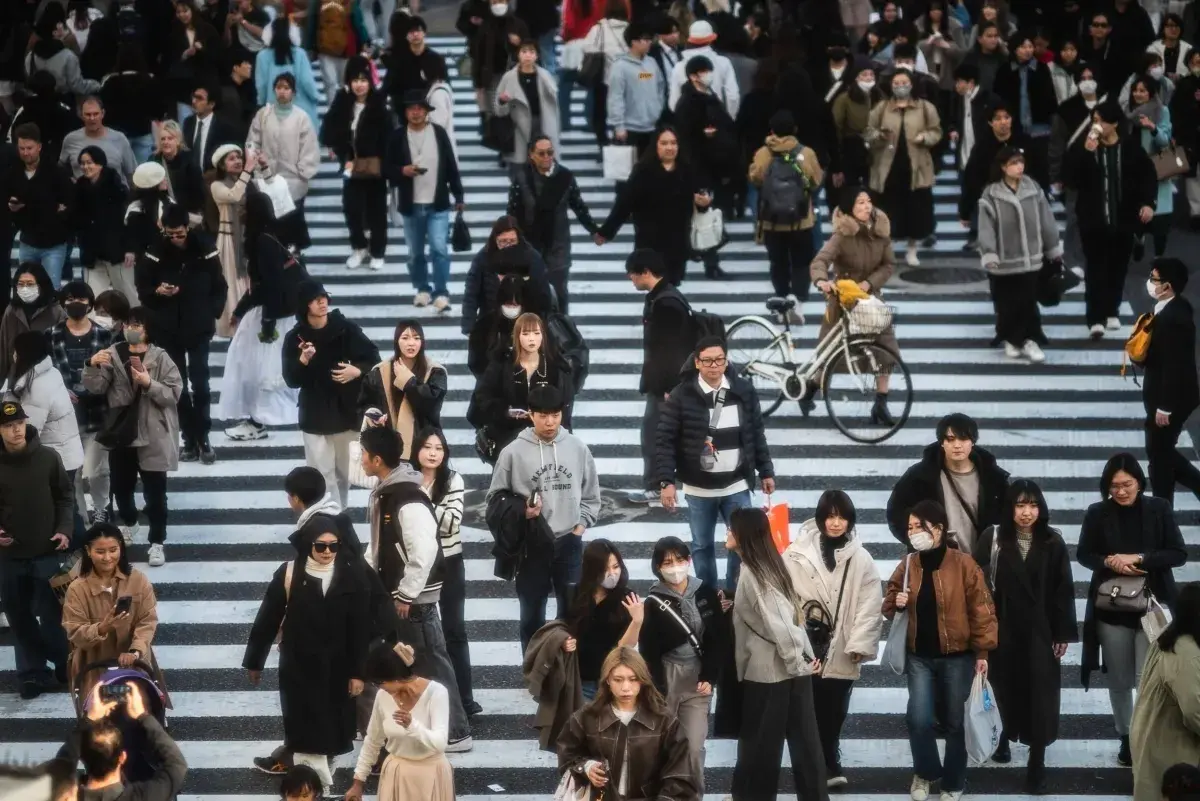
Japan's work culture in 2026 is more regulated than its reputation suggests: statutory overtime is capped, paid leave is legally enforced, and reforms keep arriving year after year. Still, hierarchy, unwritten expectations, and long hours in certain industries persist, and foreign employees need to understand both the law and the social norms before signing a contract.
Last updated: May 23, 2026
- The Legal Framework: What the Law Actually Says
- Overtime Pay Rates
- How Many Hours Do People Actually Work?
- Karōshi and the Mental Health Picture
- Hierarchy and Unwritten Expectations
- Paid Leave: What You Get and Whether You'll Take It
- Parental Leave and Family-Care Reforms
- What Reforms Are and Aren't Coming
- Freelancers and the New Protection Act
- Common Pitfalls for Foreign Employees
The Legal Framework: What the Law Actually Says
Japan's Labor Standards Act (LSA) sets the baseline. Standard working hours are capped at 8 hours per day and 40 hours per week, with at least one day off per week (or four days within any four-week period). Anything beyond that requires a so-called "36 Agreement" (named after Article 36 of the LSA) filed between the employer and a labor representative.
Since the Work Style Reform Act took full effect in April 2019, overtime under a 36 Agreement is capped at:
- 45 hours per month
- 360 hours per year
Under "special circumstances" clauses (deadlines, seasonal peaks, etc.), employers can push past those numbers, but hard ceilings apply:
Limit | Cap |
|---|---|
Overtime in any single month (incl. holiday work) | 100 hours |
Rolling 2-to-6 month average | 80 hours/month |
Annual overtime | 720 hours |
Months per year using "special circumstances" | Maximum 6 |
Violating these caps is a criminal offense under the LSA. Penalties include imprisonment of up to 6 months or fines of up to ¥300,000. The Ministry of Health, Labour and Welfare (MHLW) does prosecute, and the labor standards inspection offices (労働基準監督署, rōdō kijun kantokusho) take complaints seriously.
A few industries got a five-year grace period that finally ended in April 2024. Construction workers, automobile drivers, and physicians are now covered, though transportation drivers have a special-clause annual cap of 960 hours, and hospital doctors at designated Level B/C institutions can be extended up to 1,860 hours per year after third-party evaluation.
Overtime Pay Rates
If you do work overtime, you must be paid premiums. The base rates as of 2026:
- 125% of normal wage for standard overtime
- 135% for work on a statutory holiday
- 150% for monthly overtime exceeding 60 hours
- 25% night-shift premium for hours between 10pm and 5am (stacks on top, so overtime at night = 150%, holiday night work = 160%)
The 50% premium for overtime above 60 hours per month was extended to small and medium-sized enterprises from April 1, 2023. Previously only large firms had to pay it.
Watch for fixed overtime pay (固定残業代, kotei zangyōdai), sometimes called minashi zangyō. Many tech, consulting, and startup contracts bundle, say, 30 or 45 hours of overtime into your base monthly salary. That is legal, but the contract must explicitly state how many hours are included and the company still has to pay extra for any hours beyond that quota. Read this clause carefully before signing.
A narrow exemption exists for Highly Skilled Professionals: workers earning at least ¥10 million per year in specified roles can opt out of overtime, holiday, and night-shift premium rules entirely. They must receive at least 104 days off per year and give explicit written consent. Most foreign hires will not fall under this exemption.
How Many Hours Do People Actually Work?
The gap between statute and reality has narrowed but not closed.
- OECD data put average annual hours per Japanese employee at 1,611 in 2023, slightly above the 2022 figure of 1,607 and the 2020 pandemic low of 1,597.
- MHLW labour reports show employees in Information and Communications worked an average of 147 to 167 hours per month from January to October 2025 (roughly 36 to 42 hours per week).
Those averages mask wide variance. Manufacturing, white-collar finance, and traditional advertising agencies can run far hotter than tech. Foreign-capital companies (外資系, gaishikei) tend to follow stricter compliance and shorter hours than domestic legacy firms.
Karōshi and the Mental Health Picture
Karōshi (過労死, death from overwork) is not a relic. In fiscal 2024, the MHLW recognized 1,304 cases of overwork-related deaths and health disorders, a record high and up 196 from the previous year. Of those:
- 247 involved strokes or heart conditions
- 1,057 involved mental health disorders (the first time this figure crossed 1,000)
- 89 involved suicide or attempted suicide
Since 2015, all employers with 50 or more employees must run an annual Stress Check Program (ストレスチェック) and offer support based on results. If you score in the high-stress range, you are entitled to a consultation with an occupational physician. Use it. Foreign employees often skip the Japanese-language follow-up out of shyness; the right to that consultation is yours.
For more on how remote arrangements have changed daily reality, see this guide to remote work culture in Japan.
Hierarchy and Unwritten Expectations
The law caps hours. Social pressure fills the gaps. A few patterns to know:
- Senpai/kōhai (先輩/後輩) relationships still structure most offices. Your direct senior expects to be consulted on decisions and informed of your movements. Skipping levels frustrates everyone.
- Hourenso (報連相): hōkoku (report), renraku (contact), sōdan (consult). This is the operating system of Japanese teamwork. Over-communicate small status updates rather than presenting finished work out of nowhere.
- Leaving on time: technically your right, socially loaded in some firms. The phrase お先に失礼します (osaki ni shitsurei shimasu, "excuse me for leaving before you") is the polite exit line. Saying it cheerfully and consistently from day one sets your norm.
- Nominication (飲みニケーション, drinking + communication): after-work drinks remain influential, though attendance expectations have softened since the pandemic. Going to one or two per quarter is usually enough to stay in the loop.
- Ringi-sei (稟議制): decision-making by circulating documents for stamps. It is slow but produces buy-in. Pushing for a fast unilateral decision usually backfires.
- Meishi (名刺): business card exchange is still standard at first meetings. Receive with both hands, place the card on the table during the meeting, never write on it in front of the giver.
Hierarchy is real but not absolute. Foreign-capital firms, startups, and younger Japanese-led companies are noticeably flatter than traditional listed corporations.
Paid Leave: What You Get and Whether You'll Take It
Statutory paid annual leave (年次有給休暇, nenji yūkyū kyūka, often shortened to 有給 yūkyū) starts at 10 days after 6 months of continuous service with at least 80% attendance, then increases each year to a maximum of 20 days at 6.5 or more years of service. Unused leave carries over for one year and then expires (a two-year window total).
Since April 2019, employers are legally required to ensure each employee entitled to 10 or more days actually takes at least 5 days per year. Non-compliance triggers fines of up to ¥300,000 per affected employee. This rule changed Japanese office life more than many expats realize: managers now actively push staff to schedule leave.
That said, the take-up rate is still incomplete. The paid-leave acquisition rate reached 62.1% in 2022 (the highest since 1984), but workers still only took an average of 10.9 days out of 17.6 granted.
Practical advice for foreign employees:
- Schedule your leave at the start of the fiscal year (April) when calendars are open.
- Use nenkyū in blocks attached to public holidays for longer trips home.
- Sick days are typically deducted from yūkyū in Japan; there is no separate statutory sick leave. Save a buffer.
Parental Leave and Family-Care Reforms
Japan has invested heavily in parental leave, and the numbers are finally moving.
- Male paternity-leave take-up reached a record 40.5% in fiscal 2024, up 10.4 percentage points year on year. The government target is 50% in calendar 2025 and 85% by 2030.
- Male civil servants took paternity leave at 85.9% in fiscal 2024; male local-government employees crossed 50% for the first time at 58.5%.
- Childcare leave pays 67% of regular salary for the first 180 days and 50% thereafter. From April 2025, the new Post-Childbirth Leave Support Benefit (出生後休業支援給付金) tops this up by 13% to bring qualifying periods to roughly 80% of gross salary. The 2025 monthly cap for the 180-day rate is ¥315,369.
- Under the April 2025 amendment to the Childcare and Family Care Leave Act, employees raising children up to elementary-school age can apply for exemption from overtime. From October 2025, employers must offer at least two of five flexible-work measures for parents of children aged 3 through elementary school.
- Mandatory gender pay-gap disclosure expands from employers with 300+ employees to employers with 100+ employees on April 1, 2026.
If you are a working parent on a Japanese contract, these benefits are accessible to foreign residents on the same terms. The paperwork goes through your employer's HR and the local Hello Work office.
What Reforms Are and Aren't Coming
A January 2025 MHLW study group proposed a sweeping overhaul: a ban on 14 or more consecutive workdays, mandatory 11-hour inter-shift rest periods, and a statutory "right to disconnect." In December 2025, the MHLW announced the reform bill would not be submitted to the 2026 regular Diet session. Enactment is not expected before 2027.
Meanwhile, under Prime Minister Sanae Takaichi (in office since October 2025), the government is examining the opposite direction: deregulating working-hour rules. Nikkei/TV Tokyo and JNN polls from late 2025 showed about 64% of respondents support deregulation in principle, though MHLW analysis found only 6.4 to 6.7% of employed persons themselves want to actually work more. The policy direction for 2026 to 2027 is genuinely uncertain. Check current MHLW announcements before relying on any specific cap.
Freelancers and the New Protection Act
If you work as an independent contractor in Japan, note the Freelance Protection Act (フリーランス保護法), which took effect November 1, 2024. It requires entrusting businesses to issue written terms, pay within 60 days, and avoid abusive contract changes. Non-compliant entrusting business operators face Japan Fair Trade Commission investigation and fines up to ¥500,000.
For those considering shorter stays, our guide to Japan working holiday visa options walks through eligibility and steps.
Common Pitfalls for Foreign Employees
- Signing without reading the fixed-overtime clause. Always confirm how many minashi hours are baked into your salary.
- Not joining the labor union. Japan's overall unionization rate hit a record low of 16.1% in 2024, but if your company has one, membership gives you a channel for disputes.
- Letting paid leave expire. Track your balance every quarter; it disappears after two years.
- Treating sābisu zangyō (unpaid "service" overtime) as normal. It is illegal. Document hours via a personal log if your firm's system rounds them down.
- Avoiding the stress check follow-up. Translation support exists; use it.
- Misreading silence as agreement. In meetings, an absence of objection often means "I have concerns but won't voice them now." Follow up one-on-one.
For a comparative regional perspective, see this look at extreme work culture in Asia.
FAQs
Is overtime really capped at 45 hours a month in Japan?
Yes, under a standard 36 Agreement. Special-circumstances clauses can push it higher but never beyond 100 hours in a single month, 80 hours averaged over 2 to 6 months, or 720 hours per year.
Do I have to attend after-work drinks?
Legally, no. Socially, occasional attendance helps. Skipping every single one in a traditional Japanese firm can isolate you; in gaishikei and startups, it's a non-issue.
How do I refuse overtime politely?
Cite a fixed external commitment (medical appointment, family, a class). "申し訳ありませんが、本日は予定がありまして" (mōshiwake arimasen ga, honjitsu wa yotei ga arimashite, "I'm sorry, I have plans today") is the standard formula.
What if my employer breaks the overtime law?
File a report at your local Labor Standards Inspection Office (労働基準監督署). You can do this anonymously, and they can investigate without naming you.
Can I negotiate a four-day week?
Increasingly yes, especially at foreign-capital firms and in tech. The 2025 flexible-work measures pushed many companies to formalize shorter-week and remote options. Ask during the offer stage rather than after joining.
Navigating Japanese workplace norms is much easier when you can read the email subtext and follow hallway conversations. If you're moving to Japan, learning Japanese with real native content makes the daily reality of hourensou, meeting etiquette, and HR paperwork far less stressful. Try Migaku to learn from the shows, news, and books Japanese colleagues actually consume.