How to Get a Freelancer Visa (Freiberufler) in Germany
最終更新日: 2026年5月13日
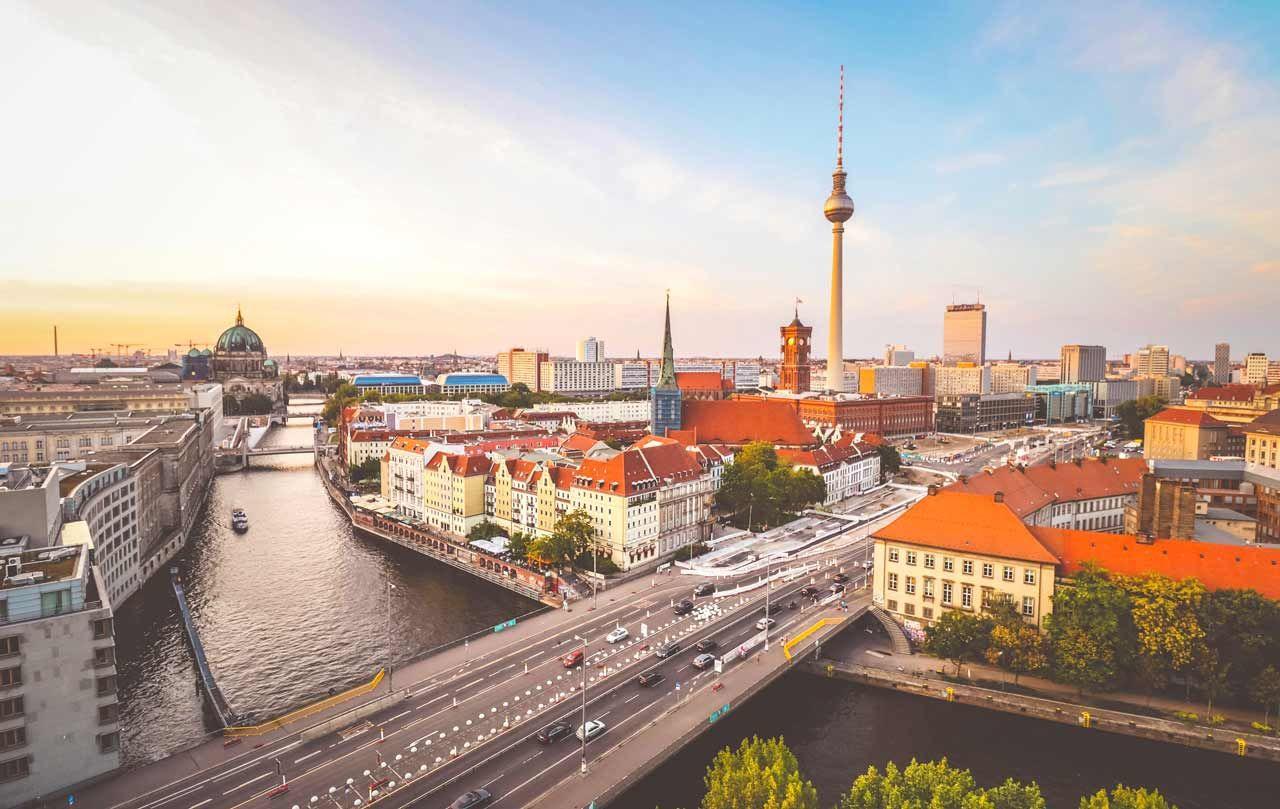
Germany's Freiberufler visa is a national long-stay residence permit under Section 21(5) of the Residence Act (AufenthG) that lets non-EU nationals live in Germany while working as an independent professional in fields like writing, IT consulting, design, teaching, translation, or the arts. You apply either at a German mission abroad (D-visa) or, if you hold a passport that allows visa-free entry, directly at the local Ausländerbehörde after arrival.
Last updated: May 13, 2026
- Who Qualifies as a Freiberufler
- Who Can Skip the Visa and Apply in Germany
- Document Checklist
- The Pension Rule for Applicants Over 45
- Step-by-Step: Applying From Abroad (D-Visa Route)
- Step-by-Step: Applying Inside Germany (Visa-Exempt Nationals)
- Fees and Processing Times
- Common Pitfalls
- After Approval: What the Permit Gives You
Who Qualifies as a Freiberufler
The Freiberufler category is narrower than "self-employed" in general. It is defined by Section 18(1)(1) of the German Income Tax Act (Einkommenssteuergesetz, EStG), which lists independent scientific, artistic, literary, teaching, and educational activity, plus a catalog of "liberal professions" (Katalogberufe) such as doctors, lawyers, tax advisors, engineers, architects, journalists, interpreters, and certain IT and consulting professionals.
If your activity falls outside this list, you are likely a Gewerbetreibender (tradesperson) and apply under a different track of Section 21 AufenthG, which requires registering a business (Gewerbe) and, in many cases, a stronger economic-interest argument. The application logic below still largely applies, but the documents differ.
To qualify, you generally need to show:
- A profession that fits Section 18(1)(1) EStG, or a regulated profession with the appropriate German license.
- Concrete demand for your services in Germany, usually evidenced by letters of intent from German-based clients.
- Enough income or savings to cover your living costs and health insurance without public assistance.
- German statutory or comparable private health insurance (foreign travel insurance is not accepted for the residence permit).
- For applicants over 45: adequate pension provision (see below).
For regulated professions, you must include a professional license to practice, such as a vocational training diploma or chamber registration.
Who Can Skip the Visa and Apply in Germany
Citizens of the United Kingdom, Australia, Canada, Israel, Japan, New Zealand, the Republic of Korea, and the United States may enter Germany visa-free and apply for the Freiberufler residence permit at the local Ausländerbehörde after arrival. You do not need a D-visa from a German mission first.
If you use this route, two deadlines matter:
- Register your address (Anmeldung) at the local Meldebehörde within 2 weeks of moving in.
- Submit the residence permit application to the Ausländerbehörde within the first 90 days of stay.
A Schengen C-visa is not sufficient to switch to a Freiberufler permit inside Germany. If your nationality is not on the visa-exempt list, you must apply for a national D-visa at a German mission before traveling.
Document Checklist
The exact list varies slightly by consulate and by Bundesland, but the core file is consistent. Prepare two complete sets (original plus copy) and bring everything to the appointment.
- Completed VIDEX application form (printed, signed).
- Valid passport, issued within the last 10 years, valid for at least 6 more months, with 2 consecutive blank pages.
- Two biometric photos, 35x45 mm, taken within the last 6 months.
- CV and copies of degrees, diplomas, or professional certifications.
- For regulated professions: the German professional license or recognition certificate.
- Portfolio or work samples (especially for artists, writers, designers, IT freelancers).
- Business plan and revenue/cost projection for the first 1 to 3 years.
- Letters of intent or contracts from at least 2 German-based clients.
- Proof of health insurance (German statutory like TK or AOK, or comparable private cover such as Mawista, Ottonova, or Hallesche).
- Proof of financial means: bank statements, equity capital, or a loan commitment.
- Proof of accommodation in Germany (rental contract or landlord confirmation).
- For applicants over 45: pension provision evidence (see next section).
- Proof of address registration (Anmeldebescheinigung), if applying from inside Germany.
German authorities expect documents in German. Translations by a sworn translator (vereidigter Übersetzer) are usually required for diplomas, contracts from non-English-speaking countries, and any official certificates.
The Pension Rule for Applicants Over 45
If you are 45 or older when you apply, you must show adequate old-age provision. From July 1, 2025, the Berlin Ausländerbehörde sets the benchmark as either:
- A projected monthly pension of at least €1,612.53 from age 67, payable for at least 12 years, or
- Assets of at least €232,204.00.
Nationals of the Dominican Republic, Indonesia, Japan, the Philippines, and Sri Lanka are exempt from this requirement under bilateral agreements. Other Bundesländer apply the same federal logic, though formatting of the proof can differ. A private pension policy, a paid-off property, investment accounts, or a combination can satisfy the asset threshold.
Step-by-Step: Applying From Abroad (D-Visa Route)
- Confirm your category. Check whether your work fits Section 18(1)(1) EStG. If you are unsure, write a short profession description and compare it to the Katalogberufe list.
- Gather client letters. Two or more is the standard expectation. They should be on company letterhead, signed, and state the scope, duration, and approximate fee of the planned work.
- Write a business plan. Three to ten pages is typical: profile, services, target market, marketing, competitors, pricing, projected revenue and costs, and your German tax residency plan.
- Arrange health insurance. Get a binding offer or confirmation valid from your planned arrival date.
- Book a visa appointment at the German mission in your country of residence. Slots can be tight; book as early as possible.
- File the VIDEX form online, then bring the printout to the appointment.
- Pay the visa fee of €75 (in local currency) at the appointment.
- Wait for processing. At the German Mission in the UK, processing for the self-employed/freelancer category is typically 6 to 9 months. Other missions vary; plan accordingly.
- Travel to Germany once the D-visa is issued. The visa is usually valid for 3 to 6 months and lets you enter and start working.
- Register your address (Anmeldung) within 2 weeks.
- Apply for the residence permit at the local Ausländerbehörde before the D-visa expires.
Step-by-Step: Applying Inside Germany (Visa-Exempt Nationals)
- Enter Germany on your passport (no visa required for the listed nationalities).
- Find an apartment or registered sublet and complete the Anmeldung within 2 weeks.
- Sign up for German health insurance effective from your registration date.
- Open a German bank account (most freelancers use N26, Commerzbank, Sparkasse, or similar).
- Register with the tax office (Finanzamt) using the Fragebogen zur steuerlichen Erfassung to receive your tax number (Steuernummer).
- Submit the residence permit application to the Ausländerbehörde within 90 days of arrival. In Berlin, the freelance permit application is filed online and you receive a PDF that confirms the continued validity of your existing status (a Fiktionsbescheinigung effect) until the decision is made.
- Attend the in-person appointment when invited, bring originals, pay the fee, and provide biometrics.
Fees and Processing Times
Item | Amount (2025) |
|---|---|
Entry D-visa at German mission abroad | €75 (local currency) |
Residence permit, electronic (eAT), Berlin | €100.00 |
Residence permit, sticker label | €56.00 |
Maximum residence permit fee under AufenthV | €100 |
Settlement permit (Niederlassungserlaubnis) | up to €147 |
Standard visa fee | €90 |
Turkish nationals up to age 24 (reduced) | €27.60 |
Turkish nationals 24 and over (reduced) | €46.00 |
Digital passport photo at Berlin self-service terminal | €6.00 extra |
Berlin's Immigration Office accepts credit cards (Visa, Mastercard) and PayPal for online payments. D-visa processing at the German Mission in the UK runs 6 to 9 months for the self-employed category; other missions in North America and Asia have reported 8 to 16 weeks in 2025, but you should treat any wait under 3 months as optimistic. Berlin Ausländerbehörde appointment lead times fluctuate; the online filing route has reduced in-person bottlenecks since 2024.
Common Pitfalls
- Wrong category. Applying as a Freiberufler when your work is actually a Gewerbe (e.g., e-commerce, dropshipping, agency work with employees) leads to rejection. Talk to a Steuerberater before filing if there is any doubt.
- Foreign-only health insurance. Travel cover or a US/UK policy is not accepted for the residence permit. You need German statutory or comparable private cover.
- Weak client letters. Generic "we may hire you" notes are routinely rejected. Letters should name a project, fee, and time frame.
- Schengen visa shortcut. You cannot enter on a Schengen C-visa and switch. You need a D-visa or a visa-exempt passport.
- Pension proof for over-45s. Many applicants miss this and have to refile. If you are 45 or older, build the pension or assets file from day one.
- Late Anmeldung. Missing the 2-week registration window can complicate insurance, tax registration, and the permit application.
- No translations. Documents in languages other than German (and sometimes English) will be returned. Budget for sworn translations early.
After Approval: What the Permit Gives You
The Freiberufler residence permit is initially issued for up to 3 years and is tied to the freelance activity stated in your application. You can renew it as long as the work and finances continue to support it. After 5 years of legal residence, you can apply for a settlement permit (Niederlassungserlaubnis) for indefinite residence.
Germany's 2024 citizenship reform reduced standard naturalization from 8 years to 5 years of residence, with 3 years possible for "exceptional integration" (including C1 German). Dual citizenship is now legal. Time on a Freiberufler permit counts toward both the settlement permit and naturalization clocks.
If the freelance route does not fit, related options to compare include the EU Blue Card in Germany salary requirements for salaried specialists, the Germany Chancenkarte Opportunity Card for job seekers, and, in a different country, the France Long Stay Visitor Visa application.
FAQs
Can I apply for the Freiberufler visa from inside Germany on a tourist Schengen visa? No. A Schengen C-visa is not sufficient. You must hold a national D-visa or be from a visa-exempt country.
Is a business plan really required? Yes, in practice. The Ausländerbehörde and many consulates ask for it explicitly, and even when they do not, it is the document that ties your client letters, finances, and projections together.
How much income do I need to show? There is no fixed national figure. The Ausländerbehörde sets it case-by-case based on your projected costs (rent, insurance, taxes) and dependents. Check the latest official guidance at make-it-in-germany.com and your local Ausländerbehörde.
Do I need to speak German? Not for the Freiberufler permit itself. You will need German for naturalization (B1 standard, C1 for fast-track) and many client situations.
Can my spouse and children join me? Yes. Family reunification is available once the permit is issued. Your spouse generally needs basic German (A1) before arrival, with some exemptions.
What about taxes? Freelancers register with the Finanzamt and typically pay income tax, plus solidarity surcharge where applicable, and church tax if registered with a church. Most Freiberufler are exempt from trade tax (Gewerbesteuer). VAT (Umsatzsteuer) applies above the small-business threshold.
How long does the actual permit take after I apply in Germany? It varies by city. Berlin's online filing usually produces a Fiktionsbescheinigung-style PDF quickly, with a final decision within several weeks to a few months.
If you are moving to Germany on this route, daily life, tax appointments, and client meetings all go more smoothly with working German. Migaku helps you learn German from real native shows, podcasts, and articles, so you can try Migaku alongside your move.