Italy Digital Nomad Visa (2026 Launch): Who Qualifies & How to Apply
最終更新日: 2026年5月14日
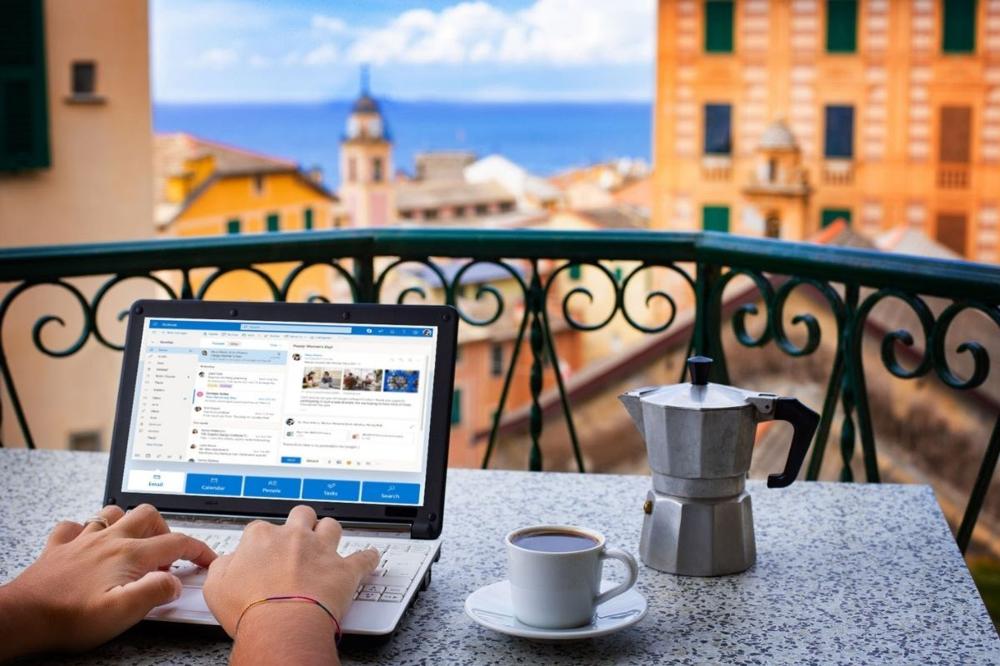
Italy's Digital Nomad Visa is now operational: the implementing decree was published in the Gazzetta Ufficiale on 2 March 2026, and consulates began accepting applications from 18 March 2026. This guide explains who qualifies, what to prepare, and how to file from abroad.
Last updated: May 14, 2026
What the Italy Digital Nomad Visa Actually Is
The visa is a national long-stay (Type D) entry permit authorized under Article 27-quater of Legislative Decree 286/1998. Its legal foundation is the Inter-ministerial Decree of 29 February 2024 (in force since 5 April 2024), with the operational guidelines finalized in the March 2026 implementing decree signed jointly by the Ministers of the Interior, Labour, and Foreign Affairs.
It covers two distinct profiles:
- Digital nomads: self-employed freelancers and independent specialists who work remotely using technology.
- Remote workers: employees of a foreign company (or contractors of one) working remotely from Italy.
Both groups must qualify as "highly specialized" workers. This is the key gatekeeping concept, and it eliminates a large share of casual remote workers from eligibility.
Two features make this route attractive compared with other Italian work visas:
- It sits outside the annual decreto flussi quotas.
- It requires no Nulla Osta (the work authorization certificate that bottlenecks most employment-based visas).
Who Qualifies in 2026
The Consulate General of Italy in London and other consulates spell out the highly qualified threshold. You must meet at least one of:
- A Bachelor's degree from a minimum 3-year program, or
- 5 years of relevant professional experience, or
- 3 years of relevant experience within the past 7 years (only for ICT managers and specialists), or
- A qualification in a regulated profession.
On top of the qualification test, applicants must show:
- At least 6 months of prior remote work experience in the same field.
- Minimum income: Italian law sets the floor at three times the threshold for healthcare cost exemption. The Consulate General in New York has cited €24,789/year in its published guidance. Market practice in 2026 has aligned around roughly €28,000 gross per year (about €2,333/month) from foreign sources. Confirm the figure with your competent consulate before filing.
- Income source restriction: only earnings from the work you will actually perform in Italy count. Passive income (Social Security, rental income, dividends, capital gains) is explicitly excluded.
- Health insurance valid in Italy with minimum coverage of €30,000 (around US$50,000), covering medical treatment, hospitalization, and repatriation, for the full duration of stay.
- Proof of accommodation in Italy: a rental contract, lease, or property deed in the applicant's name. Without it, the application is denied. A hotel booking is not sufficient.
- A clean criminal record for the previous 5 years (no convictions for offenses listed in Articles 380 and 381 of the Italian Code of Criminal Procedure).
- A passport valid at least 3 months beyond your intended return date, with at least 2 blank pages.
Document Checklist
Document requirements are set centrally but each consulate publishes its own list with small variations. Expect to assemble the following before booking your appointment:
- Long-stay visa application form (Type D), signed.
- Recent passport-size photo (biometric standard).
- Passport plus a copy of the photo page.
- Proof of highly qualified status: degree certificate (with apostille and sworn Italian translation where required) or detailed employment letters covering the qualifying years.
- Evidence of at least 6 months of prior remote work in your field.
- For remote workers: employment contract with a non-Italian employer authorizing remote work from Italy, plus a statement from the employer confirming it has no criminal convictions linked to facilitating illegal immigration in the previous 5 years.
- For digital nomads (self-employed): client contracts, business registration documents, recent invoices, and tax returns.
- Proof of income meeting the threshold (bank statements, tax returns, pay slips).
- Health insurance policy with €30,000 minimum coverage, valid in Italy.
- Proof of accommodation in Italy (rental contract, lease, or deed).
- Criminal record certificate from your country of residence (and any country where you lived in the past 5 years), apostilled and translated.
- Proof of payment of the visa fee.
Documents issued outside Italy generally need an apostille (for Hague Convention countries) or consular legalization, plus a sworn Italian translation. Build at least 4-6 weeks into your timeline for this paperwork alone.
How to Apply From Abroad: Step by Step
The process runs through the Italian consulate with jurisdiction over your legal residence. You cannot pick a consulate at random.
- Identify your competent consulate. Use the Italian Ministry of Foreign Affairs website to confirm which consulate covers your address.
- Secure accommodation in Italy first. Because a signed lease or deed is required at submission, this typically means signing a rental contract remotely or through a representative. Many applicants use a 12-month lease aligned with the visa duration.
- Buy compliant health insurance. The €30,000 coverage minimum must be explicit in the policy wording, with Italy listed as a covered territory.
- Assemble and translate documents. Apostille first, then sworn translation. Order matters.
- Register on Prenot@mi. Create an account at https://prenotami.esteri.it/ and book the Digital Nomad / Remote Worker Visa appointment slot. Demand has been heavy since the March 2026 launch; in major cities (New York, London, Los Angeles), appointments can be weeks or months out.
- Attend the in-person appointment. Since 11 January 2025, biometrics (fingerprints) are mandatory for all national visa applicants, including digital nomads. Bring originals and copies of every document.
- Pay the visa fee. The national long-stay visa fee is approximately €116, paid in local currency at the consulate's published quarterly exchange rate. Fees adjust every 3 months (January 1, April 1, July 1, October 1). Check your specific consulate's site (for example, consnewyork.esteri.it or conslondra.esteri.it) the week of your appointment.
- Wait for the decision. Processing times are addressed in the next section.
- Enter Italy and apply for the Permesso di Soggiorno. Within 8 working days of arrival, you must file for the residence permit at the local Questura (police headquarters), using the Poste Italiane "kit" available at designated post offices. The permit is what actually authorizes you to live and work in Italy beyond the visa's entry validity.
Fees and Processing Times
Item | Amount / Duration (2026) |
|---|---|
National long-stay visa fee | ~€116 (paid in local currency; adjusts quarterly) |
Processing time, self-employed digital nomads | Up to 120 days (per Consulate London, Consulate Houston) |
Processing time, remote employees | Up to 30 days (per Consulate Houston) |
Residence permit (Permesso di Soggiorno) electronic fee + marca da bollo | Confirm current figures with Ministero dell'Interno or Poste Italiane |
Initial residence permit validity | Up to 1 year |
Renewable | Yes, annually, if requirements still met |
The 120-day window for self-employed applicants is not a target. The Consulate General in London states explicitly that it may take up to 120 days "without exceptions." Plan your relocation date with that ceiling in mind, not the floor.
Family Members
Digital nomad visa holders may bring close family under Italy's family reunification rules:
- Eligible: a spouse and children under 18.
- Not eligible under this visa: adult children over 18 and dependent parents, even if financially dependent.
Family members receive permits tied to the principal applicant's status and renew on the same cycle.
Taxes: What Actually Happens After 183 Days
A point most applicants underestimate. Italian tax residency triggers automatically after 183 days of physical presence in a calendar year, after which your worldwide income becomes taxable in Italy. You will need an Italian tax code (codice fiscale) and, in most cases, will file an annual return.
A common misunderstanding: the Digital Nomad Visa does not automatically grant access to Italy's 50% inbound-worker ("impatriate") tax regime. That benefit requires a separate application and has its own eligibility tests. If favorable tax treatment is part of your decision to move, speak to an Italian commercialista (chartered accountant) before you arrive, not after.
Double taxation treaties between Italy and your home country can reduce or eliminate duplicate liability, but they do not exempt you from filing.
Common Pitfalls
- Counting passive income. Pensions, rental income, and dividends do not qualify, no matter how large. Only income from the work you will perform in Italy counts.
- Booking an Airbnb instead of signing a lease. Short-term bookings are not accepted as proof of accommodation. You need a registered rental contract, lease, or deed.
- Underestimating the qualification proof. A claim of "5 years of experience" needs supporting documents: employer letters on letterhead, contracts, tax filings. A LinkedIn export is not enough.
- Health insurance that excludes Italy or has a low cap. Travel medical policies often cap at €15,000-€20,000. You need €30,000 minimum, and Italy must be explicitly covered.
- Forgetting the 8-working-day Questura deadline. Missing this window can void your residence permit application and force a restart.
- Assuming Schengen short-stay rules apply. The digital nomad visa is a national, long-stay visa. Time spent in Italy on this permit does not count against the 90/180 Schengen tourist allowance, but travel to other Schengen states is still subject to their rules.
- Choosing the wrong consulate. Applying outside your jurisdiction will get the file rejected at intake.
FAQs
Can I apply from inside Italy on a tourist stay?
No. The visa must be applied for from the Italian consulate covering your legal residence abroad. Entering as a tourist and converting is not permitted.
How long is the initial visa valid?
The entry visa allows you to enter Italy and apply for a residence permit of up to 1 year. The permit, not the visa, governs your actual stay.
Can I renew indefinitely?
The Permesso di Soggiorno is renewable annually as long as you continue to meet the income, insurance, accommodation, and work requirements.
Does this lead to permanent residency or citizenship?
Yes, on standard Italian timelines. You can apply for permanent residency after 5 years of continuous legal residence, and Italian citizenship by naturalization after 10 years.
Can I switch employers or clients during the year?
Yes, but the new work must still meet the highly qualified threshold and income floor. Major changes should be documented for the renewal.
Do I need to speak Italian?
No Italian language requirement applies to the visa itself. For long-term residency and citizenship applications later, language certification (B1 level) is required.
Is the income threshold gross or net?
Gross, before tax, evidenced by tax returns, contracts, and bank statements.
Can I use a co-working space address for the accommodation requirement?
No. The accommodation proof must be a residential address (lease, rental contract, or deed) in your name.
Other Routes Worth Comparing
If you fall short on the qualification or income tests, two alternatives within Italy and nearby may fit better. Retirees and applicants with substantial passive income often look at the Italy Elective Residence Visa alternative, which is built around passive income (precisely what the digital nomad route excludes). Cross-border comparisons are also worth running: the Spain Digital Nomad Visa comparison has different thresholds and a streamlined online process, and the Germany Freelancer Visa for remote workers suits people with German clients or a portfolio practice.
Moving to Italy means handling landlords, the Questura, your commercialista, and daily life largely in Italian, so building working Italian before you arrive pays off quickly. If that's on your list, try Migaku to learn from the Italian shows, news, and books you'd actually consume anyway.