Shadowing for Language Learners: A 2026 Practical Guide
最終更新日: 2026年5月4日
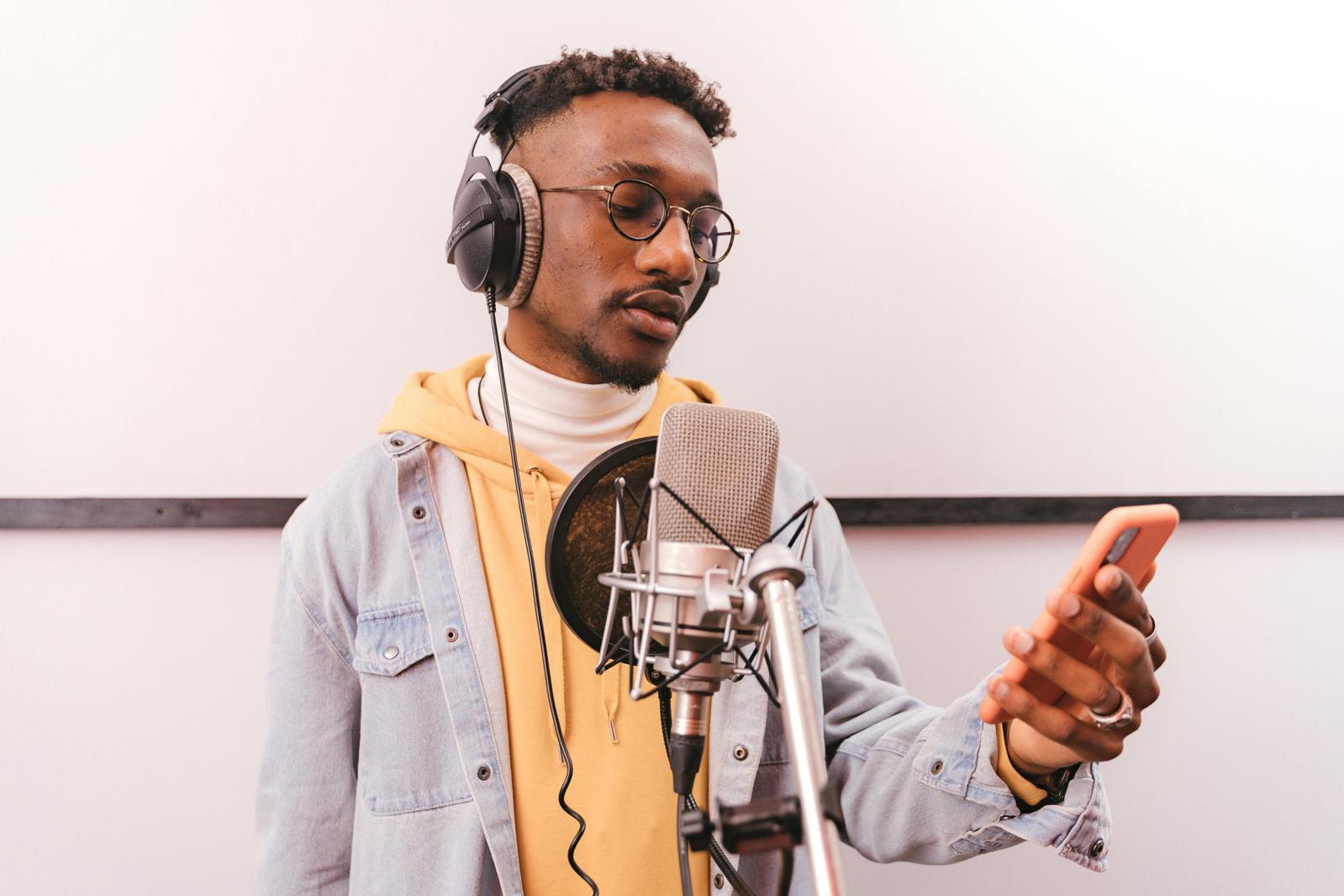
You've heard that shadowing fixes your accent, your listening, and your speaking fluency all at once. Then you tried it, parroted a podcast for five minutes, felt ridiculous, and quit. The problem isn't shadowing. It's that most advice skips the part where you learn how to do it, what to shadow, and how it fits into the rest of your study. This guide walks through the technique as it's actually studied in second-language research, then turns it into sessions you can run this week.
What Shadowing Actually Is
Shadowing means listening to native audio and repeating it out loud with minimal delay, ideally a beat or two behind the speaker, while the audio keeps playing. You are not pausing. You are not translating. You are running your mouth as a tracking system for someone else's voice.
The technique was formalized for language learning by Japanese researcher Katsuhiko Tamai in 1992, and later developed extensively by Shuhei Kadota, whose 2007 book Shadowing as a Training Method for Improving EFL Learners' Listening and Speaking Skills recommends three to five hours of shadowing per week for measurable fluency gains. Before that, shadowing lived in two other worlds: psycholinguistics, where it was used to test selective attention, and interpreter training, where trainees used it to build the ability to listen and speak simultaneously. Sylvie Lambert's 1992 work in Meta: Translators' Journal is one of the foundational pieces from the interpreting side.
Outside academia, the polyglot Alexander Arguelles is the person most responsible for introducing shadowing to general language learners, partly through his walking-while-shadowing demonstrations on YouTube. His version is more theatrical than the classroom version, but the mechanics are the same: audio in, voice out, almost simultaneously.
Why It Works (The Boring Cognitive Bit)
Shadowing's theoretical home is Alan Baddeley's working memory model, specifically the phonological loop, the subsystem responsible for holding and rehearsing sound. When you shadow, you are forcing the phonological loop to hold a chunk of foreign speech long enough to reproduce it while the next chunk arrives. Over time this stretches your ability to process the language's sound patterns in real time, which is exactly the bottleneck behind "I understood every word but couldn't follow the sentence."
There is decent empirical support for the specific gains. Yo Hamada's 2016 study Shadowing: Who benefits and how?, published in Language Teaching Research, found that lower-intermediate learners made significant listening gains from sessions of ten to fifteen minutes, three to four times a week, over six weeks. Foote and McDonough's 2017 study in the Journal of Second Language Pronunciation found measurable pronunciation improvements from mobile-assisted shadowing, meaning you do not need a lab or a tutor to get results. A phone and headphones are enough.
There's also a shape to the research worth noting. Shadowing helps listening and pronunciation fairly reliably. Effects on raw vocabulary acquisition are weaker, because shadowing is about processing form, not about encoding meaning. That matters for how you combine it with the rest of your study, which we'll get to.
The Three Main Types
A September 2025 paper by Zafarova M.F. in the International Journal of Pedagogics splits shadowing into three working categories. You should know all three because they fix different problems.
- Simultaneous shadowing. You repeat as close to instantly as possible, usually a syllable or two behind. This is the hardest version and the one interpreters train. It targets processing speed more than comprehension. Use it when you already roughly understand the audio and want to sharpen your reflexes.
- Delayed shadowing. You wait one to three seconds before repeating, holding the phrase in working memory first. This is more forgiving and leans harder on the phonological loop. It's the best default for most learners because it forces you to actually hear the chunk before producing it.
- Prosodic shadowing. You deliberately mimic rhythm, pitch, and stress more than exact phonemes. You exaggerate the music of the sentence. This is the version that fixes the "textbook accent" problem, where every word is technically correct but the melody is wrong.
Tim Murphey, in a 2001 paper in Language Teaching Research, also described conversational shadowing, where one partner echoes parts of what the other says during a live conversation. It's useful, but it's a classroom tool, not a solo practice method.
How to Actually Run a Session
Here is a session template that respects the research. Fifteen minutes, four days a week, for six weeks is the dosage Hamada's study used for lower-intermediate learners. You can scale up toward Kadota's three to five hours per week once you're comfortable.
- Pick a 60 to 90 second clip of native audio. Dialogue works better than monologue for most learners because the prosody varies more. For Japanese, a clip from a Nihongo con Teppei episode or a scene from a slice-of-life drama like Terrace House is a good length. For Spanish, a minute of Radio Ambulante or a scene from La Casa de Papel. For English, a short clip from a podcast like 99% Invisible.
- Listen once without doing anything. Just hear the shape of it. What's the mood, who's speaking, roughly what is happening.
- Read the transcript once, silently. Look up anything you need to. This is the step where meaning gets encoded. Shadowing is bad at teaching vocabulary cold, so do the lookup now.
- Shadow with the transcript, delayed style. Two to three passes. Keep the text visible. You are allowed to stumble. The goal is coverage, not perfection.
- Shadow without the transcript. Two to three passes. Your mouth will drop words. That's fine. Notice which sounds you can't catch and flag them.
- Prosodic pass. One final pass where you exaggerate the melody and stress, almost caricaturing the speaker. This is the pass that upgrades your accent.
That whole loop is roughly fifteen minutes on a 90-second clip. If it takes you longer, your clip is too long or too hard. Shorten it.
What to Shadow (And What to Skip)
Material choice is where most shadowing practice goes wrong. A clip is shadowable if you can already understand roughly 80 to 90 percent of it after one read of the transcript. Below that threshold you're just producing noise, which trains nothing.
- Good starter material. Graded podcasts aimed at learners (News in Slow Spanish, Nihongo con Teppei, Inner French), slice-of-life drama scenes, narrated children's books with audio, dubbed animation where the mouth movements are slower than live speech.
- Good intermediate material. Scripted TV, audiobook chapters where you have the text, interview podcasts where the host speaks clearly (think The Ezra Klein Show for English, Hoy Hablamos for Spanish).
- Bad material for shadowing. Fast rap, overlapping reality TV arguments, unscripted vlogs with heavy filler, anything where the transcript is auto-generated and wrong. You cannot shadow what you cannot first hear clearly.
The deeper point is that shadowing works best as a second pass on content you were already going to consume for immersion. If you're already watching a Japanese drama with hover lookups, pulling a favorite 60-second scene back out for shadowing costs you almost nothing and compounds with the comprehension work you already did. For a fuller picture of how to structure the immersion side, see how to actually learn a language, and for Japanese specifically, learning Japanese: what actually works.
Common Mistakes That Kill Results
A few predictable traps, with fixes:
- Shadowing material that's too hard. If the transcript has ten unknown words per sentence, you're not shadowing, you're chanting. Drop the difficulty. Shadowing is not where you push comprehension.
- Whispering or mumbling. The phonological loop engages more strongly when you actually produce sound. You need to be audibly speaking, not mouthing. Find a room where you can be loud.
- Only ever doing simultaneous shadowing. Most learners copy Arguelles's walking simultaneous style because it looks impressive on video. Delayed shadowing is more useful for most of your weeks. Mix the three types.
- No feedback loop. Record yourself on your phone once a week and play it back against the original. This is the single highest-leverage habit in shadowing practice and almost nobody does it. You will hear your own vowel drift instantly.
- Treating it as your whole study. Shadowing doesn't teach vocabulary efficiently and doesn't build grammar intuition on its own. It sits next to reading, listening, and SRS review. Treat it as the pronunciation and processing-speed layer, not the foundation. The relative difficulty of building these layers depends heavily on your target language, which is covered in what makes a language easy.
Fitting Shadowing Into a Real Week
A workable intermediate schedule looks like this. Twenty to thirty minutes a day of native-content immersion (video, podcast, or reading with lookups), ten to twenty minutes of SRS review, and a fifteen-minute shadowing block four days a week using clips pulled from the immersion you already did. One of those four days, record yourself and compare.
That gives you roughly an hour a day, with shadowing occupying about a quarter of it. It also keeps shadowing tied to content you actually care about, which is the single biggest predictor of whether you'll still be doing this in three months. Shadowing random textbook audio is sustainable for about two weeks. Shadowing a line from a show you're genuinely watching is sustainable for years.
The tightest version of this loop is when the lookup, the flashcard, and the audio clip all live in the same place, so pulling a scene back out for shadowing takes seconds instead of a full re-hunt. That's what how Migaku works is built around: the native content stays central, and the study tools attach to it instead of replacing it. Shadow the scenes you already loved watching, and the six weeks Hamada's learners needed will pass before you notice.