Germany's Ausbildung Visa: How Foreigners Can Train in a Trade
Última actualización: 27 de mayo de 2026
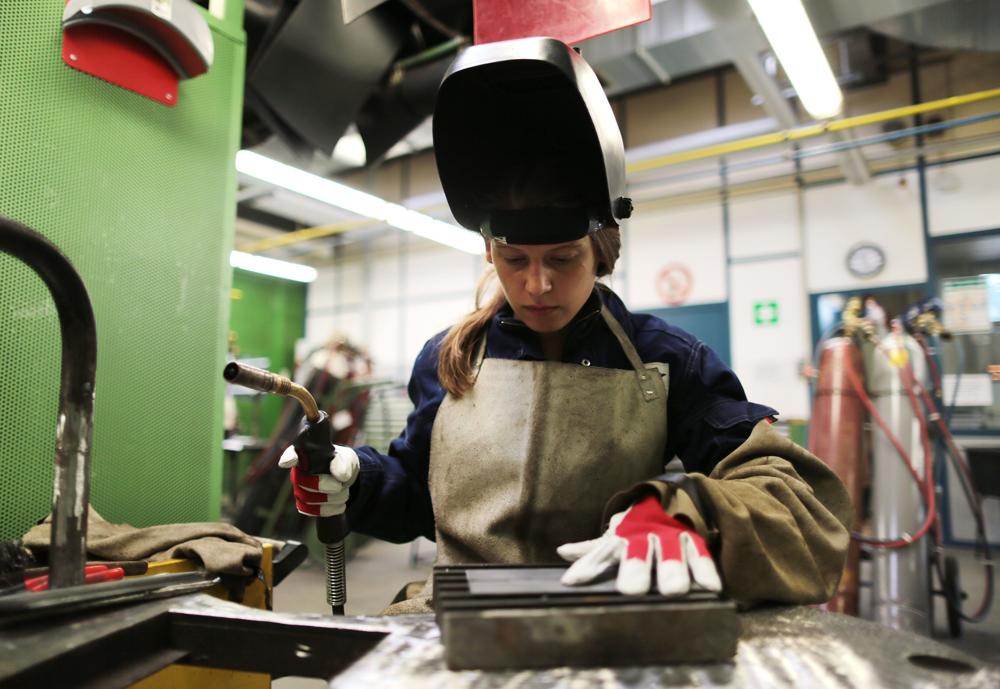
Germany's Ausbildung visa lets foreigners move to Germany to complete a paid, state-recognized vocational training program in a skilled trade, typically lasting two to three and a half years, with a clear path to long-term work and residency afterward. It is one of the most accessible legal routes into the German labor market for people without a university degree.
Last updated: May 27, 2026
What the Ausbildung Visa Actually Is
The legal basis for the vocational training residence permit is Section 16a of the German Residence Act (Aufenthaltsgesetz, AufenthG), titled Aufenthaltserlaubnis zum Zweck der Ausbildung. It covers two main scenarios:
- Qualified vocational training (qualifizierte Berufsausbildung): a state-recognized program of at least two years, usually in the dual system where you split time between a company (Betrieb) and a vocational school (Berufsschule).
- Non-qualified or assistant training: shorter or auxiliary programs, with lower language requirements but fewer post-training rights.
Germany currently lists more than 320 recognized training occupations (Ausbildungsberufe) on the Federal Institute for Vocational Education and Training (BIBB) database. They span industrial mechanics, electronics, IT, hospitality, logistics, healthcare, baking, carpentry, automotive trades, and dozens more. Around 213,000 foreigners are already training in Germany under this system, making up roughly 13.2% of all apprentices, and there are over 150,000 unfilled Ausbildung positions every year. The shortage is the main reason the route is open and actively encouraged.
If you do not yet have a training contract, there is a separate option: the training-place-seeker visa under Section 17 AufenthG. It is valid for up to nine months, requires you to be under 35, and since March 2024 allows you to work up to 20 hours per week while you look for a placement.
Who Is Eligible
The core eligibility points for the §16a visa are:
- A signed training contract (Ausbildungsvertrag) with a German employer for a recognized program, or confirmed admission to a state-recognized school-based vocational program (schulische Ausbildung).
- Recognized German language skills, normally B1 (CEFR) for qualified training. Healthcare and nursing programs usually require B2. For non-qualified/assistant training under §16a Paragraph 3, A2 may be accepted, in line with Federal Employment Agency instructions updated in June 2024.
- Proof that you can support yourself financially during training.
- For in-company (dual) training, approval from the Federal Employment Agency (Bundesagentur für Arbeit) under §39 AufenthG. The employer's application to the local Immigration Office (Ausländerbehörde) usually triggers this.
- Valid health insurance and a clean criminal record.
- Recognized school-leaving qualifications, with credentials assessed via the anabin database where required.
There is no nationality restriction, but the practical experience varies. Non-EU applicants always need a visa from a German mission abroad before entering. EU/EEA and Swiss citizens do not need one at all.
Language Requirements in Detail
B1 is the working threshold for most qualified Ausbildungen. The certificate must come from a recognized provider:
- Goethe-Institut
- telc
- ÖSD (Österreichisches Sprachdiplom)
- TestDaF
Some consulates will accept other certificates if the issuer is on their accepted list, but Goethe and telc are the safest. Healthcare employers usually insist on B2, and large hospital groups may require you to pass an additional Fachsprachprüfung (medical language exam) before you can start clinical work. Plan at least 9 to 12 months of intensive study to reach B1 from zero, and longer for B2.
Document Checklist
Bring everything in duplicate, with certified German translations where the consulate requires them.
- Completed national (D) visa application form
- Valid passport with at least two blank pages
- Two biometric passport photos
- Signed Ausbildungsvertrag from your German employer, or admission letter from a vocational school
- Federal Employment Agency approval (often submitted by the employer)
- Recognized German language certificate (B1, or B2 for healthcare)
- School-leaving certificates and any prior qualifications, translated and apostilled
- anabin recognition print-out, where applicable
- Proof of financial means (see next section)
- Health insurance valid from your arrival date
- CV in tabular German format (Lebenslauf)
- Motivation letter explaining why you chose this profession and this employer
- Proof of accommodation in Germany, where available
- Visa fee payment receipt
Consulates publish their own annexes. Always cross-check the checklist on the website of the specific German Embassy or Consulate where you will apply.
Fees, Financial Proof, and Processing Time
Item | 2026 amount |
|---|---|
National (D) visa fee, adult | €75 |
National (D) visa fee, minor under 18 | €37.50 |
Blocked account, school-based vocational training | €992/month, €11,904/year |
Blocked account, training-place-seeker (§17), 2023 reference | €1,027/month (verify current figure) |
Chancenkarte blocked deposit (alternative route) | €13,092 (€1,091 × 12) |
Typical processing time | 2 to 3 months |
If your Ausbildung pays a salary, the salary itself usually counts as proof of financial means and you do not need a blocked account. School-based (unpaid) vocational training, such as some healthcare and design programs, requires a Sperrkonto. The blocked-account figure is tied to the BAföG student support rate and is set by the Federal Foreign Office; confirm the current monthly minimum on the auswaertiges-amt.de visa pages before transferring funds.
You can submit your application through the Federal Foreign Office's online Consular Services Portal (Auslandsportal) and then attend a biometrics appointment at the consulate. Where the employer is willing, ask them to start an accelerated visa procedure (beschleunigtes Visumverfahren) under §81a AufenthG via the local Ausländerbehörde in Germany. This can cut processing time noticeably, although it costs the employer an additional fee.
What You Will Earn During Training
Germany sets a statutory minimum apprentice wage (Mindestausbildungsvergütung), updated yearly. For trainees starting in 2026, the new minimums published in the Bundesgesetzblatt on 10 October 2025 are:
- Year 1: €724/month gross (a 6.2% increase from €682 in 2025)
- Year 2: +18% on the first-year rate
- Year 3: +35%
- Year 4: +40%
These floors apply where no collective agreement (Tarifvertrag) exists. In tariff-bound companies, the average Ausbildungsvergütung was around €1,133 gross per month across all years in 2024, and many trades in metalworking, banking, and construction pay considerably more. Note that the statutory hourly minimum wage of €13.90 (as of 1 January 2026) applies to side jobs and regular employment, but not to apprentices, who fall under the Vocational Training Act (Berufsbildungsgesetz, BBiG).
Under a §16a permit, you may take an additional job of up to 20 hours per week in an unrelated field, useful for boosting income in expensive cities.
Step-by-Step Application Process
- Reach B1 German (or B2 for healthcare) and get a recognized certificate. This is the single biggest gatekeeper.
- Find a training position. Search on the Federal Employment Agency's portal (arbeitsagentur.de), Make it in Germany, IHK Lehrstellenbörse, and the Handwerkskammer apprenticeship boards. Apply directly to companies in your target city.
- Sign the Ausbildungsvertrag. The employer registers it with the relevant Chamber (IHK or HWK).
- Gather documents and book a national visa appointment at the German mission in your country of residence.
- Submit your application through the Auslandsportal and attend the biometrics appointment with originals and copies.
- Wait 2 to 3 months for processing. The consulate consults the Ausländerbehörde in the German city where you will live, which in turn consults the Federal Employment Agency.
- Enter Germany with your D visa, which is typically valid for 90 days.
- Register your address (Anmeldung) at the local Bürgeramt within two weeks of moving in.
- Open a German bank account and arrange statutory health insurance (you will normally be enrolled automatically through your employer).
- Apply for the residence permit (Aufenthaltstitel) at the Ausländerbehörde before your D visa expires. It is normally issued for the full duration of the Ausbildung.
Life After the Ausbildung
Once you finish and pass the final exam (Abschlussprüfung) administered by the IHK or HWK, you are entitled to an 18-month residence permit to look for qualified employment matching your new qualification. During that time, you can work in any job. Once you have a qualified offer, you can switch to a Skilled Worker visa under §18a.
After completing the Ausbildung plus two years of qualified employment, you become eligible to apply for a Niederlassungserlaubnis, Germany's permanent settlement permit. This is significantly faster than the eight years required for naturalization in most cases, and is one of the main long-term attractions of the route. For a deeper look at the different settlement tracks, see our guide to Niederlassungserlaubnis permanent residency paths.
Common Pitfalls
- Underestimating the language barrier. A B1 certificate is the legal minimum, but Berufsschule classes, technical vocabulary, and customer interaction often demand much more. Many trainees who scrape B1 struggle in their first semester.
- Choosing an unrecognized program. Only state-recognized Ausbildungsberufe listed by BIBB qualify under §16a. Private "diploma" schools without IHK or HWK recognition will not get you the visa.
- Submitting incomplete financial proof. If your Ausbildung is unpaid (school-based), the Sperrkonto must be funded before the consulate decides.
- Ignoring the Federal Employment Agency step. For dual training, the BA's consent is mandatory. Employers sometimes forget to file, which stalls the whole case.
- Letting your training collapse silently. If you lose your placement through no fault of your own (e.g., employer insolvency), you have six months on your existing permit to find a new training position. Notify the Ausländerbehörde immediately; do not wait.
- Forgetting health insurance from day one. Coverage must be active when you enter Germany.
- Translations and apostilles. Many consulates reject documents translated by non-sworn translators. Use a vereidigter Übersetzer or the consulate's accepted list.
Frequently Asked Questions
Can I bring my spouse and children?
Family reunification is possible under §30 and §32 AufenthG, but you must demonstrate sufficient income and housing. With a first-year apprentice wage near €724, this is genuinely difficult in the early years and many families wait until after the trainee qualifies and starts skilled employment.
Do I need a job offer before applying for the visa?
For the §16a Ausbildung visa, yes, you need a signed training contract. If you do not have one yet, apply for the §17 training-place-seeker visa instead (max nine months, must be under 35).
Is there an age limit for the Ausbildung visa itself?
No statutory upper age limit applies to §16a. The age cap of 35 applies only to the §17 training-place-seeker visa. In practice, some employers prefer younger candidates, but adult career-changers are accepted, especially in healthcare and the trades.
Does my degree from home count?
It does not replace the Ausbildung, but it can help with consular credibility and sometimes shortens the program by a year if the Chamber recognizes prior learning.
Can I switch programs or employers during the Ausbildung?
Yes, but you must report changes to the Ausländerbehörde, and a new BA approval may be needed. Do not start a new contract before clearing it.
What about transport and daily life?
Trainees qualify for student-style transit deals in many regions. The nationwide Deutschlandticket transit pass is a popular option for getting between your Betrieb, Berufsschule, and home.
Are there scholarships?
Most direct support comes from employers and from BAB (Berufsausbildungsbeihilfe), a needs-based subsidy. Academic scholarship programs like those covered in our DAAD scholarships in Germany guide are aimed at university students, not vocational trainees, but the page is useful context if you are weighing both paths.
Will the visa let me travel within the Schengen area?
Yes. Once your German residence permit is issued, you can travel to other Schengen countries for up to 90 days in any 180-day period.
If you are heading to Germany for an Ausbildung, getting your German solid before you arrive will determine how smoothly the first year goes. Try Migaku to learn German from the kinds of shows, news, and YouTube videos you already enjoy.