UR Housing in Japan: How to Apply Without a Guarantor
Última actualización: 15 de mayo de 2026
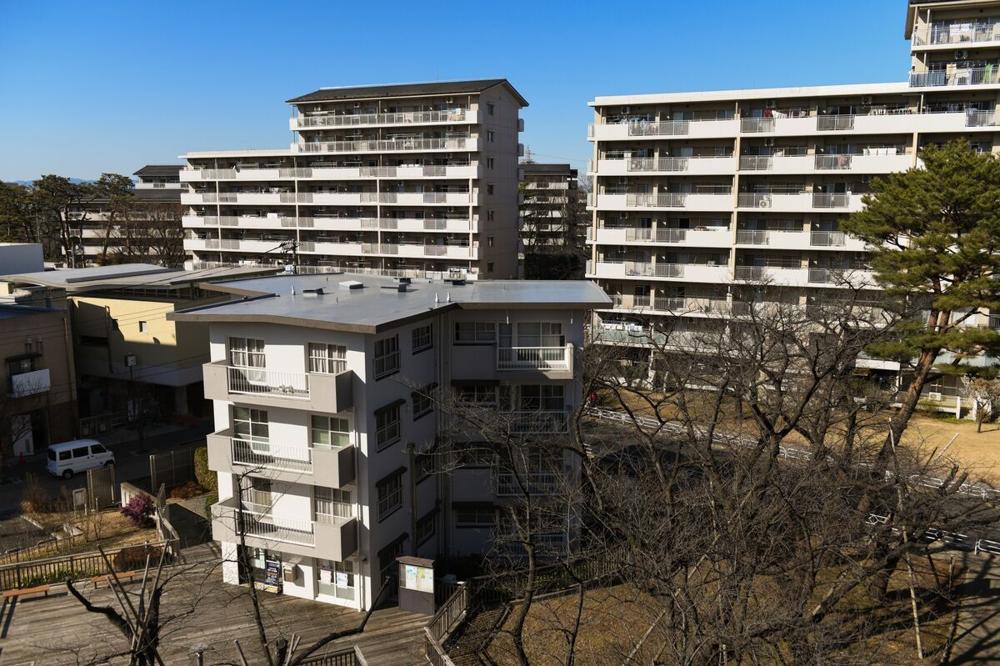
UR Housing is Japanese public rental housing managed by the Urban Renaissance Agency (都市再生機構), and the main reason expats seek it out is simple: you can sign a lease with no guarantor, no key money, no agent fee, and no renewal fee. This guide walks you through who qualifies, what documents you need, and how to actually get keys in hand.
Last updated: May 15, 2026
What UR Housing Is and Why Expats Want It
UR (Urban Renaissance Agency, 独立行政法人都市再生機構) is a semi-public agency that manages roughly 740,000 rental units across Japan. Over half of the inventory (about 52%) sits in the greater Tokyo region, covering Tokyo, Kanagawa, Chiba, Saitama, and Ibaraki, though UR also operates in Kansai, Chubu, and other regions.
The practical advantages for a foreign tenant are significant:
- No guarantor (連帯保証人) required
- No key money (礼金)
- No agent or brokerage fee (仲介手数料)
- No contract renewal fee (更新料)
- Standard, transparent contracts in plain Japanese
- Foreign residents are explicitly eligible
For anyone who has tried renting on the private market in Japan and been asked for a Japanese guarantor, a guarantor company fee, and one to two months of key money on top of deposit, UR removes most of the friction.
Who Can Apply: Eligibility Rules
UR uses an income-based screening rather than a guarantor system. There are two questions to clear: residency status and income.
Residency status
Foreign applicants must hold a valid residence card (在留カード) with a visa term of at least one year. Short-term and tourist visas are not accepted. UR's published categories of eligible foreign residents include:
- Permanent Residents and Special Permanent Residents
- Holders of a mid- to long-term status of residence with a valid residence card, who can fully understand the rental contract
- Diplomat and Official status holders
Working-holiday visa holders are a special case. They can sign a UR contract, but only if they pay one full year of rent up front.
Income thresholds (2025–2026 figures)
UR scales the income test to the rent of the unit you want. The standard tiers used by UR sales agencies are:
Monthly rent | Required monthly income |
|---|---|
Below ¥62,500 | At least 4× the rent |
¥62,500 to ¥249,999 | At least ¥250,000 |
¥250,000 and above | At least ¥400,000 |
Some regional UR sales offices (for example Chubu) express the same idea in annual terms: for rent of ¥62,500/month or higher, annual income of at least ¥3,000,000 for an individual or ¥4,000,000 for a family.
If you don't meet the income test
UR offers two alternative qualification routes that are particularly useful for freelancers, new arrivals without a Japanese tax record, and remote workers paid abroad:
- Pay one full year of rent plus the deposit in advance, or
- Hold yen savings in a Japanese bank account equal to 100× the monthly rent (so for a ¥100,000/month apartment, ¥10,000,000 in savings).
These alternatives are written into UR's own FAQ. Bring documented proof (bank passbook, balance certificate from your bank, or pre-payment receipt) when you apply.
Document Checklist
Bring originals plus copies. UR sales offices will photocopy what they need on the spot.
- Residence card (在留カード), front and back
- Passport
- My Number card or notification slip (recommended)
- Health insurance card
- Tax certificate (課税証明書 / kazei shōmeisho) issued by your ward office, showing annual income (typically the prior year's figure must exceed ¥3,000,000 to qualify on income alone)
- Withholding tax slip (源泉徴収票 / gensen chōshūhyō) from your employer for the previous year, or
- For the self-employed: a copy of your filed final tax return (確定申告書 / kakutei shinkokusho)
- Employment certificate (在職証明書) if requested
- Hanko (personal seal); a signature is sometimes accepted but a hanko is the norm
- Japanese bank account details for rent auto-debit (口座振替)
- If using the savings route: a recent balance certificate (残高証明書) from a Japanese bank
- If using the prepayment route: cleared funds ready to transfer at contract signing
If you have just arrived in Japan and have no Japanese tax record yet, the savings or prepayment alternatives are the cleanest path. Your home-country tax records are not used.
How to Apply, Step by Step
UR applications run on a first-come, first-served basis. There is no lottery and no waiting list, which means availability changes daily.
1. Search for a vacant unit
The official UR rental site is https://www.ur-net.go.jp/chintai/. The interface is primarily in Japanese, though some pages have English. Filter by prefecture, station, rent range, and floor plan. Listings marked 募集中 (boshūchū) are accepting applications.
Alternatively, walk into a UR sales office (UR営業センター). Major offices are in Shinjuku, Tokyo Station, Yokohama, Osaka, Nagoya, Fukuoka, and elsewhere. Some regional offices operate 9:30 to 12:00 and 13:00 to 17:00 and are closed Wednesdays, Sundays, and national holidays, so check hours before traveling.
2. View the unit
UR will hand you a viewing slip (案内票) and you can usually tour vacant units the same day or within a few days. Many UR properties are unfurnished, sometimes unrenovated, and almost always come without appliances. Verify whether air conditioning, lighting fixtures, and a gas range are included; for older complexes (団地) this varies unit by unit.
3. Reserve (仮申込)
If you want the unit, return to the office the same day to place a hold. UR will typically hold a unit for a short window (a few days) while you gather documents.
4. Submit the formal application
Bring the document checklist above. UR staff will verify your income against the tier table and confirm your residency status. If you qualify under the savings or prepayment route, that decision is made here.
5. Sign the contract and pay
At signing you typically pay:
- The security deposit (敷金): up to 3 months of basic rent. UR's published rule is that it never demands more than 3 months. Many applicants pay 2 months plus pro-rated first-month rent.
- Pro-rated first month's rent and common service fees (共益費)
- Fire insurance (sometimes optional, sometimes packaged)
There is no key money, no agent fee, and no guarantor company fee. UR's standard model also does not charge a renewal fee when your contract rolls over.
6. Move in
All listed household members must be able to move in within one month of the UR-designated move-in date. If you cannot, the contract can be canceled.
Fees, Deposits, and Processing Time
Item | Amount |
|---|---|
Key money (礼金) | None |
Agent fee (仲介手数料) | None |
Guarantor or guarantor-company fee | None |
Renewal fee (更新料) | None |
Security deposit (敷金) | Up to 3 months' basic rent |
First month rent | Pro-rated from move-in date |
Fire insurance | Varies, typically a small annual fee |
Processing time from document submission to keys can be as fast as 1 to 2 weeks if the unit is vacant and your paperwork is complete. The full search-to-move-in cycle is usually 2 to 4 weeks. There is no separate screening month as you might see with private listings.
Discount Programs Worth Knowing
UR runs several rent-reduction schemes that can meaningfully cut your monthly cost. They generally require a 3-year fixed-term lease (定期借家契約), meaning the contract ends after 3 years and is not automatically renewed.
- U35割 (Under-35 discount): If the contract holder is 35 or younger, rent is reduced by up to 20% (10% at some complexes) for a 3-year fixed term. Cohabitants are limited to a spouse (any age) or relatives aged 35 and under within specified kinship rules.
- そのママ割 / すくすく割 (child-rearing discount): Households raising a child under 18, including expecting parents at the time of application, receive a discount for 3 years under a fixed-term lease.
- 近居割 (Near-Residence Discount): A 5% rent reduction for up to 5 years when two related households live in the same complex or within a 2 km radius. Child-rearing households meeting income criteria can stack up to a 20% reduction.
- UR Light: A reduced monthly rent in exchange for a 3-year non-renewable fixed-term lease, available at selected properties.
- URでPonta: A loyalty program awarding 1 Ponta point per ¥500 of rent paid. New contracts signed since December 1, 2023 with a child under 18, or with a couple both under 40, earn triple points (3 per ¥500) for up to 60 months.
If you are under 35, under 40 as a couple, or have small children, ask the UR sales office directly which discount you stack with the unit you are viewing. The published rent on UR's website does not always reflect the discounted figure.
Common Pitfalls
- Assuming English service everywhere. Some UR sales offices in central Tokyo have English-speaking staff. Many regional offices do not. Bring a Japanese-speaking friend, or expect to handle the contract in Japanese. UR requires that you can fully understand the rental contract.
- Trying to apply on a tourist visa. This is the single most common rejection reason. Your residence card must show a term of at least 1 year.
- Counting overseas income. UR's income test relies on a Japanese tax certificate. Income earned abroad and untaxed in Japan does not count. Use the savings or prepayment alternative instead.
- Skipping the unit inspection. Older 団地 buildings can be 40+ years old. Confirm whether the unit has been renovated, whether there is a Western or Japanese-style toilet, whether the bath unit is modern, and whether you need to buy a gas range.
- Missing the 1-month move-in window. If you sign now but cannot leave your current place for 6 weeks, you may lose the unit. Time the application carefully.
- Overlooking common service fees (共益費). These are charged on top of rent and cover building maintenance. Factor them into your budget.
- Not budgeting for utilities setup. UR does not handle gas, electricity, water, or internet. You arrange those yourself after move-in.
FAQs
Do I really not need a guarantor?
Correct. UR does not require a personal guarantor or a guarantor company. The income test (or the savings/prepayment alternative) replaces the guarantor system.
Can I apply from abroad before I arrive in Japan?
Not directly. You need a residence card, which is issued at the port of entry after your visa is approved. You can research listings online from abroad, but the formal application happens in person at a UR sales office once you are in Japan. For visa preparation, see the Japan 2026 Visa Rules and Requirements overview and, if you are arriving as a student, the Japan Student Visa Financial Requirements breakdown.
Can a student apply?
Yes, if you hold a student visa of at least 1 year and can either show qualifying income (rare for students), pay one year of rent up front, or hold 100× the monthly rent in a Japanese bank account. Some universities arrange UR partnerships for international students; ask your international office.
What if my Japanese is weak?
UR will assess whether you can understand the contract. Bringing a bilingual friend or a paid interpreter is acceptable and common. If you are still settling in and want a head start on day-to-day Japanese, the Japan Travel Tips for 2026 guide covers practical ground for new arrivals.
Is rent paid in cash or by bank transfer?
Monthly rent is collected by automatic bank debit (口座振替) from a Japanese bank account. Set this up at contract signing.
Can I share a UR unit with a roommate?
UR has specific house-sharing programs at selected properties, but a standard contract is for the named tenant and registered cohabitants (usually family). Ask the sales office about the ハウスシェアリング制度 if you want to share with a non-family member.
What happens at the end of the contract?
A standard UR lease is open-ended and rolls over without a renewal fee. Fixed-term leases under discount programs (U35割, UR Light, etc.) end after 3 years and do not renew, though you can often apply for a new unit.
Where do I confirm the current official figures?
The authoritative source is the Urban Renaissance Agency itself at https://www.ur-net.go.jp/chintai/ and the eligibility page at https://www.ur-net.go.jp/chintai/rent/requirements/. For borderline income cases, contact your local UR sales office directly before applying.
Moving into UR housing is one of the most foreigner-friendly steps you can take in Japan, but contracts, ward office visits, and utility setup all happen in Japanese. If you want to build the Japanese to handle that with confidence, try Migaku to learn from the same shows, news, and websites you'll actually use in daily life here.