French Citizenship by Descent: Who Qualifies and How to Apply
最終更新日: 2026年5月23日
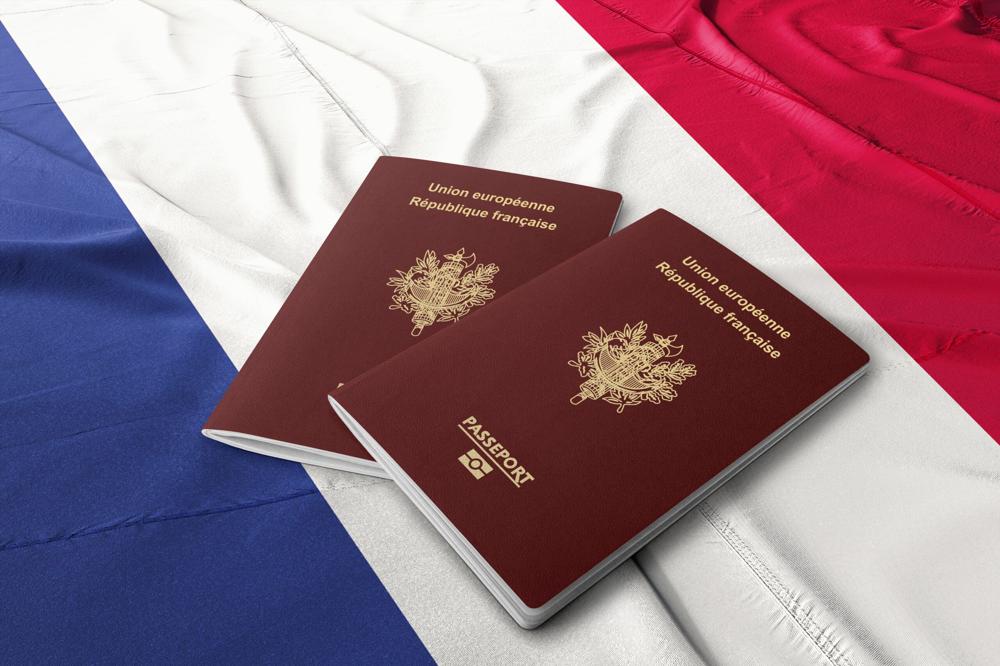
If at least one of your parents was French at the moment you were born, you are almost certainly French already, whether you were born in Paris, Pittsburgh, or Phnom Penh. French citizenship by descent (jus sanguinis) is not granted, it is recognized, and the application is really a request to have your existing nationality officially documented by a French court.
Last updated: May 23, 2026
Who qualifies for French citizenship by descent
France follows jus sanguinis: nationality passes through filiation, not place of birth. The core rule (still in force in 2026) is straightforward.
- At least one of your legal parents must have been French at the time of your birth.
- It does not matter where you were born.
- It does not matter whether the French parent was the mother or the father (modern equality applies, though older transmission rules can complicate cases before 1973).
- There is no language test, no residency requirement, no civic exam, and no income threshold for descent cases. The B2 French level and civic exam introduced on 1 January 2026 apply only to naturalization by decree and by marriage, not to filiation.
What about grandparents or great-grandparents? You are not automatically French just because a grandparent was. However, if the chain of transmission is intact (your French grandparent transmitted to your parent, who transmitted to you), you are French. The administrative challenge is documenting every link in that chain.
The 50-year rule (Article 30-3)
The single biggest trap in descent cases is Article 30-3 of the Civil Code, often called the "desuetude" or 50-year rule. If you and the ascendant from whom you claim French nationality have habitually resided outside France for more than 50 years, and none of you has exercised the "possession d'état de Français" (acting as a French national: holding a French passport, voting at a consulate, registering with consular authorities, doing military service, etc.), the right to have your nationality recognized is lost.
The Constitutional Council confirmed this rule in decision No. 2025-1130/1131/1132/1133 QPC of 11 April 2025, so it is not going away. Practically, this means third- and fourth-generation descendants whose family lost all official contact with France will struggle, while families that kept passports renewed or registered births at the consulate are usually safe.
Minors whose parent's nationality is confirmed by a judgment
The Cour de cassation (29 June 2022, n° 21-50.032) clarified that when a parent's French nationality is established by court judgment, minor children follow the parent's condition automatically. They do not need a separate Certificate of French Nationality.
The document you actually need: the CNF
For citizenship by descent, you do not file a "citizenship application" in the naturalization sense. You request a Certificat de nationalité française (CNF): an official court document stating that you are French and on what legal basis. With the CNF you can then request a French passport, register on the consular roll, transcribe your birth certificate into French civil registers, and exercise all rights of a French citizen.
Key facts about the CNF in 2026:
- The procedure is governed by Decree No. 2022-899 of 17 June 2022, in force since 1 September 2022, and clarified by the Circulaire of 9 January 2025.
- Applications use form Cerfa No. 16237.
- The CNF is free of charge.
- The court registry (greffe du tribunal judiciaire) has a legal deadline of 6 months from the receipt of a complete file to issue a decision.
Where to file
Your filing location depends on where you live and where you were born.
Your situation | Where to file |
|---|---|
You live in France | The tribunal judiciaire of your domicile |
You live abroad and were born abroad | Pôle de la nationalité, Parvis du Tribunal, 75017 Paris |
You live abroad and were born in France | The tribunal judiciaire of your last French domicile, or Paris if none |
Declaration as ascendant or sibling of a French national | Ministry of the Interior, Sous-direction de l'accès à la nationalité française, 12 rue Francis Le Carval, 44404 Rezé Cedex |
Note that the NATALI online portal, mandatory since 6 February 2023, only handles naturalization by decree. CNF requests and declarative procedures (marriage, ascendant, sibling) remain paper-based.
Document checklist
The court wants to see an unbroken documentary chain from the original French ancestor down to you. Build the dossier methodically.
For you (the applicant):
- Cerfa No. 16237, completed and signed.
- Full copy (copie intégrale) of your birth certificate. If you were born abroad, request transcription via the French consulate or the Service Central d'État Civil (SCEC) in Nantes (11 rue de la Maison Blanche, 44941 Nantes Cedex 9). Transcription is free; online delivery typically takes around 20 days. Births in Algeria, Tunisia, or Morocco go through the SCEC's Bureau des transcriptions pour le Maghreb.
- Valid government-issued photo ID.
- Proof of domicile (utility bill, lease, attestation from your consulate if abroad).
- Two passport-style photos (some tribunals).
- Any prior French ID, passport, consular card, or military record you possess (these are evidence of possession d'état and help defeat the 50-year rule).
For each ascendant in the chain (parent, grandparent, etc.):
- Full copy of their birth certificate.
- Marriage certificate(s) where relevant.
- Death certificate if deceased.
- Proof of French nationality: French birth certificate from a French commune or the SCEC, French passport, military booklet, consular registration card, naturalization decree, or a previously issued CNF.
Translations:
Any foreign-language document must be translated by a sworn translator (traducteur assermenté) registered with a French Cour d'appel. Documents from non-Hague-Apostille countries may need legalization through the French consulate.
Application steps
- Map your family tree on paper. Identify the closest French ancestor and every link between them and you. Note dates, places, and names exactly as they appear on civil records.
- Order civil-status documents. Start with the SCEC in Nantes for any French ancestor born abroad, and with the relevant mairie for births in France. Request "copies intégrales," not extracts.
- Reconstruct foreign records. Birth, marriage, and death certificates from your country of residence, plus name-change documents and adoption records if applicable.
- Have everything translated and, where required, apostilled or legalized.
- Complete Cerfa No. 16237. Be precise about your legal basis (e.g., filiation through your father, who was born in Marseille in 1958).
- Submit the dossier to the correct tribunal judiciaire or to the Pôle de la nationalité in Paris if you live abroad.
- Receive the récépissé (receipt of complete file). The 6-month decision clock starts from this date.
- Once issued, use your CNF to apply for a French passport at a French consulate or French mairie equipped for biometric passports.
Fees and processing time
Item | Cost (2026) | Notes |
|---|---|---|
CNF application | Free | Processed by the tribunal judiciaire |
Birth-certificate request from SCEC | Free | About 20 days online |
Sworn translation | Varies by translator | Typically €30–€60 per page on the open market |
French passport, adult, in France | €86 | Electronic tax stamp, 10-year validity |
French passport, adult, at a consulate | €96 | Tax stamp; some consulates accept card/cash |
French passport, minor 15–17 | €42 | 5-year validity |
French passport, minor under 15 | €17 | 5-year validity |
Electronic tax stamps (timbres fiscaux) are sold exclusively at timbres.impots.gouv.fr, are valid 12 months from purchase, and refundable within 18 months if unused.
Processing time for the CNF itself is legally capped at 6 months from a complete file, but in practice queues at certain tribunals, and at the Pôle de la nationalité in Paris, can run longer. France has not published a single official figure for descent-case wait times, so contact the relevant court directly for current expectations.
Common pitfalls
- Triggering the 50-year rule. If your family left France generations ago and nobody has held a French passport or registered at a consulate, gather every scrap of possession d'état evidence before filing. Old passports, consular voter registrations, and military records save cases.
- Name mismatches across documents. Spelling variants between French and foreign records (accents dropped, surnames anglicized, maiden vs. married names) routinely cause file rejections. Ask the issuing authority for a corrected document or include a sworn affidavit explaining the variation.
- Submitting extracts instead of full copies. French courts want copie intégrale, which shows parentage. Short-form extracts are usually rejected.
- Forgetting the marriage chain. A grandparent's marriage certificate is often the document that links surnames across generations.
- Assuming your foreign birth certificate is enough. If you were born abroad to a French parent, you still need the French civil registers to reflect your birth. Request transcription via the consulate or the SCEC.
- Filing at the wrong tribunal. Applicants abroad born abroad must file in Paris at the Pôle de la nationalité, not at a consulate.
- Missing the appeal window. If your CNF is refused, you have 6 months to file a contentious appeal directly at the tribunal judiciaire, with legal representation by a lawyer mandatory.
Frequently asked questions
Does France allow dual citizenship?
Yes. France has permitted dual and even multiple nationality since 1973. You do not need to renounce another citizenship to be recognized as French.
Do I need to speak French?
No. Language requirements (the new B2 level effective 1 January 2026) and the civic exam apply to naturalization by decree and by marriage. Descent cases have no language or civic test. That said, navigating French administration, banks, and daily life is far easier with the language.
Can I claim through a grandparent if my parent never claimed?
In principle yes, provided the chain of transmission is intact and the 50-year rule has not been triggered. If your French grandparent transmitted nationality to your parent at birth, your parent was French (whether they ever held a passport or not) and so are you.
Is there a deadline to apply?
There is no application deadline as such, but the 50-year desuetude rule effectively imposes one for families long settled abroad. Do not wait if you suspect you are close to the threshold.
What if my French parent was naturalized into another country before I was born?
If they lost French nationality before your birth, you do not acquire it by descent. If they retained French nationality (France has allowed dual citizenship since 1973), you do.
Can I apply for my children at the same time?
Yes. Minor children typically follow the condition of their French parent. Include their full civil-status documents in your dossier.
What happens after I get the CNF?
With your CNF you can request a French passport, register on the consular roll, get a national identity card, vote in French elections, work freely across the EU, and sponsor a non-EU spouse. If you plan to settle in France, you will also want to look at exchanging a US driver's license for a French one, French mortgages for foreigners, and how to write a French CV.
If you are claiming French citizenship by descent and plan to actually live, work, or raise a family in France, getting comfortable with the language will save you years of friction. Migaku for French lets you learn from real French shows, books, and news, which is the closest thing to being on the ground before you arrive.